Your Guide to Steak Burrito Calories and Nutrition
Discover the real steak burrito calories in your meal. Learn how to build a healthier burrito that fits your diet, from fast food to homemade.
Let's get straight to the point: a steak burrito can be a nutritionally balanced meal or a significant calorie investment. We're talking about a massive range, from a manageable 500 calories on the low end to a diet-derailing 1,200 (or more!) on the high end.
That huge swing isn't random. It’s a direct result of the ingredients chosen. Think of building a burrito like customizing a car—every add-on has a caloric "price tag," and it all adds up fast.
Where Do All The Calories Come From?
Trying to pin down the exact calorie count for a "steak burrito" can feel impossible. You'll see one source claiming 600 calories and another pointing to 1,100, and frustratingly, both can be right.
The devil is in the details. A burrito isn't a single food item; it’s an assembly of individual ingredients, each with its own calorie load.
- The Tortilla: Just the large flour tortilla alone can pack over 300 calories before you've even added a single grain of rice.
- The Main Fillings: The type of rice (white vs. brown), the portion of steak, and the kind of beans all make a difference.
- The Toppings: This is where the numbers often explode. A generous scoop of cheese, a dollop of sour cream, and a spoonful of guacamole can easily tack on an extra 400-500 calories.
Fast Food vs. Restaurant vs. Homemade
Where you get your burrito from matters just as much as what's inside it. At major fast-food chains, steak burritos might average between 600-800 calories, but that figure hides some wild variations.
For example, a Steak Burrito Supreme from Taco Bell is a relatively modest 454 calories. In stark contrast, a loaded steak burrito from a fast-casual spot like Chipotle can easily soar past 1,221 calories. That’s a staggering 170% difference, often driven by a much larger tortilla and heaping portions of high-calorie toppings.
To help you visualize this, here’s a quick breakdown of what you can expect from different sources.
Steak Burrito Calorie Quick Guide
| Burrito Source | Estimated Calorie Range | Key Calorie Drivers |
|---|---|---|
| Popular Fast Food | 450 - 700 calories | Smaller portions, standardized recipes, fewer "premium" toppings. |
| Fast-Casual (e.g., Chipotle) | 900 - 1,200+ calories | Large tortillas, generous scoops of rice, cheese, and sour cream. |
| Typical Homemade | 600 - 850 calories | Portion control is key; depends entirely on your ingredient choices. |
As you can see, the final count comes down to the sum of its parts. The good news is that you're in control.
If you want to see exactly how your favorite combination adds up, our interactive burrito calorie calculator can give you a precise estimate in seconds. This guide will walk you through how to build a better burrito that fits your goals, one ingredient at a time.
Where Your Burrito Calories Are Hiding
Ever get a steak burrito that seems identical to your last one, only to find out it has a wildly different calorie count? It's not magic—it all comes down to how it's built. A burrito is just a sum of its parts, and every single ingredient adds to that final number.
Think of it this way: each choice you make along the assembly line is a transaction. The tortilla is your first, and it’s a big one. That huge, 12-inch flour tortilla you get at most build-your-own spots? It can easily pack over 300 calories on its own, and that's before you've even added a single grain of rice.
The Core Components
Once the tortilla is laid out, the main fillings start to pile on. While steak is our protein of choice here, the way it's cooked and portioned is a game-changer. Lean, grilled steak is a powerhouse of protein, but if the steak is cooked in a pool of oil or comes from a fattier cut, the calorie count will naturally be higher.
From there, you’ve got your base fillers:
- Rice: A standard scoop of white or brown rice typically adds another 150-200 calories.
- Beans: Black or pinto beans will tack on about 130 calories per serving, but they also bring good fiber and protein to the table. Watch out for refried beans, though, which are often made with lard and can be much higher in fat and calories.
This is how a simple burrito starts to grow, and as the infographic shows, the toppings are what can really send the calorie count through the roof.
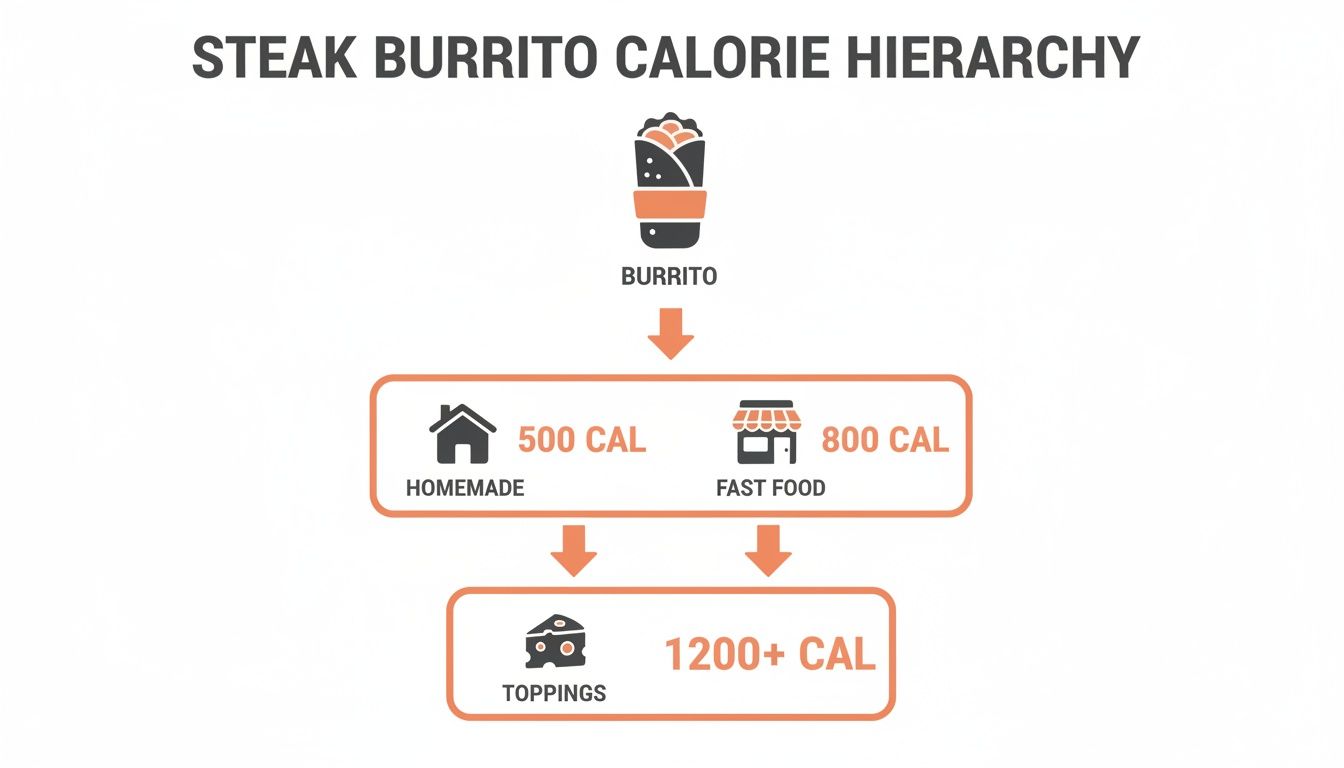
As you can see, a basic burrito is one thing, but a fully loaded one can quickly soar past the 1,200 calorie mark.
Toppings That Tip The Scales
This is where a perfectly reasonable meal can turn into a total calorie bomb. Those creamy, cheesy, and delicious extras are often the biggest source of "hidden" calories that people don't account for. They have a knack for turning a balanced meal into something that might not quite fit your health goals.
These additions are deceptively dense. A little dollop here and a sprinkle there adds up much faster than you’d expect, inflating the total steak burrito calories in a hurry.
For example, a standard two-tablespoon serving of sour cream brings about 60 calories to the party. A normal portion of shredded cheese? That's another 90-110 calories. Guacamole and queso are right there with them.
This is where things can get out of hand. Let’s break down how these popular extras contribute:
- Sour Cream: About 60 calories and 5 grams of fat.
- Shredded Cheese: Roughly 110 calories and 9 grams of fat.
- Guacamole: Adds around 70-100 calories, mostly from healthy fats.
- Queso/Creamy Sauces: Can easily pile on 90-150 calories or even more.
Toss just these four onto your burrito, and you’ve added an extra 330+ calories—basically the equivalent of wrapping your meal in a second tortilla. Just being aware of what these toppings contribute is the key to building a burrito that works for you.
Hacking the Fast-Food Burrito Menu
Let's be honest, fast-food burritos are a lifesaver when you're short on time and need something that actually feels like a meal. But trying to order one that won't derail your diet can feel like navigating a minefield. The menu boards are plastered with tempting words like "fresh" and "wholesome," but the reality is that a few wrong choices can turn a reasonable lunch into a calorie catastrophe.
The crazy thing is how wildly different the calorie counts can be from one chain to the next. Some spots offer surprisingly lean steak burritos, while others serve up monsters that pack nearly half a day's calories into a single tortilla.
A Tale of Two Burritos
So, how do the big names really stack up? Let’s look at a classic example: the Chipotle Steak Burrito. If you build it smart, it can be a solid choice. A basic version with steak, rice, and beans clocks in around 480 calories, with 16 grams of fat and 46 grams of carbs. It’s a respectable meal that won’t break the calorie bank.
But head to another popular fast-casual joint, and it's a different story. It’s not uncommon to see burritos that soar past 700 calories before you even think about adding guac or queso. The main culprits? Gigantic flour tortillas, double scoops of rice, and heavy-handed pours of creamy sauces.
Smart Swaps for a Lighter Burrito
Knowing the numbers is one thing, but putting that knowledge into action is what really counts. You don't have to swear off your favorite burrito spot. You just need to order with a little strategy.
Here are a few of my go-to moves for cutting calories without sacrificing the flavors you love:
- Go "Naked" in a Bowl: This is the easiest win. Ditching that huge flour tortilla can instantly save you around 300 calories and a ton of carbs. You get all the good stuff in a bowl, and it’s just as satisfying.
- Double Down on Veggies: Always ask for extra fajita veggies. Those grilled peppers and onions add a ton of flavor, bulk, and fiber for almost no extra calories, which helps you feel fuller, longer.
- Sauce on the Side, Always: This is non-negotiable. Those creamy sauces—sour cream, queso, chipotle aioli—are where the calories hide. Get them on the side so you can add just a spoonful for flavor instead of getting a ladle-full.
Even the packaging, like different takeaway boxes, can subtly influence how we perceive portion sizes, making mindful ordering even more important.
The bottom line is that you're in the driver's seat. A few simple, intentional choices about your base, fillings, and toppings are all it takes to build a delicious burrito that fits right into your goals.
Ultimately, navigating a fast-food menu is all about being informed. If you want a quick way to see how different options compare on the fly, check out our guide on using an AI fast food macro finder to get instant nutritional estimates.
The Restaurant Burrito vs. The Homemade Advantage
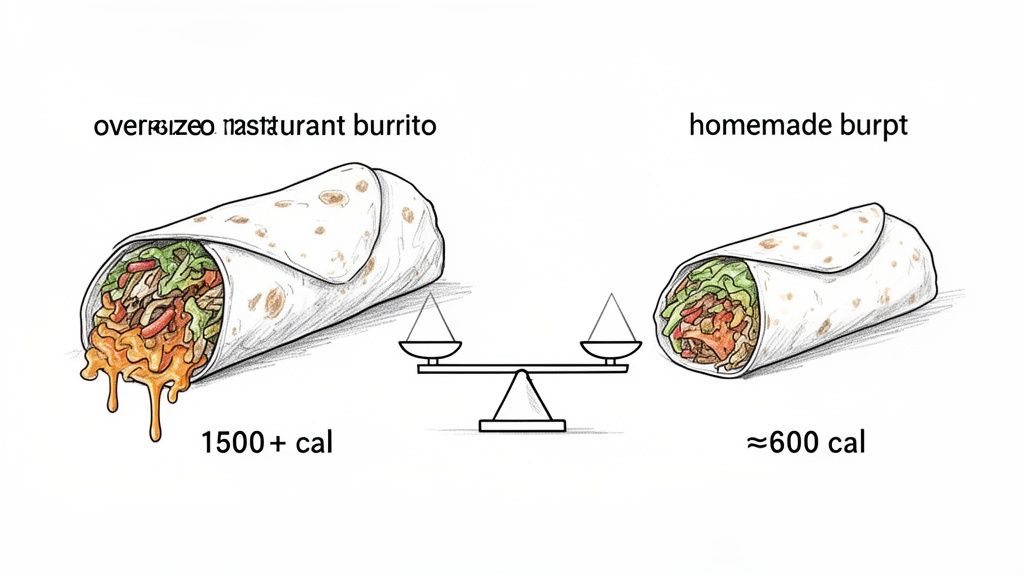
We've all been there. You order a steak burrito at a restaurant, and what arrives is a monster—an absolute behemoth wrapped in foil, spilling over the sides of the plate. They’re often drowned in sauce, loaded with a mountain of cheese, and can easily clock in at over 1,500 calories. That's more than a day's worth of food for some of us, all in one sitting.
Now, compare that to what you can make in your own kitchen. This is where the magic happens. When you're the one in charge, you have total control over every single ingredient. You get to be the chef, the portion master, and the calorie counter. The result? A delicious, satisfying steak burrito that can come in under 600 calories without you feeling deprived.
Crafting a Smarter Burrito at Home
Building a lower-calorie burrito isn't about eating a sad, empty tortilla. It’s all about making smart swaps—simple, intentional changes that slash calories while amping up flavor and nutrients.
Here’s a quick guide to building a better burrito from scratch:
- Choose Lean Steak: Start with a cut like flank or sirloin. Trim off any visible fat before you cook it, and go easy on the oil in the pan.
- Pile on the Veggies: Sautéed bell peppers and onions add incredible flavor and bulk for hardly any calories. They make the burrito feel more substantial and filling.
- Pick Brown Rice or Quinoa: Swap the standard white rice for a whole-grain option. The extra fiber will help you feel full longer.
- Swap Sour Cream for Greek Yogurt: You can get that same creamy, tangy flavor by using plain, non-fat Greek yogurt. It has way less fat and gives you a fantastic protein boost.
The difference these small changes make is staggering. Think about a standard steak burrito from a place like Taco Cabana. Their USDA Choice Steak Burrito (without beans) hits 750 calories. You'd have to walk for more than three and a half hours just to burn that off. You can dive deeper into restaurant burrito stats and what it takes to burn them off.
A Sample Macro Breakdown
By taking the reins, you completely change the nutritional story. The whole point is to lower the steak burrito calories without sacrificing the protein and fiber that make it a truly satisfying meal.
A homemade burrito built with these principles isn't a "cheat meal." It's a smart, sustainable meal that can be a regular part of your diet, helping you hit your goals.
Let's look at what a well-built homemade burrito could look like from a numbers perspective.
Sample Homemade Steak Burrito (Approx. 580 Calories)
- Protein: 45g
- Carbohydrates: 55g
- Fat: 20g
With macros like these, this burrito becomes the perfect post-workout meal or a seriously fulfilling dinner that keeps you on track. It just goes to show that cooking at home gives you the power to enjoy the foods you love while still making progress toward your health and fitness goals.
Alright, let's talk strategy. You don't have to give up your favorite steak burrito to stay on track with your health goals. It's all about making a few smart choices that cut down on the calories without sacrificing that flavor you're craving.
Think of it as building a better burrito, not a boring one. With a few key adjustments, you can dramatically lower the steak burrito calories whether you're ordering out or making it yourself.
Smart Swaps That Make a Big Difference
The secret isn't deprivation; it's about being strategic. Focusing on the high-impact ingredients means you can make your burrito work for you, not against you.
-
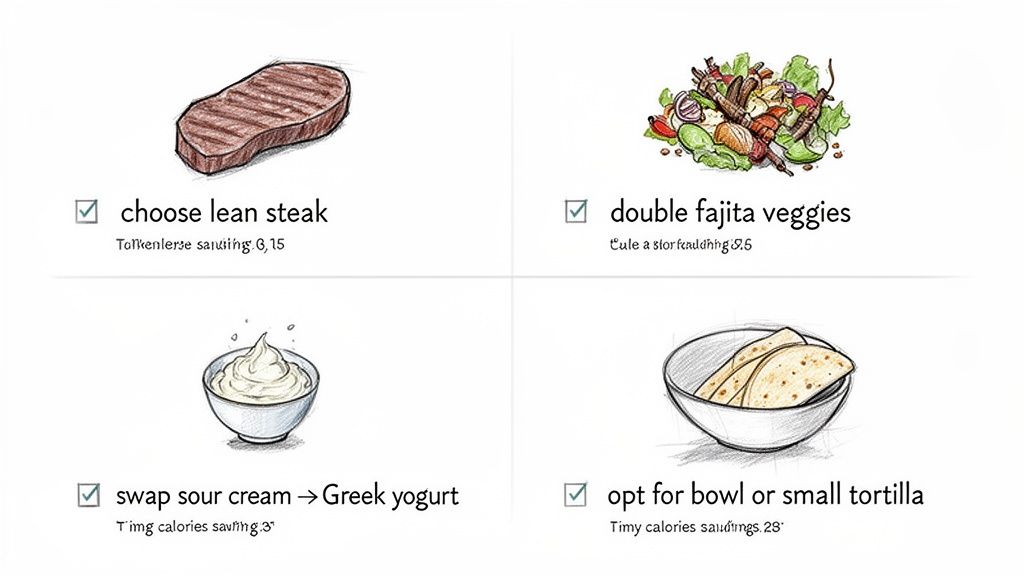
Go "Naked" in a Bowl: Your biggest win, right off the bat, is skipping the giant flour tortilla. A burrito bowl is your best friend here. This one simple move can save you around 300 calories and a hefty dose of refined carbs.
-
Double Down on Veggies: Don't be shy—always ask for extra fajita vegetables. Those grilled peppers and onions pack a ton of flavor and fiber for barely any calories. They add bulk that helps you feel full and satisfied.
-
Be Smart with Your Fats: We all love cheese, sour cream, and guacamole, but they add up fast. Instead of piling on all three, try picking just your absolute favorite. You'll still get that creamy texture and rich taste without the calorie overload.
-
Choose Salsa Over Cream: Fresh salsas like pico de gallo or a zesty salsa verde are your allies. They deliver a massive flavor punch with minimal calories. Creamy sauces like queso or chipotle aioli, on the other hand, can easily tack on an extra 100+ calories.
The Advantage of Cooking at Home
Making your burrito at home puts you in the driver's seat. You control every single ingredient, which is the ultimate tool for anyone keeping an eye on their nutrition. You can also explore practical tips for a cleaner diet to take your homemade meals to the next level.
The goal is to build a smarter burrito—a hefty, satisfying meal that's also packed with protein and fiber. It’s about making your food align perfectly with a healthy lifestyle.
By using smaller tortillas, lean flank steak, and even swapping sour cream for Greek yogurt, you can create something incredible that supports your goals.
Curious exactly what your custom creation comes out to? If you want to get granular, an AI-powered recipe calculator can give you an instant and surprisingly accurate breakdown. These simple but powerful tips give you the freedom to create a burrito that perfectly fits your personal health goals.
Stop Guessing and Start Tracking with BiteKit
So, after all that, you've got a much better handle on what's in your steak burrito. But let's be honest, trying to log one in a typical tracking app can feel like a chore.
You end up scrolling through what feels like a million different ingredient options, guessing at portion sizes ("Was that a half-cup of rice or a full cup?"), and never feeling totally confident in the final numbers. That kind of guesswork can make it tough to know if you're actually hitting your goals.
A Smarter Way to Log Your Meals
We've all been there, staring at our phone, trying to deconstruct a meal we just enjoyed. That exact frustration is why we built BiteKit. We wanted to take the mental gymnastics out of logging complex meals so you can get an accurate count without the headache.
Instead of manual entry and endless searching, BiteKit gives you a few incredibly simple ways to log your food in seconds:
- Photo Logging: Just snap a picture of your steak burrito. Our AI analyzes the photo to identify the ingredients and estimate the portions for you.
- Voice Logging: Don't feel like typing? Simply tell the app what you ate. Saying, "I had a steak burrito with rice, beans, and cheese," is all it takes.
- Text Logging: Or, you can always just type in your meal description, and our AI will crunch the numbers and give you a full nutritional breakdown.
Here's how easily you can log and view your meal's impact on your daily goals.
The app gives you an instant, precise breakdown of your burrito's calories and macros, and your daily totals update right away. It's a much simpler—and smarter—way to know exactly what you're eating.
Common Questions About Burrito Nutrition
When it comes to steak burritos, a few questions always pop up. Let's walk through the most common ones so you can feel confident in your choices, whether you're ordering out or building your own at home.
What Is the Lowest Calorie Way to Order a Steak Burrito?
The single biggest move you can make is to order a burrito bowl instead of a traditional burrito. That one swap saves you around 300 calories right off the bat by skipping the massive flour tortilla.
To get the calorie count as low as possible, start your bowl with a bed of lettuce and a double portion of fajita veggies. From there, add your steak, a small scoop of black beans, and finish it with a fresh salsa like pico de gallo. You'll get a flavorful, high-protein meal that often clocks in under 400 calories.
How Much Protein Is in a Typical Steak Burrito?
You can expect a pretty wide range here, anywhere from 25 grams to over 50 grams of protein. It almost entirely depends on how much steak is included and whether you’ve added beans, which give you an extra protein boost.
If you get a generous portion of steak, that burrito can be a fantastic post-workout meal. The protein is exactly what your body needs for muscle repair, making it a truly satisfying way to refuel after a tough gym session.
Can Steak Burritos Fit into a Weight Loss Plan?
They absolutely can. A burrito isn't inherently "good" or "bad"—what matters are the ingredients you choose and how it fits into your total daily calories. It all comes down to being mindful of your choices.
A homemade burrito where you control every ingredient or a thoughtfully built burrito bowl can easily fit into a calorie deficit—the foundation of any weight loss journey. The challenge is the oversized restaurant burritos, which can be loaded with high-fat extras and derail your progress if you're not careful.