AI Gut Microbiome Diet Scorer
Describe your typical daily diet and get a science-based gut microbiome health score using the DI-GM framework — with personalized plant diversity, fermented food, and fiber recommendations.
More detail = more accurate score. Include cooking methods, specific foods and rough portions.
Try an example diet:
What Is the Gut Microbiome?
The gut microbiome is a complex ecosystem of trillions of bacteria, fungi, viruses, and other microorganisms living in your digestive tract. Far from passive passengers, these microbes influence immunity, mood, metabolism, inflammation, and even cognitive function.
A diverse microbiome — one with many different microbial species — is strongly associated with better health outcomes. Research from the American Gut Project found that people who eat 30 or more different plant foods per week have significantly more diverse gut microbiomes than those eating 10 or fewer.
38T
microbial cells in your gut
roughly equal to human cells
70%
of immune cells reside in the gut
gut-immune axis connection
30+
plant foods per week
target for high diversity
The DI-GM Framework Explained
The Dietary Index for Gut Microbiome (DI-GM) is a research-validated scoring system that assesses diet quality through the lens of gut microbiome health. Unlike general healthy eating indices, DI-GM specifically weights factors most closely tied to microbial diversity and function.
Plant Diversity (0–25 pts)
Each unique plant food feeds different bacterial species. The target is 30+ distinct plant foods per week — counting vegetables, fruits, legumes, whole grains, nuts, seeds, herbs, and spices.
Fiber Variety (0–25 pts)
Different fiber types feed different microbes. Soluble fiber (oats, apples), insoluble fiber (wheat bran, vegetables), resistant starch (legumes, cooled rice), and prebiotic fibers (inulin, FOS) each support distinct microbial populations.
Fermented Foods (0–25 pts)
Live-culture fermented foods directly introduce beneficial microbes and their metabolites. A 2021 Cell study showed that a high-fermented-food diet increased microbiome diversity and reduced inflammatory markers in just 10 weeks.
Gut Disruptors (0–25 pts)
Points deducted for ultra-processed foods with emulsifiers, artificial sweeteners, excess alcohol, very low fiber intake, and frequent antibiotic use. These factors reduce microbial diversity and can increase intestinal permeability.
Top Microbiome-Supporting Foods
Adding these foods to your weekly rotation can meaningfully improve your gut microbiome diversity score:
Prebiotic Powerhouses
Garlic, onions, leeks, asparagus, Jerusalem artichoke, chicory root, dandelion greens, and green bananas are among the richest sources of prebiotic fibers (inulin and FOS) that selectively feed Bifidobacteria and Lactobacillus species.
Live-Culture Fermented Foods
Unsweetened yogurt with live cultures, kefir, kimchi, raw sauerkraut, miso, tempeh, and unpasteurized kombucha provide live microorganisms and beneficial short-chain fatty acid precursors.
Polyphenol-Rich Foods
Berries, dark chocolate (70%+), green tea, olive oil, red wine (moderate), pomegranate, and colorful vegetables contain polyphenols that act as prebiotics and selectively promote beneficial microbial species like Akkermansia muciniphila.
Resistant Starch Sources
Cooked-and-cooled potatoes and rice, unripe bananas, legumes, rolled oats, and barley provide resistant starch that reaches the colon intact, producing butyrate — a key short-chain fatty acid that fuels gut lining cells.
Gut Disruptors to Minimize
These common dietary factors can significantly reduce microbial diversity and harm gut barrier integrity:
Ultra-Processed Foods (UPFs)
Many UPFs contain emulsifiers (like carrageenan and polysorbate 80) that can disrupt the mucus layer protecting gut bacteria and trigger low-grade inflammation.
Artificial Sweeteners
Saccharin, sucralose, and aspartame have been shown in animal and human studies to alter gut microbial composition and impair glucose tolerance by disrupting bacterial populations.
Excess Alcohol
Heavy alcohol consumption reduces microbial diversity, promotes growth of harmful bacteria, increases intestinal permeability ("leaky gut"), and depletes beneficial Lactobacillus species.
Very Low Fiber Intake
When fiber is scarce, gut bacteria that normally feed on fiber begin to degrade the protective mucus layer instead, potentially increasing gut permeability and inflammation over time.
How to Improve Your Gut Microbiome Score
Small, consistent changes add up fast when it comes to gut microbiome diversity. Here are the highest-impact strategies ranked by evidence:
Add one new plant food per day
Rotate your vegetables, try new legumes, add herbs and spices generously. Even small amounts of new plant foods count toward your weekly plant diversity score.
Add a fermented food to one meal daily
A serving of yogurt at breakfast, kimchi with lunch, or miso soup at dinner. Start small to avoid digestive discomfort as your microbiome adapts.
Swap refined grains for whole and ancient grains
Replace white rice and white bread with brown rice, quinoa, farro, oats, and sourdough bread. These provide more fiber types and are fermented differently in the gut.
Reduce ultra-processed food frequency
Replacing just one UPF snack per day with whole food alternatives (nuts, fruit, yogurt) can meaningfully improve your gut disruptors subscore over time.
Frequently Asked Questions
What is the DI-GM framework?
The Dietary Index for Gut Microbiome (DI-GM) is a research-backed framework that scores diet quality specifically through the lens of gut microbiome health. It evaluates plant diversity, fiber variety, fermented food intake, and avoidance of gut-disrupting dietary factors.
How many plant foods should I eat per week?
Research from the American Gut Project recommends 30 or more different plant foods per week for optimal microbiome diversity. This includes vegetables, fruits, legumes, whole grains, nuts, seeds, herbs, and spices — even small amounts count. Most people eat only 10–15 per week.
What are the best fermented foods for gut health?
The best fermented foods contain live active cultures: yogurt, kefir, kimchi, raw sauerkraut, miso, tempeh, and kombucha. A 2021 Stanford study in Cell found that a high-fermented-food diet increased microbiome diversity and reduced inflammatory markers in just 10 weeks.
What are gut disruptors?
Gut disruptors are dietary factors that reduce microbial diversity or harm the gut lining. Common culprits include ultra-processed foods with emulsifiers, artificial sweeteners (saccharin, sucralose), excess alcohol, and very low fiber intake. Minimizing these is as important as adding gut-friendly foods.
What is prebiotic fiber and why does it matter?
Prebiotic fiber selectively feeds beneficial gut bacteria. Key sources include inulin from garlic, onions and asparagus; resistant starch from cooked-and-cooled potatoes and legumes; and FOS from bananas and Jerusalem artichoke. Eating a variety of fiber types — not just quantity — feeds the widest range of beneficial microbial species.
How accurate is the AI gut microbiome score?
The score is an evidence-based estimate applying DI-GM principles to your diet description. For best accuracy, describe your diet in detail including specific foods, cooking methods, and rough frequencies. The tool is designed as educational guidance, not a clinical microbiome test.
iPhone app · 3-day free trial
You're likely eating 500 calories more than you think
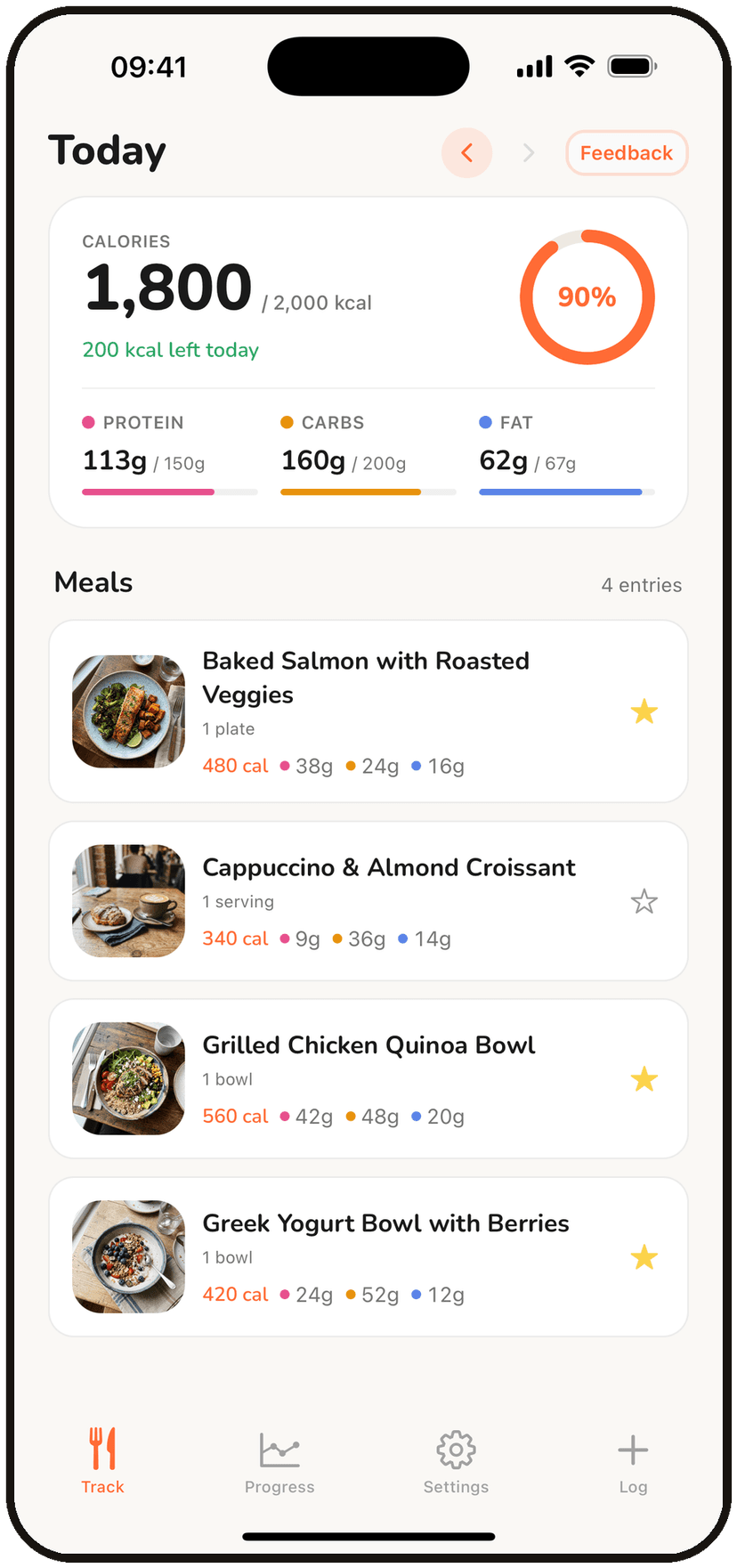
Portion guesses add up fast. BiteKit's AI estimates what's actually on your plate — oils, sides and all — so your log stays close to what you really ate.
- Log meals by photo, voice, or text
- Calories & macros estimated in seconds
- Syncs with Apple Health and Apple Watch
Free download · 3-day free trial, cancel anytime.
Scan with your iPhone camera