AI Post-Workout Meal Builder
Describe your workout and get an optimal recovery meal with exact macro breakdown, timing advice, and the science behind every recommendation.
Helps calculate more precise protein recommendations
Quick starts:
Why Post-Workout Nutrition Matters
Exercise breaks down muscle tissue and depletes glycogen stores. What you eat afterward determines how quickly and effectively your body recovers. Proper post-workout nutrition can mean the difference between optimal gains and wasted effort.
- Muscle protein synthesis: Exercise stimulates muscle protein synthesis, but without adequate protein intake, you cannot fully capitalize on this anabolic response
- Glycogen replenishment: Your muscles use glycogen (stored carbohydrate) as fuel during exercise. Replenishing these stores is critical for your next workout
- Reduced muscle breakdown: The right nutrition post-workout shifts your body from a catabolic (breaking down) to an anabolic (building up) state
- Faster recovery: Optimal post-workout nutrition reduces muscle soreness, inflammation, and recovery time between sessions
The Anabolic Window Explained
The "anabolic window" refers to the period after exercise when your body is primed to absorb nutrients and direct them toward muscle repair and growth. While older research suggested a narrow 30-minute window, modern science offers a more nuanced view.
The Traditional View
Early research suggested a strict 30-minute post-workout window where nutrient uptake was dramatically enhanced. This led to the advice of drinking a protein shake immediately after your last set.
The Modern Understanding
Current research shows the window is wider than initially thought — roughly 2-3 hours post-exercise. However, if you trained fasted or it has been 4+ hours since your last meal, eating sooner (within 30-60 minutes) is more beneficial.
The bottom line: while you do not need to rush to eat within minutes of your last rep, having a balanced meal within 1-2 hours of training is a solid practice for most people. The AI Post-Workout Meal Builder tailors timing advice to your specific situation.
Carb-to-Protein Ratios by Workout Type
Different types of exercise deplete your body differently, which means optimal post-workout nutrition varies by workout type. Here is a research-backed guide:
Strength / Hypertrophy Training
Ratio: 2:1 to 3:1 carbs to protein. Focus on high protein (30-50g) to maximize muscle protein synthesis. Include moderate carbs to replenish the glycogen used during sets.
HIIT / CrossFit
Ratio: 3:1 to 4:1 carbs to protein. These high-intensity workouts burn through glycogen rapidly. Prioritize carbohydrate replenishment alongside adequate protein for the combined strength and endurance demands.
Endurance (Running, Cycling, Swimming)
Ratio: 3:1 to 4:1 carbs to protein. Long-duration exercise heavily depletes glycogen. Carbohydrate intake is the top priority, with sufficient protein to support muscle repair from the repetitive stress.
Light Activity (Yoga, Stretching)
Ratio: Balanced macros. Light activity does not heavily deplete glycogen or cause significant muscle damage. A balanced snack or normal meal timing is sufficient for recovery.
Common Post-Workout Nutrition Mistakes
Even experienced athletes make these recovery nutrition errors. Avoid these pitfalls to maximize your training results:
Skipping Carbs After Lifting
Many people focus only on protein after weights, but carbs are essential for replenishing glycogen and creating an insulin response that helps shuttle amino acids into muscles.
Too Much Fat Post-Workout
Fat slows digestion and delays the absorption of protein and carbs your muscles need urgently. Keep fat moderate in your immediate post-workout meal.
Not Eating Enough
Under-eating after a tough workout limits your recovery capacity. Even during a fat-loss phase, your post-workout meal should provide sufficient protein and carbs for repair.
Neglecting Hydration
Rehydrating is just as important as refueling. Even mild dehydration impairs recovery and nutrient delivery. Drink water before and alongside your post-workout meal.
Frequently Asked Questions
How does the AI Post-Workout Meal Builder work?
The AI Post-Workout Meal Builder uses sports nutrition science and AI to create personalized recovery meals. You select your workout type, duration, and intensity, and the AI generates an optimal meal with ingredients, macros, timing advice, and the scientific rationale behind each recommendation.
What should I eat after a workout?
After a workout, eat a meal combining protein (for muscle repair) and carbohydrates (for glycogen replenishment). The exact ratio depends on your workout type: strength training benefits from a 2:1 to 3:1 carb-to-protein ratio, while endurance exercise benefits from 3:1 to 4:1. Fat should be kept moderate post-workout.
How soon after a workout should I eat?
Research suggests eating within 30-60 minutes after exercise for optimal recovery, though the urgency depends on your last pre-workout meal. If you trained fasted, eating sooner is more important. If you had a balanced meal 2-3 hours before training, the window is more flexible.
How much protein do I need after a workout?
Research recommends 0.25-0.5 grams of protein per kilogram of body weight after exercise, typically 20-40 grams for most people. After intense resistance training, the higher end of this range is most beneficial. The AI tool calculates specific protein needs based on your body weight and workout type.
Does the post-workout meal change for different exercises?
Yes, significantly. After strength training, the focus is on high protein with moderate carbs. After endurance exercise, the priority shifts to carbohydrate replenishment. After HIIT or CrossFit, you need both high carbs and high protein. The AI builder tailors every recommendation to your specific workout.
Can I get vegan or dairy-free meal suggestions?
Absolutely. The tool supports Vegan, Vegetarian, Dairy-Free, Gluten-Free, and Low-Carb dietary restrictions. The AI strictly avoids incompatible ingredients and substitutes appropriate alternatives while maintaining optimal recovery nutrition.
iPhone app · 3-day free trial
You're likely eating 500 calories more than you think
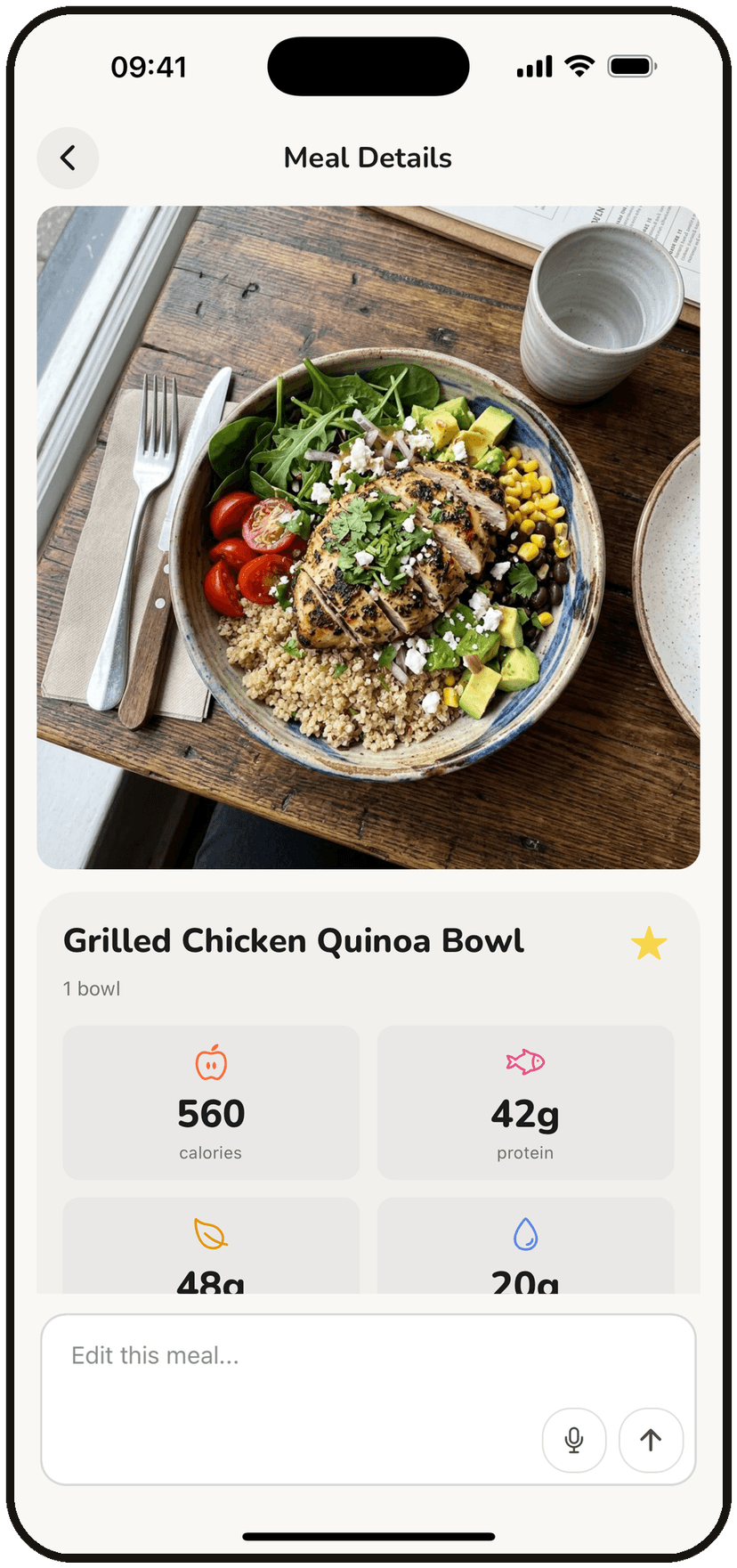
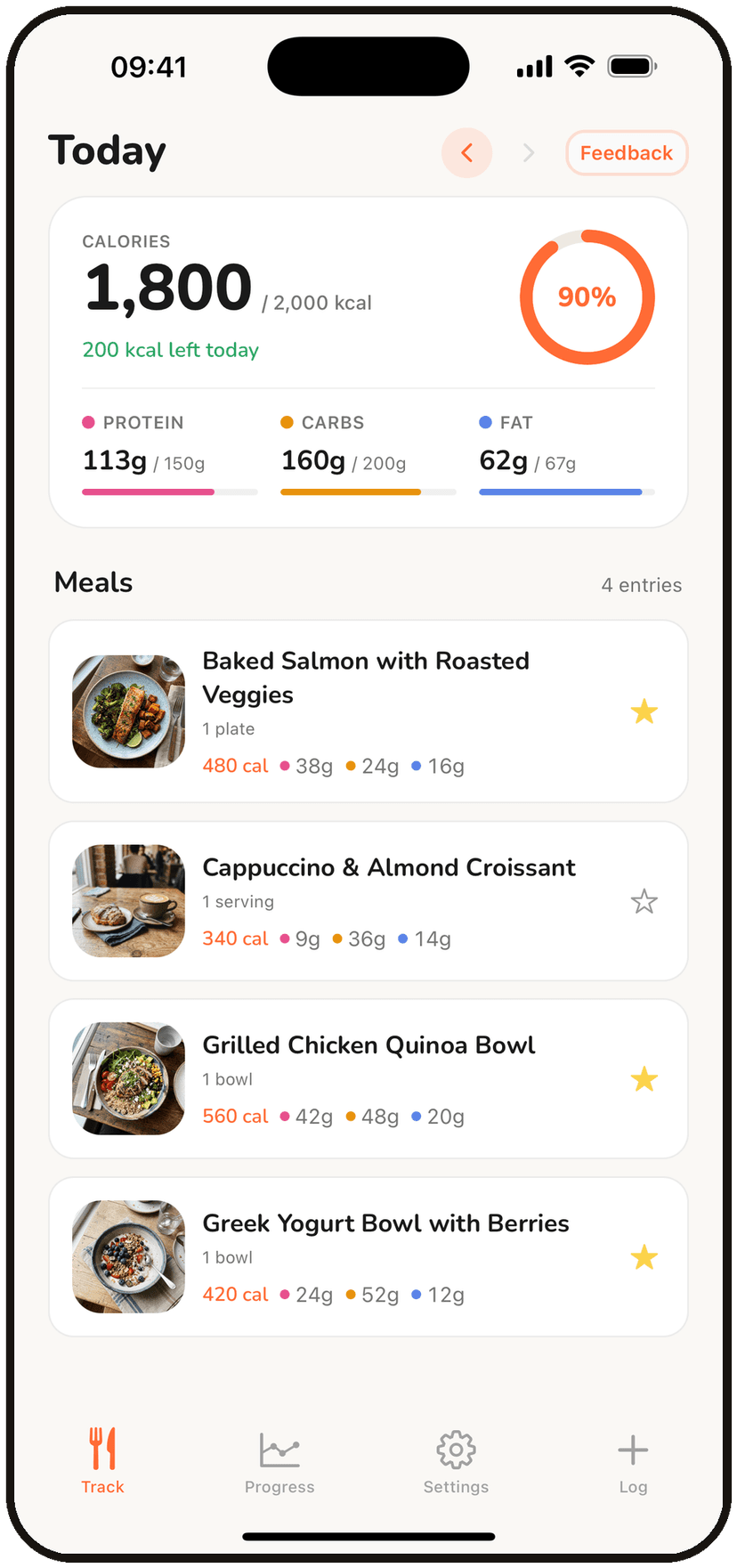
Portion guesses add up fast. BiteKit's AI estimates what's actually on your plate — oils, sides and all — so your log stays close to what you really ate.
- Log meals by photo, voice, or text
- Calories & macros estimated in seconds
- Syncs with Apple Health and Apple Watch
Free download · 3-day free trial, cancel anytime.
Scan with your iPhone camera