BMR Calculator
Calculate your Basal Metabolic Rate - the number of calories your body burns at complete rest. Compare results from multiple scientific formulas.
If provided, the Katch-McArdle formula becomes available for more accurate results
What is BMR?
BMR (Basal Metabolic Rate) is the number of calories your body needs to perform its most basic life-sustaining functions. These include breathing, circulation, cell production, nutrient processing, protein synthesis, and ion transport.
Think of BMR as the energy cost of simply being alive - even while sleeping, your body is constantly working. BMR typically accounts for about 60-75% of your total daily calorie expenditure, making it the largest component of your metabolism.
BMR accounts for:
- Heart beating and blood circulation
- Breathing and lung function
- Brain and nervous system activity
- Body temperature regulation
- Cell growth and repair
- Hormone production
BMR vs TDEE: What's the Difference?
Understanding the difference between BMR and TDEE is crucial for effective nutrition planning:
BMR (Basal Metabolic Rate)
Calories burned at complete rest. This is the absolute minimum energy your body needs to survive, measured in a completely rested, fasted state.
60-75% of total calories
TDEE (Total Daily Energy Expenditure)
Your BMR plus all additional calories burned through daily activities, exercise, and the thermic effect of food. This is what you actually burn each day.
TDEE = BMR x Activity Factor
Key insight: You should never eat below your BMR for extended periods, as this can slow your metabolism and be harmful to your health. Use TDEE for setting calorie goals.
Factors That Affect BMR
Several factors influence your Basal Metabolic Rate. Understanding these can help you optimize your metabolism:
Muscle Mass
Muscle tissue burns more calories than fat tissue, even at rest. More muscle = higher BMR. This is why strength training is valuable for metabolism.
Age
BMR decreases by about 1-2% per decade after age 20, primarily due to muscle loss and hormonal changes. Staying active helps minimize this decline.
Gender
Men typically have higher BMRs than women due to greater muscle mass and different hormonal profiles. This is reflected in the calculation formulas.
Body Size
Larger bodies require more energy to maintain. Both height and weight contribute to BMR - taller and heavier individuals have higher metabolic rates.
Genetics & Hormones
Thyroid hormones significantly impact metabolism. Genetics also play a role, with some people naturally having faster or slower metabolisms.
How to Increase Your BMR
While some factors are out of your control, there are proven ways to boost your metabolic rate:
Build Muscle
Strength training builds lean muscle mass, which burns 6-10 calories per pound daily vs. 2-3 for fat. Prioritize resistance exercises 2-4 times per week.
Eat Enough Protein
Protein has a higher thermic effect - your body burns 20-30% of protein calories during digestion vs. 5-10% for carbs. Aim for 0.7-1g per pound of body weight.
Stay Active Throughout the Day
NEAT (Non-Exercise Activity Thermogenesis) - walking, standing, fidgeting - can burn 300-500 extra calories daily. Take breaks from sitting every hour.
Prioritize Sleep
Poor sleep disrupts hunger hormones and can lower BMR. Aim for 7-9 hours of quality sleep. Sleep deprivation can reduce metabolic rate by 2-8%.
Avoid Extreme Dieting
Severely restricting calories can lower your BMR by 20-30% as your body enters "starvation mode." This metabolic adaptation can persist even after you resume normal eating. A moderate deficit of 500 calories is safer and more sustainable.
BMR Formulas Explained
Our calculator uses three scientifically validated formulas. Here's how each one works:
Mifflin-St Jeor (1990) - Recommended
Men: BMR = (10 x weight in kg) + (6.25 x height in cm) - (5 x age) + 5
Women: BMR = (10 x weight in kg) + (6.25 x height in cm) - (5 x age) - 161
Studies show this is the most accurate formula for most modern populations. Recommended by the American Dietetic Association.
Harris-Benedict (1919)
Men: BMR = 88.362 + (13.397 x weight) + (4.799 x height) - (5.677 x age)
Women: BMR = 447.593 + (9.247 x weight) + (3.098 x height) - (4.330 x age)
The original BMR formula, widely used for over a century. May overestimate BMR for modern populations by 5-15%.
Katch-McArdle (1996)
BMR: 370 + (21.6 x lean body mass in kg)
Uses lean body mass instead of total weight, making it more accurate for athletes and those with unusual body compositions. Requires knowing your body fat percentage.
Frequently Asked Questions
What is BMR?
BMR (Basal Metabolic Rate) is the number of calories your body burns at complete rest to maintain basic life functions like breathing, circulation, and cell production. It represents the minimum energy your body needs to survive.
What is the difference between BMR and TDEE?
BMR is the calories burned at complete rest, while TDEE includes BMR plus all calories burned through daily activities and exercise. Your TDEE equals your BMR multiplied by an activity factor, and is always higher than your BMR.
Which BMR formula is most accurate?
The Mifflin-St Jeor equation is considered most accurate for most people. If you know your body fat percentage, the Katch-McArdle formula may be more accurate as it accounts for lean body mass.
How can I increase my BMR?
Build muscle through strength training, eat adequate protein, stay active throughout the day, get enough sleep, and avoid extreme calorie restriction. Muscle burns more calories than fat, even at rest.
Why do I need to know my BMR?
Knowing your BMR helps you understand your baseline calorie needs and is essential for creating effective nutrition plans. Never eat below your BMR for extended periods - use it as a minimum threshold and calculate TDEE for actual calorie goals.
Does BMR change with age?
Yes, BMR decreases by about 1-2% per decade after age 20, primarily due to muscle loss and hormonal changes. Regular exercise and strength training can help minimize this decline.
Free app
You're likely eating 500 calories more than you think
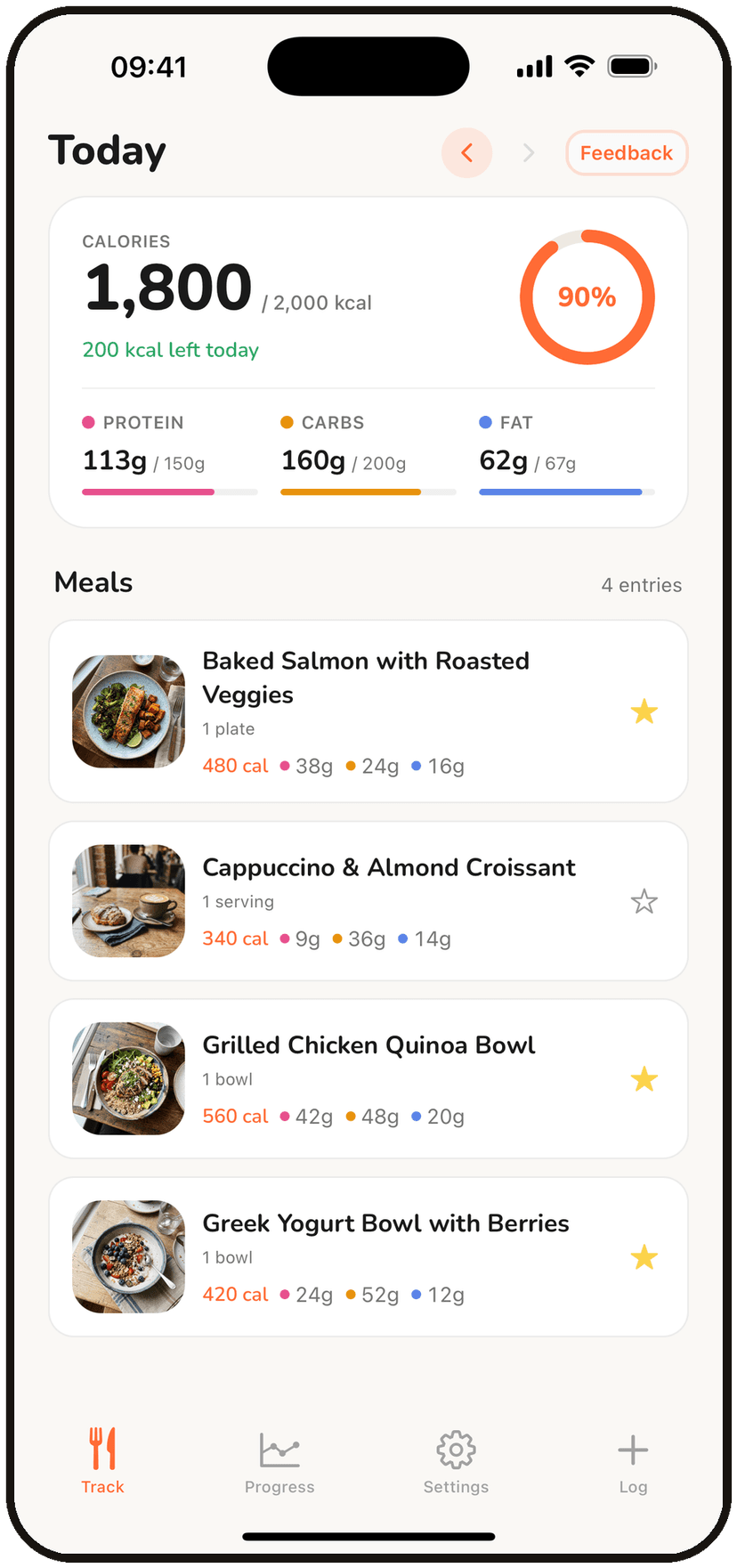
Portion guesses add up fast. BiteKit's AI reads your actual plate, so the number you track is the number you ate.
- Photo, voice, or text input
- Instant calorie & macro tracking
- Private by design — no password required
Free to download. No credit card required.
Scan to get the app