Body Fat Calculator
Estimate your body fat percentage using the Navy Method. Get your fat mass, lean mass, and see where you fall on the body fat scale.
Measure at navel level
Measure below the larynx (Adam's apple)
Measurement Tips
- Waist: Measure horizontally at your navel level
- Neck: Measure just below the larynx, keeping the tape level
- Tip: Take measurements in the morning before eating for consistency
What is Body Fat Percentage?
Body fat percentage represents the proportion of your total body weight that consists of fat tissue. Unlike BMI (Body Mass Index), which only considers height and weight, body fat percentage gives you a clearer picture of your body composition by distinguishing between fat mass and lean mass.
Your body contains two types of fat:
- Essential fat: Necessary for normal body functions, hormone regulation, and organ protection
- Storage fat: Energy reserves stored in adipose tissue, which can be reduced through diet and exercise
Knowing your body fat percentage helps you set realistic fitness goals, track progress more accurately than weight alone, and understand your overall health better.
How to Measure Body Fat at Home
The Navy Method requires only a measuring tape and calculates body fat using circumference measurements. Here's how to take accurate measurements:
Waist Measurement
Men: Measure horizontally at navel (belly button) level
Women: Measure at the narrowest point of your waist, typically just above the belly button
Neck Measurement
Measure just below the larynx (Adam's apple) with the tape sloping slightly downward at the front. Keep the tape level at the sides and back.
Hip Measurement (Women Only)
Measure at the widest point of your buttocks, keeping the tape level all the way around.
Tips for Accurate Measurements
- Measure in the morning before eating
- Keep the tape snug but not compressing the skin
- Take each measurement 2-3 times and use the average
- Exhale normally when measuring waist (don't suck in)
- Use a flexible cloth or plastic measuring tape
Body Fat vs. BMI: Which is Better?
Body Fat Percentage
- Measures actual fat vs. lean mass
- Better for athletes and muscular individuals
- Accounts for body composition differences
- More accurate health indicator
- Requires measurements or equipment
BMI
- Only uses height and weight
- Can misclassify muscular people as overweight
- Quick and easy to calculate
- Good for population-level studies
- Less accurate for individuals
Example: A 180 lb, 5'10" bodybuilder would have a BMI of 25.8 (overweight), but their body fat might be only 10-12% (athletic). Body fat percentage gives a much clearer picture of their actual health status.
Healthy Body Fat Ranges by Age and Gender
Body fat recommendations vary based on gender and fitness goals. Here are the standard categories:
Men
Women
Note: Body fat naturally increases with age. These ranges are general guidelines. Athletes in certain sports may have body fat outside these ranges and still be healthy.
How to Reduce Body Fat
Reducing body fat while preserving muscle mass requires a strategic approach combining nutrition, exercise, and lifestyle factors:
Create a Moderate Calorie Deficit
Aim for a 300-500 calorie daily deficit. Larger deficits can lead to muscle loss. Use our Calorie Deficit Calculator to find your target.
Prioritize Protein Intake
Consume 0.7-1g protein per pound of body weight to preserve muscle during fat loss. Protein also increases satiety and has a higher thermic effect.
Strength Train Regularly
Resistance training 3-4 times per week signals your body to preserve muscle mass. This keeps your metabolism high during fat loss.
Be Patient and Consistent
Healthy fat loss is 0.5-1% body fat per month. Faster rates often mean muscle loss. Track trends over weeks, not days.
Frequently Asked Questions
What is body fat percentage?
Body fat percentage is the total mass of fat divided by total body mass. It shows how much of your weight is fat versus lean mass (muscle, bone, organs). Unlike BMI, it actually measures body composition.
How accurate is the Navy Method for calculating body fat?
The Navy Method is generally accurate within 1-3% of DEXA scans for most people. Developed by the U.S. Navy, it's one of the most reliable circumference-based methods. Accuracy depends on proper measurement technique.
What is a healthy body fat percentage?
For men: Athletes 6-13%, Fitness 14-17%, Average 18-24%. For women: Athletes 14-20%, Fitness 21-24%, Average 25-31%. The fitness range is ideal for most health-conscious individuals.
Why do women have higher body fat percentages than men?
Women naturally carry more essential fat for hormonal function and reproduction. This fat is stored in breasts, hips, and thighs. Women need 10-13% essential fat compared to 2-5% for men.
How often should I measure my body fat?
Measure every 2-4 weeks under consistent conditions (same time of day, similar hydration). Body fat changes slowly, so weekly measurements are sufficient. Daily tracking is unnecessary.
What is the difference between body fat percentage and BMI?
BMI only uses height and weight and can't distinguish muscle from fat. A muscular person may have a "high" BMI but low body fat. Body fat percentage directly measures fat mass, making it better for assessing fitness and health.
Free app
You're likely eating 500 calories more than you think
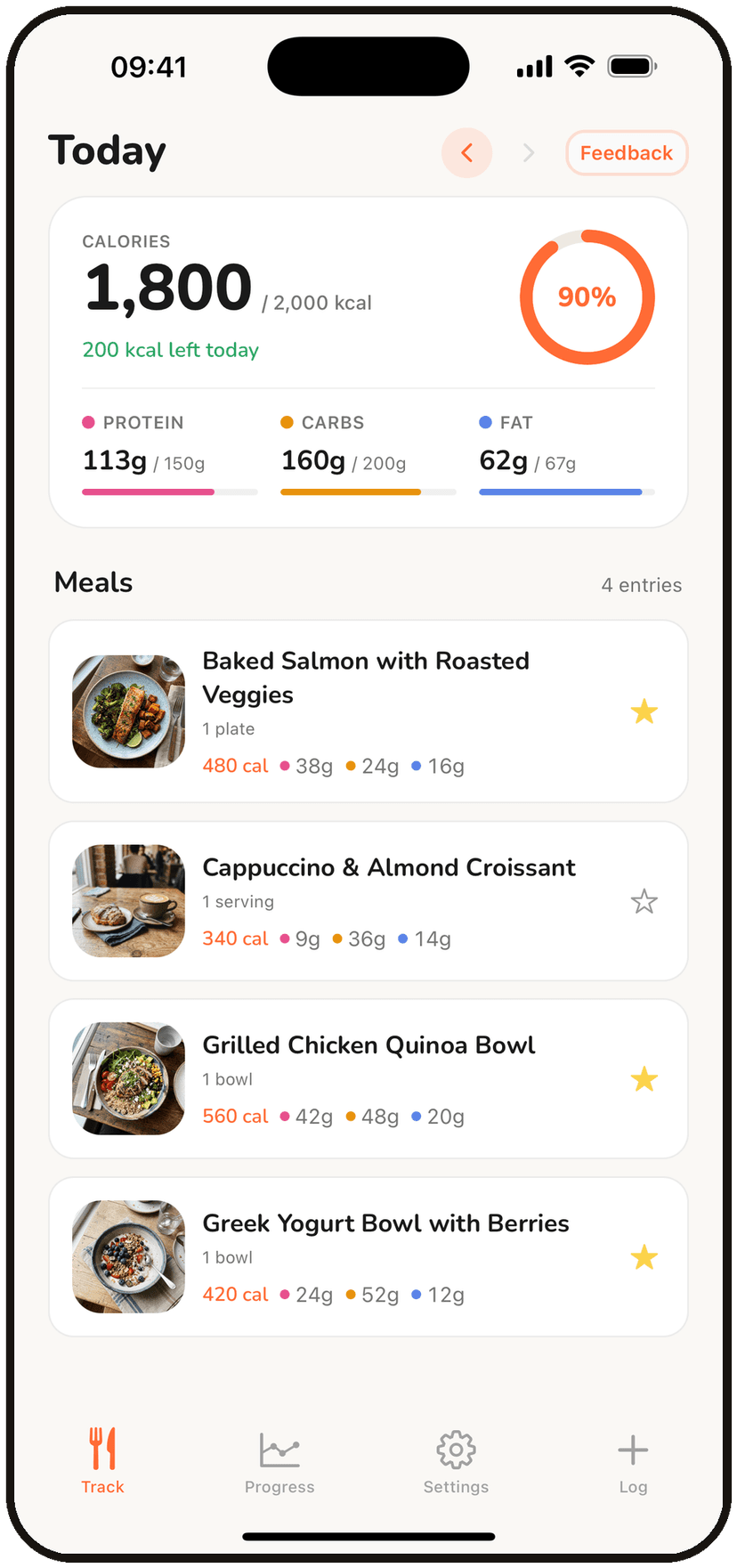
Portion guesses add up fast. BiteKit's AI reads your actual plate, so the number you track is the number you ate.
- Photo, voice, or text input
- Instant calorie & macro tracking
- Private by design — no password required
Free to download. No credit card required.
Scan to get the app