Body Roundness Index Calculator
Calculate your BRI from waist circumference and height — a newer metric that predicts cardiometabolic risk better than BMI by measuring body shape rather than just weight.
What is BRI?
The Body Roundness Index (BRI) uses your waist circumference and height to estimate body shape and predict cardiometabolic risk. Unlike BMI, which only uses weight and height, BRI specifically captures abdominal adiposity — the fat distribution most closely linked to heart disease, diabetes, and metabolic syndrome.
What is the Body Roundness Index (BRI)?
The Body Roundness Index (BRI) is a metric developed by Diana Thomas and colleagues in 2013 that estimates body shape and predicts cardiometabolic risk. It uses just two measurements — waist circumference and height — to model the body as an ellipse and produce a score reflecting how "round" your body cross-section is.
Unlike BMI, which only considers total weight relative to height, BRI specifically captures abdominal adiposity — the type of fat distribution most strongly associated with cardiovascular disease, type 2 diabetes, hypertension, and metabolic syndrome. This makes BRI a more targeted predictor of health outcomes related to central obesity.
BRI values typically range from about 1 to 15. A lower BRI indicates a leaner, more elliptical body shape, while a higher BRI indicates a rounder body shape with more abdominal fat accumulation.
BRI vs. BMI: Why BRI is a Better Health Predictor
BRI
- Uses waist circumference and height
- Captures abdominal fat distribution
- Predicts cardiometabolic risk accurately
- Distinguishes between body shapes
- Does not require a scale
BMI
- Uses total weight and height
- Cannot distinguish muscle from fat
- Misclassifies muscular individuals
- Ignores fat distribution entirely
- Simple but less informative
Example: Two people with identical BMIs of 28 can have vastly different health risk profiles. One may carry excess weight around their midsection (apple-shaped, high BRI) while the other carries it in their hips and thighs (pear-shaped, lower BRI). BRI captures this distinction that BMI completely misses.
The Research Behind BRI
BRI was introduced in a 2013 paper by Thomas et al. published in Obesity. The formula models the human body cross-section as an ellipse, using height as the major axis and waist circumference to derive the minor axis. The key findings and subsequent research include:
- Original study (2013): BRI was shown to correlate strongly with body fat percentage and visceral adipose tissue measured by DEXA scans
- Validation studies: Multiple studies across different populations have confirmed BRI's ability to predict metabolic syndrome, type 2 diabetes, and cardiovascular risk
- JAMA Network Open (2024): A large-scale study found that both high and low BRI values were associated with increased all-cause mortality, supporting a U-shaped relationship between BRI and health outcomes
- Comparison studies: BRI has been shown to outperform BMI and perform comparably to or better than waist-to-height ratio in predicting cardiometabolic risk factors
Important Context
While BRI is a promising metric, it is one of many tools for assessing health risk. No single number can fully capture your health status. BRI should be used alongside other indicators such as blood pressure, blood lipids, blood glucose, and overall fitness level. Always consult a healthcare provider for comprehensive health assessment.
How to Measure Your Waist Circumference Correctly
Accurate waist measurement is critical for a reliable BRI calculation. Follow these steps:
Step 1: Prepare
Remove or lift clothing around your midsection. Stand upright with your feet shoulder-width apart and arms relaxed at your sides. Breathe normally — do not suck in your stomach.
Step 2: Find the Correct Landmark
Locate the top of your hip bone (iliac crest) and the bottom of your last rib. The correct measurement point is the midpoint between these two landmarks, which is usually at or near your navel level.
Step 3: Measure
Wrap a flexible (non-stretchy) tape measure around your waist at the identified midpoint. Keep the tape parallel to the floor and snug against your skin without compressing it. Read the measurement at the end of a normal exhalation.
Step 4: Record Accurately
Take the measurement two or three times and use the average for the most accurate result. Measure at the same time of day (ideally in the morning before eating) for consistent tracking over time.
How to Improve Your BRI
Since BRI is driven by waist circumference relative to height, improving your BRI means reducing abdominal fat. Here are evidence-based strategies:
Create a Moderate Calorie Deficit
A deficit of 300-500 calories per day promotes sustainable fat loss. Use our Calorie Deficit Calculator to find your target intake.
Prioritize Protein Intake
Higher protein intake (1.6-2.2g per kg) preserves muscle during fat loss and increases satiety. Use our Protein Intake Calculator for a personalized target.
Combine Cardio and Strength Training
Aerobic exercise directly reduces visceral fat, while resistance training builds muscle that raises your resting metabolic rate. Aim for 150+ minutes of moderate cardio and 2-3 strength sessions per week.
Reduce Refined Carbs and Alcohol
Refined carbohydrates and alcohol are strongly linked to abdominal fat storage. Replace them with whole grains, vegetables, and lean proteins to preferentially reduce waist circumference.
Frequently Asked Questions
What is the Body Roundness Index (BRI)?
BRI is a metric developed in 2013 that uses waist circumference and height to model your body shape as an ellipse. It produces a score that reflects how "round" your body is, which directly correlates with abdominal fat — the type of fat most closely linked to heart disease, diabetes, and metabolic syndrome. Unlike BMI, BRI captures fat distribution, not just total weight.
How is BRI calculated?
BRI uses the formula: BRI = 364.2 − 365.5 × √(1 − ((waist ÷ (2π))² ÷ (0.5 × height)²)). This models the body cross-section as an ellipse, where the waist defines one axis and height defines the other. The result is a dimensionless number where higher values indicate greater body roundness.
What is a healthy BRI score?
A BRI between 1 and 3.4 is generally considered healthy with low cardiometabolic risk. Below 1 is very lean, 3.41-5 is overweight with moderate risk, 5.01-6.9 is obese with high risk, and above 6.9 is severely obese with very high risk. Aiming for a BRI in the 1-3.4 range is a good health target.
Is BRI better than BMI?
For predicting cardiometabolic risk, yes. Research shows BRI is a better predictor of conditions like metabolic syndrome and type 2 diabetes because it captures abdominal fat distribution. BMI cannot distinguish muscle from fat and ignores where fat is stored. However, BRI and BMI serve different purposes, and both have value as part of a comprehensive health assessment.
How do I measure my waist circumference correctly?
Stand upright, breathe normally, and locate the midpoint between the top of your hip bone and the bottom of your last rib. Wrap a flexible tape measure around your waist at this point, keeping it parallel to the floor and snug without compressing. Read the measurement at the end of a normal exhalation. Do not suck in your stomach. Take 2-3 measurements and average them for accuracy.
What is body eccentricity?
Body eccentricity is a value from 0 to 1 that describes how elliptical your body cross-section is. A value closer to 1 means a more elongated, elliptical shape (leaner), while a value closer to 0 means a more circular shape (higher roundness). It is the mathematical foundation of the BRI formula and gives you another perspective on your body geometry.
iPhone app · 3-day free trial
You're likely eating 500 calories more than you think
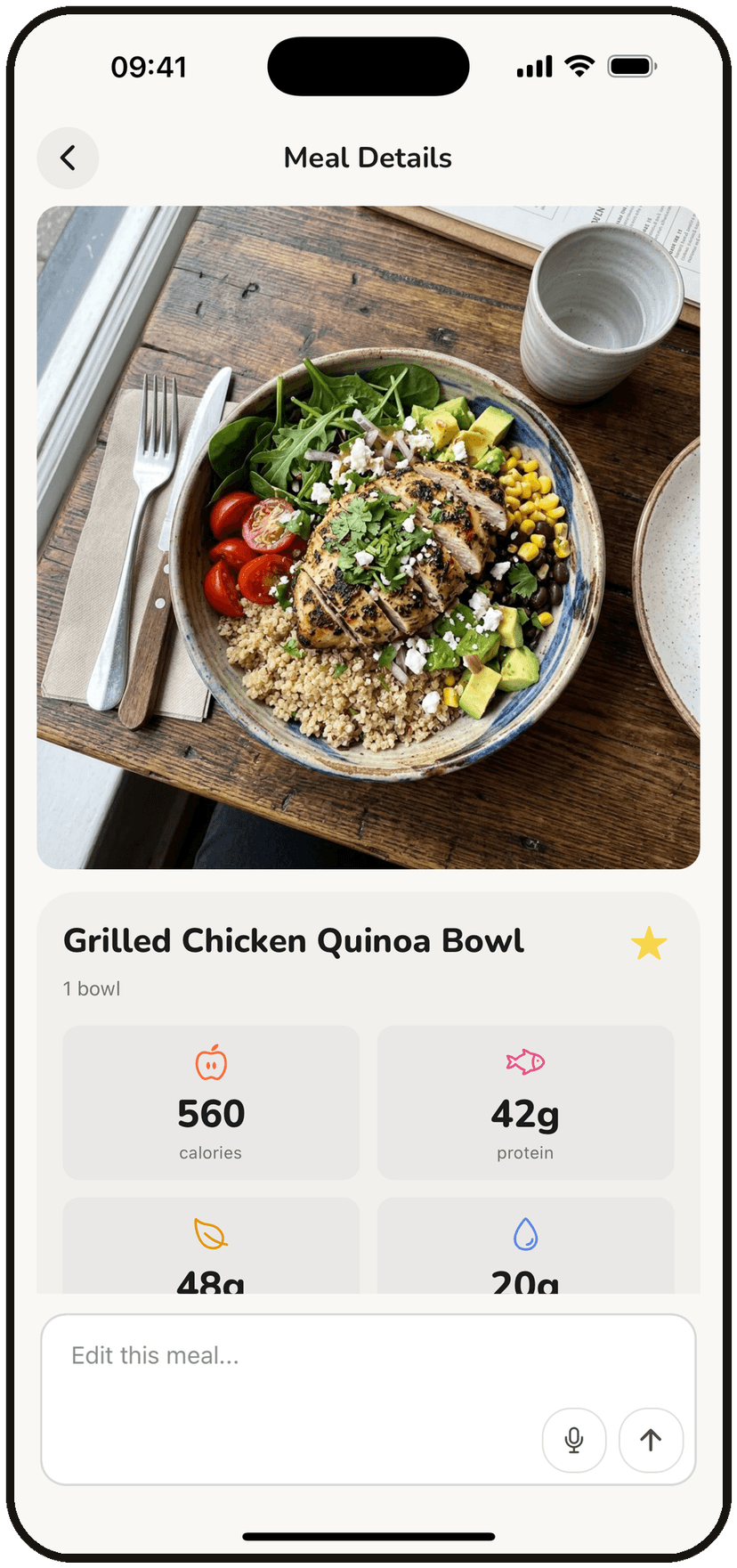
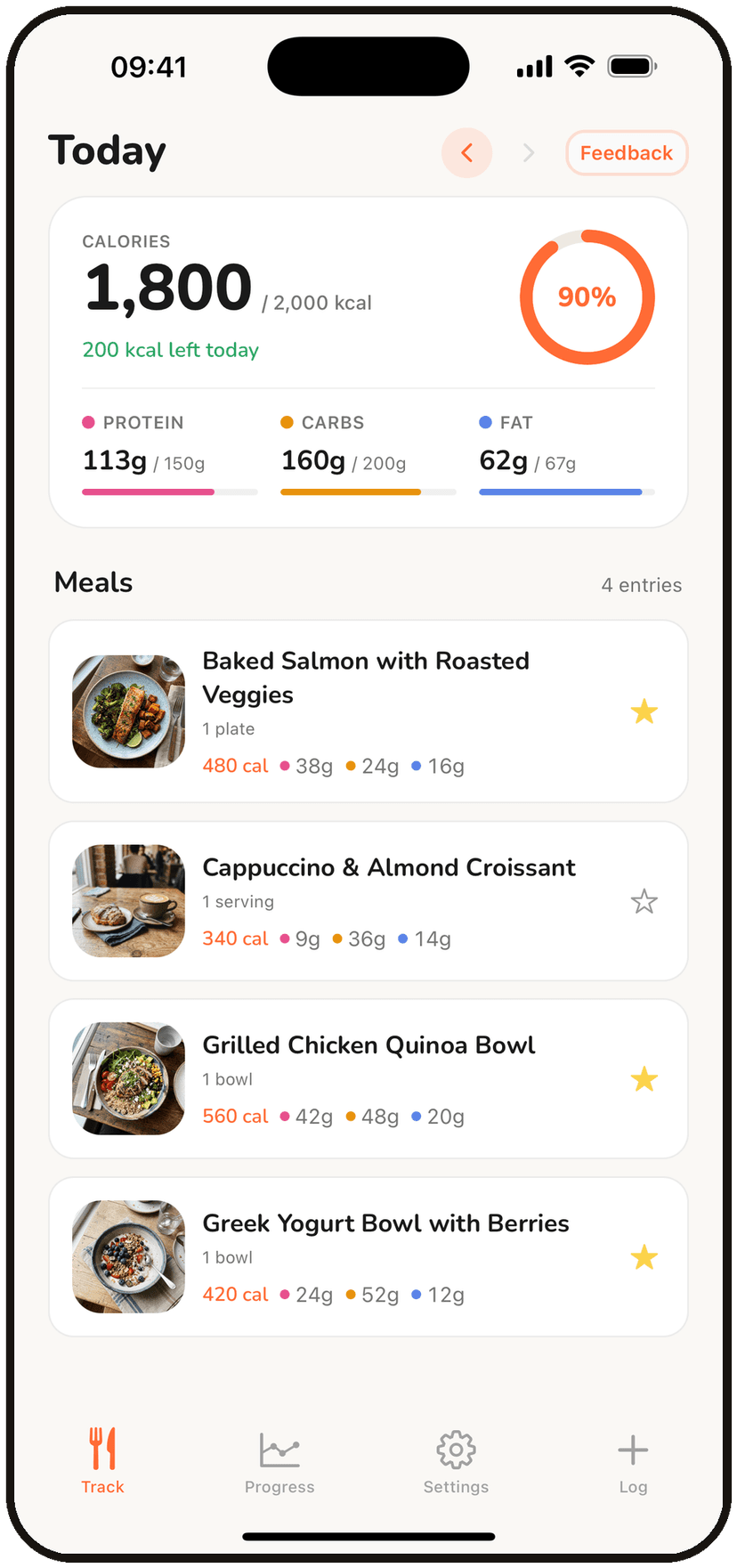
Portion guesses add up fast. BiteKit's AI estimates what's actually on your plate — oils, sides and all — so your log stays close to what you really ate.
- Log meals by photo, voice, or text
- Calories & macros estimated in seconds
- Syncs with Apple Health and Apple Watch
Free download · 3-day free trial, cancel anytime.
Scan with your iPhone camera