Calorie Calculator
Find out how many calories you should eat per day. Enter your details below to get a personalized recommendation for weight loss, maintenance, or muscle gain.
Pick the option that best describes your typical week
How Many Calories Should I Eat?
The number of calories you need each day depends on several factors including your age, gender, height, weight, and activity level. While general guidelines suggest women need 1,600-2,400 calories and men need 2,000-3,000 calories per day, your personal needs may be different.
Our calorie calculator uses the Mifflin-St Jeor equation to estimate your calorie needs. This formula is considered one of the most accurate methods for calculating your Basal Metabolic Rate (BMR), which is then adjusted based on your activity level and goals.
Weight Loss
-500 cal/day
~1 lb/week loss
Maintenance
Your TDEE
Maintain weight
Weight Gain
+500 cal/day
~1 lb/week gain
Understanding Your Calorie Needs
Your body uses calories for everything it does - from breathing and pumping blood to walking and exercising. Understanding the different components of your calorie needs can help you make better decisions about eating and activity.
Basal Metabolic Rate (BMR)
The calories your body burns at complete rest - just to keep you alive. This accounts for about 60-75% of your daily calorie burn and includes breathing, circulation, and cell production.
Activity Calories
The calories you burn through movement - from walking to the kitchen to intense workouts. This is the most variable part of your calorie needs and why activity level matters so much.
Thermic Effect of Food
Your body burns calories just digesting food - about 10% of what you eat. Protein requires the most energy to digest, followed by carbs, then fat.
Calories for Weight Loss vs. Muscle Gain
Whether you want to lose weight or build muscle, the principles are similar: create the right calorie balance and be consistent. Here's how to approach each goal:
For Weight Loss
- ✓Eat 500 calories below maintenance
- ✓Never go below 1,200 (women) or 1,500 (men) cal
- ✓Prioritize protein to preserve muscle
- ✓Aim for 1-2 lbs per week maximum
For Muscle Gain
- ✓Eat 300-500 calories above maintenance
- ✓Focus on protein (0.7-1g per lb bodyweight)
- ✓Combine with strength training
- ✓Aim for 0.5-1 lb per week maximum
Tips for Counting Calories
Calorie counting doesn't have to be complicated. Here are practical tips to make it easier and more effective:
1. Use a Food Tracking App
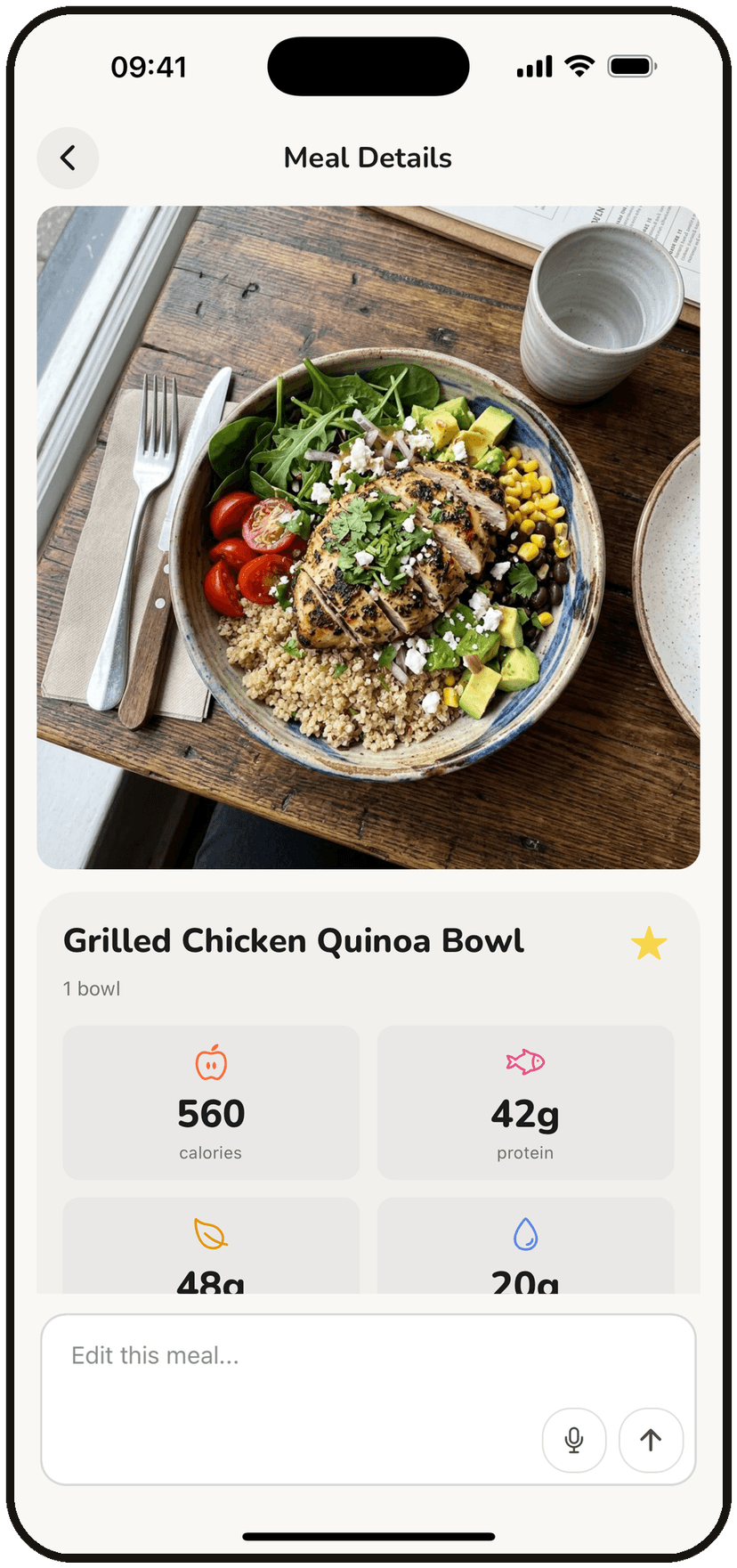
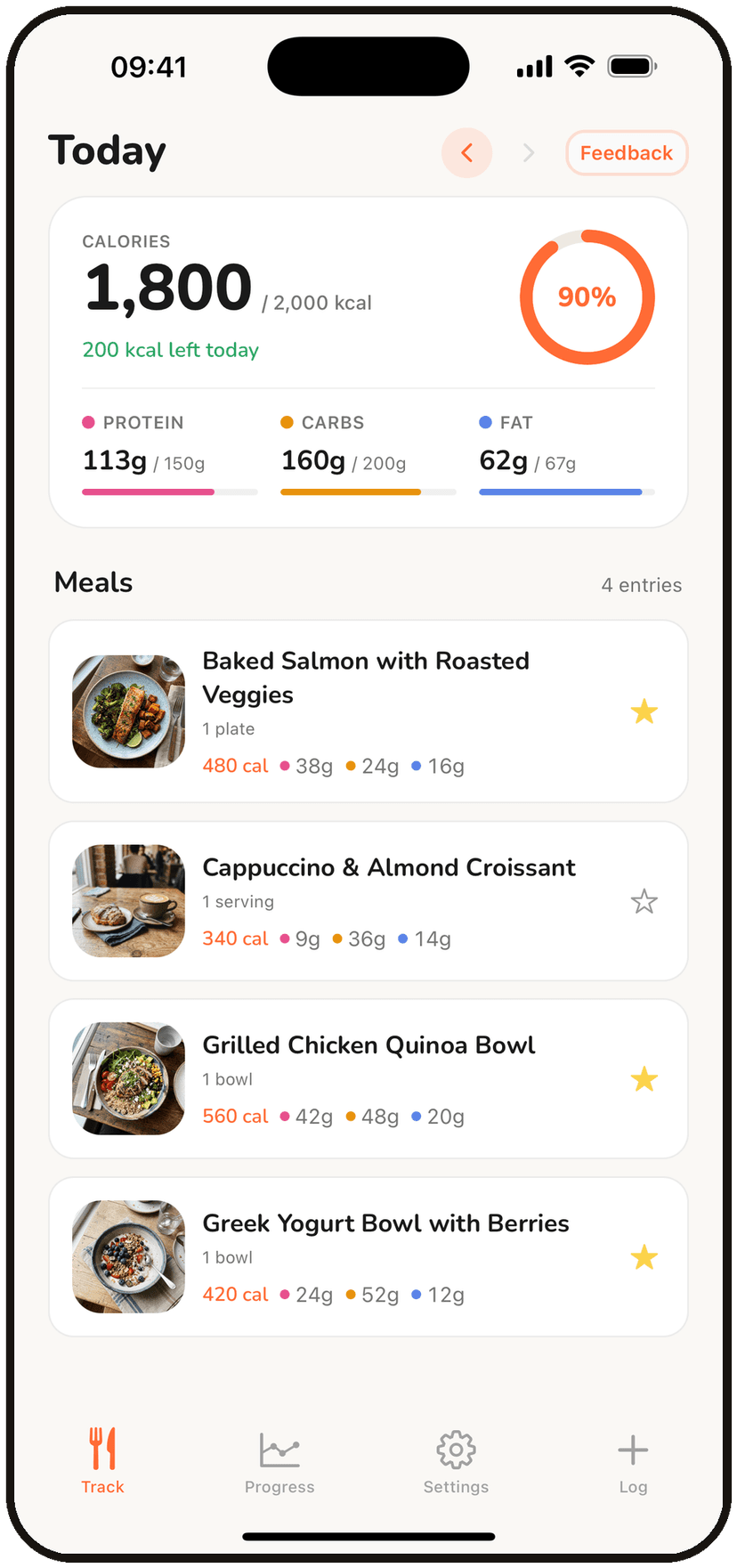
Apps like BiteKit make logging meals quick and easy. Just speak or type what you ate - no manual searching required.
2. Measure Your Portions
Use a food scale or measuring cups at first to learn what portions actually look like. You'll get better at estimating over time.
3. Log Everything
Include drinks, cooking oils, sauces, and snacks. These "hidden" calories add up quickly and are often forgotten.
4. Focus on Weekly Averages
Don't stress about one high-calorie day. What matters is your average intake over the week. Consistency beats perfection.
5. Prep Meals in Advance
When you prepare meals ahead of time, you know exactly what's in them. This makes tracking faster and reduces guesswork.
6. Adjust Based on Results
If you're not seeing results after 2-3 weeks, adjust your calories by 100-200. Your actual needs may differ from the calculation.
Common Calorie Counting Mistakes
Even with the best intentions, these common mistakes can derail your progress. Here's what to avoid:
Underestimating Portion Sizes
Studies show people underestimate calories by 30-50%. That "small bowl" of pasta might actually be 2-3 servings.
Forgetting Liquid Calories
Sodas, coffee drinks, alcohol, and juices can add hundreds of calories that don't fill you up. A large latte might have 300+ calories.
Not Counting Cooking Oils
One tablespoon of oil has about 120 calories. If you cook with oil multiple times a day, this quickly adds up.
Eating Back Exercise Calories
Fitness trackers often overestimate calories burned. If you eat back all your "exercise calories," you might not lose weight.
Frequently Asked Questions
How many calories should I eat per day?
It depends on your age, gender, height, weight, activity level, and goals. On average, women need 1,600-2,400 calories and men need 2,000-3,000 calories. Use our calculator above for a personalized recommendation.
How many calories should I eat to lose weight?
To lose weight safely, eat about 500 calories less than your maintenance level. This creates a deficit that leads to losing about 1 pound per week. Never go below 1,200 calories (women) or 1,500 calories (men) without medical supervision.
How accurate is this calorie calculator?
Our calculator uses the Mifflin-St Jeor equation, one of the most accurate formulas available. However, individual metabolism varies, so use your results as a starting point and adjust based on your actual progress.
How do I count calories effectively?
Use a food tracking app like BiteKit to log meals easily. Be consistent, measure portions, and track everything including drinks, oils, and sauces. Focus on weekly averages rather than daily perfection.
Should I eat the same calories every day?
Not necessarily. What matters most is your weekly average. Some people prefer consistency, while others use calorie cycling (eating more on active days, less on rest days). Both approaches work.
What happens if I eat too few calories?
Eating too few calories can slow your metabolism, cause muscle loss, lead to nutrient deficiencies, and make you feel tired. Always maintain a minimum of 1,200 calories (women) or 1,500 calories (men).
Free app
You're likely eating 500 calories more than you think
Portion guesses add up fast. BiteKit's AI reads your actual plate, so the number you track is the number you ate.
- Photo, voice, or text input
- Instant calorie & macro tracking
- Private by design — no password required
Free to download. No credit card required.
Scan to get the app