Calorie Surplus Calculator
Calculate your optimal calorie surplus for lean bulking. Get your daily calorie target, macro breakdown, and projected weight gain rates based on your body and training experience.
What is a calorie surplus?
A calorie surplus means eating more calories than your body burns (TDEE). This provides the extra energy needed for muscle growth. A controlled surplus of 200-500 kcal minimizes fat gain while maximizing muscle-building potential during a bulk.
What is a Calorie Surplus?
A calorie surplus means consuming more calories than your body burns in a day. Your body uses calories for basic functions (breathing, digestion, cell repair), daily activity, and exercise. When you eat more than this total — your Total Daily Energy Expenditure (TDEE) — the extra energy is available for building new tissue, including muscle.
Without a calorie surplus, your body lacks the raw energy needed to synthesize new muscle protein efficiently. While beginners and those returning from a break can sometimes build muscle at maintenance or even in a slight deficit, a controlled surplus is the most reliable way to maximize muscle growth for most people.
The key word is controlled. Eating too much above your TDEE does not build muscle faster — it just adds more body fat. Research consistently shows that a moderate surplus of 200-500 kcal per day is the sweet spot for maximizing muscle gain while keeping fat accumulation in check.
Lean Bulk vs Dirty Bulk: Which is Better?
There are two broad approaches to bulking, and they produce very different results:
Lean Bulk
- Surplus of 200-350 kcal above TDEE
- Precise tracking of calories and macros
- Focus on nutrient-dense whole foods
- Slower but cleaner weight gain
- Shorter cutting phase needed afterward
- Stay closer to a lean physique year-round
Dirty Bulk
- Surplus of 500-1000+ kcal above TDEE
- Minimal tracking, eat whatever you want
- Often includes a lot of junk food
- Faster weight gain but mostly fat
- Requires a long, difficult cut afterward
- Risk of developing unhealthy eating habits
The verdict: For most people, a lean bulk is the superior strategy. Research shows that muscle protein synthesis has an upper limit — you can only build so much muscle per day regardless of how much you eat. A massive surplus just means more of those extra calories get stored as fat. A lean bulk keeps you looking good while steadily building muscle.
How Much Calorie Surplus Do You Need?
The ideal surplus depends on your training experience, current body fat, and goals:
Beginners (under 1 year of training)
Recommended surplus: 300-500 kcal. Beginners can gain muscle rapidly due to "newbie gains," so a slightly larger surplus is justified. Expect roughly 60% of weight gained to be muscle. This is the one time a more aggressive bulk can be efficient.
Intermediates (1-3 years of training)
Recommended surplus: 200-350 kcal. Muscle gain slows as you become more trained. A moderate surplus provides enough energy for growth while limiting unnecessary fat gain. Expect roughly a 50:50 muscle-to-fat gain ratio.
Advanced (3+ years of training)
Recommended surplus: 200 kcal. Advanced lifters are closer to their genetic ceiling and gain muscle very slowly. A small, controlled surplus is essential to avoid unnecessary fat gain. Expect roughly 40% muscle and 60% fat gain.
Tracking Your Bulking Progress
Consistent tracking is essential to ensure your bulk is going as planned. Here are the key metrics to monitor:
Weekly Weigh-ins
Weigh yourself at the same time each day (ideally first thing in the morning after using the bathroom) and calculate a weekly average. This smooths out daily fluctuations from water, food volume, and sodium. Aim for your target weekly gain rate.
Strength Progress
Track your lifts. If your strength is steadily increasing, it is a strong sign that you are building muscle. Stalled strength in a surplus may indicate you need to adjust your training program rather than eat more.
Body Measurements
Take monthly measurements of your chest, arms, waist, and thighs. If your waist is growing much faster than your arms and chest, you may be gaining too much fat and should reduce your surplus.
Progress Photos
Take photos every 2-4 weeks under the same lighting and angles. Visual progress can be hard to notice day-to-day but becomes clear over time. Photos are the best way to assess body composition changes.
Adjusting Your Surplus Over Time
Your calorie surplus is not a set-it-and-forget-it number. As your body changes, your calorie needs will shift. Here is when and how to adjust:
If weight gain stalls
As you gain weight, your TDEE increases because your body has more mass to maintain. If your weekly average weight has not changed for 2-3 weeks while you are consistently hitting your calorie target, add 100-150 kcal per day (primarily from carbohydrates) and reassess after another 2 weeks.
If you are gaining too fast
Gaining more than your target rate (e.g., over 0.5 kg/week for intermediates) usually means you are storing excess fat. Reduce your surplus by 100-150 kcal per day. Prioritize reducing carbohydrates or fats while keeping protein constant.
Every 5 kg (10 lbs) gained
Recalculate your TDEE with your new body weight. A heavier body burns more calories at rest and during activity, so your maintenance level will have increased. Recalculating ensures your surplus stays accurate.
When to stop bulking
Most coaches recommend ending a bulk when your body fat reaches 18-20% for men or 28-30% for women. Beyond these levels, insulin sensitivity decreases and a larger proportion of weight gain becomes fat. Transition to a cut, lose the excess fat, then start another bulk cycle.
Frequently Asked Questions
How many extra calories do I need to build muscle?
Most people need 200-500 calories above their TDEE to build muscle effectively. A lean bulk uses a smaller surplus of around 200 kcal for minimal fat gain, while a more aggressive approach uses 400-500 kcal for faster (but fattier) gains. Beginners can tolerate a larger surplus because their bodies are primed for rapid muscle growth.
What is the difference between a lean bulk and a dirty bulk?
A lean bulk uses a controlled surplus of 200-350 kcal with precise macro tracking and quality food choices. A dirty bulk means eating as much as possible (often 1000+ kcal surplus) without worrying about food quality. Lean bulking results in significantly less fat gain, a shorter cutting phase afterward, and better long-term body composition.
How much weight should I gain per week when bulking?
For a lean bulk, aim for 0.2-0.5 kg (0.4-1 lb) per week. Beginners can aim toward the higher end since they gain muscle faster, while advanced lifters should target the lower end. Gaining more than 0.5 kg per week usually means excess fat gain. Use weekly weight averages rather than daily weigh-ins for accuracy.
How much protein do I need when bulking?
Aim for 1.6-2.2 grams of protein per kilogram of body weight per day when bulking. This calculator uses 2g/kg as the target. Spread protein across 3-5 meals for optimal muscle protein synthesis. Use our Protein Intake Calculator for a more detailed personalized recommendation.
Does training experience affect how much muscle I can gain?
Yes, significantly. Beginners can expect roughly 60% of weight gained to be muscle, intermediates around 50%, and advanced lifters only about 40%. This is because beginners experience rapid "newbie gains" that diminish as you approach your genetic muscular potential. Advanced lifters should use smaller surpluses to avoid unnecessary fat gain.
Should I eat differently on training days vs rest days?
Many lifters benefit from eating slightly more on training days (especially carbohydrates) to fuel workouts and support recovery, and slightly less on rest days. This calculator provides separate recommendations for both. Keep protein and fat consistent; vary your carbs to adjust total calories between training and rest days.
iPhone app · 3-day free trial
You're likely eating 500 calories more than you think
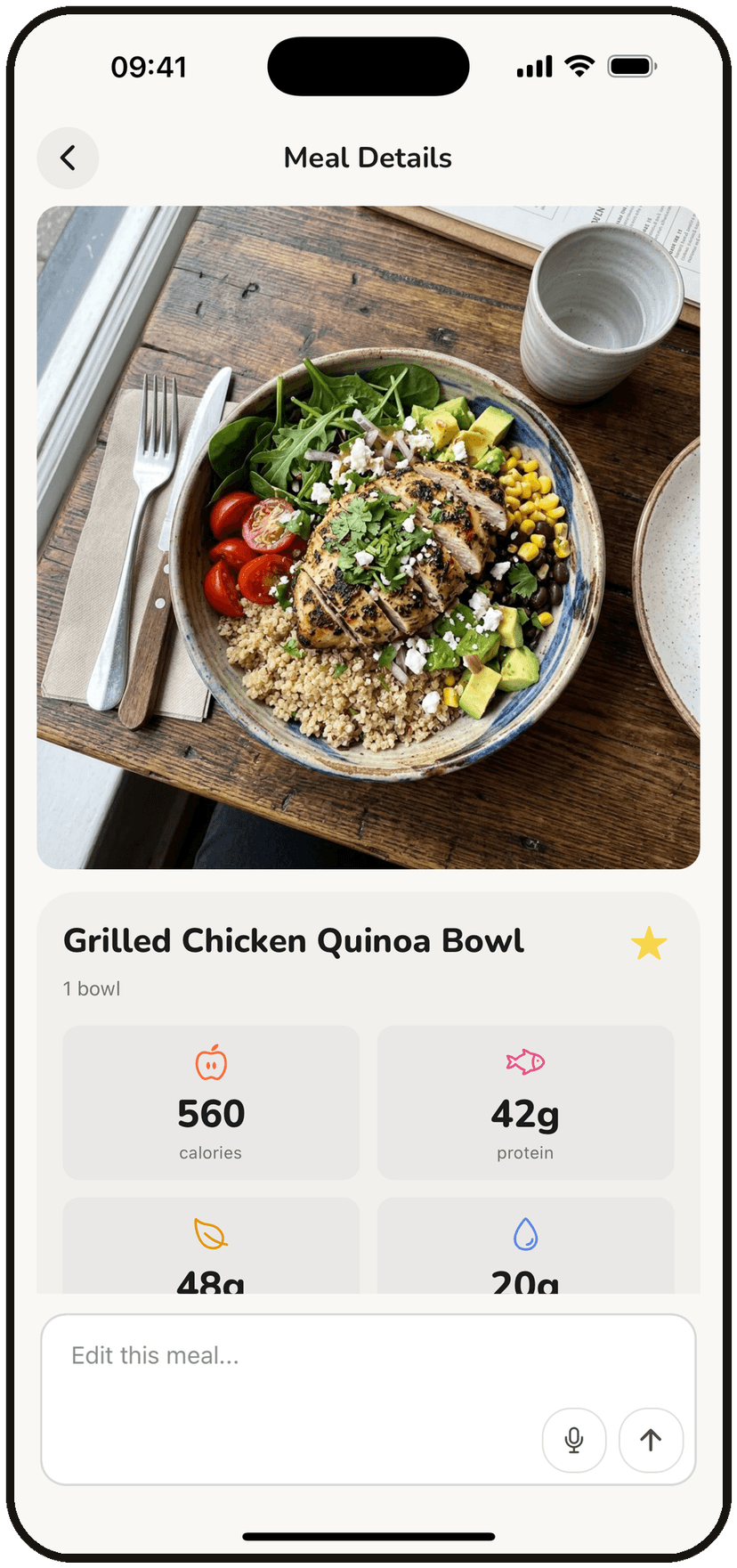
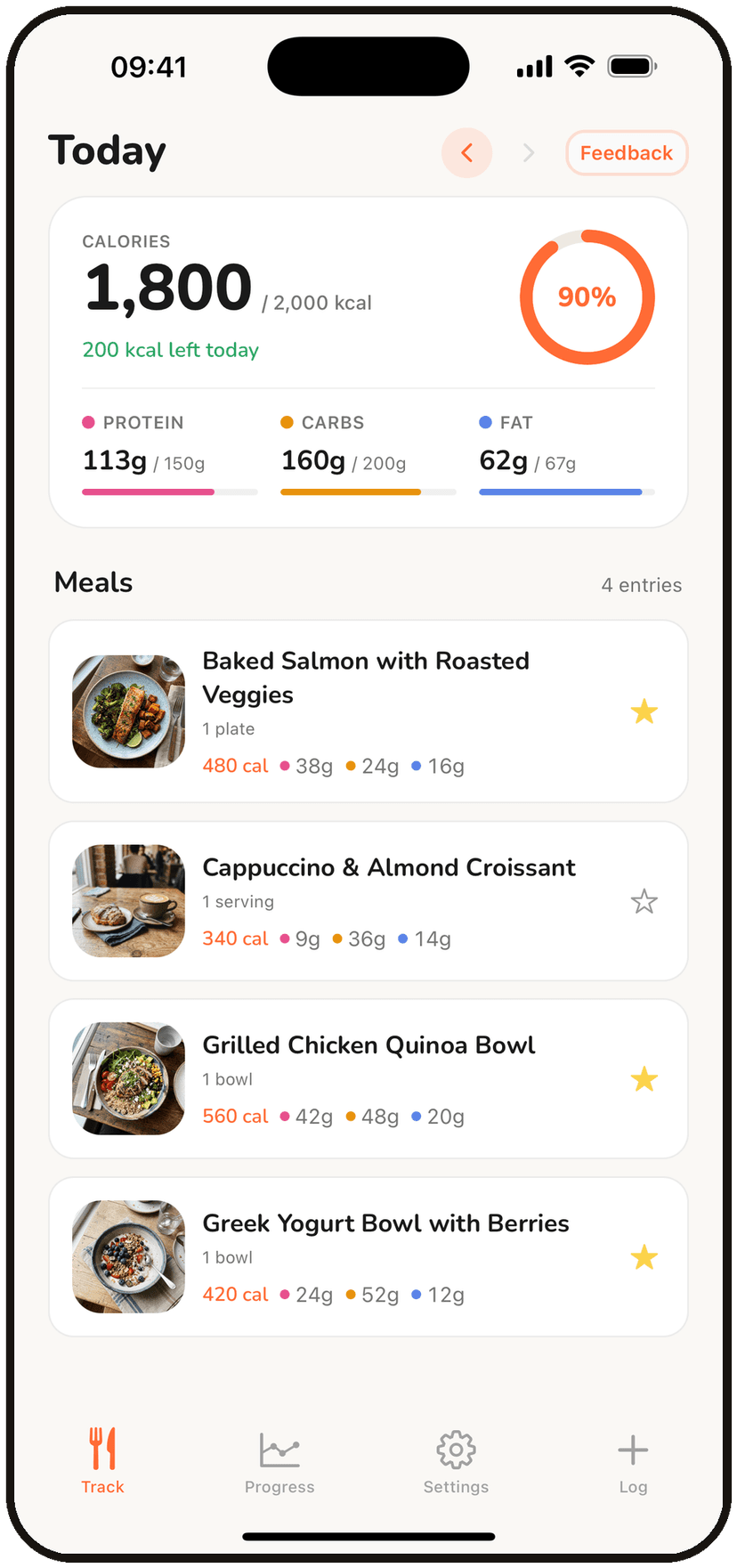
Portion guesses add up fast. BiteKit's AI estimates what's actually on your plate — oils, sides and all — so your log stays close to what you really ate.
- Log meals by photo, voice, or text
- Calories & macros estimated in seconds
- Syncs with Apple Health and Apple Watch
Free download · 3-day free trial, cancel anytime.
Scan with your iPhone camera