Calories Burned Calculator
Estimate how many calories you burn during exercise and daily activities. Uses validated MET values for 50+ activities including running, cycling, swimming, and strength training.
How Calorie Burn Works
Your body burns calories constantly to fuel basic functions like breathing, circulation, and cell repair. This is your Basal Metabolic Rate (BMR). When you exercise, your calorie burn increases significantly above your resting rate.
The number of calories you burn during exercise depends on three main factors: the intensity of the activity (measured by MET values), your body weight, and the duration of the exercise. The formula is simple: Calories = MET x weight (kg) x time (hours).
MET Values Explained
MET (Metabolic Equivalent of Task) is a standardized measure of the energy cost of physical activities. One MET equals the energy expended while sitting quietly, approximately 1 kcal per kilogram of body weight per hour.
Light (MET 1-3)
Stretching, cooking, slow walking. These activities burn slightly more calories than resting and are great for recovery days.
Moderate (MET 3-6)
Brisk walking, yoga, leisure cycling, gardening. Moderate activities provide good health benefits with sustainable effort.
Vigorous (MET 6-9)
Jogging, swimming laps, basketball, weight lifting. Vigorous activities significantly boost calorie burn and cardiovascular fitness.
Very High (MET 9+)
Running fast, HIIT, jump rope, competitive sports. These high-intensity activities maximize calorie burn per minute.
Most Effective Exercises for Calorie Burn
While high-MET activities burn the most calories per minute, the best exercise for weight management is one you enjoy and can do consistently. Here are the top calorie burners:
Running at 10 mph - MET 14.5
The highest calorie burn of common exercises. A 155 lb person burns about 733 cal/hour. Best for experienced runners with good cardiovascular fitness.
Butterfly Swimming - MET 13.8
An extremely demanding full-body workout that burns roughly 698 cal/hour. Low impact on joints despite high intensity.
Jump Rope (fast) - MET 12.3
Portable and effective, burning about 622 cal/hour. Great for interval training and improving coordination.
HIIT / CrossFit - MET 12.0
High-intensity interval training burns about 607 cal/hour during the workout, plus continues burning extra calories for hours afterward (EPOC effect).
Tips to Burn More Calories
Add Intervals
Alternate between high and low intensity. Interval training burns more calories than steady-state cardio and boosts your metabolism for hours.
Build Muscle
Muscle tissue burns more calories at rest than fat. Adding strength training increases your BMR, so you burn more calories all day long.
Increase Duration
Even moderate activities burn significant calories over longer periods. A 60-minute walk burns more than a 15-minute jog for many people.
Stay Active Daily
Non-exercise activity thermogenesis (NEAT) adds up. Take stairs, walk during calls, garden, and play with your kids for extra daily burn.
Frequently Asked Questions
How are calories burned calculated?
Calories burned are calculated using the MET formula: Calories = MET x body weight (kg) x duration (hours). MET values represent the energy cost of an activity relative to resting. A MET of 1 equals your resting metabolism.
What is a MET value?
MET stands for Metabolic Equivalent of Task. It measures the energy cost of physical activities relative to rest. Walking at 3 mph has a MET of 3.5, meaning it burns 3.5 times more energy than sitting still. Values are based on the Compendium of Physical Activities.
Which exercise burns the most calories?
Running at 10 mph (MET 14.5), butterfly swimming (MET 13.8), fast jump rope (MET 12.3), and HIIT (MET 12.0) burn the most calories per minute. However, the best exercise is one you enjoy and can sustain regularly.
Does body weight affect calories burned?
Yes, heavier individuals burn more calories doing the same activity for the same duration. This is because more energy is needed to move a larger body mass. The MET formula directly multiplies activity intensity by body weight.
How accurate is this calculator?
MET-based estimates are a good approximation but can vary by 15-20% from actual values. Individual factors like fitness level, body composition, and exercise intensity affect real calorie burn. For more precision, combine this with a heart rate monitor.
How many calories does walking burn?
A 155 lb person burns approximately 175 calories walking at 2 mph for 60 minutes, 245 calories at 3 mph, and 350 calories at a brisk 4 mph pace. Walking is an excellent low-impact way to burn calories consistently.
iPhone app · 3-day free trial
You're likely eating 500 calories more than you think
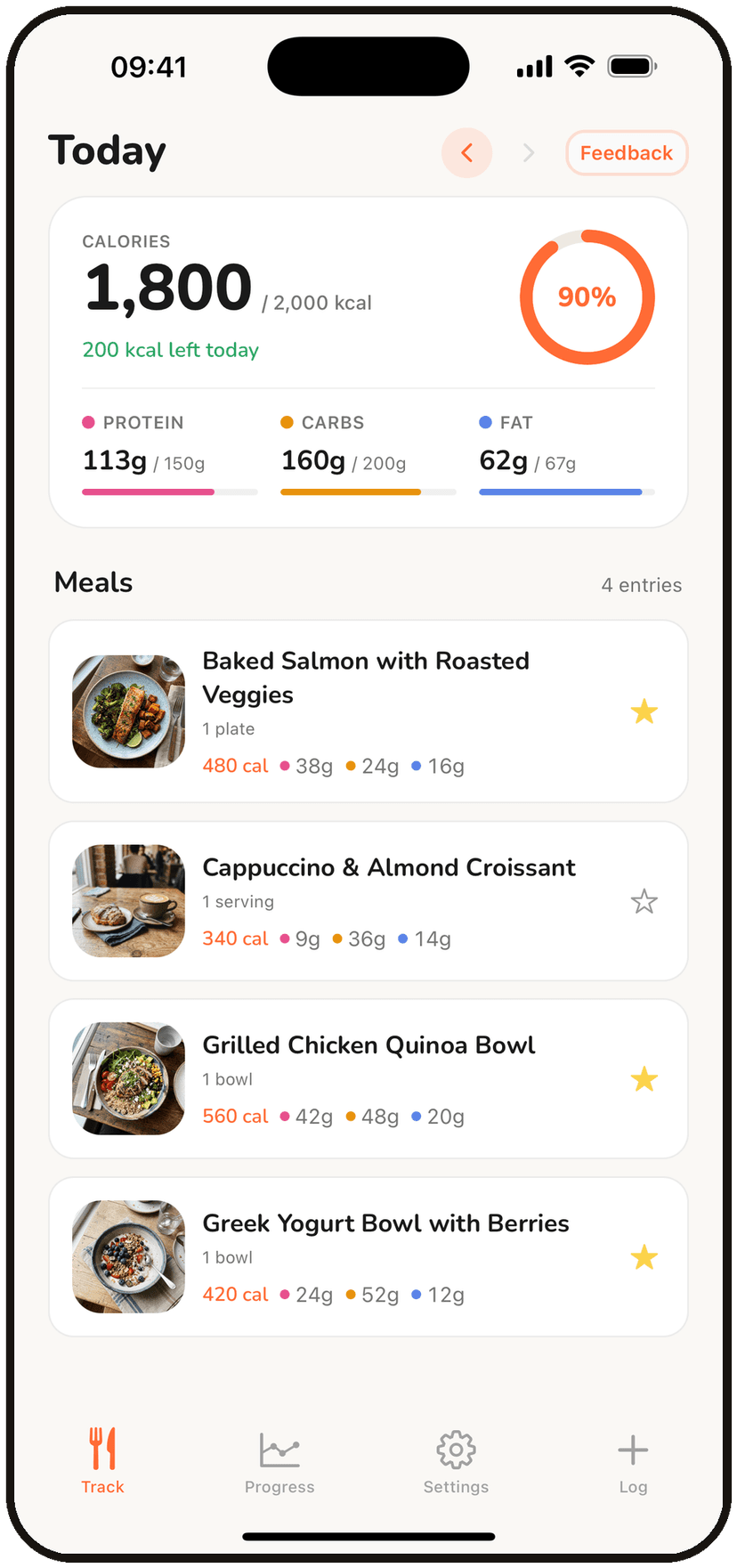
Portion guesses add up fast. BiteKit's AI estimates what's actually on your plate — oils, sides and all — so your log stays close to what you really ate.
- Log meals by photo, voice, or text
- Calories & macros estimated in seconds
- Syncs with Apple Health and Apple Watch
Free download · 3-day free trial, cancel anytime.
Scan with your iPhone camera