Custom Coffee Calorie Calculator
Build any coffee drink step by step — choose your base, size, milk, sweetener, and extras — and get exact calories, caffeine, and macros in seconds.
Step 1 — Coffee Base
Step 2 — Size
Step 3 — Milk
Step 4 — Sweetener
Step 5 — Extras
Add-ons (select all that apply)
Understanding Coffee Calories
Why Plain Coffee Is Nearly Zero Calories
Black coffee — whether espresso, drip, or cold brew — contains only about 5 calories per serving. Coffee beans are mostly water after brewing, and the trace amounts of oils extracted contribute negligible energy. This means the calorie count of your morning cup is almost entirely determined by what you add to it.
Milk Is the Biggest Calorie Driver
In a 16 oz latte, steamed milk accounts for around 12 oz of the drink volume. Choosing whole milk adds roughly 216 calories from milk alone; switching to oat milk saves about 80 calories, and unsweetened almond milk saves nearly 190 calories. Here is how common milk options compare per 100 ml:
- Almond milk (unsweetened): 13 cal
- Coconut milk (carton): 19 cal
- Skim milk: 35 cal
- Soy milk: 33 cal
- Oat milk: 50 cal
- 2% milk: 50 cal
- Whole milk: 61 cal
- Half & half: 130 cal
- Heavy cream: 340 cal
Syrups and Sweeteners Add Up Fast
Each pump of simple syrup adds 20 calories and 5 g of sugar. A standard Starbucks drink often comes with 3–5 pumps, meaning sweetener alone can add 60–100 calories. Honey and maple syrup add more flavor-per-calorie than plain syrup but still contribute 50–64 calories per tablespoon. Zero-calorie options like stevia or Splenda let you keep the sweetness without the sugar hit.
Caffeine: How Much Is Safe?
The FDA advises healthy adults to stay under 400 mg of caffeine per day — roughly 4 cups of drip coffee or 6 espresso shots. Cold brew concentrate can contain up to 200 mg per serving, so a large cold brew latte can easily push 200+ mg in a single drink. Pregnant individuals and those sensitive to caffeine should aim for significantly less. Decaf espresso contains less than 5 mg per shot, making it a near-zero-caffeine option.
High-Protein Coffee Add-Ons
Adding a scoop of protein powder to your morning coffee turns it into a macro-friendly meal replacement, contributing 25 g of protein and around 120 calories. Collagen peptides are a lighter option at 35 calories and 9 g of protein per scoop, and they dissolve easily in hot or cold coffee without affecting flavor. These are popular choices among fitness enthusiasts looking to hit daily protein targets.
Comparing Coffee Drink Calorie Ranges
Here is a rough calorie guide for medium (12 oz) drinks using whole milk and no sweetener:
- Espresso (straight): ~5 cal
- Americano: ~10 cal
- Cappuccino (less milk): ~80–100 cal
- Flat White: ~120–140 cal
- Latte: ~160–180 cal
- Cold brew latte: ~170–190 cal
- Macchiato (just a splash): ~30–40 cal
Numbers rise significantly once you factor in flavored syrups, whipped cream, or caramel drizzle — a fully loaded large latte can exceed 500 calories.
Frequently Asked Questions
How many calories are in a latte?
A medium (12 oz) latte made with 2 espresso shots and whole milk contains roughly 180 calories. Using oat milk drops it to about 125 calories, while almond milk brings it down to around 40 calories. Adding sweetener or flavored syrup adds 20–60 calories per pump.
Does black coffee have calories?
Plain black coffee — whether drip, espresso, or cold brew — has only about 5 calories per serving. Almost all the calories in coffee drinks come from milk, sweeteners, syrups, and other add-ons.
How much caffeine is in a latte?
A standard latte uses 2 espresso shots, providing about 126 mg of caffeine. A cold brew latte contains up to 200 mg from the cold brew concentrate alone. The FDA recommends staying under 400 mg of caffeine per day for healthy adults.
Which milk is lowest in calories for coffee?
Unsweetened almond milk is the lowest-calorie option at just 13 calories per 100 ml, followed by coconut milk (carton) at 19 cal/100 ml. Skim milk comes in at 35 cal/100 ml. Whole milk contains 61 cal/100 ml, and heavy cream is the highest at 340 cal/100 ml.
How many calories does whipped cream add to coffee?
A standard serving of whipped cream on a coffee drink adds approximately 100 calories and 5 grams of fat. Skipping whipped cream is one of the easiest ways to cut calories from a specialty coffee order.
Is cold brew higher in caffeine than espresso?
Yes. Cold brew concentrate typically contains around 200 mg of caffeine per 8 oz serving, whereas a double espresso shot has about 126 mg. Cold brew is steeped for 12–24 hours, extracting significantly more caffeine.
Related Tools
iPhone app · 3-day free trial
You're likely eating 500 calories more than you think
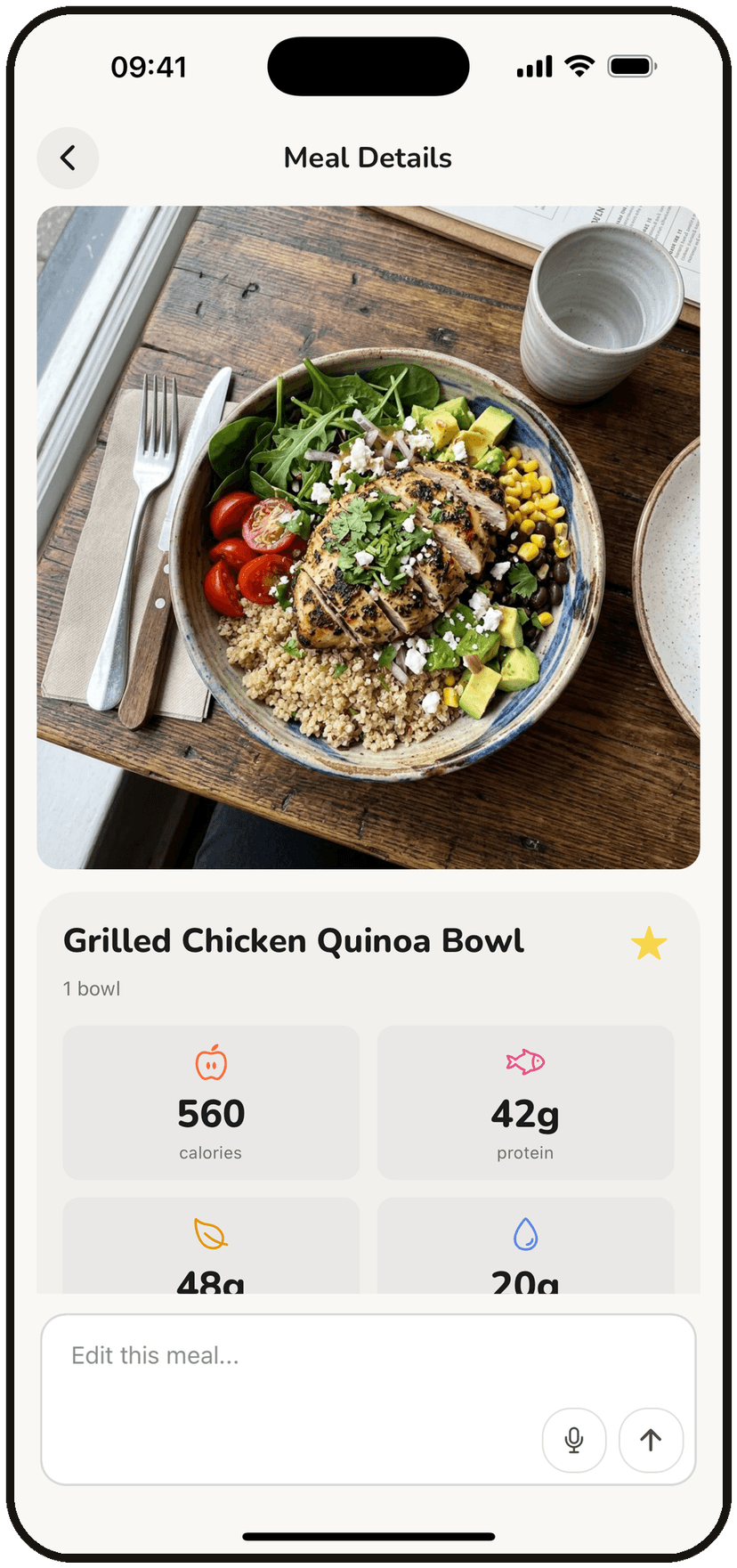
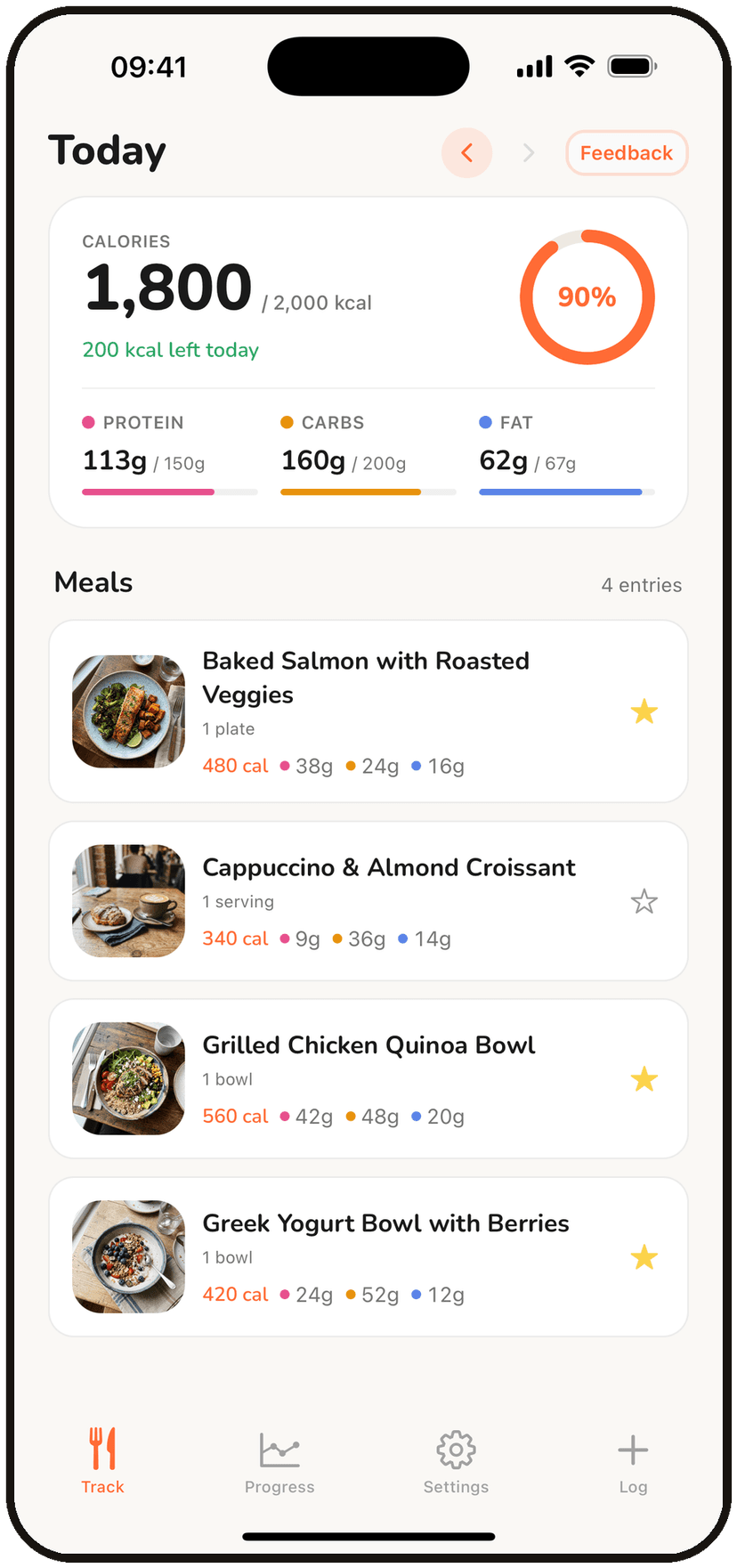
Portion guesses add up fast. BiteKit's AI estimates what's actually on your plate — oils, sides and all — so your log stays close to what you really ate.
- Log meals by photo, voice, or text
- Calories & macros estimated in seconds
- Syncs with Apple Health and Apple Watch
Free download · 3-day free trial, cancel anytime.
Scan with your iPhone camera