Cooking Measurement Converter
Convert cups, tablespoons, teaspoons, ml, grams, and ounces for 25+ kitchen ingredients — with density-adjusted accuracy, calorie counts, and a full equivalents table.
Why Ingredient Density Changes Everything
One of the most common baking mistakes is assuming that all cups weigh the same. They do not. Volume measures a fixed space; weight measures actual mass. Since different ingredients pack into that space differently, the gram equivalent of 1 cup varies dramatically:
| Ingredient | Grams per Cup | Cal per 100 g |
|---|---|---|
| Almond Flour | 96 g | 571 kcal |
| Rolled Oats | 90 g | 389 kcal |
| Cocoa Powder | 85 g | 228 kcal |
| All-Purpose Flour | 125 g | 364 kcal |
| Brown Sugar (packed) | 220 g | 380 kcal |
| Honey | 340 g | 304 kcal |
| Salt (table) | 292 g | 0 kcal |
| Water | 237 g | 0 kcal |
A recipe that calls for “1 cup of flour” will be dramatically different in texture if you pack the cup vs. spoon-and-level it. The values in this converter use the standard spoon-and-level density for dry ingredients.
Volume-to-Volume Conversions (Fixed for All Ingredients)
Unlike volume-to-weight conversions, volume-to-volume conversions are always the same regardless of the ingredient. These are universally fixed in the US customary system:
| Unit | = Cups | = Tbsp | = Tsp | = ml | = fl oz |
|---|---|---|---|---|---|
| 1 Cup | 1 | 16 | 48 | 236.6 | 8 |
| 1 Tbsp | 0.0625 | 1 | 3 | 14.79 | 0.5 |
| 1 Tsp | 0.0208 | 0.333 | 1 | 4.93 | 0.167 |
| 1 fl oz | 0.125 | 2 | 6 | 29.57 | 1 |
| 100 ml | 0.423 | 6.76 | 20.3 | 100 | 3.38 |
Tips for Accurate Kitchen Measurements
Use a Kitchen Scale for Baking
Professional bakers and pastry chefs almost universally weigh ingredients in grams. Volume measurements introduce too much variability — how you scoop a cup of flour can change the weight by 20–30 g depending on whether you tap the cup, pack it, or spoon-and-level it. For bread, pastry, and anything where texture matters, weighing is non-negotiable.
The Spoon-and-Level Method for Flour
When measuring flour by volume, spoon the flour into the measuring cup and level off the top with a straight edge — do not scoop directly from the bag. Direct scooping compacts the flour and can add 20–30% more weight than the recipe intends, resulting in dense, dry baked goods.
Liquids vs. Dry Ingredients
Use liquid measuring cups (with a pour spout) for milk, oil, honey, and syrup. Use dry measuring cups (which you level off) for flour, sugar, and other solids. Measuring honey or oil in a dry cup will leave residue that is hard to pour out, affecting the amount that actually goes into your recipe.
Packed vs. Unpacked Brown Sugar
Recipes that call for brown sugar almost always mean “packed” — pressed firmly into the measuring cup so it holds its shape when turned out. Packed brown sugar weighs approximately 220 g per cup; loosely filled it can be as light as 150 g per cup. This converter uses the packed value.
Using This Converter for Calorie Tracking
Most recipes list ingredients in volume units — not grams — which makes calorie counting difficult when you only have a nutritional label that shows calories per 100 g. This converter bridges that gap: enter the volume amount from your recipe, select the ingredient, and instantly see the weight in grams and the calorie estimate for that specific quantity.
For example, a recipe calling for 2 tablespoons of olive oil contains about 27 g of oil, which is approximately 239 calories. That same 2 tablespoons of honey is 42 g and only 128 calories — very different despite the same volume.
Frequently Asked Questions
How many grams are in a cup of flour?
All-purpose flour is approximately 125 g per cup (spoon-and-level). Bread flour is 130 g, whole wheat flour is 120 g, and almond flour is lighter at 96 g per cup. These differences are significant in baking — weigh your flour for precision.
How many tablespoons are in a cup?
Exactly 16 tablespoons make 1 cup. A tablespoon is 3 teaspoons or 14.79 ml. These volume relationships are fixed and do not change with the ingredient.
Why do I need to select an ingredient to convert cups to grams?
Because every ingredient has a different density. A cup of honey (340 g) weighs nearly 4× more than a cup of almond flour (96 g). Without ingredient-specific density data, a volume-to-weight conversion would be inaccurate.
Is 1 cup always 240 ml?
The US cup is 236.588 ml — often rounded to 237 or 240 ml. This converter uses the precise US value. Australian and Canadian recipes may use a 250 ml metric cup, so results could differ slightly.
How accurate are these conversions?
Volume-to-volume conversions are exact. Volume-to-weight conversions use standard ingredient densities and are accurate within 5–10% for most home baking. For professional baking, always weigh ingredients on a digital scale.
How many calories are in a tablespoon of butter?
One tablespoon of butter weighs approximately 14.2 g and contains about 102 calories. Use the converter above: select Butter, enter 1 tablespoon, click Convert, and the calorie count will be shown.
Related Tools
iPhone app · 3-day free trial
You're likely eating 500 calories more than you think
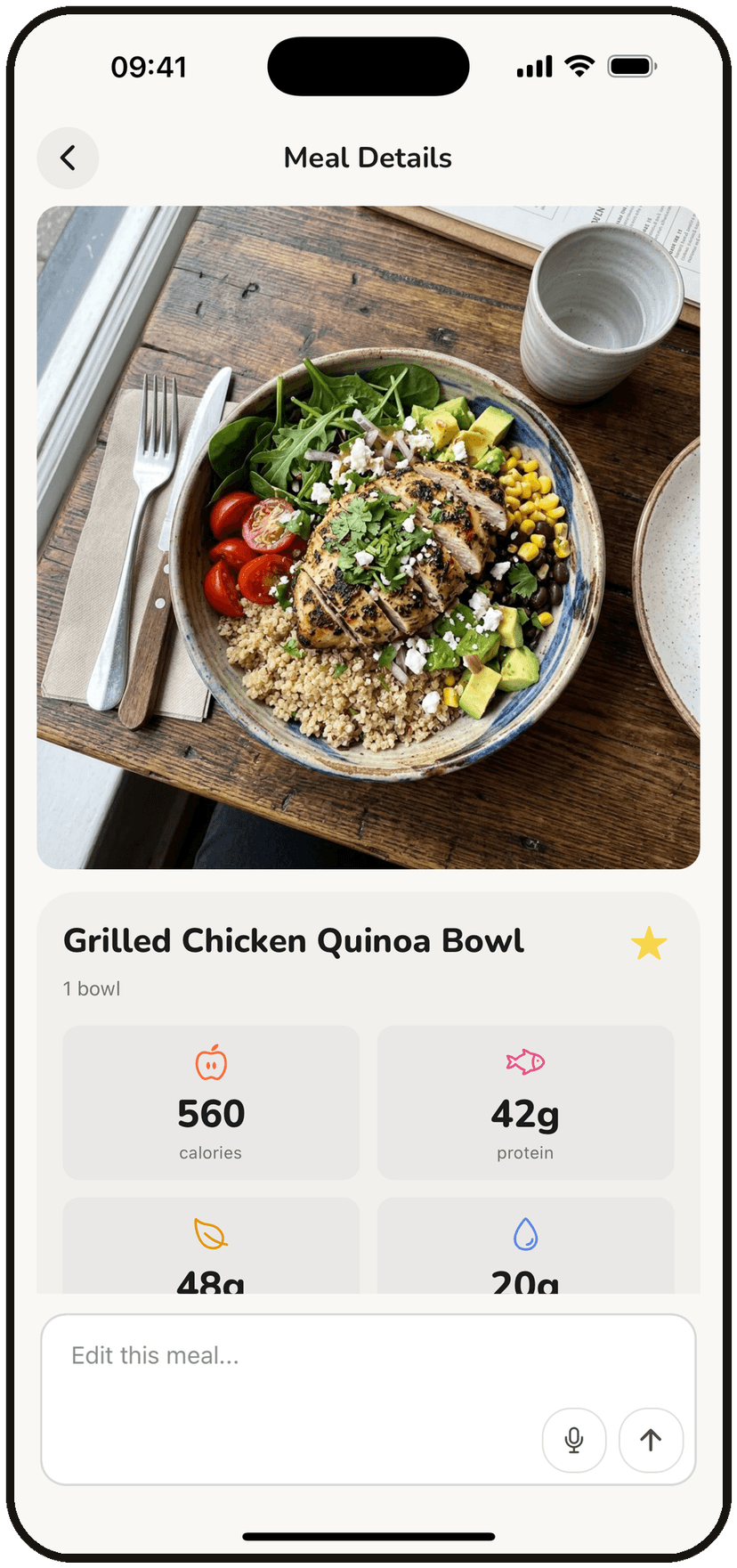
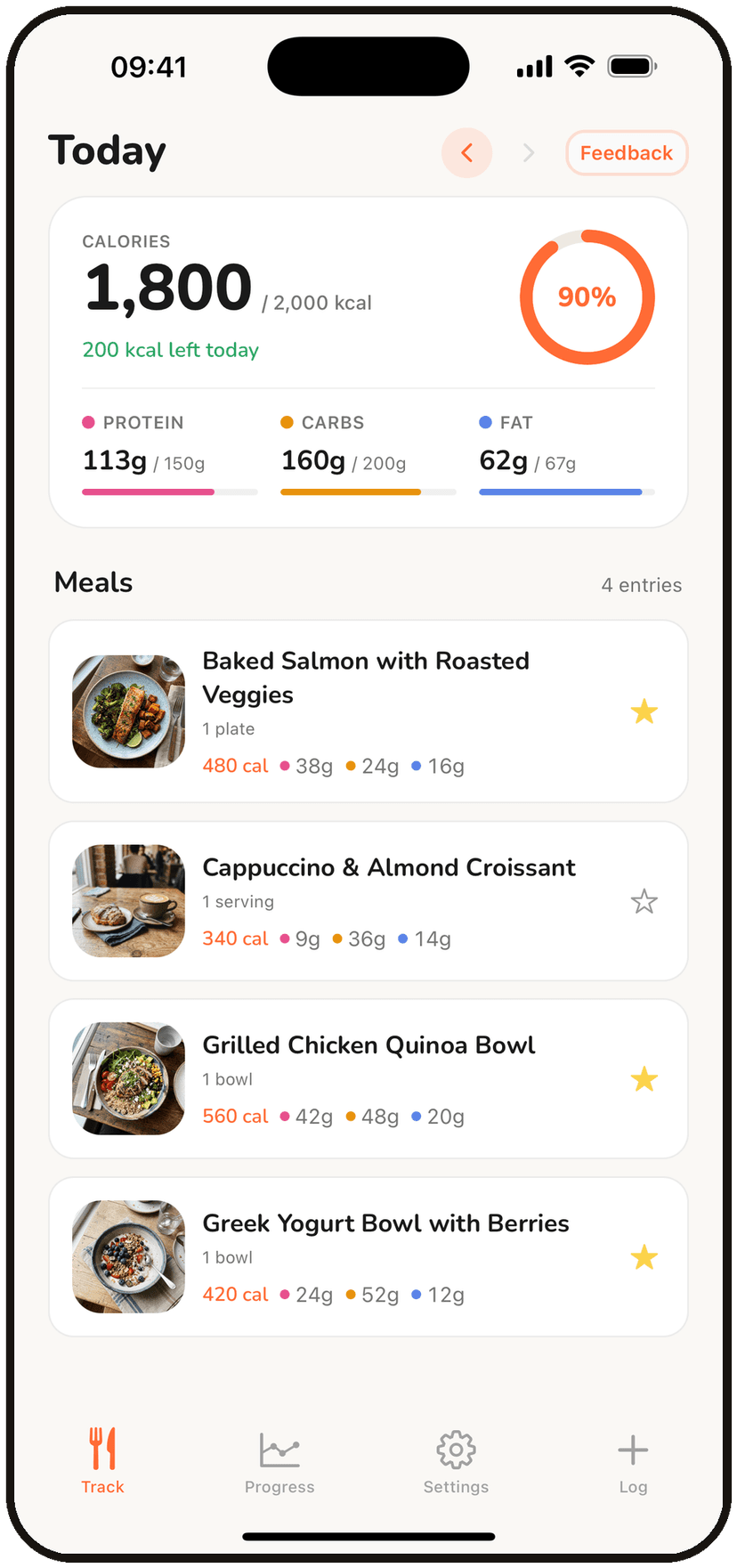
Portion guesses add up fast. BiteKit's AI estimates what's actually on your plate — oils, sides and all — so your log stays close to what you really ate.
- Log meals by photo, voice, or text
- Calories & macros estimated in seconds
- Syncs with Apple Health and Apple Watch
Free download · 3-day free trial, cancel anytime.
Scan with your iPhone camera