Cooking Oil Calorie Calculator
Estimate how many calories your food actually absorbs from cooking oil. Choose your oil, cooking method, and food type to get an accurate calorie breakdown.
Cooking Details
Why Cooking Oil Calories Matter
Cooking oil is one of the most commonly under-tracked sources of calories in home-cooked meals. A single tablespoon of oil contains approximately 120 calories, and most recipes call for 2-4 tablespoons. If you are cooking three meals a day and using oil each time, those hidden calories can add up to 500-1,000 or more calories per day that many people never count.
The good news is that not all cooking oil ends up in your food. Depending on how you cook, your food may absorb as little as 8% or as much as 100% of the oil used. Understanding oil absorption rates helps you track calories more accurately and make smarter cooking choices when watching your intake.
~120
Calories per Tbsp
Nearly all cooking oils
8-30%
Frying Absorption
Most oil stays in the pan
100%
Dressings & Raw
All oil is consumed
Oil Absorption by Cooking Method
Different cooking methods result in dramatically different oil absorption rates. Understanding these differences is key to accurate calorie tracking and making lower-calorie cooking choices.
Deep Frying (8-25% absorption)
Despite the large amount of oil used, deep frying actually has a relatively low absorption rate. The high temperature creates a rapid crust on the food surface that acts as a barrier. However, breaded and battered foods absorb significantly more because the coating is porous. Proper oil temperature (350-375°F) is critical — too low and the food becomes a grease sponge.
Sautéing & Stir-Frying (10-30% absorption)
Pan cooking uses less oil than frying, but absorption rates are moderate because food sits in direct contact with the oil. Sautéing at higher heat with frequent stirring reduces absorption compared to slow cooking in oil. Stir-frying in a wok tends toward the lower end because of the high heat and brief cooking time.
Baking & Roasting (50-80% absorption)
When you toss vegetables or potatoes in oil before baking, most of the oil stays on the food. The slow cooking process gives the oil time to be absorbed. This is why roasted vegetables taste so good but can be surprisingly calorie-dense. Using a light spray instead of tossing in oil can dramatically reduce the calorie impact.
Grilling & Dressing (70-100% absorption)
Oil brushed onto food for grilling is almost entirely consumed since there is no pan to leave excess behind. Salad dressings and finishing oils are consumed at 100% since they coat the food and are eaten directly. When counting calories for dressed salads and grilled items, count the full oil amount.
Comparing Cooking Oils
While all cooking oils have similar calorie counts per tablespoon (119-124 calories), they differ significantly in fat composition and smoke points. Choosing the right oil depends on your cooking method and health priorities.
Heart-Healthy Oils
High in monounsaturated fats, linked to improved heart health and lower LDL cholesterol.
- Olive Oil: 73% monounsaturated, best for low-medium heat
- Avocado Oil: 71% monounsaturated, highest smoke point
- Canola Oil: 64% monounsaturated, neutral flavor
- Peanut Oil: 46% monounsaturated, great for frying
High Smoke Point Oils
Best for high-heat cooking like frying, searing, and wok cooking. Less likely to break down and produce harmful compounds.
- Avocado Oil: 520°F — highest of all common oils
- Ghee: 482°F — clarified butter for Indian cooking
- Peanut Oil: 450°F — classic for deep frying
- Sunflower Oil: 440°F — neutral, affordable option
Healthiest Cooking Oils Ranked
Health experts consistently recommend oils high in monounsaturated and polyunsaturated fats while limiting saturated fat. Here is how common cooking oils stack up for overall health.
Extra Virgin Olive Oil — Best Overall
The gold standard for healthy cooking. Rich in monounsaturated fats and polyphenol antioxidants that reduce inflammation. Best for sautéing, dressings, and medium-heat cooking. The Mediterranean diet, widely regarded as the healthiest diet pattern, uses olive oil as its primary fat source.
Avocado Oil — Best for High Heat
Similar fat profile to olive oil but with the highest smoke point of any cooking oil (520°F). Its neutral flavor makes it versatile for any cooking method. The best all-purpose oil if you want one oil that works for everything from salads to deep frying.
Canola Oil — Best Budget Heart-Healthy Option
Low in saturated fat (only 7%) and high in monounsaturated fat. Affordable and widely available. Its neutral flavor works well in baking and everyday cooking. Often overlooked in favor of trendier oils, but nutritionally excellent.
Coconut Oil & Butter — Use Sparingly
Coconut oil is 82% saturated fat, higher than butter (63% saturated). While they add great flavor, the American Heart Association recommends limiting saturated fat to less than 6% of daily calories. Use these for occasional flavor rather than as your everyday cooking oil.
How to Reduce Oil Calories in Your Cooking
You do not have to give up cooking with oil to cut calories. These practical strategies can reduce the oil calories in your meals by 50-90% while keeping food flavorful and satisfying.
Measure Your Oil
The biggest calorie savings come from simply measuring oil instead of free-pouring. Most people pour 3-5 times more oil than a recipe calls for when they eyeball it. Using a tablespoon measure can save 200-400 calories per meal. A kitchen scale is even more accurate for tracking.
Use Oil Sprays and Misters
An oil spray creates a thin, even coating that uses about 1/4 to 1/3 of a teaspoon per spray — roughly 3-10 calories. Compare that to pouring a tablespoon (120 calories). Refillable oil mister bottles let you use your preferred oil type at a fraction of the calories.
Try Water Sautéing and Steam-Frying
Water sautéing replaces oil with small amounts of water or broth. While the texture differs slightly from oil sautéing, it works well for vegetables and aromatics like onions and garlic. Steam-frying combines a small amount of oil with water for a compromise between flavor and calorie reduction.
Upgrade Your Cookware
High-quality non-stick pans, ceramic cookware, and air fryers dramatically reduce the oil needed for cooking. Air fryers are especially effective for achieving crispy, fried-like textures with 70-80% less oil. These are investments that pay for themselves in calorie savings over time.
Frequently Asked Questions
How many calories does cooking oil add to food?
The calories added depend on the cooking method and food type. Deep frying absorbs 8-25% of the oil used, sautéing absorbs 15-30%, while dressings and raw use absorb 100%. A tablespoon of oil contains about 120 calories, so a sautéed dish using 2 tablespoons might absorb 50-70 calories from the oil.
Does food absorb all the oil used in cooking?
No, food does not absorb all the cooking oil. The absorption rate varies by cooking method: deep frying absorbs only 8-25%, sautéing absorbs 15-30%, and baking absorbs 50-80%. Only when oil is used as a dressing or consumed raw is 100% of the oil calories counted. Factors like food type, temperature, and cooking duration also affect absorption.
Which cooking oil has the fewest calories?
All cooking oils have roughly similar calories per tablespoon (119-124 calories) because they are nearly pure fat. Butter is slightly lower at about 102 calories per tablespoon because it contains some water. The real calorie difference comes from how much oil you use and how much your food absorbs, not which oil you choose.
Which foods absorb the most oil when cooking?
Breaded and battered foods absorb the most oil because the coating acts like a sponge. Starchy foods like potatoes and tofu also absorb more oil than average. Meat and eggs absorb less oil due to their protein structure and natural fats that resist additional oil absorption. Patting food dry before cooking helps reduce oil absorption for all food types.
How can I reduce the calories from cooking oil?
Use an oil spray instead of pouring (reduces oil by 80-90%), cook with non-stick pans, pat food dry before cooking, use higher heat for frying to form a faster crust, drain fried foods on paper towels, and consider air frying which uses 70-80% less oil. Measuring oil with a tablespoon instead of eyeballing also helps control portions.
What is the best oil for high heat cooking?
Avocado oil has the highest smoke point at 520°F (271°C), making it ideal for high-heat cooking like searing and deep frying. Ghee (482°F / 250°C), peanut oil (450°F / 232°C), and sunflower oil (440°F / 227°C) are also excellent choices. Butter has the lowest smoke point at 302°F (150°C) and should be avoided for high-heat cooking.
iPhone app · 3-day free trial
You're likely eating 500 calories more than you think
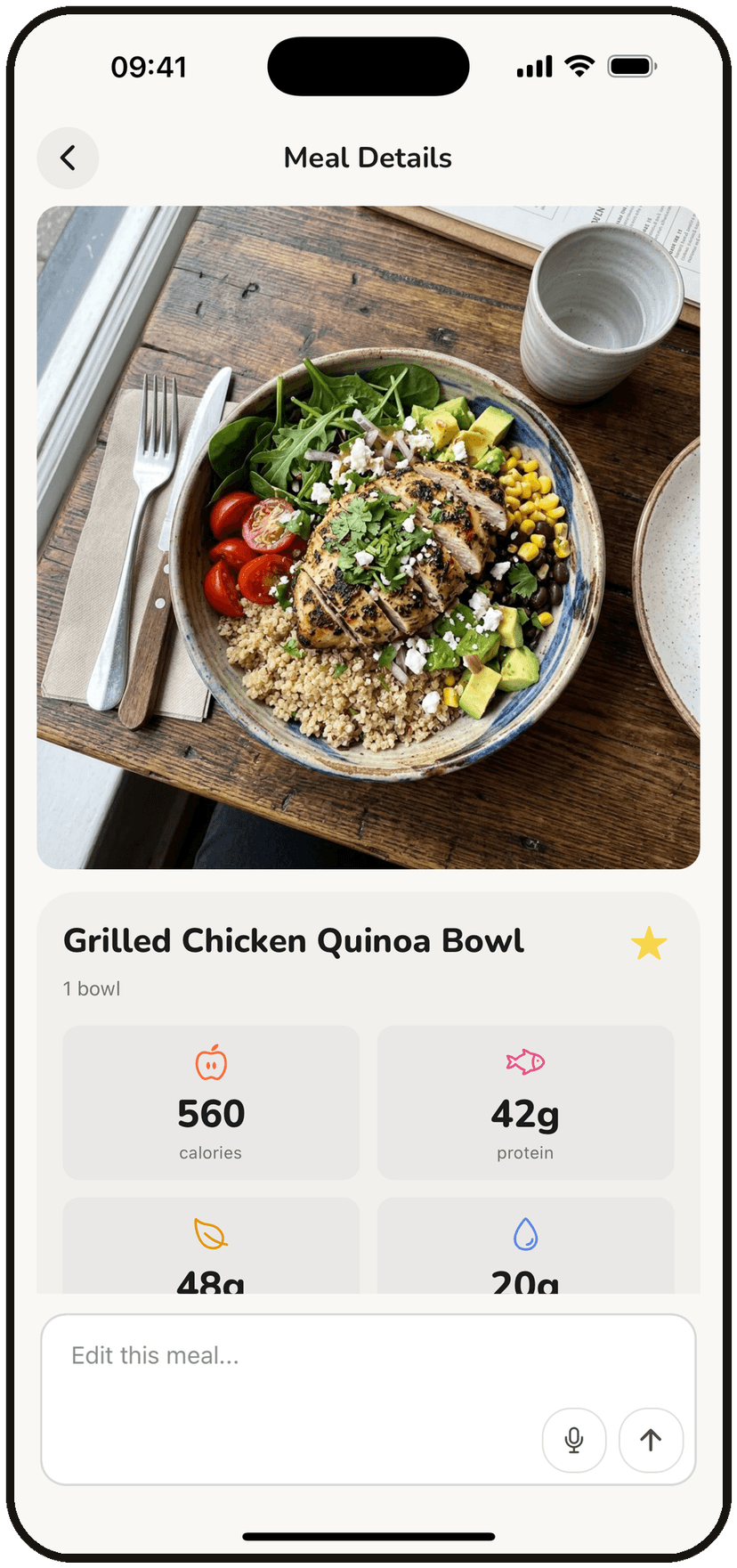
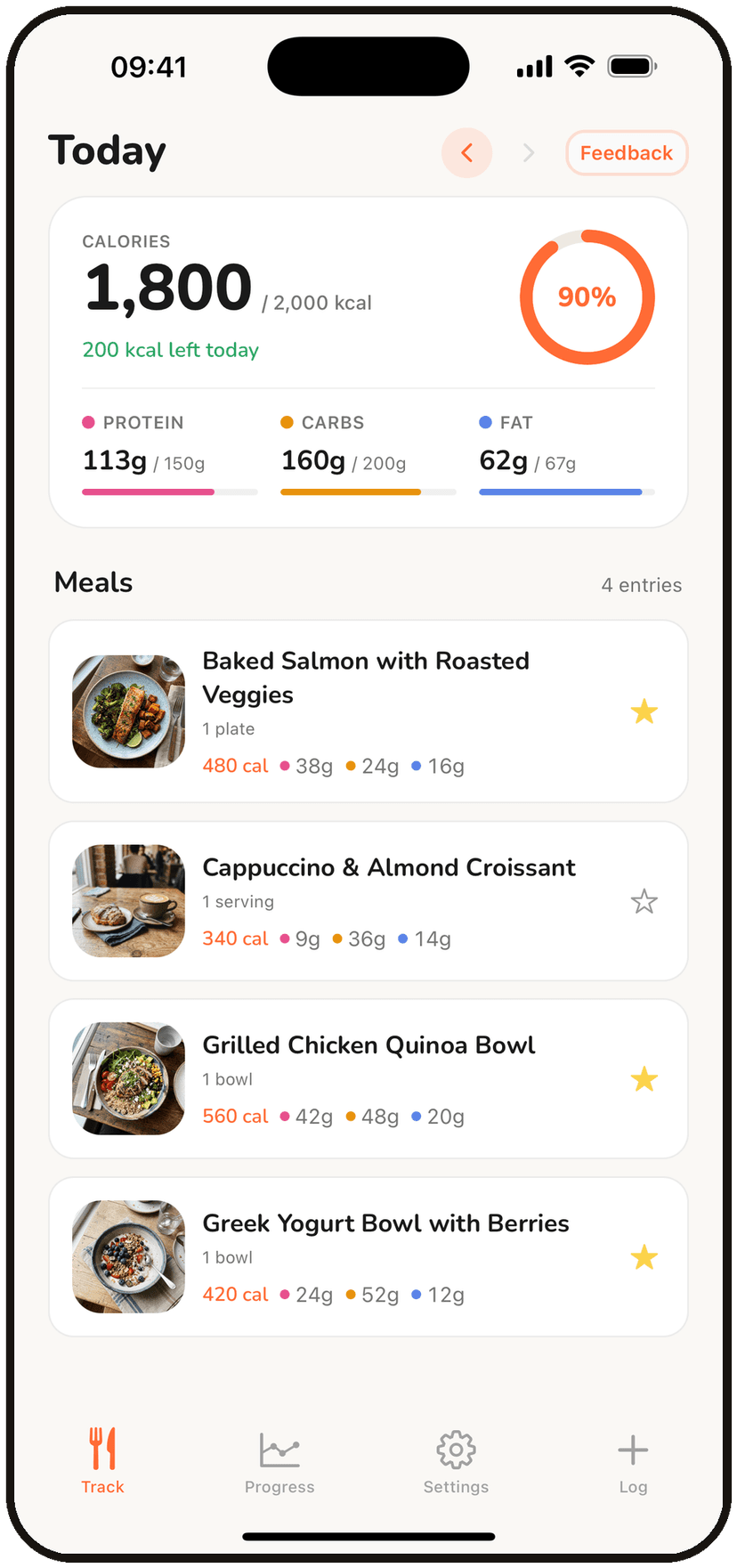
Portion guesses add up fast. BiteKit's AI estimates what's actually on your plate — oils, sides and all — so your log stays close to what you really ate.
- Log meals by photo, voice, or text
- Calories & macros estimated in seconds
- Syncs with Apple Health and Apple Watch
Free download · 3-day free trial, cancel anytime.
Scan with your iPhone camera