Cost Per Calorie Calculator
Compare foods by cost per 100 calories, cost per gram of protein, and overall value. Find the most affordable way to meet your daily calorie and macro targets.
Food Items
3/15 itemsWhy Cost Per Calorie Matters
Food is one of the largest expenses in any household budget, yet most people have no idea how much they pay per calorie or per gram of protein. Understanding the true cost of the energy and nutrients in your food is the foundation of eating well on a budget. Whether you are a student, a family on a tight grocery budget, or a bodybuilder eating 3,000+ calories per day, knowing which foods deliver the most nutrition per dollar can save you hundreds of dollars per month.
The difference between the cheapest and most expensive calorie sources can be enormous. A dollar spent on white rice yields over 3,000 calories, while a dollar spent on fresh berries might yield under 200 calories. Neither extreme is ideal on its own, but knowing these numbers helps you build a balanced, affordable diet.
$0.08
Budget Staples
Rice, oats, pasta per 100 calories
$0.30
Balanced Foods
Eggs, chicken, beans per 100 calories
$1.00+
Premium Foods
Fresh berries, salmon per 100 calories
Most Affordable Calorie Sources
These foods consistently deliver the most calories per dollar. They make excellent base ingredients for budget-friendly meals. Prices vary by region, so use the calculator above with your local prices for the most accurate results.
White Rice & Pasta
White rice and dried pasta are among the most calorie-dense budget foods available, often delivering 2,000 to 4,000 calories per dollar. A 2-pound bag of rice at $2.49 contains roughly 3,200 calories. While low in protein, they serve as excellent calorie bases to pair with higher-protein foods like beans, eggs, or chicken.
Oats
Rolled oats deliver roughly 1,000 calories per dollar and come with the bonus of decent protein (5g per serving), fiber, and B vitamins. A large canister can provide breakfast for weeks. Oats are incredibly versatile — use them for overnight oats, oatmeal, smoothies, baking, or even savory bowls.
Peanut Butter
Peanut butter packs a remarkable 190 calories per 2-tablespoon serving, with a solid 7g of protein and healthy fats. A $3.49 jar delivers roughly 760 calories per dollar. It requires no cooking, has a long shelf life, and pairs well with bread, oats, smoothies, and fruit for quick, calorie-dense meals.
Eggs
While not the highest in raw calories per dollar, eggs offer an exceptional balance of cost, protein quality, and versatility. A dozen eggs provides 840 calories and 72g of complete protein for around $4 to $5. They can be scrambled, boiled, fried, or baked into countless dishes, making them a cornerstone of budget nutrition.
Dried Beans & Lentils
Dried legumes are nutritional powerhouses that deliver 1,500+ calories per dollar along with protein, fiber, iron, and folate. A one-pound bag of dried black beans costs about $1.29 and yields roughly 1,540 calories. Paired with rice, they form a complete protein source that has fueled civilizations for millennia.
Balancing Cost and Nutritional Quality
The cheapest calories come from carb-heavy and fat-heavy foods like rice, oil, and sugar. While these are fine as part of a balanced diet, relying exclusively on the cheapest calorie sources leads to poor nutrition. The key is to combine cost-efficient base foods with nutrient-dense options.
Calorie Base Foods
High in calories per dollar but often lower in protein and micronutrients. Use these as the foundation of your meals.
- Rice & Pasta: 2,000-4,000 cal/$
- Oats: ~1,000 cal/$
- Bread: ~800 cal/$
- Potatoes: ~600-900 cal/$
- Peanut Butter: ~760 cal/$
Nutrient-Dense Foods
Higher cost per calorie but rich in protein, vitamins, and minerals. Add these to complete your nutrition.
- Eggs: ~170 cal/$ + 14g protein/$
- Chicken: ~130 cal/$ + 25g protein/$
- Frozen Vegetables: Vitamins A, C, K
- Bananas: Potassium, fiber
- Canned Fish: Omega-3, protein
Key takeaway: Build meals around affordable calorie bases like rice and oats, then add protein from eggs, chicken, or beans, and round out nutrition with affordable produce. This strategy typically costs $5 to $8 per day for a complete 2,000-calorie diet with adequate protein.
How to Build Budget Meals That Hit Your Macros
The most effective budget meal strategy uses a layered approach: start with cheap calorie-dense foods, add affordable protein, and finish with vegetables and flavor.
Step 1: Choose Your Calorie Base ($0.05-0.15 per 100 cal)
Start with rice, pasta, oats, potatoes, or bread. These provide the bulk of your calories at the lowest cost. A cup of cooked rice (200 cal) costs roughly $0.12. This base should cover 40-50% of your daily calories.
Step 2: Add Affordable Protein ($0.15-0.40 per 100 cal)
Layer in eggs, chicken thighs, canned tuna, beans, lentils, or whey protein. Aim for 0.7 to 1.0g of protein per pound of body weight. Mixing animal and plant proteins keeps costs low while ensuring complete amino acid profiles.
Step 3: Add Vegetables and Fruit
Frozen vegetables, bananas, cabbage, carrots, and onions are among the most affordable produce options. They provide essential vitamins, minerals, and fiber. While higher in cost per calorie, they are critical for overall health and are needed in relatively small quantities.
Step 4: Add Fats and Flavor
Cooking oil, butter, soy sauce, spices, and hot sauce add calories and make budget meals enjoyable. A bottle of cooking oil delivers thousands of calories per dollar. Spices and sauces are small investments that dramatically improve meal satisfaction, making it easier to stick to a budget diet long-term.
Frequently Asked Questions
What is the cheapest food per calorie?
The cheapest foods per calorie typically include white rice, dried pasta, oats, cooking oils, peanut butter, dried beans, and potatoes. White rice often delivers over 3,000 calories per dollar, making it one of the most calorie-dense budget foods available. However, the cheapest calories are not always the most nutritious, so it is important to balance cost efficiency with nutritional quality.
How do you calculate cost per 100 calories?
To calculate cost per 100 calories, divide the total package price by the total calories in the package, then multiply by 100. For example, if a $2.49 bag of rice contains 3,200 total calories, the cost per 100 calories is ($2.49 / 3,200) x 100 = $0.08 per 100 calories. This metric lets you compare the true energy cost of different foods regardless of package size.
Should I only buy the cheapest calories?
No, the cheapest calories are not always the best choice. While cost per calorie is useful for budget planning, you should also consider protein content, micronutrient density, fiber, and overall diet quality. The best approach is to use cheap calorie sources like rice, oats, and beans as your base, then add higher-quality protein and nutrient-dense foods like eggs, chicken, and vegetables.
What is a good cost per gram of protein?
A cost of $0.02 to $0.05 per gram of protein is generally considered affordable. Budget staples like eggs, canned tuna, dried lentils, and chicken thighs typically fall in this range. Mid-range sources like chicken breast and Greek yogurt cost $0.05 to $0.10 per gram. Premium sources like wild salmon or grass-fed beef can cost $0.15 or more per gram of protein.
How many calories per dollar is good?
Budget staples like rice, oats, pasta, and cooking oils deliver 1,000 to 4,000+ calories per dollar. Moderate-value foods like chicken, eggs, ground beef, and beans typically provide 400 to 1,000 calories per dollar. Premium or prepared foods often deliver under 400 calories per dollar. For budget meal planning, aiming for an average of 500 to 1,000 calories per dollar across your whole diet is a reasonable target.
What is the most cost-effective way to hit my daily calorie and macro targets?
The most cost-effective approach combines cheap calorie-dense base foods (rice, oats, pasta, potatoes) with affordable protein sources (eggs, canned tuna, chicken thighs, beans, whey protein) and budget-friendly produce (frozen vegetables, bananas, cabbage). By building meals around these staples, most people can hit 2,000+ calories with adequate protein for under $5 to $8 per day.
iPhone app · 3-day free trial
You're likely eating 500 calories more than you think
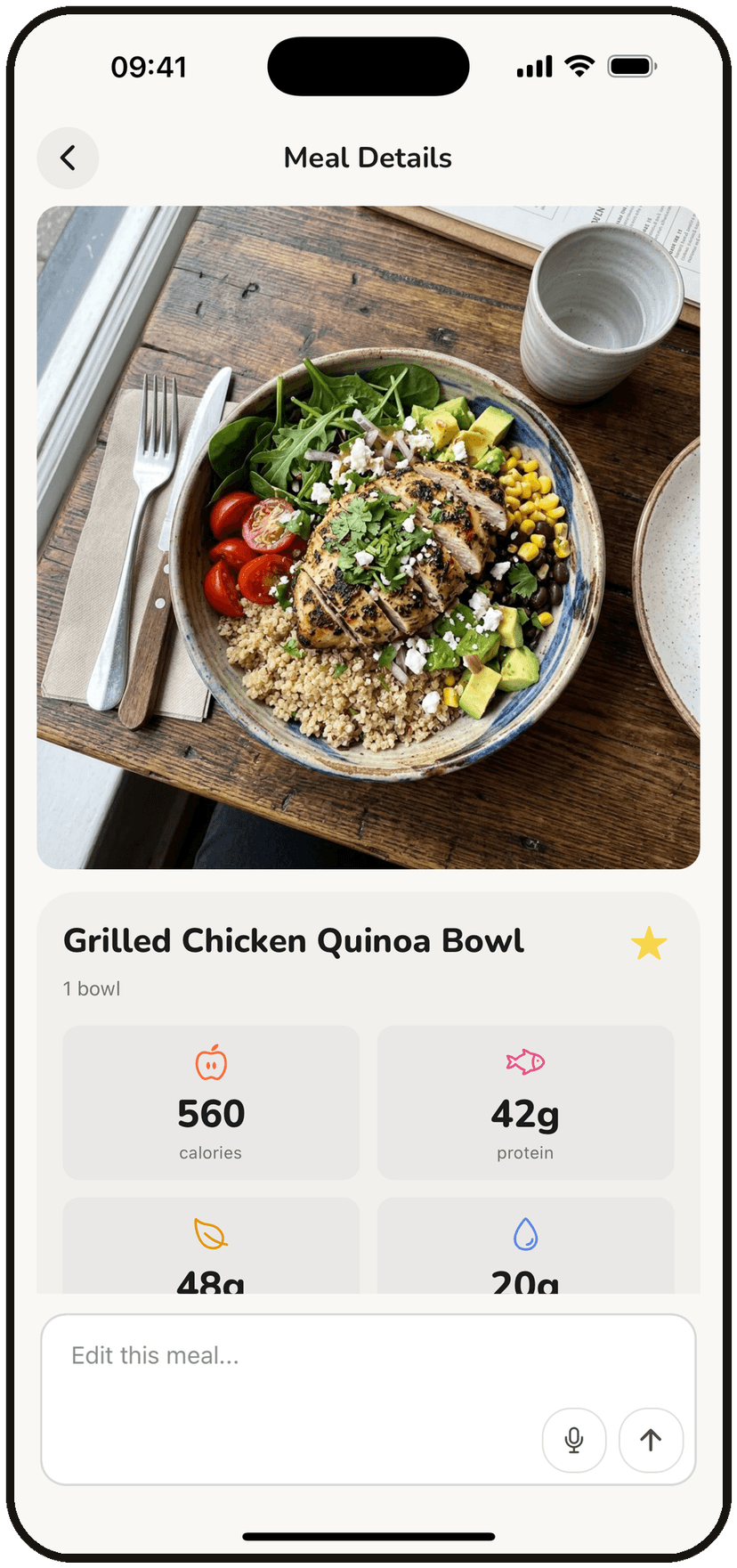
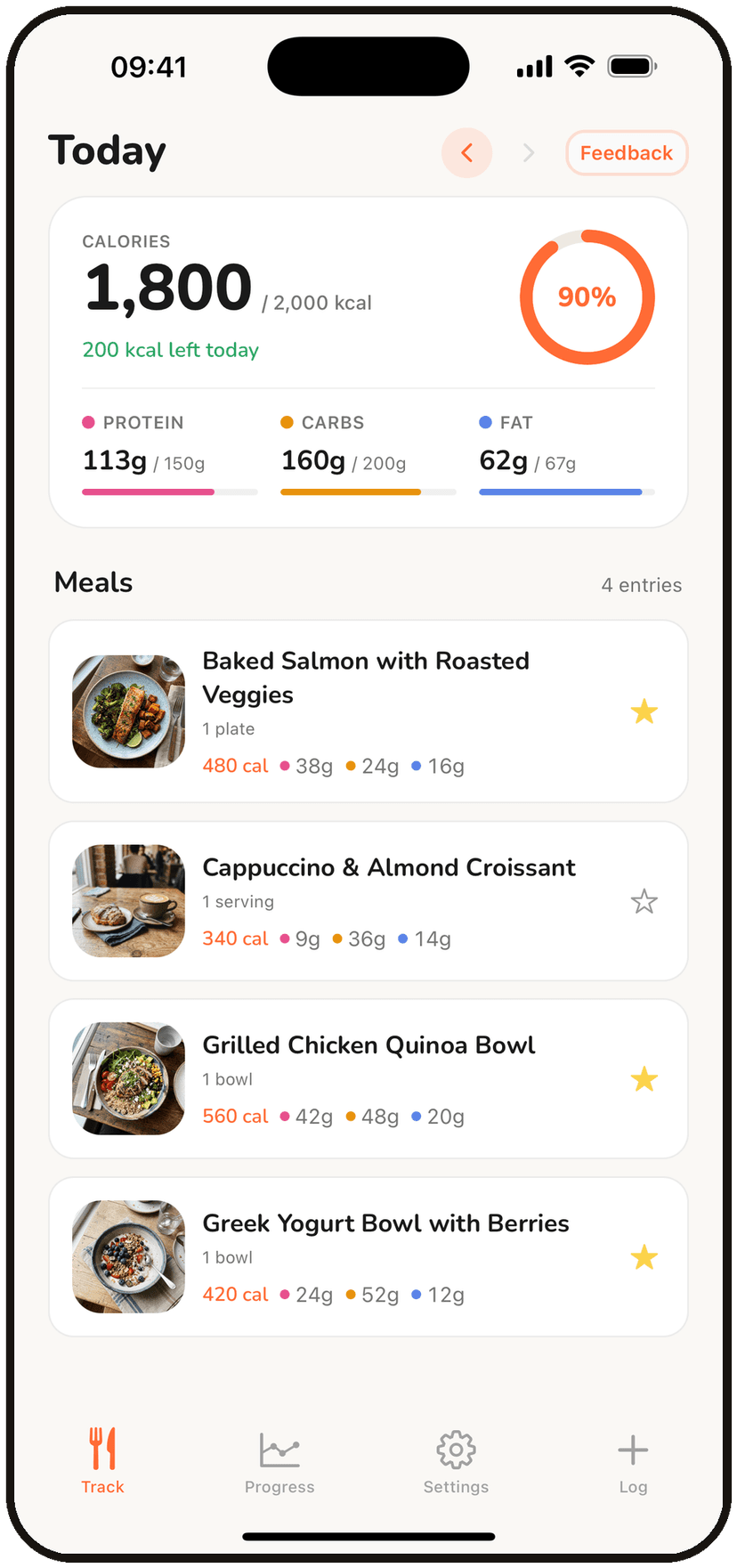
Portion guesses add up fast. BiteKit's AI estimates what's actually on your plate — oils, sides and all — so your log stays close to what you really ate.
- Log meals by photo, voice, or text
- Calories & macros estimated in seconds
- Syncs with Apple Health and Apple Watch
Free download · 3-day free trial, cancel anytime.
Scan with your iPhone camera