Creatine Intake Calculator
Calculate your optimal daily creatine dose based on your body weight and training intensity. Get personalized loading and maintenance phase recommendations.
What Is Creatine?
Creatine is a naturally occurring compound found in muscle cells. It helps your muscles produce energy during high-intensity exercise and heavy lifting. Your body produces about 1-2 grams of creatine per day from amino acids, and you also get it from foods like red meat and fish.
Supplementing with creatine increases your muscle's phosphocreatine stores, allowing you to produce more ATP (adenosine triphosphate) - the key energy currency your cells use during intense physical activity. This translates to measurable improvements in strength, power output, and muscle recovery.
Loading Phase vs. Maintenance Phase
There are two main approaches to creatine supplementation, and both are effective:
Loading Phase
- Dose: 0.3g per kg of body weight per day
- Duration: 5-7 days
- Split into: 4 equal servings throughout the day
- Purpose: Rapidly saturate muscle creatine stores
Maintenance Phase
- Dose: 3-5g per day (0.03-0.05g per kg)
- Duration: Ongoing
- Taken: Once daily with food
- Purpose: Maintain saturated muscle stores
Note: If you skip the loading phase and go straight to 3-5g per day, your muscles will still reach full saturation - it just takes about 3-4 weeks instead of 1 week.
Proven Benefits of Creatine
Creatine is one of the most extensively studied sports supplements. Research consistently shows the following benefits:
Increased Strength
5-10% increase in strength and power output during resistance training
Faster Recovery
Reduced muscle damage and inflammation after intense exercise
Muscle Growth
Supports lean muscle gain when combined with resistance training
How Does Creatine Work?
During high-intensity exercise, your muscles use ATP for energy. ATP loses a phosphate group and becomes ADP. Creatine, stored in your muscles as phosphocreatine, donates its phosphate group to regenerate ATP quickly.
Step 1: ATP is Used for Energy
When you lift a heavy weight or sprint, your muscle cells break down ATP into ADP + energy. Your ATP stores only last about 8-10 seconds of maximal effort.
Step 2: Phosphocreatine Regenerates ATP
Phosphocreatine donates a phosphate group to ADP, rapidly regenerating it back into ATP. This allows you to maintain high-intensity effort for a few more reps or seconds.
Step 3: More Creatine = More Capacity
By supplementing with creatine, you increase your phosphocreatine reserves by 20-40%. This means more ATP regeneration capacity and better performance during short, intense efforts.
Creatine from Food Sources
While supplementation is the most practical way to maximize creatine stores, you can also get creatine from food. However, you would need to eat large amounts to match supplement doses:
Red Meat
~5g per kg of raw beef or pork. You'd need to eat about 1 kg of steak to get 5g of creatine.
Fish
Herring contains ~6.5-10g per kg. Salmon and tuna have about 4.5g per kg.
Poultry
Chicken and turkey contain about 3-4g per kg of raw meat.
Plant Sources
Plants contain negligible creatine. Vegetarians and vegans typically have lower muscle creatine levels and may benefit more from supplementation.
Frequently Asked Questions
How much creatine should I take per day?
For maintenance, the standard recommendation is 3-5 grams of creatine monohydrate per day, or more precisely 0.03-0.05g per kilogram of body weight. For an 80kg (176lb) person, this works out to about 3-4g per day. Higher training intensity may warrant a dose closer to 5g.
Do I need a creatine loading phase?
A loading phase is optional. It involves taking about 20-25g per day (split into 4 doses) for 5-7 days to rapidly saturate your muscles. Without loading, taking 3-5g per day will still fully saturate your muscles within 3-4 weeks. Loading just gets you there faster.
When is the best time to take creatine?
Research suggests taking creatine close to your workout (before or after) may be slightly more effective, but consistency matters more than timing. Take it at whatever time helps you remember. On rest days, take it with any meal.
Is creatine monohydrate the best form?
Yes. Creatine monohydrate is the most researched and cost-effective form. Despite marketing for alternatives like HCL, ethyl ester, or buffered creatine, no other form has been shown to be superior in peer-reviewed studies. Monohydrate has decades of safety data.
Should I take creatine on rest days?
Yes, take creatine every day including rest days. The goal is to keep your muscle creatine stores fully saturated. Skipping rest days will cause your levels to gradually drop. Take your regular maintenance dose with a meal.
Does creatine cause water retention and bloating?
Creatine draws water into muscle cells, which can increase body weight by 1-3 lbs initially. This is intracellular water retention within the muscles (not subcutaneous bloating) and is generally considered beneficial. Any initial bloating typically subsides after the loading phase.
iPhone app · 3-day free trial
You're likely eating 500 calories more than you think
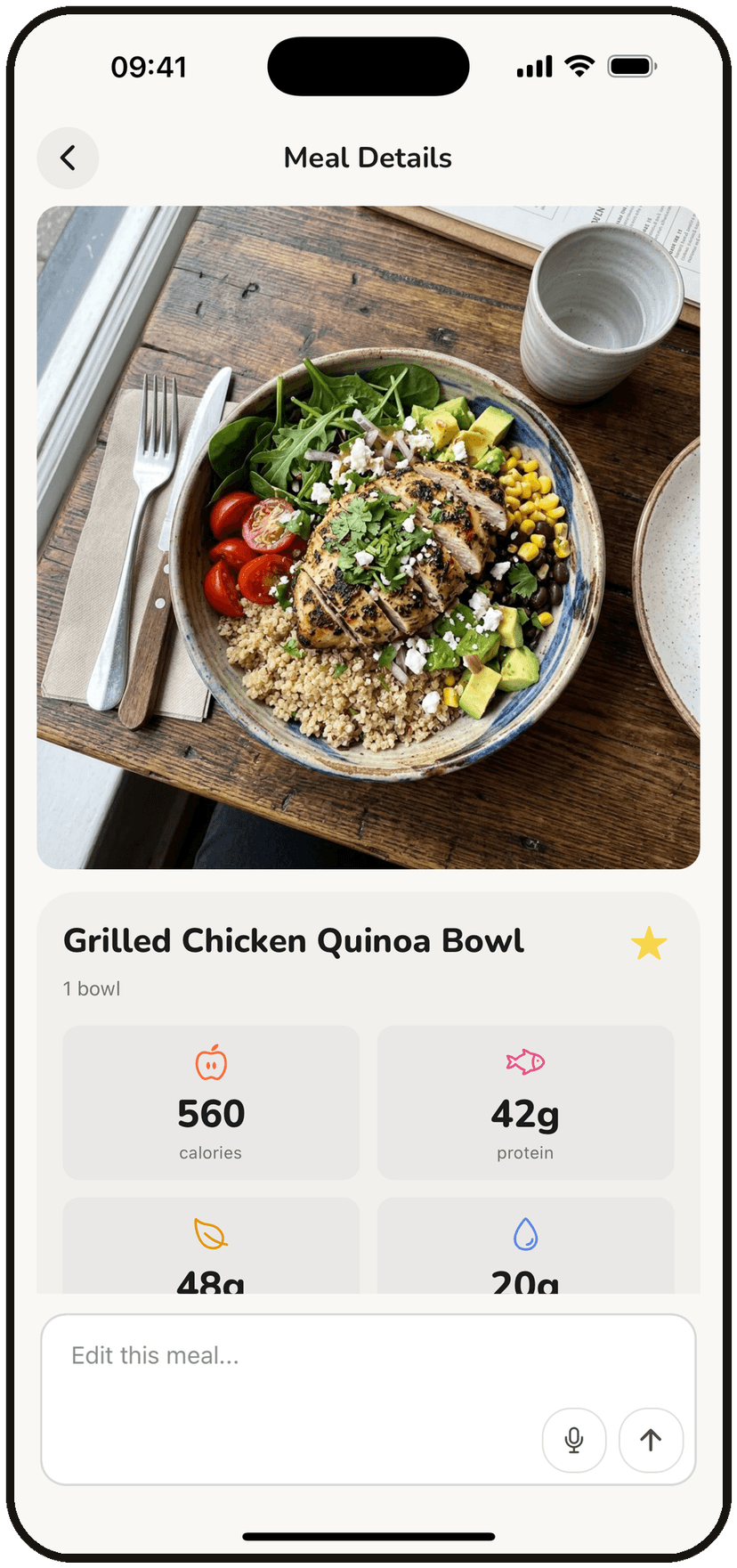
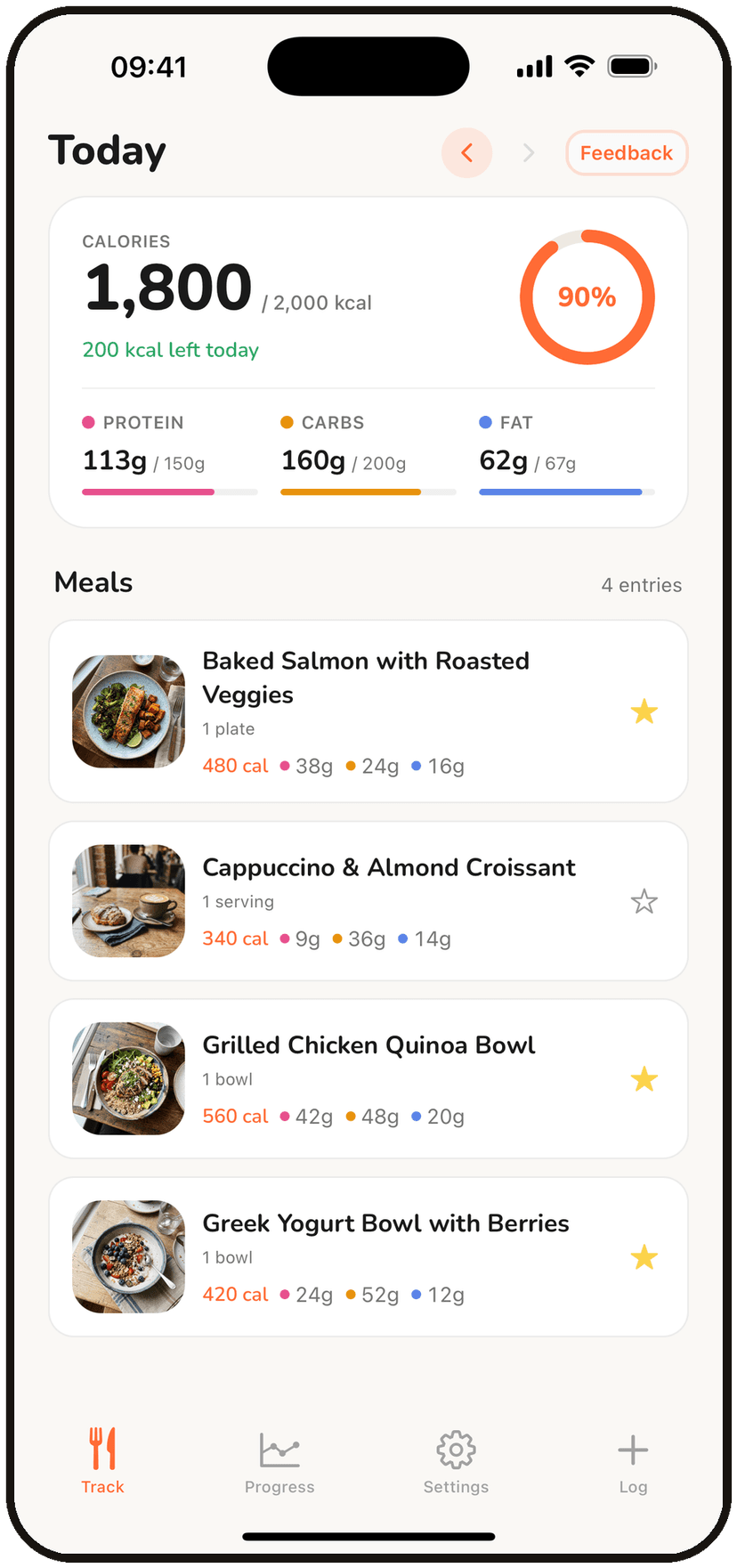
Portion guesses add up fast. BiteKit's AI estimates what's actually on your plate — oils, sides and all — so your log stays close to what you really ate.
- Log meals by photo, voice, or text
- Calories & macros estimated in seconds
- Syncs with Apple Health and Apple Watch
Free download · 3-day free trial, cancel anytime.
Scan with your iPhone camera