Daily Sugar Intake Calculator
Find out how much added sugar you should eat per day based on WHO and AHA guidelines. Get a personalized daily sugar limit in grams and teaspoons.
Added Sugar vs. Natural Sugar
Not all sugar is created equal. Understanding the difference between added and natural sugars is crucial for making informed dietary choices and staying within your daily sugar limit.
Added Sugars
- What: Sugars added during processing or preparation
- Examples: Table sugar, HFCS, honey, agave, maple syrup
- Found in: Soda, candy, baked goods, sauces, cereals
- Impact: Rapid blood sugar spikes, empty calories
Natural Sugars
- What: Sugars naturally present in whole foods
- Examples: Fructose in fruit, lactose in milk
- Found in: Fresh fruits, vegetables, dairy products
- Impact: Slower absorption due to fiber, vitamins included
Key takeaway: WHO and AHA sugar limits refer specifically to added sugars. Natural sugars in whole fruits and plain dairy do not count toward your daily added sugar limit.
Health Effects of Excess Sugar
Regularly exceeding your daily sugar limit can lead to a range of health problems. Research consistently links high added sugar consumption to the following conditions:
Weight Gain
Excess sugar provides empty calories and promotes fat storage, especially visceral fat
Heart Disease
High sugar intake increases triglycerides, blood pressure, and chronic inflammation
Energy Crashes
Sugar spikes and crashes lead to fatigue, brain fog, and increased cravings
Other conditions linked to excess sugar include type 2 diabetes, non-alcoholic fatty liver disease, tooth decay, increased inflammation, and accelerated skin aging. Reducing added sugar intake to within recommended limits is one of the most impactful dietary changes for long-term health.
How to Reduce Sugar Intake
Cutting back on sugar doesn't have to mean giving up flavor. Here are practical strategies to reduce your added sugar consumption:
1. Swap Sugary Drinks for Water or Unsweetened Beverages
Sugary beverages are the largest source of added sugar in most diets. A single soda can contain nearly 40g of sugar. Switch to water, sparkling water, or unsweetened tea to make the biggest immediate impact on your sugar intake.
2. Choose Whole Fruits Over Fruit Juice
Whole fruits contain fiber that slows sugar absorption, while fruit juice delivers concentrated sugar without the fiber. An orange has about 12g of natural sugar with 3g of fiber, while 8 oz of orange juice has 21g of sugar with no fiber.
3. Read Nutrition Labels Carefully
Look for "Added Sugars" on the Nutrition Facts label. Sugar hides under many names including sucrose, dextrose, maltose, corn syrup, and any ingredient ending in "-ose." Compare products and choose options with less added sugar.
4. Reduce Sugar Gradually
Your taste buds adapt over time. Instead of quitting sugar cold turkey, gradually reduce the amount you add to coffee, cereal, and recipes. Within 2-3 weeks, you'll find that previously normal amounts of sugar taste overly sweet.
Reading Nutrition Labels for Sugar
Since 2020, the FDA requires food labels to list "Added Sugars" separately from total sugars. Here's how to decode nutrition labels to track your sugar intake effectively:
Total Sugars vs. Added Sugars
Total sugars include both natural and added sugars. Focus on the "Added Sugars" line, which shows the sugars added during manufacturing. This is the number that counts toward your daily limit.
% Daily Value (DV)
The % DV for added sugars is based on 50g per day (10% of a 2,000-calorie diet). As a rule of thumb, 5% DV or less is considered low, while 20% DV or more is high. Use this to quickly compare products.
Hidden Names for Sugar
Sugar appears under 50+ names in ingredients lists. Common ones include sucrose, high-fructose corn syrup, dextrose, maltose, rice syrup, cane juice, agave nectar, and anything ending in "-ose" or "syrup."
Serving Size Matters
Always check the serving size. A bottle of soda may list 39g of sugar, but if the serving size is half the bottle, the label only shows about 20g. Always multiply by the number of servings you actually consume.
Frequently Asked Questions
How much sugar should you have per day?
The WHO recommends that added sugars make up less than 10% of your total daily calories, with an ideal target of less than 5%. The AHA recommends no more than 36 grams (9 teaspoons) per day for men and 25 grams (6 teaspoons) per day for women. For a 2,000-calorie diet, 10% equals about 50 grams of added sugar.
What is the difference between added sugar and natural sugar?
Added sugars are sugars put into foods during processing (like high-fructose corn syrup in soda), while natural sugars occur in whole foods like fruit (fructose) and milk (lactose). Natural sugars come with fiber, vitamins, and minerals that slow absorption. Daily sugar limits from WHO and AHA refer specifically to added sugars, not natural sugars in whole fruits and dairy.
How many teaspoons of sugar is 25 grams?
There are approximately 4 grams of sugar in one teaspoon, so 25 grams equals about 6.25 teaspoons. This is the AHA's recommended daily maximum for women. For reference, a single 12-ounce can of regular soda contains about 39 grams (nearly 10 teaspoons) of added sugar, which exceeds the entire daily recommendation.
What happens if you eat too much sugar?
Excessive sugar intake is linked to weight gain, type 2 diabetes, heart disease, tooth decay, fatty liver disease, increased inflammation, and energy crashes. Regularly consuming more than the recommended daily limit increases your risk of chronic diseases over time.
Which foods have the most hidden sugar?
Common culprits include flavored yogurt (up to 19g per serving), pasta sauce (12g per half cup), granola bars (12g each), fruit juice (24g per 8 oz), ketchup (4g per tablespoon), breakfast cereals (12g per cup), and protein bars (up to 20g). Always check nutrition labels for the "Added Sugars" line to track your intake accurately.
Should athletes eat more sugar than sedentary people?
Athletes may benefit from slightly more sugar, particularly around workouts for quick energy. A moderate target of about 8% of total calories from added sugar is reasonable for athletic performance. However, whole food sources like fruit are generally preferred over added sugars, and timing matters more than total amount for active individuals.
iPhone app · 3-day free trial
You're likely eating 500 calories more than you think
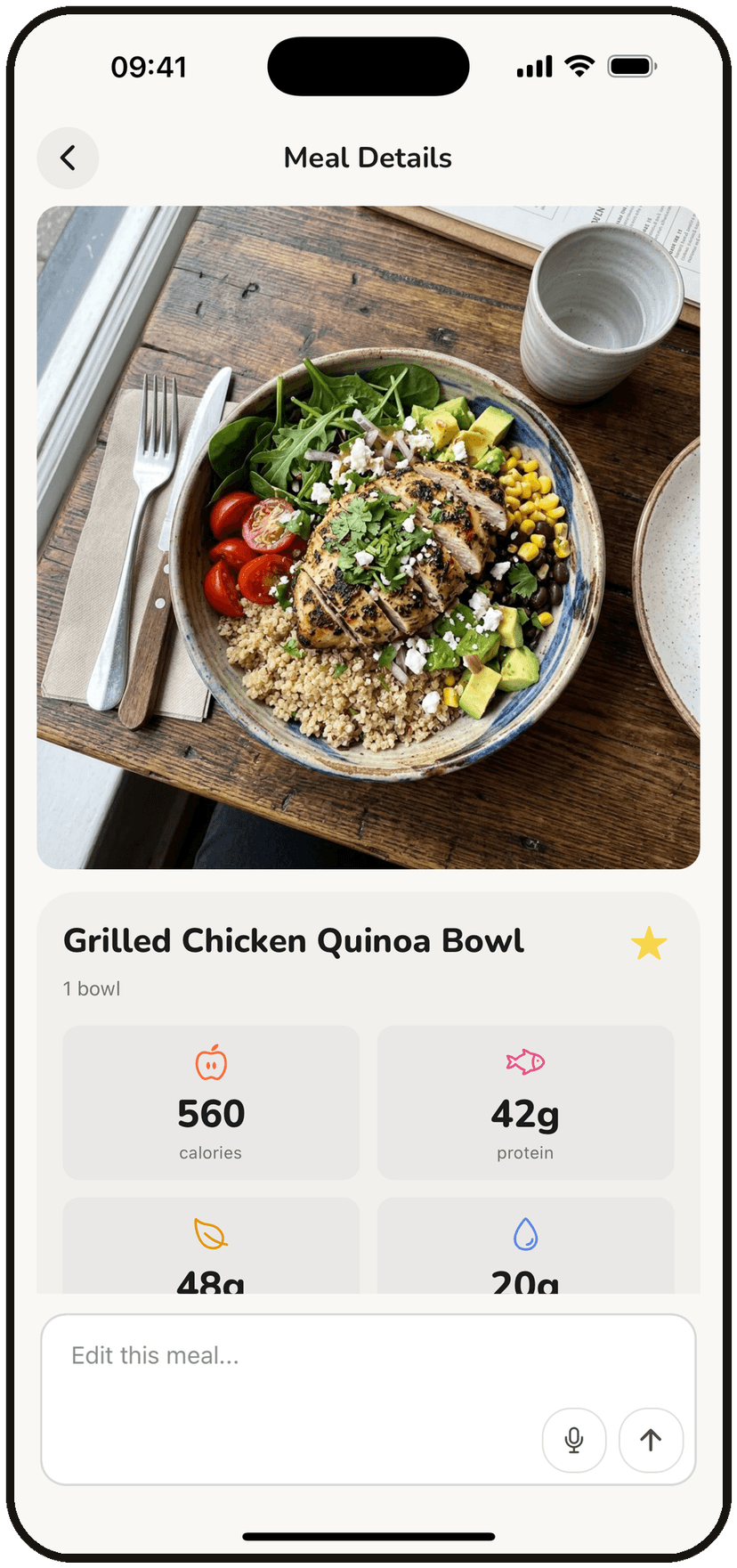
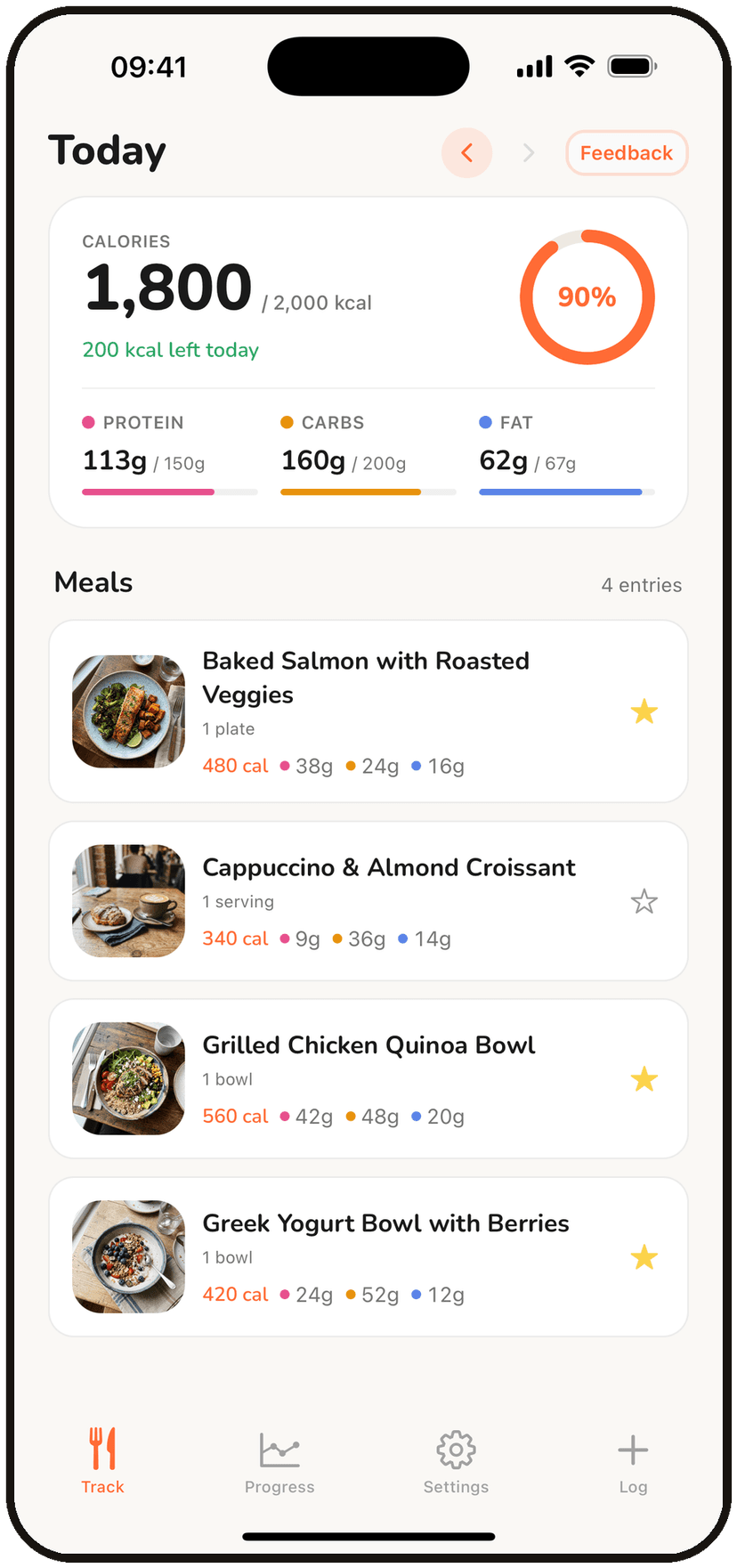
Portion guesses add up fast. BiteKit's AI estimates what's actually on your plate — oils, sides and all — so your log stays close to what you really ate.
- Log meals by photo, voice, or text
- Calories & macros estimated in seconds
- Syncs with Apple Health and Apple Watch
Free download · 3-day free trial, cancel anytime.
Scan with your iPhone camera