Deload Week Nutrition Calculator
Calculate reduced calorie and macro targets for your planned deload weeks. Keep protein high, adjust carbs and fat to match your reduced training volume, and optimize recovery without excessive fat gain.
Current Training Day Nutrition
Enter what you normally eat on training days
How many days per week you train during your deload
What is a Deload Week?
A deload week is a planned period of reduced training volume and/or intensity, typically lasting one week. During a deload, you might reduce your working sets by 40-50%, lower the weight to 50-70% of your normal loads, or simply do fewer exercises per session.
The purpose is straightforward: allow your body to recover from accumulated training fatigue. Hard training creates micro-damage in muscles, stresses joints and connective tissue, and taxes your central nervous system. Without periodic recovery, performance plateaus and injury risk increases. A well-timed deload lets everything catch up, so you come back stronger.
Why Adjust Nutrition During a Deload?
Many lifters make the mistake of eating exactly the same during a deload as they do during hard training weeks. The problem is that reduced training volume means significantly lower calorie expenditure and less glycogen depletion. Eating the same creates an unintentional calorie surplus that can lead to unnecessary fat gain.
Lower Energy Expenditure
Training volume is the biggest driver of workout calories burned. A 40% reduction in volume means substantially fewer calories burned per session. Your nutrition should reflect this change.
Less Glycogen Depletion
Lighter training sessions deplete less muscle glycogen. This means your body needs fewer carbohydrates for replenishment, making carbs the primary macro to reduce during a deload.
Protein During Recovery
While calories and carbs decrease during a deload, protein should stay the same or even increase slightly. This is because the deload is when your body is actively repairing tissue damage accumulated over weeks of hard training.
Research consistently shows that maintaining at least 1.0g of protein per pound of body weight during reduced training periods helps preserve lean muscle mass and supports recovery. If you're in a caloric deficit during your deload, protein becomes even more important to prevent muscle loss.
The Recovery Paradox
You might think you need less protein because you're training less. But the opposite is true during a deload - your body is using this time to repair and adapt. High protein intake ensures your muscles have the building blocks they need for this recovery process.
Signs You Need a Deload
Deloads can be scheduled proactively (every 4-8 weeks) or taken reactively when your body signals it needs recovery. Watch for these signs:
Stalled or Declining Strength
If your lifts have plateaued for 2+ weeks or you're actually getting weaker despite good nutrition and sleep, accumulated fatigue is likely the culprit.
Persistent Fatigue and Poor Sleep
Feeling constantly tired, having trouble falling asleep, or waking up unrested despite adequate sleep time are classic signs of CNS fatigue that responds well to deloading.
Joint Pain and Nagging Aches
Chronic joint soreness, especially in high-stress areas like shoulders, elbows, and knees, is your body telling you it needs time to repair connective tissue.
Declining Motivation
If you usually love training but find yourself dreading the gym, mental fatigue from overtraining may be setting in. A deload can reignite your drive.
Frequently Asked Questions
What is a deload week?
A deload week is a planned period where you reduce training volume and/or intensity by 20-50% to allow your muscles, joints, and nervous system to recover from accumulated fatigue. Most lifters benefit from deloading every 4-8 weeks.
Why should I reduce calories during a deload?
Reduced training volume means you burn fewer calories and deplete less glycogen. Keeping calories the same creates an unintentional surplus that can lead to fat gain. A modest 10-20% calorie reduction matches your intake to your actual expenditure.
Why does protein stay high during a deload?
The deload is when your body actively repairs damage from weeks of hard training. High protein (at least 1.0g per pound of body weight) provides the amino acids needed for muscle repair and recovery. Cutting protein during a deload undermines the whole purpose.
How often should I take a deload week?
Most intermediate to advanced lifters benefit from a deload every 4-8 weeks. Beginners can go longer (8-12 weeks) since their training loads are lighter. Listen to your body - if you notice persistent fatigue, stalled progress, or joint pain, it may be time to deload.
Will I lose muscle during a deload?
No. Research shows muscle mass can be maintained for weeks even with significantly reduced training, as long as some stimulus and adequate protein are present. One deload week will not cause any measurable muscle loss. In fact, deloads help you build more muscle long-term.
Should I eat at a deficit or surplus during a deload?
For most people, eating at maintenance (adjusted for reduced activity) is ideal. A slight surplus supports maximum recovery if you're very fatigued. A slight deficit works if you're cutting, but avoid aggressive deficits during deloads as they impair recovery.
iPhone app · 3-day free trial
You're likely eating 500 calories more than you think
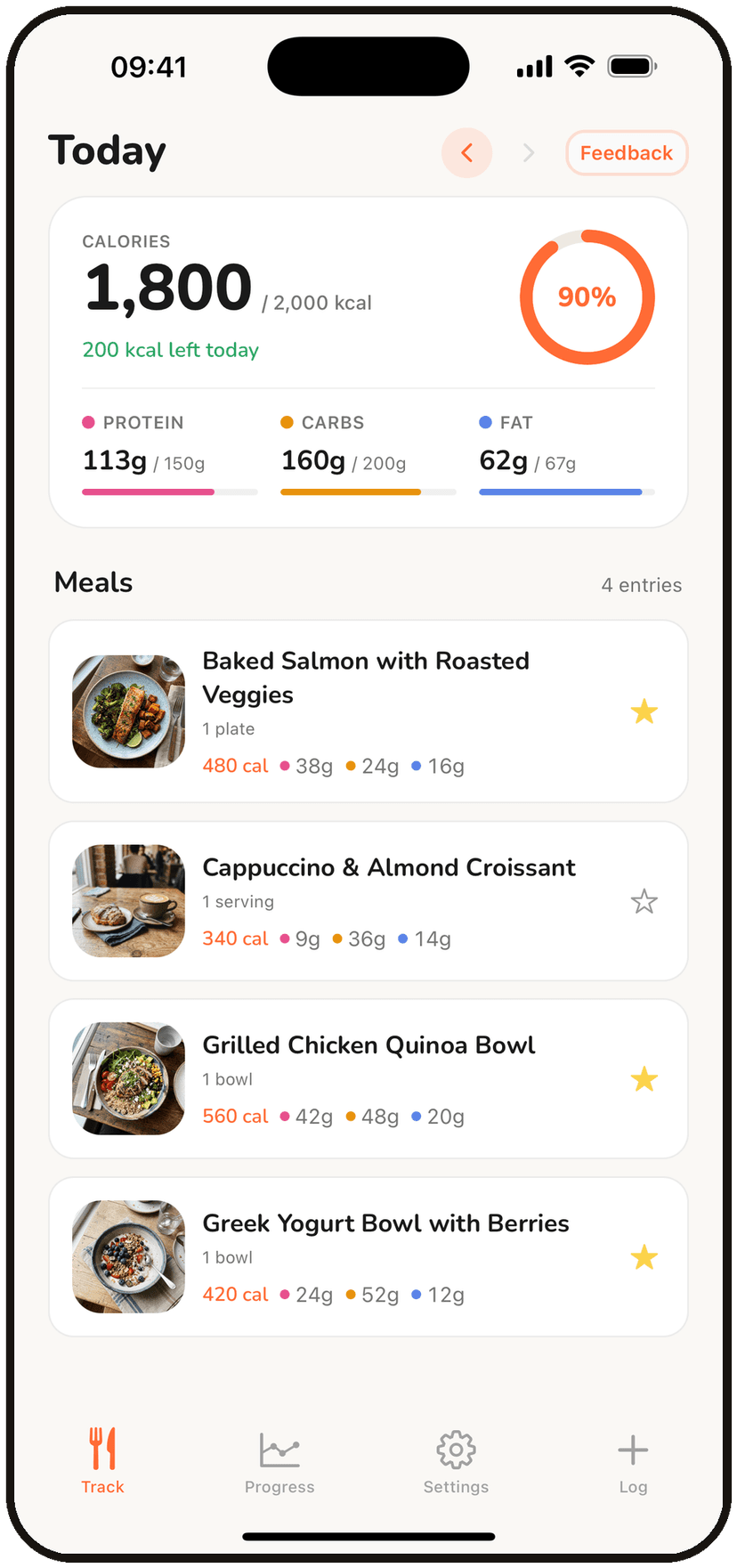
Portion guesses add up fast. BiteKit's AI estimates what's actually on your plate — oils, sides and all — so your log stays close to what you really ate.
- Log meals by photo, voice, or text
- Calories & macros estimated in seconds
- Syncs with Apple Health and Apple Watch
Free download · 3-day free trial, cancel anytime.
Scan with your iPhone camera