DOTS Score Calculator
Calculate your DOTS score using the modern IPF coefficient system. Enter your squat, bench press, deadlift, and body weight to see how your strength compares across weight classes.
What is the DOTS Score?
DOTS (Dynamic Objective Team Scoring) is a modern powerlifting coefficient introduced in 2019 by the International Powerlifting Federation (IPF). It applies a 4th-degree polynomial formula to your body weight and powerlifting total (squat + bench press + deadlift) to compare lifters across weight classes more evenly than older scoring systems.
What is the DOTS Score?
DOTS (Dynamic Objective Team Scoring) is a powerlifting coefficient system introduced in 2019 by the International Powerlifting Federation (IPF) as a modern replacement for the Wilks formula. It produces a normalized score from your powerlifting total (squat + bench press + deadlift) and body weight, allowing fair comparisons between lifters of different sizes.
The DOTS system was developed to address perceived shortcomings in older coefficient systems, particularly at the extremes of the body weight spectrum. Under the Wilks system, very light and very heavy lifters sometimes received scores that did not accurately reflect their competitive performances. DOTS uses an updated mathematical model calibrated against a large database of modern competition results to produce a more uniform distribution of scores across all weight classes.
Since its adoption, DOTS has become the primary scoring system for many IPF-affiliated federations and is increasingly used in international powerlifting competitions. It is now one of the most commonly referenced coefficient systems alongside Wilks and GL Points.
How is the DOTS Score Calculated?
The DOTS Score uses a 4th-degree polynomial formula applied to your body weight to derive a coefficient, which is then multiplied by your powerlifting total. Here's the breakdown:
Step 1: Determine Your Total
Total (kg) = Best Squat + Best Bench Press + Best Deadlift
Example: 180 kg + 120 kg + 220 kg = 520 kg total
Step 2: Calculate the DOTS Denominator
Denominator = A×bw⁴ + B×bw³ + C×bw² + D×bw + E
Where bw = body weight in kg, and A through E are gender-specific constants
Step 3: Calculate the DOTS Score
DOTS Score = Total (kg) × 500 / Denominator
Example: 520 kg × 500 / denominator = ~386 DOTS points (for an 83 kg male)
The polynomial coefficients were derived from extensive analysis of modern competition results to produce the most even scoring distribution across all weight classes. Separate coefficients are used for male and female lifters to account for physiological differences in strength potential.
DOTS Strength Levels Explained
DOTS scores provide a modern benchmark for evaluating powerlifting strength. These levels are based on competitive standards and population data:
Beginner (< 200)
New to powerlifting or still building foundational strength. Most people who have recently started training fall into this range. Focus on mastering squat, bench, and deadlift technique with progressive overload.
Novice (200 - 300)
Developing solid strength across all three lifts. Many consistent recreational lifters with 1-2 years of training reach this range. You're noticeably stronger than the general population.
Intermediate (300 - 400)
Competitive at local and regional powerlifting meets. This range represents several years of dedicated, structured training with dialed-in nutrition. You stand out in most gyms.
Advanced (400 - 500)
National-level competitor. Reaching this level typically requires years of periodized programming, optimized recovery, and exceptional dedication. You're among the strongest in your federation.
Elite (500+)
World-class strength. Only a tiny fraction of competitive powerlifters ever achieve this level. These are international-level athletes, record holders, and among the strongest humans on Earth relative to their body weight.
DOTS vs. Wilks: What Changed and Why?
DOTS Score
- Introduced in 2019 as the modern IPF standard
- Uses a 4th-degree polynomial formula
- More even scoring across extreme weight classes
- Calibrated from modern competition databases
- Adopted by the IPF and many affiliates
Wilks Score
- Established in the 1990s by Robert Wilks
- Uses a 5th-degree polynomial formula
- May slightly favor middle weight classes
- Most widely recognized in the community
- Still used by many national federations
Which should you use? If you compete, use whatever your federation requires. The IPF and many of its affiliates have adopted DOTS as their primary scoring system. For personal tracking, both scores are valid benchmarks. DOTS tends to produce fairer comparisons for lifters at the lightest and heaviest weight classes, while Wilks remains the most universally understood reference point in the powerlifting community. You can calculate both using our Wilks Score Calculator and compare them side by side.
How to Improve Your DOTS Score
Improving your DOTS Score means increasing your total relative to your body weight. Here are proven strategies:
Follow a Periodized Program
Use a structured training program with planned intensity and volume progression. Programs like 5/3/1, Sheiko, Juggernaut Method, or Calgary Barbell are proven for powerlifting progress.
Optimize Body Composition
Since DOTS adjusts for body weight, gaining strength without excessive body fat improves your score. Use our Body Recomposition Calculator for targeted macro splits on training and rest days.
Prioritize Protein Intake
Strength athletes need 1.6-2.2g of protein per kg of body weight for optimal muscle recovery and growth. Use our Protein Intake Calculator to find your daily target.
Address Weak Points
Identify which lift has the most room for improvement. Typical competition ratios are roughly 35-40% squat, 20-25% bench, and 35-40% deadlift. Allocate extra training volume to your weakest lift to bring it in line.
Frequently Asked Questions
What is a DOTS Score in powerlifting?
DOTS (Dynamic Objective Team Scoring) is a modern powerlifting coefficient introduced in 2019 by the IPF. It uses a 4th-degree polynomial formula applied to your body weight and powerlifting total (squat + bench press + deadlift) to produce a normalized score for comparing lifters across different weight classes.
What is a good DOTS Score?
A DOTS score below 200 is beginner level. 200-300 is novice, 300-400 is intermediate, 400-500 is advanced, and 500+ is elite. Most competitive powerlifters at regional meets score between 300-400, while national and international competitors typically exceed 400.
How is the DOTS Score calculated?
The DOTS Score equals your powerlifting total (in kg) multiplied by 500, divided by a polynomial denominator. The formula is: DOTS = Total × 500 / (A×bw⁴ + B×bw³ + C×bw² + D×bw + E), where bw is body weight in kg and A through E are gender-specific constants.
What is the difference between DOTS and Wilks?
Both systems compare powerlifting strength across weight classes. The Wilks formula was created in the 1990s and uses a 5th-degree polynomial. DOTS was introduced in 2019 and uses a 4th-degree polynomial calibrated from modern competition data. DOTS generally provides a more even distribution of scores across extreme weight classes, which is why the IPF adopted it.
Is DOTS better than Wilks?
DOTS is considered an improvement for comparing lifters at extreme body weights (very light or very heavy). The IPF adopted DOTS because it produces a more uniform score distribution across all weight categories. However, Wilks remains widely recognized and many lifters still reference it. Use whatever your federation requires, or calculate both for a complete picture.
Does the DOTS formula differ for men and women?
Yes. The DOTS formula uses separate polynomial coefficients for men and women because the relationship between body weight and strength potential differs between sexes. This ensures fair comparisons within each gender category. Male and female DOTS scores should be compared within their respective groups.
iPhone app · 3-day free trial
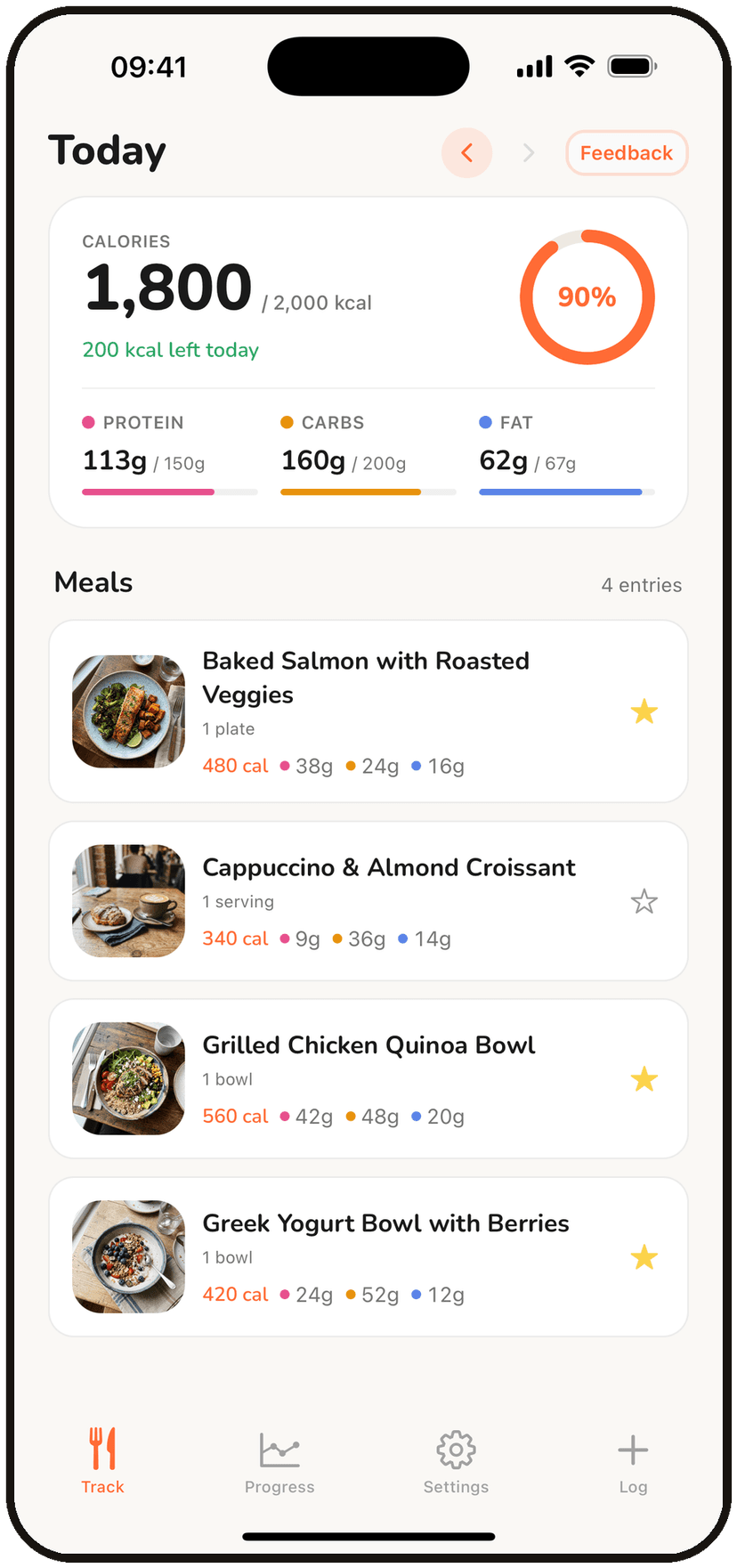
You're likely eating 500 calories more than you think
Portion guesses add up fast. BiteKit's AI estimates what's actually on your plate — oils, sides and all — so your log stays close to what you really ate.
- Log meals by photo, voice, or text
- Calories & macros estimated in seconds
- Syncs with Apple Health and Apple Watch
Free download · 3-day free trial, cancel anytime.
Scan with your iPhone camera