Egg Calorie Calculator
Calculate exact calories and macros for eggs by cooking method, egg size, quantity, and added fats. Boiled, fried, scrambled, poached, or omelette — get precise nutrition in seconds.
Calculate Egg Nutrition
Standard omega-3 content (~37mg DHA + EPA per egg).
Egg Nutrition: Why Cooking Method Matters
Eggs are one of the most nutritionally complete foods available, delivering high-quality complete protein, healthy fats, vitamins, and minerals in a compact package. A single large egg contains roughly 72–94 calories depending on how it is prepared.
The cooking method itself accounts for only a small difference in base egg nutrition. The bigger calorie driver is added fat: cooking with butter or olive oil can add 34–119 extra calories per egg preparation depending on the amount used. Choosing a cooking spray instead of butter can save 100+ calories per batch.
Calories in Eggs by Cooking Method
All values below are for one large egg (50g) with no added fat:
Hard / Soft Boiled
78 cal6.3g protein • 5.3g fat — Lowest fat, no added oil needed
Poached
72 cal6.3g protein • 4.8g fat — Lowest calorie method overall
Fried (in butter)
90 cal6.3g protein • 7.0g fat — Base includes butter used in the pan
Scrambled
91 cal6.1g protein • 6.7g fat — Slightly higher carbs from mixing
Omelette
94 cal6.5g protein • 7.2g fat — Highest protein per egg
Raw
72 cal6.3g protein • 4.8g fat — Same as poached — no heat degradation
How Added Fat Affects Egg Calories
The fat you cook eggs in is often a bigger calorie contributor than the egg itself. Here is how common cooking fats compare:
Best for boiled or poached eggs
Minimal impact, good for non-stick
Light flavor, typical for 1-2 eggs
Common for omelettes and scrambles
Heart-healthy monounsaturated fats
Significant calorie addition
Egg Size and Calorie Differences
Egg size is standardized by weight. The calorie difference between a small and a jumbo egg is significant — about 65% more calories in a jumbo compared to a small:
| Size | Weight | Cal (boiled) | Protein |
|---|---|---|---|
| Small | 38g | 59 | 4.8g |
| Medium | 44g | 69 | 5.5g |
| Large | 50g | 78 | 6.3g |
| Extra Large | 56g | 87 | 7.1g |
| Jumbo | 63g | 98 | 7.9g |
Why Egg Protein Is Exceptional
Eggs are considered the gold standard for protein quality. They score a perfect 1.0 on the Protein Digestibility Corrected Amino Acid Score (PDCAAS) and contain all nine essential amino acids in ideal ratios.
Research shows that cooking eggs increases protein digestibility from around 51% (raw) to 91% (cooked). This means the protein you absorb from a cooked egg is substantially higher than from a raw one — despite the same total protein content on paper.
Conventional vs. Pasture-Raised vs. Omega-3 Eggs
All egg types have essentially the same calorie and macronutrient profile. The differences lie in micronutrient content, particularly omega-3 fatty acids and fat-soluble vitamins:
Conventional Eggs
~37mg omega-3 (DHA + EPA) per egg. Standard commercial production. Most widely available and most affordable.
Free-Range Eggs
~50mg omega-3 per egg. Hens have outdoor access, leading to marginally higher nutrient content. Vitamin D levels may also be slightly higher.
Pasture-Raised Eggs
~150mg omega-3 per egg. Hens roam outdoors and forage on insects and grass, producing eggs with notably higher omega-3, vitamin D, and vitamin A content.
Omega-3 Enriched Eggs
~350–400mg omega-3 per egg. Hens are fed flaxseed or fish oil supplements. These eggs provide a meaningful dose of heart-healthy EPA and DHA and are ideal for people who do not eat fish regularly.
Frequently Asked Questions
How many calories are in a boiled egg?
A large hard-boiled or soft-boiled egg (50g) contains approximately 78 calories, 6.3g of protein, 5.3g of fat, and 0.6g of carbohydrates. Because no oil or butter is used, boiling is one of the lowest-calorie cooking methods.
How many calories are in a fried egg?
A large egg fried in butter has approximately 90 calories base. Adding cooking fat increases this — 1 tsp of butter adds 34 calories and 1 tbsp adds 102 calories on top. Use cooking spray to minimize added calories while still preventing sticking.
How many calories are in scrambled eggs?
One large scrambled egg (plain) contains about 91 calories, 6.1g protein, 1.6g carbs, and 6.7g fat. If you add milk or cream during scrambling, or use extra butter in the pan, the calorie count will be higher.
Does egg size affect calorie count?
Yes, significantly. A small egg (38g) is approximately 60 calories while a jumbo egg (63g) is about 98 calories boiled. Our calculator automatically scales nutrition values for all five USDA egg sizes.
How much protein is in one egg?
A large egg provides approximately 6.1–6.5g of complete protein depending on cooking method. Eggs contain all nine essential amino acids and have one of the highest PDCAAS scores of any natural food, making them an excellent source of high-quality protein.
Should I be worried about cholesterol in eggs?
A large egg contains about 186mg of cholesterol. Current nutritional research shows that for most healthy adults, dietary cholesterol from eggs has minimal impact on blood cholesterol or cardiovascular risk. The American Heart Association suggests up to one egg per day is safe for most people as part of a balanced diet.
Are pasture-raised or omega-3 eggs healthier?
They have the same calorie and macro profile as conventional eggs, but contain significantly more omega-3 fatty acids. Omega-3 enriched eggs can provide 350–400mg of DHA + EPA per egg, making them a good option for people who do not eat fatty fish regularly.
iPhone app · 3-day free trial
You're likely eating 500 calories more than you think
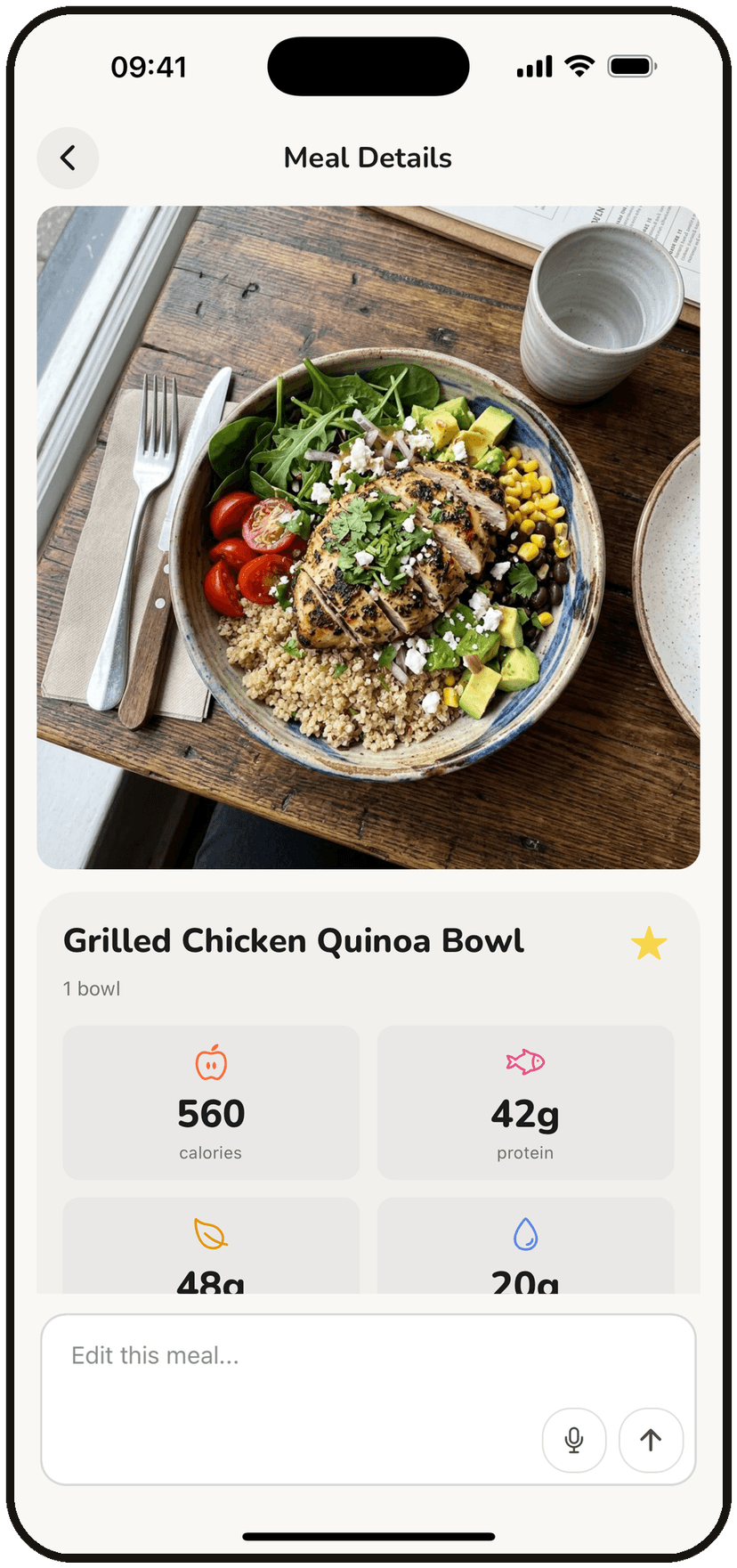
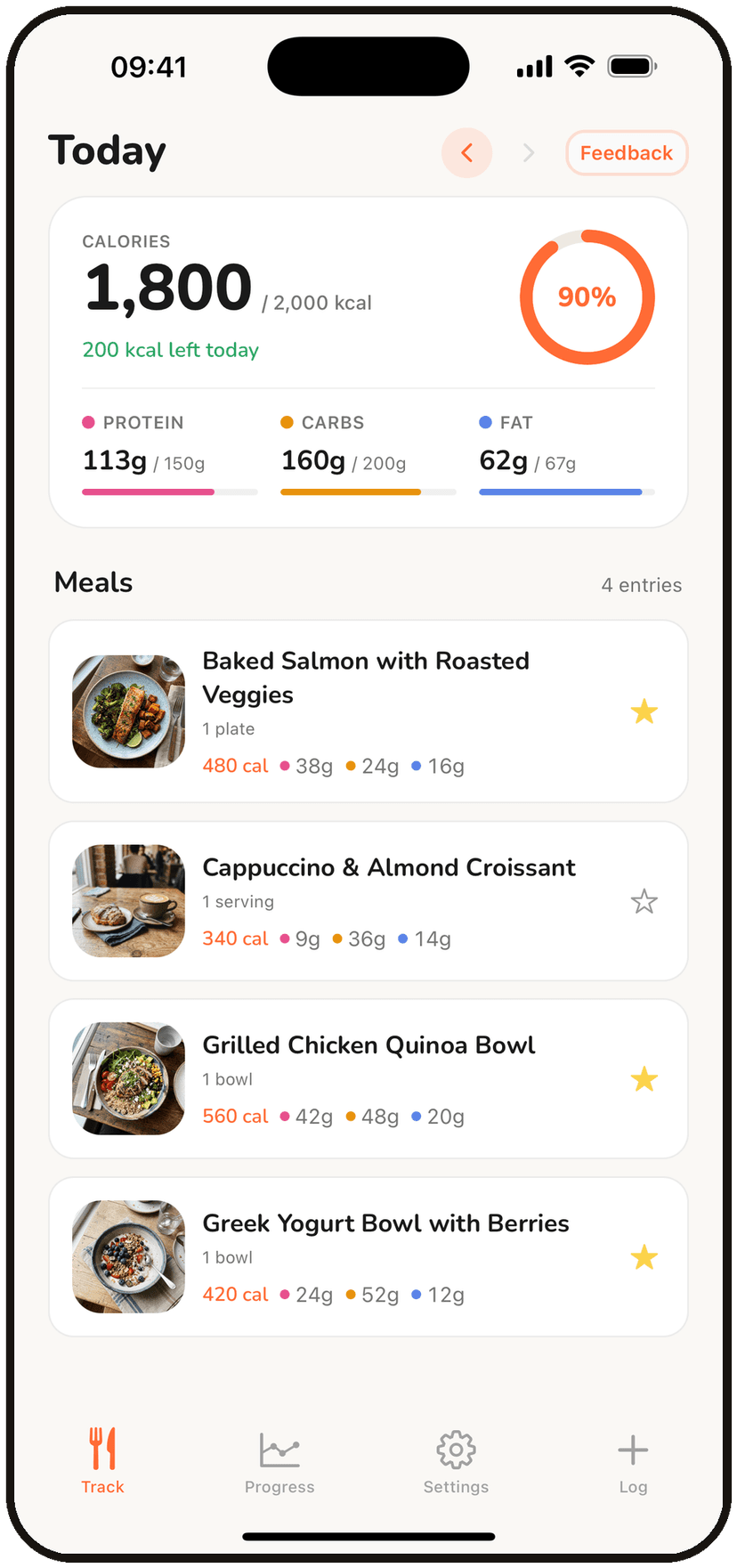
Portion guesses add up fast. BiteKit's AI estimates what's actually on your plate — oils, sides and all — so your log stays close to what you really ate.
- Log meals by photo, voice, or text
- Calories & macros estimated in seconds
- Syncs with Apple Health and Apple Watch
Free download · 3-day free trial, cancel anytime.
Scan with your iPhone camera