Egg Substitute Calculator for Baking
Find the best egg replacement for your specific recipe — with exact measurements scaled to the number of eggs, calorie comparison, and prep instructions for every substitute.
What Eggs Actually Do in Baking
Eggs perform three distinct functions in baked goods, and understanding them is key to choosing the right substitute.
- Binding: Egg proteins coagulate during baking and hold ingredients together. Without binding, cookies crumble and bread falls apart. Flax eggs, chia eggs, and silken tofu replicate this best.
- Moisture: Eggs are about 75% water and add significant moisture to batter. Applesauce, mashed banana, and Greek yogurt are excellent moisture providers.
- Lift (leavening): Beaten eggs trap air bubbles that expand in the oven, helping baked goods rise. Aquafaba — when whipped — mimics this better than any other substitute. Buttermilk and carbonated water also contribute lift through acid-base reactions and carbonation.
Most recipes rely primarily on one or two of these functions. Identifying which matters most for your recipe will guide you to the best substitute.
Best Egg Substitutes by Recipe Type
Cookies
Cookies primarily need binding, not lift. A flax egg or chia egg (1 tbsp seeds + 3 tbsp water, gelled) works excellently. Applesauce also works well and will produce a slightly chewier, moister cookie. Avoid aquafaba alone — cookies made with it can spread too much.
Cakes
Cakes need both moisture and lift. Applesauce keeps cakes very moist, and its natural sugars caramelize for a tender crumb. Aquafaba is the best choice when you need maximum rise — whip it for 2 minutes before folding it in. Greek yogurt adds moisture and reacts with baking soda for additional lift.
Brownies
Brownies are dense and fudgy — exactly the texture that flax eggs excel at. Mashed banana also creates an ultra-dense brownie (with noticeable banana flavor). Silken tofu, blended smooth, produces a rich fudgy texture with extra protein and a neutral taste.
Muffins and Quick Breads
Muffins benefit from applesauce or mashed banana, both of which contribute moisture and help the muffin hold together. Greek yogurt is also excellent — its tanginess complements blueberry and lemon flavors especially well.
Pancakes
Pancakes can use almost any substitute since the batter is very forgiving. Mashed banana creates naturally sweet pancakes with a dense texture. Buttermilk (if not vegan) is the gold standard for fluffy pancakes when used with baking soda. A flax egg also works well for a heartier, nuttier pancake.
Bread and Yeast Loaves
Bread needs strong binding. Flax and chia eggs are the most reliable choices. Commercial egg replacers formulated for bread baking (like JUST Egg powder or Bob's Red Mill) are the most predictable for consistent results across multiple loaves.
Calorie Comparison: Eggs vs. Substitutes
All values shown are per 1 egg equivalent.
| Substitute | Calories | Cal saved vs egg |
|---|---|---|
| Real egg (baseline) | 72 kcal | — |
| Carbonated water | 0 kcal | -72 |
| Aquafaba (3 tbsp) | 7 kcal | -65 |
| Commercial egg replacer | 15 kcal | -57 |
| Applesauce (1/4 cup) | 26 kcal | -46 |
| Buttermilk (1/4 cup) | 28 kcal | -44 |
| Greek yogurt (1/4 cup) | 36 kcal | -36 |
| Flax egg | 37 kcal | -35 |
| Silken tofu (1/4 cup) | 45 kcal | -27 |
| Mashed banana (1/4 cup) | 53 kcal | -19 |
| Chia egg | 58 kcal | -14 |
Tips When Replacing Multiple Eggs
Replacing 1–2 eggs with any good substitute is straightforward. When a recipe calls for 3 or more eggs, consider these strategies:
- Use a commercial egg replacer: Products like Bob's Red Mill Egg Replacer or JUST Egg powder are specifically formulated to work at higher quantities without the textural issues that can arise from using large amounts of flax gel or applesauce.
- Combine two substitutes: For 3 eggs, try 2 flax eggs (binding) + 1/4 cup aquafaba (lift). This mimics the multi-functional role that real eggs play.
- Add extra leavening: When replacing 3+ eggs, add an additional 1/4 to 1/2 teaspoon of baking powder to compensate for lost lift.
- Reduce liquid elsewhere: Substitutes like applesauce and banana add significant moisture. When using large quantities, reduce other liquids in the recipe by 1–2 tablespoons per 1/4 cup of wet substitute used.
Frequently Asked Questions
What is the best egg substitute for baking?
It depends on the recipe. Flax eggs (1 tbsp ground flaxseed + 3 tbsp water) are best for binding in cookies and brownies. Aquafaba (3 tbsp chickpea liquid) is best for cakes needing lift. Applesauce (1/4 cup) works well for moist cakes and muffins. Commercial egg replacers are the most neutral and reliable all-purpose option.
How do I make a flax egg?
Mix 1 tablespoon of ground flaxseed with 3 tablespoons of water. Stir and let sit for 5 minutes until it forms a gel. Use this in place of 1 large egg. Ground flaxseed works better than whole seeds.
Can I use applesauce instead of eggs in baking?
Yes — use 1/4 cup (60 g) of unsweetened applesauce per egg. It adds moisture and minimal sweetness. Best for muffins, quick breads, and cakes. It does not provide lift, so add an extra 1/4 tsp baking powder for recipes needing rise.
What is aquafaba and how is it used?
Aquafaba is the liquid from a can of chickpeas. Use 3 tablespoons per egg. It has virtually no flavor, can be whipped to stiff peaks like egg whites, and is the lowest-calorie egg substitute at only 7 calories.
How many calories does a real egg have vs. substitutes?
A large egg has about 72 calories. Most substitutes are significantly lower: carbonated water (0 cal), aquafaba (7 cal), commercial replacer (15 cal), applesauce (26 cal), Greek yogurt (36 cal), and flax egg (37 cal).
Can I replace multiple eggs in a recipe?
Yes, but replacing 3+ eggs is more challenging. Use a commercial egg replacer for the most reliable results, or combine two substitutes (e.g., 2 flax eggs + aquafaba). Also add an extra 1/4–1/2 tsp baking powder and reduce other liquids slightly when using large amounts of wet substitutes.
Related Tools
iPhone app · 3-day free trial
You're likely eating 500 calories more than you think
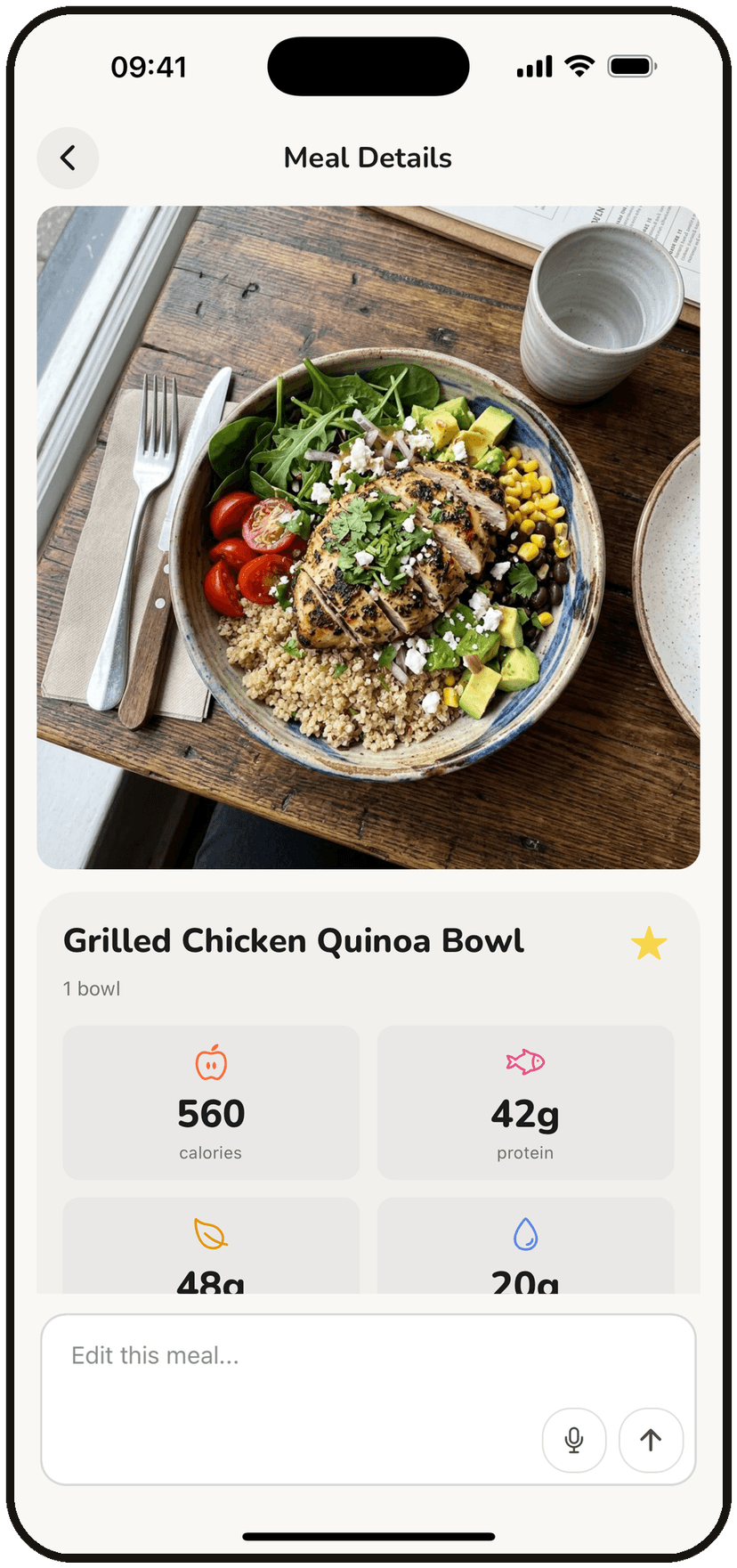
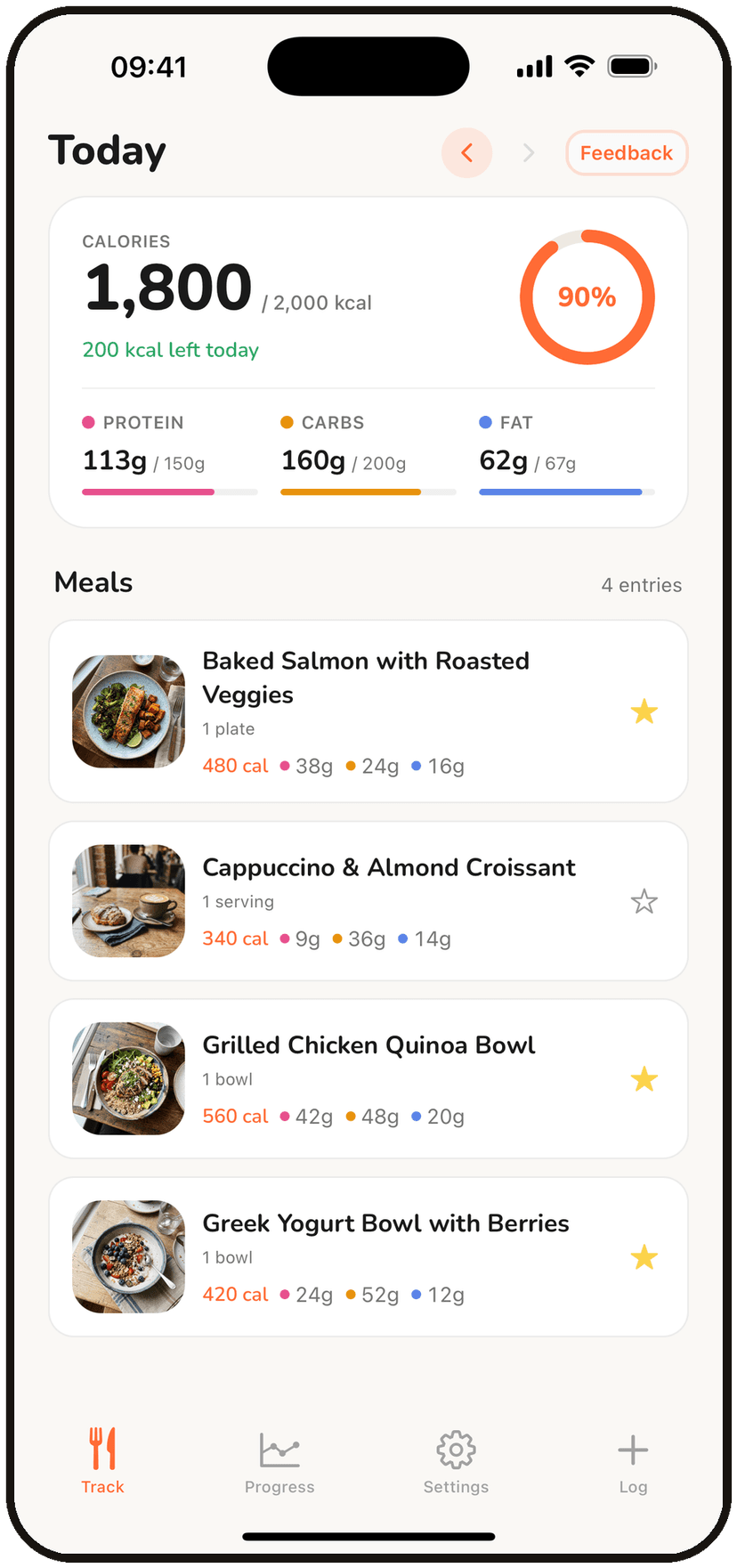
Portion guesses add up fast. BiteKit's AI estimates what's actually on your plate — oils, sides and all — so your log stays close to what you really ate.
- Log meals by photo, voice, or text
- Calories & macros estimated in seconds
- Syncs with Apple Health and Apple Watch
Free download · 3-day free trial, cancel anytime.
Scan with your iPhone camera