Daily Fat Intake Calculator
Calculate how many grams of fat you should eat per day based on your body, goals, and activity level. Get personalized recommendations for general health, weight loss, muscle gain, or keto.
Why Dietary Fat Matters
Dietary fat is one of the three essential macronutrients, alongside protein and carbohydrates. Despite its bad reputation from past decades, fat is critical for your body to function properly. Here's why getting the right amount matters:
- Hormone production: Fat is necessary for producing testosterone, estrogen, and other hormones that regulate metabolism, mood, and body composition
- Vitamin absorption: Vitamins A, D, E, and K are fat-soluble and cannot be absorbed without adequate dietary fat
- Brain health: Your brain is roughly 60% fat and requires dietary fat, especially omega-3 fatty acids, for optimal cognitive function
- Cell structure: Every cell in your body has a membrane made of fatty acids that controls what enters and exits the cell
- Satiety: Fat slows digestion and helps you feel full longer, which can reduce overall calorie intake
Daily Fat Intake Recommendations by Goal
Your optimal fat intake varies based on your health and fitness goals. Here are evidence-based guidelines:
| Goal | % of Calories | ~Grams (2000 cal) | Notes |
|---|---|---|---|
| General Health | 20-35% | 44-78g | USDA/AMDR recommendation |
| Weight Loss | 20-30% | 44-67g | Moderate fat to control calories |
| Muscle Gain | 20-30% | 44-67g | Supports hormone production |
| Keto / Low-Carb | 60-75% | 133-167g | Primary fuel source for ketosis |
| Heart Health | 20-30% | 44-67g | Emphasize unsaturated fats |
| Athletic Performance | 20-35% | 44-78g | Fuel for endurance and recovery |
Types of Dietary Fat
Not all fats are created equal. Understanding the different types helps you make healthier choices:
Unsaturated Fats (Healthy)
Monounsaturated: Olive oil, avocados, almonds, cashews. Lower LDL cholesterol and reduce heart disease risk.
Polyunsaturated: Salmon, walnuts, flaxseed, sunflower oil. Include essential omega-3 and omega-6 fatty acids your body cannot produce.
Saturated Fats (Limit)
Found in butter, cheese, red meat, and coconut oil. The American Heart Association recommends limiting saturated fat to less than 10% of daily calories. Excessive intake can raise LDL cholesterol.
Trans Fats (Avoid)
Artificial trans fats (partially hydrogenated oils) raise bad cholesterol and lower good cholesterol. They have been largely banned but may still appear in some processed foods. Avoid completely.
Healthy Fat Food Sources
Here are common healthy fat sources and their fat content to help you plan your meals:
| Food | Serving Size | Total Fat (g) | Calories |
|---|---|---|---|
| Avocado | 1 whole (~150g) | 21g | 240 |
| Olive Oil | 1 tbsp (14ml) | 14g | 119 |
| Almonds | 28g (1 oz) | 14g | 164 |
| Salmon | 100g (3.5 oz) | 13g | 208 |
| Eggs | 1 large | 5g | 72 |
| Peanut Butter | 2 tbsp (32g) | 16g | 188 |
| Walnuts | 28g (1 oz) | 18g | 185 |
| Chia Seeds | 28g (1 oz) | 9g | 137 |
| Dark Chocolate (70%+) | 28g (1 oz) | 12g | 170 |
| Coconut Oil | 1 tbsp (14ml) | 14g | 121 |
How the Fat Intake Calculator Works
Our calculator uses a two-step process to determine your optimal daily fat intake:
Step 1: Calculate Your TDEE
We use the Mifflin-St Jeor equation to calculate your Basal Metabolic Rate (BMR), then multiply by your activity level to get your Total Daily Energy Expenditure (TDEE).
Male: BMR = (10 x weight in kg) + (6.25 x height in cm) - (5 x age) + 5
Female: BMR = (10 x weight in kg) + (6.25 x height in cm) - (5 x age) - 161
Step 2: Apply Fat Percentage for Your Goal
Based on your selected goal, we apply the recommended fat percentage to your TDEE, then divide by 9 (since each gram of fat contains 9 calories).
Formula: Daily Fat (g) = (TDEE x Fat %) / 9
Example: A person with a 2,200 calorie TDEE targeting 25% fat: (2,200 x 0.25) / 9 = 61g of fat per day
Key Facts About Dietary Fat
Calories Per Gram
Fat contains 9 calories per gram, more than double protein or carbs (4 cal/g each). This makes portion awareness important.
Saturated Fat Limit
The AHA recommends keeping saturated fat below 10% of total daily calories to support heart health.
Trans Fat Target
Artificial trans fats should be completely avoided. Check ingredient labels for "partially hydrogenated oils."
Common Fat Intake Mistakes
Going too low-fat
Extremely low-fat diets (<15% of calories) can impair hormone production, reduce vitamin absorption, and leave you feeling hungry. Fat is essential - don't cut it below 20% without medical guidance.
Ignoring fat quality
Hitting your fat number with processed foods and fried items is very different from getting fats from avocados, nuts, and olive oil. Prioritize unsaturated fat sources for better health outcomes.
Not accounting for hidden fats
Cooking oils, salad dressings, sauces, and processed snacks contain significant amounts of fat that are easy to overlook. Just 2 tablespoons of olive oil adds 28g of fat to your daily total.
Fearing all saturated fat
While limiting saturated fat is important, moderate amounts from whole foods like eggs, dairy, and lean meats are part of a balanced diet. The key is keeping it under 10% of total calories.
Frequently Asked Questions
How much fat should I eat per day?
For most adults, 20-35% of total daily calories should come from fat. On a 2,000-calorie diet, that equals 44-78 grams per day. Your exact needs depend on your goals, activity level, and body composition.
How many grams of fat per day for weight loss?
For weight loss, aim for 20-30% of your total calories from fat. This helps control overall calorie intake while still providing essential fatty acids and supporting hormone function. Use our calculator above for your personalized number.
Is eating too little fat bad for you?
Yes. Fat is essential for absorbing vitamins A, D, E, and K, producing hormones, protecting organs, and maintaining cell membranes. Consuming less than 20% of calories from fat long-term may lead to deficiencies and hormonal issues.
What is the difference between saturated and unsaturated fat?
Saturated fats (butter, cheese, red meat) are solid at room temperature and should be limited to <10% of calories. Unsaturated fats (olive oil, nuts, fish) are heart-healthy and should make up the majority of your fat intake.
How much fat should I eat on a keto diet?
On a standard keto diet, fat makes up 60-75% of total calories. For a 2,000-calorie diet, that is 133-167 grams of fat per day. This high fat intake, combined with very low carbs (<50g), triggers ketosis.
Does eating fat make you fat?
No. Weight gain comes from consuming more total calories than you burn, regardless of the macronutrient. Fat is calorie-dense at 9 cal/g, so portion control matters, but healthy fats actually promote satiety and can help with weight management.
iPhone app · 3-day free trial
You're likely eating 500 calories more than you think
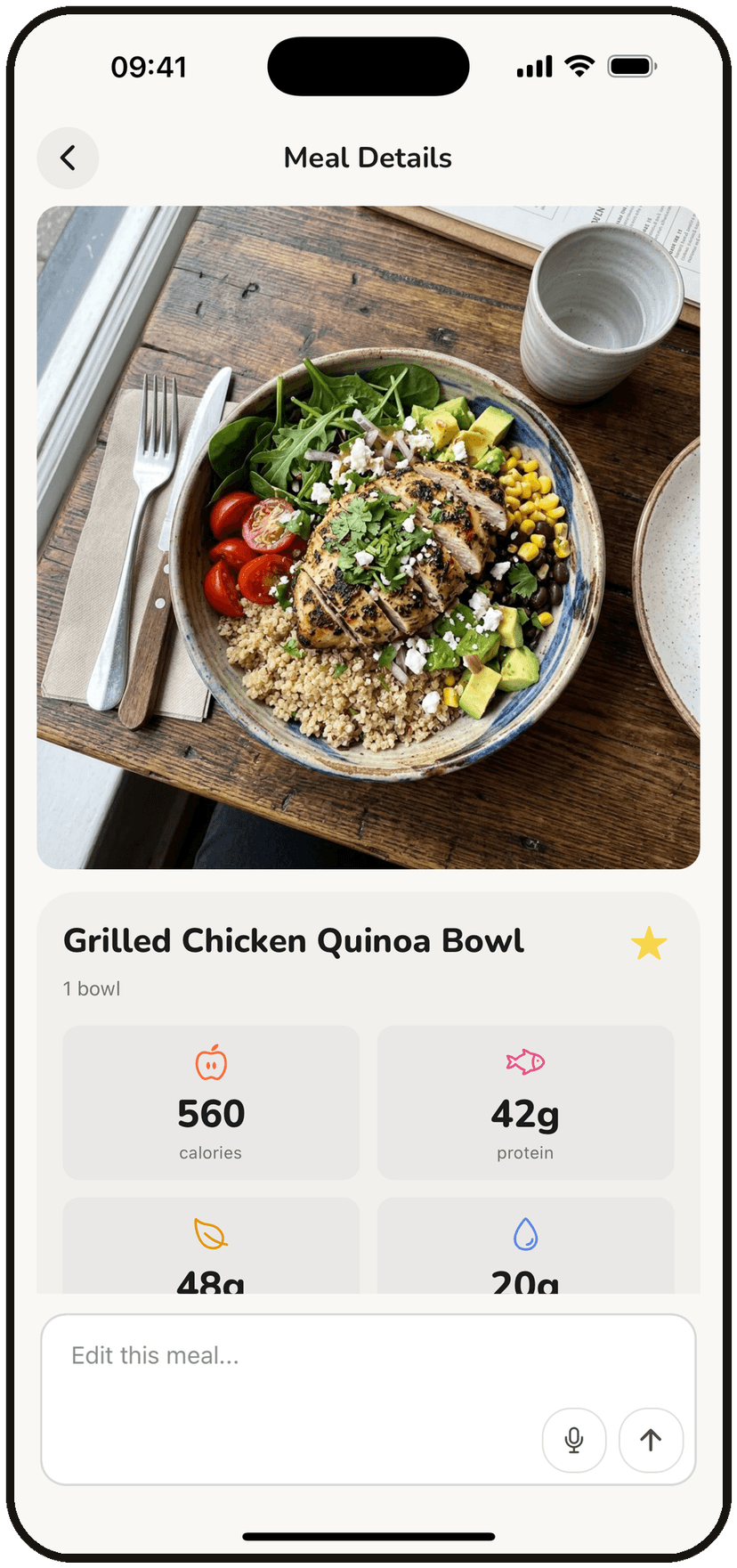
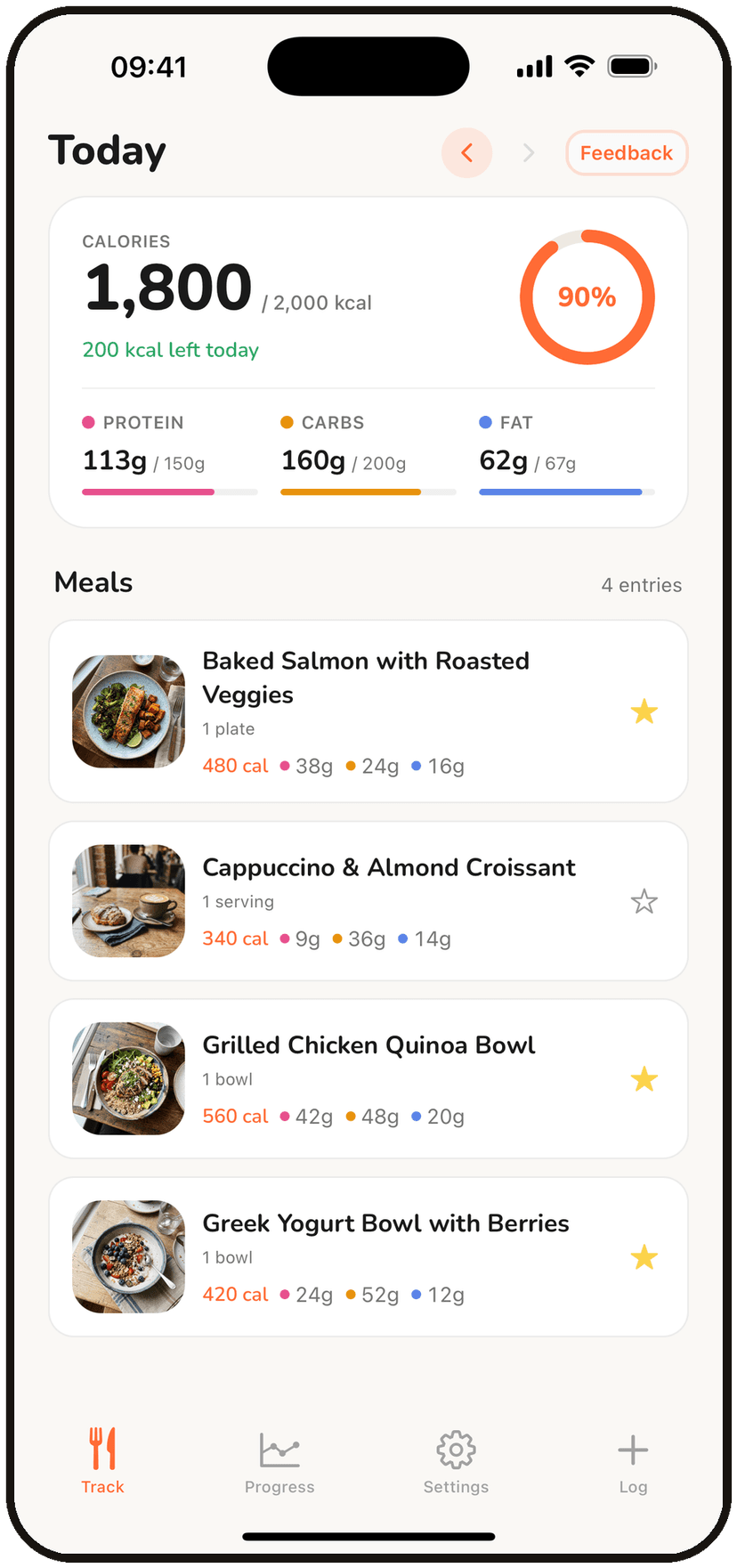
Portion guesses add up fast. BiteKit's AI estimates what's actually on your plate — oils, sides and all — so your log stays close to what you really ate.
- Log meals by photo, voice, or text
- Calories & macros estimated in seconds
- Syncs with Apple Health and Apple Watch
Free download · 3-day free trial, cancel anytime.
Scan with your iPhone camera