Fiber Diversity Score Calculator
Score your daily diet across 10 distinct fiber types — soluble, insoluble, resistant starch, beta-glucan, inulin, pectin, and more — for a complete picture of your microbiome support.
Select Foods You Ate Today
Check every food you consumed today. The calculator will identify which fiber types are covered.
Grains & Starches
Fruits
Vegetables & Alliums
Legumes
Seeds
Supplements
Select at least one food to calculate your score.
Why Fiber Diversity Matters More Than Fiber Amount
For decades, dietary fiber advice focused on a single metric: total grams per day. The current guidelines recommend 25 g for women and 38 g for men. But microbiome science has revealed that this single-number approach misses the most important variable: fiber variety.
Different fiber types are fermented by different microbial species. Eating only high-soluble-fiber foods selectively feeds one group of bacteria while starving others. A truly diverse gut microbiome — linked in research to better immune function, lower systemic inflammation, improved mental health via the gut-brain axis, and reduced risk of metabolic disease — requires feeding a wide range of microbial species with a wide range of substrates.
The landmark 2021 Stanford University study published in Cell found that a high-fiber diet alone did not increase microbiome diversity, while a high-fermented-food diet did. But combining dietary fiber diversity with fermented foods produced the strongest microbiome and immune outcomes. The lesson: the type of fiber you eat — and the breadth of types — matters as much as the amount.
The 10 Fiber Types and What They Do
Not all dietary fibers are structurally alike. Here is a plain-English guide to each type tracked by this calculator:
Soluble Fiber
Dissolves in water to form a viscous gel that slows gastric emptying and nutrient absorption. This produces more stable blood glucose responses and feeds gut bacteria through fermentation. Best sources: oats, apples, citrus, beans, lentils, psyllium husk.
Insoluble Fiber
Does not dissolve in water. Adds bulk to stool, accelerates intestinal transit, and reduces constipation risk. While less fermentable than soluble fiber, it still feeds bacteria and supports colon cell health. Best sources: wheat bran, whole grains, most vegetables, nuts and seeds.
Resistant Starch RS2 and RS3
Resistant starch escapes digestion in the small intestine and acts as a powerful prebiotic in the colon. RS2 is native resistant starch found in raw or minimally processed foods (uncooked oats, green bananas, raw potato starch). RS3 forms when starchy foods like rice, pasta, or potatoes are cooked and then cooled — making yesterday's leftovers nutritionally superior for the microbiome. Resistant starch produces more butyrate than almost any other fiber, and butyrate is the primary fuel for colonocytes (colon cells).
Beta-Glucan
A specialized soluble fiber with the strongest clinical evidence base of any dietary fiber. Beta-glucan is proven to reduce LDL cholesterol, blunt post-meal blood glucose spikes, and enhance immune cell activation. Oats and barley are the primary dietary sources; mushrooms provide a structurally different form with potent immunomodulatory properties.
Inulin and Fructooligosaccharides (FOS)
The most studied class of prebiotic fibers. Inulin and FOS selectively feed Bifidobacterium species, which produce short-chain fatty acids, B vitamins, and compounds that strengthen the gut barrier. Sources include garlic, onion, leeks, asparagus, Jerusalem artichoke (the richest source at up to 19 g per 100 g), chicory root, and dandelion greens. These fibers ferment quickly and can cause gas if introduced too rapidly.
Pectin
Found in the cell walls of fruits and root vegetables. Pectin is highly gel-forming and has strong cholesterol-lowering and gut-barrier-protecting properties. It feeds bacteria that produce butyrate and propionate, two short-chain fatty acids central to metabolic and immune health. Best sources: apples (especially the skin), citrus peel, carrots, and beets.
Arabinoxylan
The main fiber in cereal grains, especially wheat, rye, and corn bran. Arabinoxylan selectively promotes Lactobacillus and Bifidobacterium growth and is associated with improved immune markers. Whole wheat and rye breads are among the most accessible sources. It also slows glucose absorption similarly to beta-glucan.
Cellulose
The most abundant fiber on earth — the structural component of all plant cell walls. Cellulose is largely insoluble and passes through the gut mostly intact, providing mechanical stimulation to the colon lining and supporting transit. Leafy greens, broccoli, and celery are some of the richest sources. While less fermentable than other fiber types, cellulose still contributes to colon health and stool bulk.
Mucilage
A gel-forming hydrophilic fiber secreted by certain seeds and plants to retain moisture. Mucilage from chia seeds, flaxseeds, and okra forms a thick protective coating along the gut lining, reducing irritation, slowing absorption, and feeding fermentative bacteria. Chia and flaxseed are the most practical sources — one tablespoon of chia seeds in water visibly gels within minutes.
Practical Strategies to Maximize Fiber Diversity
The Leftover Advantage
One of the simplest dietary hacks for RS3 is to deliberately cook starches in advance and eat them the next day. Cook a large batch of rice or pasta, refrigerate overnight, and eat cold or reheated. The RS3 content is significantly higher than freshly cooked versions — and reheating does not destroy it.
The Allium Stack
Garlic, onion, leeks, and asparagus all provide inulin/FOS. Cooking these as a flavoring base in most savory meals is a low-effort way to cover the prebiotic fiber category daily. Even half a clove of garlic contributes measurable inulin.
Overnight Oats for RS2 and Beta-Glucan
Standard cooked oatmeal provides beta-glucan and soluble fiber. But overnight oats (uncooked oats soaked in liquid) also provide RS2, since the starch has not been gelatinized by heat. Making overnight oats instead of cooked oats adds an additional fiber type with zero extra effort.
The Seed Habit
A tablespoon of chia seeds or ground flaxseeds added to a smoothie, oatmeal, or yogurt covers the mucilage fiber type — one of the hardest types to obtain from whole foods alone. These seeds also add soluble fiber, insoluble fiber, omega-3 fatty acids, and lignans in a single small addition.
Understanding Your Score
| Score | Rating | What It Means |
|---|---|---|
| 0–20 | Very Low Diversity | 1–2 fiber types; highly selective microbial feeding |
| 21–40 | Low Diversity | 2–4 types; room for significant improvement |
| 41–60 | Moderate Diversity | 4–6 types; good foundation, a few gaps to fill |
| 61–80 | Good Diversity | 6–8 types; feeding a broad microbiome community |
| 81–100 | Excellent Diversity | 8–10 types; top-tier microbiome support |
Frequently Asked Questions
What is fiber diversity and why does it matter for gut health?
Fiber diversity means eating a variety of structurally different fiber types, not just a high total amount. Different fiber types feed different gut bacteria. Broader fiber variety leads to a more diverse microbiome, which is linked to better immune function, lower inflammation, and reduced metabolic disease risk.
What is the difference between RS2 and RS3 resistant starch?
RS2 is native resistant starch found in raw foods like uncooked oats and green bananas. RS3 forms when cooked starchy foods (rice, pasta, potatoes) are cooled — the starch reorganizes into a structure that resists digestion. Both reach the colon intact and act as prebiotics that produce butyrate.
How is the Fiber Diversity Score calculated?
Each of the 10 fiber types is worth 10 points (maximum 100). The calculator identifies which fiber types are present in the foods you selected and adds 10 points per unique type covered. Eating five different foods that all provide only soluble fiber still only counts as 10 points for that type.
What foods are highest in prebiotic inulin and FOS?
Jerusalem artichoke is the richest source (14–19 g per 100 g), followed by chicory root, garlic, leeks, onion, asparagus, and dandelion greens. Even small amounts of garlic and onion cooked into savory meals provide meaningful prebiotic benefits for Bifidobacterium strains.
Can eating too many fiber types at once cause digestive problems?
Yes — introducing high-fermentable fibers like inulin (Jerusalem artichoke, chicory) or mucilage (chia, psyllium) too quickly can cause temporary bloating and gas. Increase fiber diversity gradually over 2–4 weeks and drink plenty of water to allow your microbiome to adapt.
What is a good fiber diversity score to aim for?
A score of 60 (6 fiber types) is considered good diversity. Most people eating a mixed diet naturally hit 3–5 types. Consistently scoring 70–80 (7–8 types) is a realistic and impactful target for microbiome support, with 90–100 being excellent but requiring deliberate food choices.
Related Tools
iPhone app · 3-day free trial
You're likely eating 500 calories more than you think
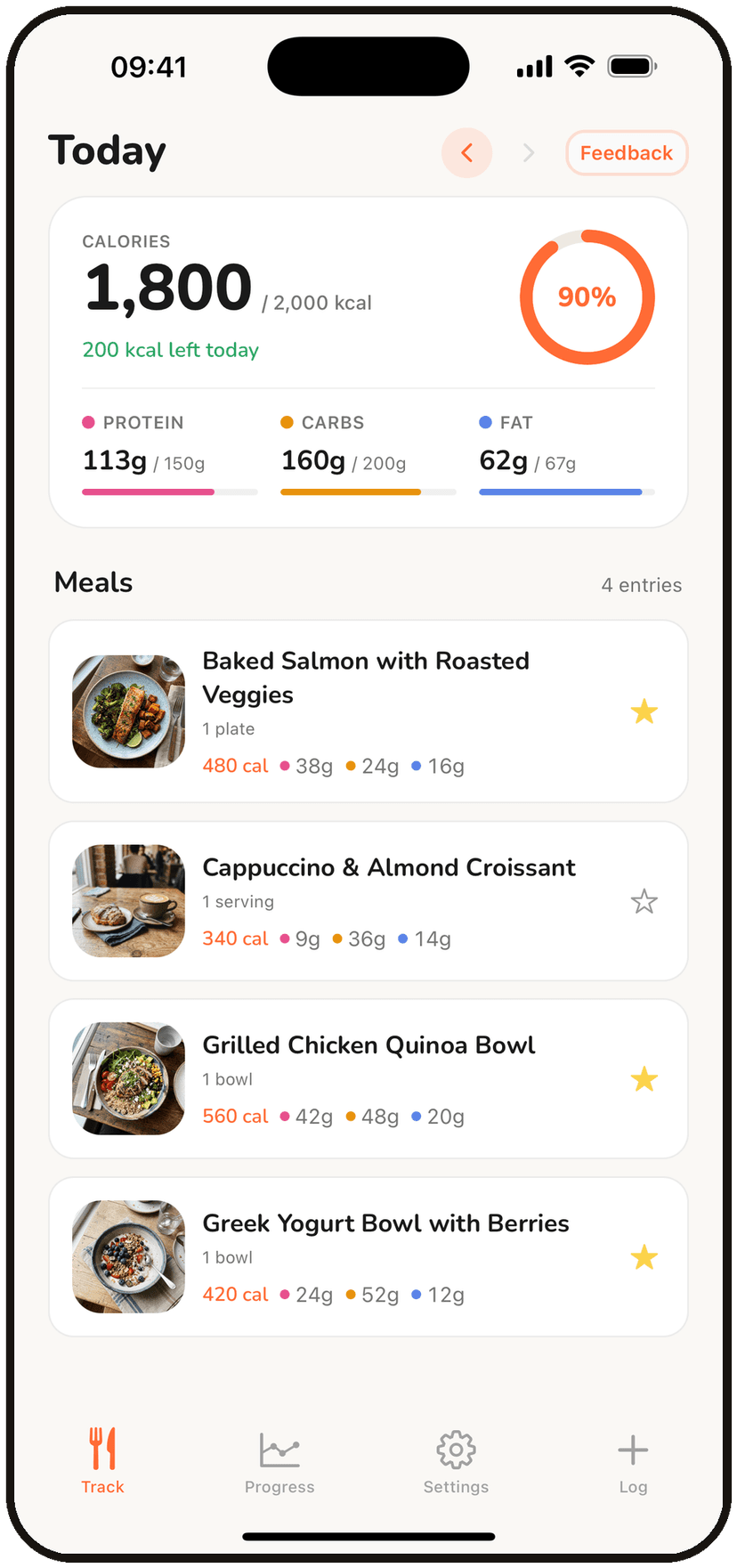
Portion guesses add up fast. BiteKit's AI estimates what's actually on your plate — oils, sides and all — so your log stays close to what you really ate.
- Log meals by photo, voice, or text
- Calories & macros estimated in seconds
- Syncs with Apple Health and Apple Watch
Free download · 3-day free trial, cancel anytime.
Scan with your iPhone camera