Fiber Intake Calculator
Calculate your optimal daily fiber intake based on your age, gender, and health goals. Get a personalized breakdown of soluble vs insoluble fiber with high-fiber food suggestions.
Why Fiber Matters
Dietary fiber is one of the most important yet under-consumed nutrients. Despite its proven benefits for digestive health, heart health, and weight management, most adults consume only about 15 grams of fiber per day - roughly half of the recommended amount.
Fiber plays a critical role in your body. It feeds the beneficial bacteria in your gut (your microbiome), helps regulate blood sugar levels by slowing the absorption of carbohydrates, lowers LDL cholesterol by binding to bile acids, promotes regular bowel movements, and increases satiety to help control appetite. Getting enough fiber is one of the simplest and most impactful changes you can make to improve your overall health.
Types of Fiber: Soluble vs Insoluble
Not all fiber is the same. There are two main types, and both are essential for good health:
Soluble Fiber
- How it works: Dissolves in water to form a gel-like substance
- Benefits: Lowers cholesterol, stabilizes blood sugar, feeds gut bacteria
- Best sources: Oats, beans, lentils, apples, citrus fruits, barley
- Target: About 25-40% of total fiber intake
Insoluble Fiber
- How it works: Does not dissolve in water, adds bulk to stool
- Benefits: Promotes regularity, prevents constipation, supports colon health
- Best sources: Whole wheat, vegetables, nuts, seeds, potato skins
- Target: About 60-75% of total fiber intake
Note: Most plant foods contain both types of fiber. Eating a variety of fruits, vegetables, whole grains, and legumes will naturally provide a good balance of soluble and insoluble fiber.
How to Increase Fiber Intake Safely
Adding too much fiber too quickly can cause gas, bloating, and cramping. Follow these guidelines to increase your fiber intake comfortably:
Go Slow: Add 5g Per Week
If you currently eat 15g of fiber per day and your goal is 30g, increase by about 5g each week. This gives your gut bacteria time to adjust and minimizes digestive discomfort.
Drink Plenty of Water
Fiber absorbs water as it moves through your digestive system. Without adequate hydration, high fiber intake can actually worsen constipation. Aim for at least 8 glasses of water per day.
Spread It Across Meals
Rather than loading all your fiber into one meal, distribute it evenly across breakfast, lunch, and dinner. This is easier on your digestion and helps maintain steady blood sugar levels throughout the day.
Choose Whole Foods Over Supplements
Whole food sources of fiber come packaged with vitamins, minerals, and antioxidants that supplements cannot replicate. Prioritize beans, lentils, vegetables, fruits, and whole grains over fiber powders.
Fiber and Weight Management
Fiber is one of the most effective natural tools for managing body weight. Research consistently shows that people who eat more fiber tend to have lower body weight, and increasing fiber intake can support fat loss even without other dietary changes.
Increased Satiety
Fiber-rich foods take longer to chew and digest, keeping you full longer and naturally reducing calorie intake
Blood Sugar Control
Soluble fiber slows glucose absorption, preventing blood sugar spikes that trigger hunger and fat storage
Gut Health
Fiber feeds beneficial gut bacteria that produce short-chain fatty acids, linked to healthy metabolism and weight
A study published in the Annals of Internal Medicine found that simply aiming to eat 30 grams of fiber per day can help with weight loss nearly as effectively as more complex diets. Adding fiber-rich foods is a simple, sustainable strategy that doesn't require calorie counting or eliminating food groups.
Frequently Asked Questions
How much fiber should I eat per day?
The USDA recommends 38 grams per day for men aged 50 and younger, 30 grams for men over 50, 25 grams for women aged 50 and younger, and 21 grams for women over 50. If you have specific health goals like weight loss or heart health, you may benefit from slightly higher amounts.
What is the difference between soluble and insoluble fiber?
Soluble fiber dissolves in water and forms a gel-like substance that helps lower cholesterol and stabilize blood sugar. Insoluble fiber does not dissolve and adds bulk to stool, promoting regular bowel movements. Both types are important and most plant foods contain a mix of both.
Can you eat too much fiber?
Yes, consuming more than 50 grams of fiber per day can cause bloating, gas, cramping, and even nutrient malabsorption. It's important to increase fiber gradually and drink plenty of water. If you experience persistent discomfort, reduce your intake and increase more slowly.
What are the best high-fiber foods?
Legumes like lentils (15.6g per cup) and black beans (15g per cup) are among the highest-fiber foods. Other excellent sources include chia seeds (9.8g per 2 tbsp), avocado (10g per fruit), pears (5.5g each), broccoli (5.1g per cup cooked), oats (4g per cup cooked), and almonds (3.5g per ounce).
Does fiber help with weight loss?
Yes, fiber supports weight loss by increasing satiety, slowing digestion, stabilizing blood sugar, and feeding beneficial gut bacteria. Research shows that simply aiming for 30 grams of fiber per day can support meaningful weight loss, even without other dietary changes.
How do I increase fiber intake without digestive discomfort?
Increase fiber gradually by about 5 grams per week. Drink at least 8 glasses of water per day, as fiber absorbs water during digestion. Spread your fiber across all meals rather than eating it all at once, and prioritize whole food sources like vegetables, fruits, and legumes over fiber supplements.
iPhone app · 3-day free trial
You're likely eating 500 calories more than you think
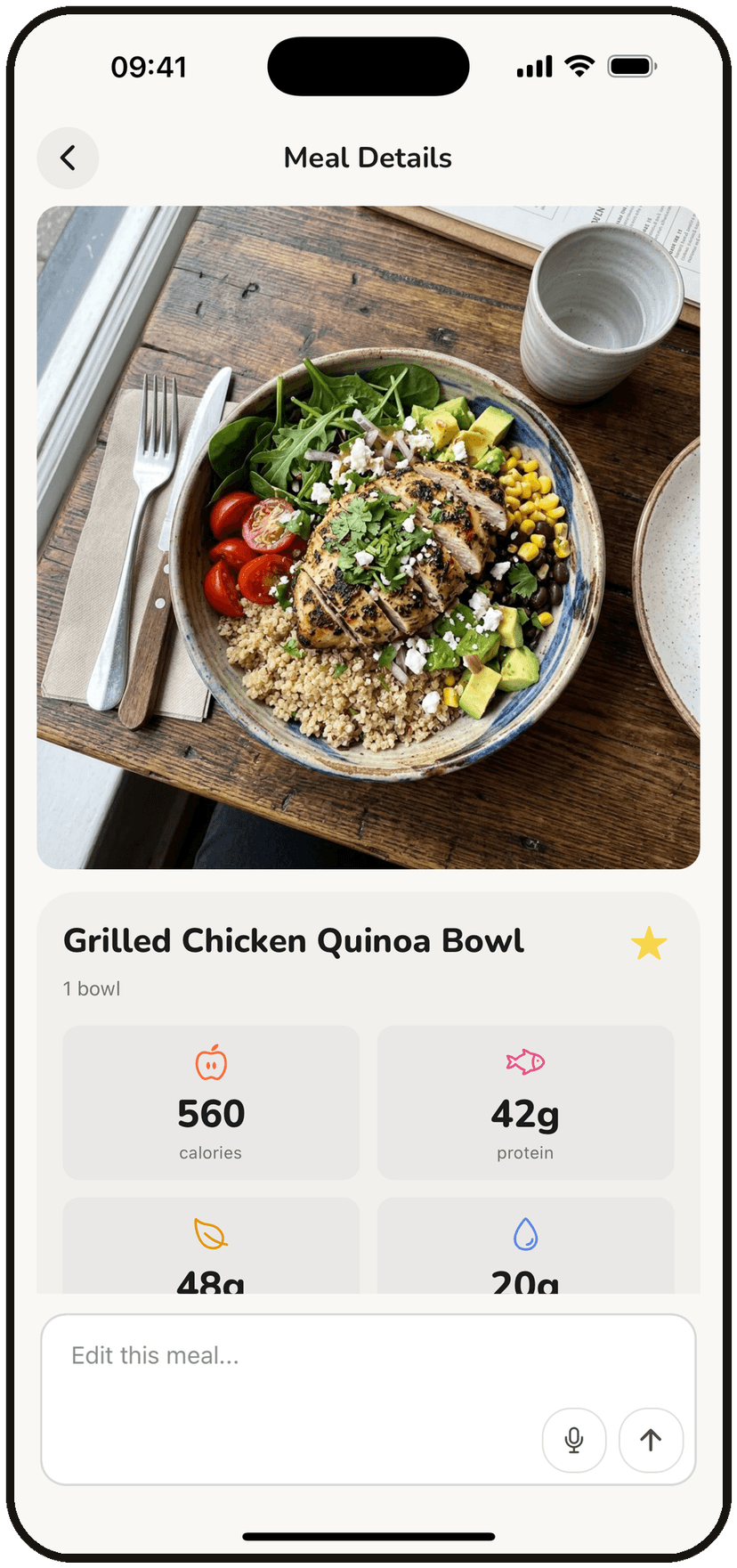
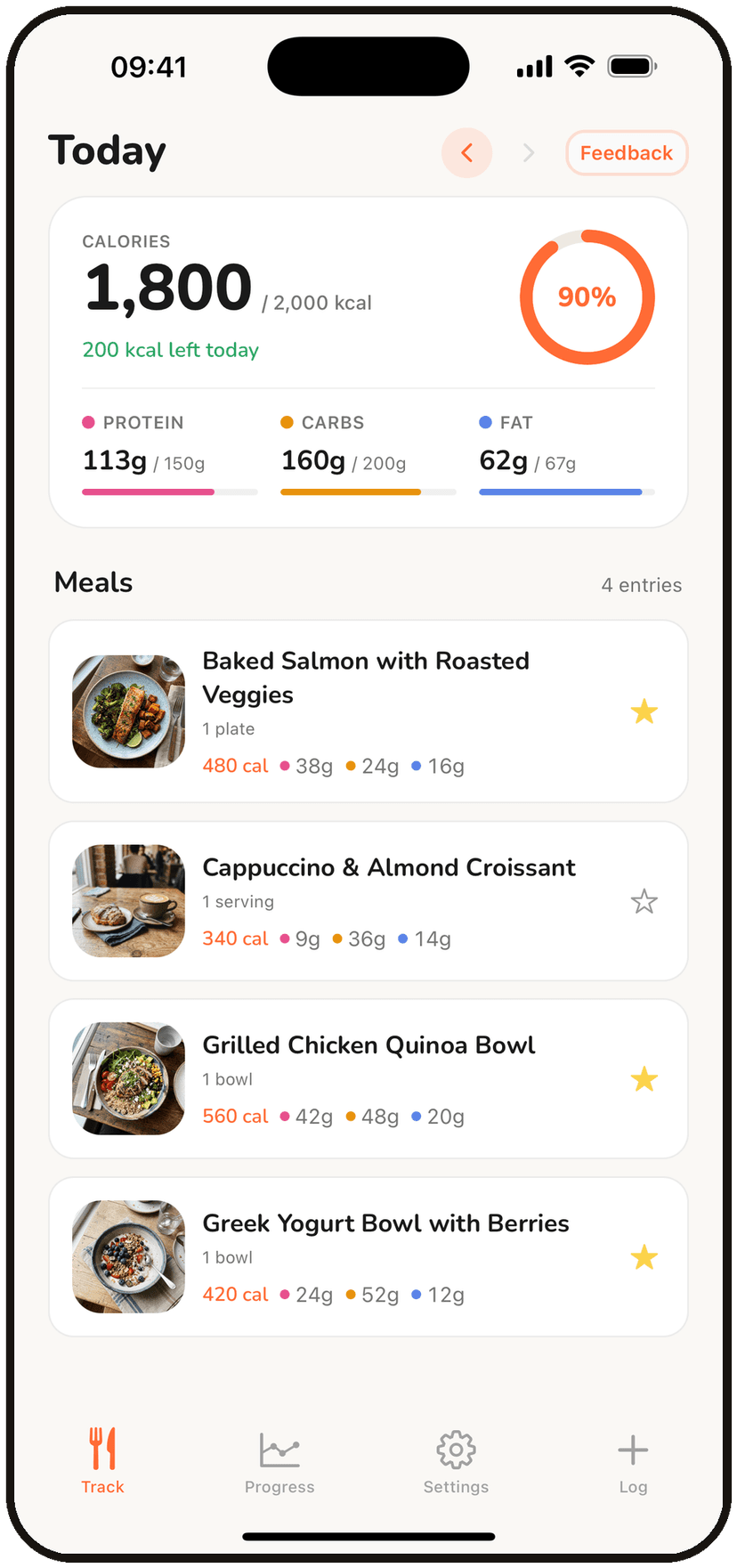
Portion guesses add up fast. BiteKit's AI estimates what's actually on your plate — oils, sides and all — so your log stays close to what you really ate.
- Log meals by photo, voice, or text
- Calories & macros estimated in seconds
- Syncs with Apple Health and Apple Watch
Free download · 3-day free trial, cancel anytime.
Scan with your iPhone camera