Insulin Resistance Risk Calculator
Assess your insulin resistance risk using the validated TyG (Triglyceride-Glucose) index. Enter your fasting triglycerides and glucose from routine blood work to get your risk level with personalized dietary recommendations.
What is the TyG Index?
The Triglyceride-Glucose (TyG) index is a validated biomarker for estimating insulin resistance. It is calculated from fasting triglyceride and fasting glucose levels using the formula: TyG = ln(Triglycerides [mg/dL] × Glucose [mg/dL] / 2). Higher values indicate greater insulin resistance. The TyG index correlates well with the hyperinsulinemic-euglycemic clamp, the gold standard for measuring insulin sensitivity.
What is Insulin Resistance?
Insulin resistance occurs when cells in your muscles, fat, and liver don't respond well to the hormone insulin. Insulin is produced by the pancreas and acts as a key that unlocks cells to allow glucose (blood sugar) to enter and be used for energy. When cells become resistant to insulin's signal, the pancreas compensates by producing even more insulin.
This creates a vicious cycle: higher insulin levels can lead to increased fat storage (especially around the abdomen), elevated triglycerides, and eventually higher blood sugar as the pancreas can no longer keep up with demand. Insulin resistance is a precursor to type 2 diabetes, but it also independently increases risk for cardiovascular disease, non-alcoholic fatty liver disease, and polycystic ovary syndrome (PCOS).
The good news is that insulin resistance is largely reversible through lifestyle changes. Research consistently shows that diet modifications, regular exercise, and weight management can significantly improve insulin sensitivity, often within weeks to months.
Understanding the TyG Index
The Triglyceride-Glucose (TyG) index was developed as a practical, accessible marker for insulin resistance. Unlike the gold-standard hyperinsulinemic-euglycemic clamp test (which is expensive and only used in research), or HOMA-IR (which requires an insulin measurement not always included in routine labs), the TyG index uses only fasting triglycerides and fasting glucose — two values found on virtually every standard blood panel.
The Formula
TyG = ln(Fasting Triglycerides [mg/dL] × Fasting Glucose [mg/dL] / 2). The natural logarithm normalizes the wide range of possible values into a manageable scale, typically between 7.0 and 10.0.
Research Validation
Multiple large-scale studies have validated the TyG index as a reliable surrogate marker for insulin resistance. A 2010 study by Guerrero-Romero et al. found that a TyG index of 8.5 or higher had 82.6% sensitivity and 82.1% specificity for detecting insulin resistance compared to the clamp method.
Why Triglycerides Matter
Elevated fasting triglycerides are a hallmark of insulin resistance. When cells resist insulin, excess glucose is converted to fat (triglycerides) in the liver. This is why the combination of triglycerides and glucose provides a more complete picture of insulin resistance than either marker alone.
Diet Strategies for Insulin Sensitivity
What you eat has a direct and powerful impact on insulin sensitivity. Research has identified several dietary patterns and specific nutrients that can help reverse insulin resistance.
Foods That Help
- Fiber-rich vegetables — broccoli, leafy greens, artichokes
- Legumes — lentils, chickpeas, black beans
- Fatty fish — salmon, sardines, mackerel
- Nuts and seeds — almonds, walnuts, flaxseeds
- Whole grains — oats, quinoa, barley
- Berries — blueberries, raspberries, strawberries
Foods to Limit
- Sugary beverages — soda, juice, sweetened coffee
- Refined grains — white bread, white rice, pastries
- Ultra-processed foods — chips, candy, fast food
- Trans fats — fried foods, margarine, packaged snacks
- Excess alcohol — raises triglycerides significantly
- Added sugars — hidden in sauces, dressings, yogurts
Key takeaway: A Mediterranean-style diet consistently ranks among the most effective eating patterns for improving insulin sensitivity. It emphasizes vegetables, legumes, fish, olive oil, and whole grains while limiting processed foods and added sugars. Use our Glycemic Load Calculator to make smarter carb choices that keep blood sugar stable.
Exercise and Lifestyle for Better Insulin Sensitivity
Physical activity is one of the most powerful tools for combating insulin resistance. Exercise improves insulin sensitivity through multiple mechanisms, and the benefits begin with the very first session.
Aerobic Exercise
Brisk walking, cycling, or swimming for 150+ minutes per week can improve insulin sensitivity by 25-50%. Even a single bout of moderate exercise enhances glucose uptake by muscles for up to 48 hours afterward.
Resistance Training
Strength training 2-3 times per week builds muscle mass, which is your body's primary glucose disposal site. More muscle means more capacity to absorb blood sugar without relying as heavily on insulin.
Sleep Quality
Just one night of poor sleep can reduce insulin sensitivity by 25-33%. Chronic sleep deprivation raises cortisol and disrupts the hormones that regulate glucose metabolism. Aim for 7-9 hours nightly.
Stress Management
Chronic stress elevates cortisol, which directly promotes insulin resistance and visceral fat storage. Regular stress-reduction practices like walking, meditation, or deep breathing can meaningfully improve metabolic markers.
Frequently Asked Questions
What is insulin resistance?
Insulin resistance is a condition where your body's cells become less responsive to insulin, the hormone that moves glucose from your blood into cells for energy. When cells resist insulin's signal, the pancreas produces more insulin to compensate, leading to elevated blood insulin levels. Over time, this can result in higher blood sugar, type 2 diabetes, and other metabolic complications.
What is the TyG index and how is it calculated?
The TyG (Triglyceride-Glucose) index is a validated biomarker for estimating insulin resistance. It uses the formula: TyG = ln(Fasting Triglycerides [mg/dL] × Fasting Glucose [mg/dL] / 2). It correlates well with the gold-standard hyperinsulinemic-euglycemic clamp test and can be easily calculated from routine blood work without needing a separate insulin measurement.
What is a normal TyG index value?
A TyG index below 8.0 is generally considered low risk for insulin resistance. Values between 8.0 and 8.5 suggest moderate risk, 8.5 to 9.0 indicates high risk, and above 9.0 suggests very high risk. These cutoffs are based on research correlating TyG values with clinical measures of insulin resistance, though optimal ranges may vary slightly across different populations.
How can I improve my insulin sensitivity?
The most effective strategies include regular exercise (both aerobic and strength training), reducing refined carbohydrates and added sugars, increasing dietary fiber to 25-35g per day, maintaining a healthy weight, eating whole foods like vegetables, legumes, and fatty fish, getting 7-9 hours of sleep, and managing stress. A Mediterranean-style diet has strong evidence for improving insulin sensitivity.
How often should I check my TyG index?
If your TyG index is in the low-risk range, annual fasting blood work is generally sufficient. For moderate risk, check every 6 months while implementing lifestyle changes. For high or very high risk, recheck after 3-6 months of modifications and consult a healthcare provider for additional testing and guidance.
Is the TyG index better than HOMA-IR?
Both are useful markers, but the TyG index has practical advantages: it does not require an insulin measurement (which isn't always included in standard blood panels), making it easier and cheaper to calculate. Multiple studies show the TyG index has comparable or slightly better sensitivity than HOMA-IR for identifying insulin resistance when compared to the gold-standard clamp test.
iPhone app · 3-day free trial
You're likely eating 500 calories more than you think
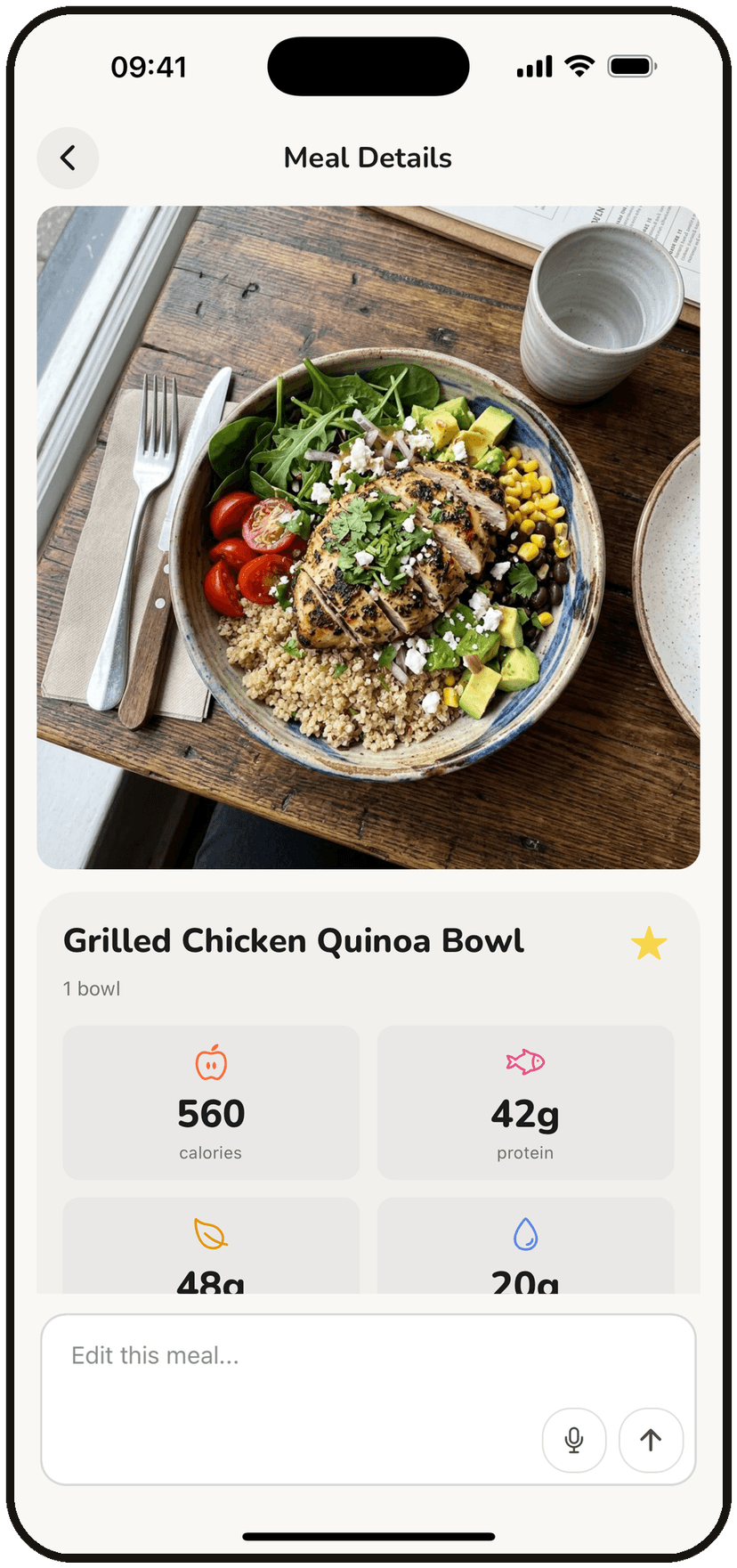
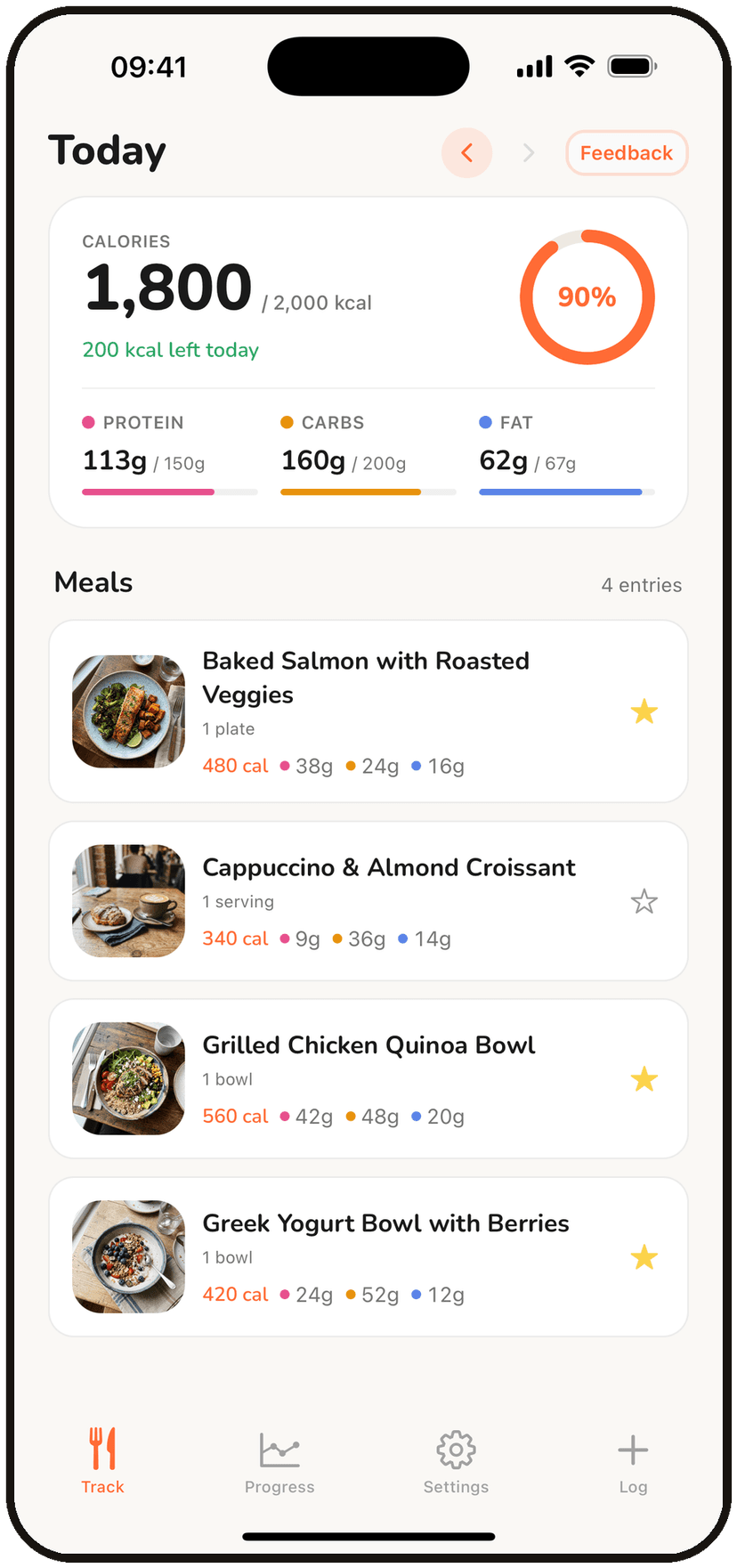
Portion guesses add up fast. BiteKit's AI estimates what's actually on your plate — oils, sides and all — so your log stays close to what you really ate.
- Log meals by photo, voice, or text
- Calories & macros estimated in seconds
- Syncs with Apple Health and Apple Watch
Free download · 3-day free trial, cancel anytime.
Scan with your iPhone camera