Lean Body Mass Calculator
Calculate your lean body mass using three proven formulas - Boer, James, and Hume. Understand your body composition with LBM, fat mass, and body fat percentage estimates.
What is Lean Body Mass?
Lean body mass (LBM) is the total weight of your body minus all stored body fat. It includes your muscles, bones, organs, skin, blood, water, and connective tissue - essentially everything that isn't fat.
Unlike total body weight, lean body mass gives you a clearer picture of your body composition. Two people can weigh the same but have vastly different amounts of lean mass and fat, which impacts their metabolic rate, strength, and overall health.
The Three LBM Formulas
Our calculator uses three well-established formulas to estimate lean body mass. Each was developed through clinical research and uses your weight, height, and gender as inputs:
Boer Formula (1984)
Males: LBM = 0.407 x Weight(kg) + 0.267 x Height(cm) - 19.2. Females: LBM = 0.252 x Weight(kg) + 0.473 x Height(cm) - 48.3. The Boer formula is considered one of the most accurate estimation methods across diverse populations.
James Formula (1976)
Males: LBM = 1.1 x Weight - 128 x (Weight/Height)². Females: LBM = 1.07 x Weight - 148 x (Weight/Height)². The James formula is widely used in clinical pharmacology for drug dosing calculations based on lean mass.
Hume Formula (1966)
Males: LBM = 0.3281 x Weight(kg) + 0.3393 x Height(cm) - 29.5336. Females: LBM = 0.2957 x Weight(kg) + 0.4181 x Height(cm) - 43.2933. One of the earliest validated formulas, the Hume method remains well-regarded in research.
Why Lean Body Mass Matters
Understanding your lean body mass is valuable for several reasons beyond simple weight tracking:
Accurate Calorie Targets
Lean body mass is the primary driver of your basal metabolic rate. Knowing your LBM allows for more precise calorie calculations than using total body weight alone.
Better Protein Goals
Setting protein intake based on lean body mass rather than total weight is more accurate, especially for people with higher body fat percentages.
Track Real Progress
Scale weight can be misleading. Tracking lean body mass over time helps you see if you're gaining muscle, losing fat, or both during a body recomposition.
Health Indicator
Higher lean body mass relative to total weight is associated with better metabolic health, stronger bones, improved insulin sensitivity, and greater functional strength.
LBM vs Body Fat Percentage
Lean body mass and body fat percentage are two sides of the same coin. If your body fat percentage is 20%, then your lean body mass makes up 80% of your total weight. Together, they paint a complete picture of your body composition.
Healthy body fat ranges vary by gender: typically 10-20% for males and 18-28% for females. Athletes often have lower body fat, while essential fat (the minimum needed for basic health) is approximately 3-5% for males and 10-13% for females.
For a more detailed body fat analysis, try our Body Fat Calculator which uses the Navy Method with body measurements, or our FFMI Calculator to see how your lean mass compares to your height.
Frequently Asked Questions
What is lean body mass (LBM)?
Lean body mass is the total weight of your body minus all stored body fat. It includes muscles, bones, organs, water, and connective tissue. LBM is a key metric for understanding your body composition and setting accurate nutrition targets.
Why is lean body mass important?
LBM determines your basal metabolic rate, helps set accurate protein targets, and is a better fitness indicator than total weight. Tracking changes in lean body mass helps you distinguish between fat loss and muscle gain over time.
Which formula is the most accurate?
No single formula is universally most accurate. The Boer formula tends to perform well across populations, James is widely used in clinical settings, and Hume is well-validated in research. We recommend using the average of all three for the most reliable estimate.
How does LBM differ from FFMI?
LBM is a raw weight measurement (e.g., 150 lbs of lean mass), while FFMI (Fat-Free Mass Index) normalizes lean mass relative to height, similar to how BMI works. FFMI allows you to compare lean mass between people of different heights.
Can I increase my lean body mass?
Yes, through resistance training, adequate protein intake (0.7-1g per pound of body weight), sufficient calories, and proper recovery. Progressive overload in strength training is the most effective way to build lean mass over time.
How often should I recalculate?
Every 4-8 weeks if actively training or dieting. Since these are estimation formulas based on weight and height, meaningful changes take time. Pair LBM tracking with progress photos and body measurements for the best results.
iPhone app · 3-day free trial
You're likely eating 500 calories more than you think
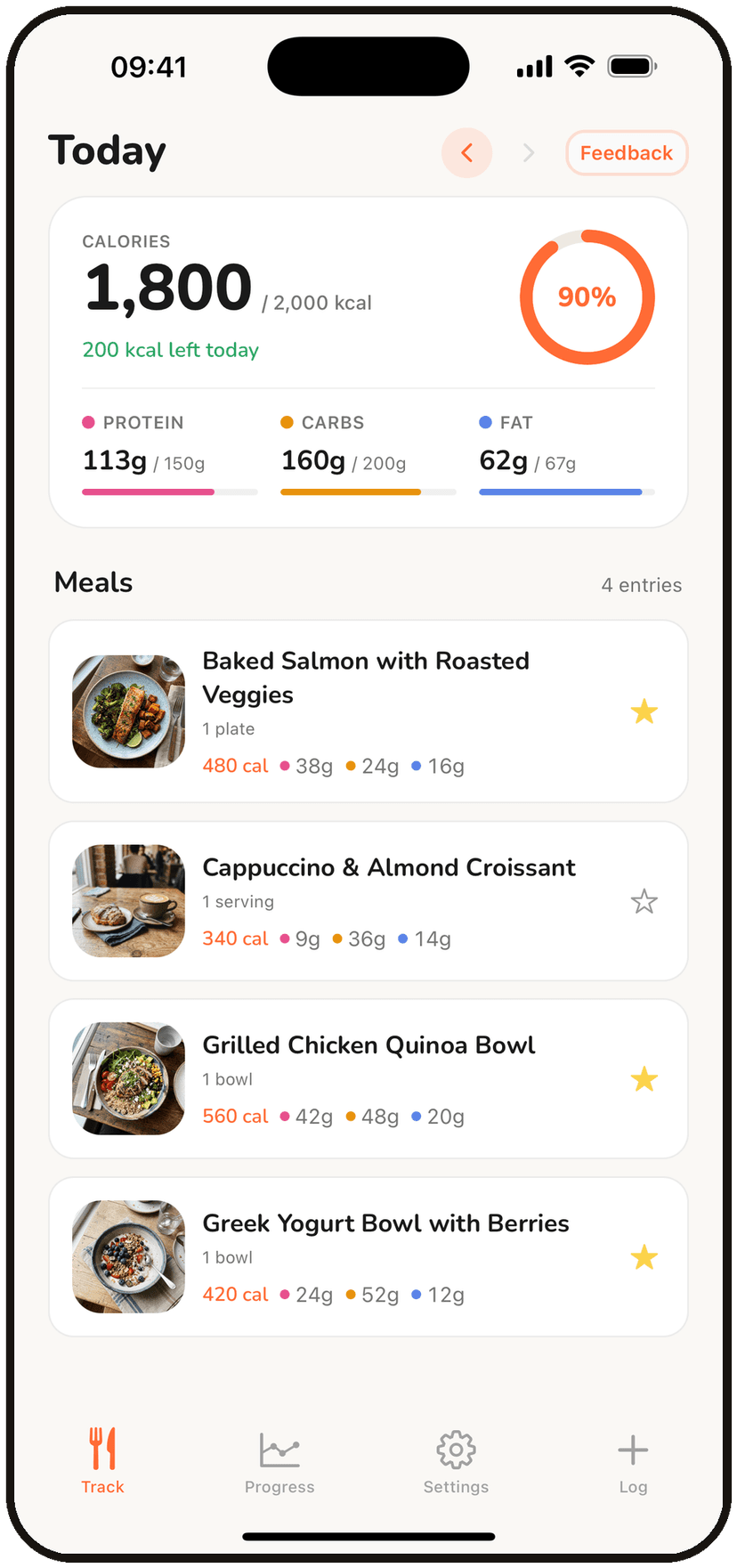
Portion guesses add up fast. BiteKit's AI estimates what's actually on your plate — oils, sides and all — so your log stays close to what you really ate.
- Log meals by photo, voice, or text
- Calories & macros estimated in seconds
- Syncs with Apple Health and Apple Watch
Free download · 3-day free trial, cancel anytime.
Scan to get the app