Leucine Threshold Calculator
Calculate the minimum grams of protein per meal — from any source — needed to cross the leucine threshold and trigger maximal muscle protein synthesis. Adjusted for protein quality and age.
Calculate how much protein you need per meal — from each source — to trigger the leucine threshold for muscle protein synthesis (MPS).
Age determines your leucine threshold — older adults need more leucine per meal
What Is the Leucine Threshold?
Leucine is the most critical amino acid for muscle protein synthesis (MPS). It acts as a metabolic signal — when blood leucine levels rise above a certain threshold, it activates mTORC1, a key molecular switch that turns on the MPS machinery in muscle cells.
The threshold model was formalized by researcher Stuart Phillips and refined by Layne Norton and others. The key insight: it is not total daily protein but the leucine content of each individual meal that determines whether you trigger MPS. A meal that does not cross the leucine threshold may provide amino acids but fails to maximally activate muscle building.
For young adults, ~2.5g leucine per meal is the trigger point. This explains why 20g of whey (providing ~2.2g leucine) is nearly as effective as 40g for acute MPS in trained individuals — both cross the threshold. But for older adults, the threshold rises to 3.5-4g, fundamentally changing optimal meal protein targets.
Why Age Changes Everything
Anabolic resistance is the age-related blunting of the muscle protein synthesis response to amino acids. In older adults, the same leucine dose that maximally stimulates MPS in a 25-year-old may only produce a submaximal response. The mTORC1 signaling cascade becomes less sensitive, and greater leucine is required to achieve equivalent activation.
| Age Group | Leucine Threshold | Whey Needed | Chicken Needed |
|---|---|---|---|
| 18-40 (Young) | ~2.5g | ~23g protein | ~31g protein |
| 40-65 (Middle) | ~3.2g | ~29g protein | ~40g protein |
| 65+ (Older) | ~3.7g | ~34g protein | ~47g protein |
Leucine Content of Common Protein Sources
The leucine percentage (leucine as a share of total protein) determines how efficiently each source crosses your threshold. Higher leucine % = less total protein needed per meal.
Whey protein
11%Highest
Best post-workout choice
Milk / Casein
9.3-9.8%Excellent
Sustained release; ideal pre-bed
Egg protein
8.6%Very Good
Whole foods benchmark
Beef / Chicken / Pork
8%Good
4 oz chicken = ~36g protein = ~2.9g leucine
Pea / Rice protein
8-8.2%Good
Best plant options; blend together
Hemp protein
5.9%Low
Requires ~50g protein to hit threshold
Practical Applications
Optimizing post-workout nutrition
Time your highest-leucine meal (or shake) within 2 hours of training. Even 20-25g of whey post-workout will cross the MPS threshold for most people under 60.
Vegan muscle building
Use a pea/rice blend (which mimics whey's amino acid profile) and aim for 35-40g protein per meal. Consider adding leucine powder (available in bulk) to further boost leucine content.
Older adult muscle preservation
Distribute 35-50g protein across 3-4 meals rather than concentrating protein at dinner. Each meal must independently cross the higher leucine threshold — one large protein meal does not "carry over."
Meal planning with food
A 4 oz chicken breast (28g protein, ~2.24g leucine) barely crosses the threshold for young adults but falls short for older adults. Adding a side of Greek yogurt or a protein drink bridges the gap.
Frequently Asked Questions
What is the leucine threshold for muscle growth?
The leucine threshold is the minimum leucine per meal to maximally activate mTORC1 and muscle protein synthesis. For young adults: ~2.5g per meal. Middle-aged adults: ~3.0-3.5g. Older adults (65+): ~3.5-4g. This is why protein quality (leucine %) matters as much as protein quantity.
Does it matter what time of day I hit the leucine threshold?
Post-workout timing is most impactful — muscle is most sensitive to amino acids in the 1-2 hours after training. However, every meal matters for daily MPS. Spreading leucine-adequate protein across 3-4 meals is more effective than one large protein meal, because MPS responds to each individual leucine stimulus, not total daily intake.
Why does whey outperform other proteins for muscle growth?
Whey has the highest leucine percentage (11%) and is rapidly digested, creating a sharp blood leucine spike that crosses the MPS threshold efficiently. 20-25g of whey provides ~2.2-2.75g leucine — usually enough to trigger MPS in younger adults at a minimal dose. Slower proteins like casein require more total grams to achieve the same leucine peak.
Can I add leucine powder to plant proteins?
Yes — adding 2-3g of leucine powder to a plant protein shake is an effective strategy for vegans. Leucine powder is inexpensive and tasteless. This “leucine top-up” approach lets you use lower-cost plant proteins while still triggering full MPS. Research confirms that leucine supplementation rescues the inferior MPS response from soy and other plant proteins.
How many grams of protein per meal do I need?
A practical guideline is 0.3-0.4g per kg body weight per meal, distributed across 3-4 meals. For a 80kg person, this means 24-32g protein per meal. For older adults, 0.4-0.5g/kg per meal is more appropriate. These ranges naturally provide adequate leucine from high-quality sources like whey, eggs, and meat.
iPhone app · 3-day free trial
You're likely eating 500 calories more than you think
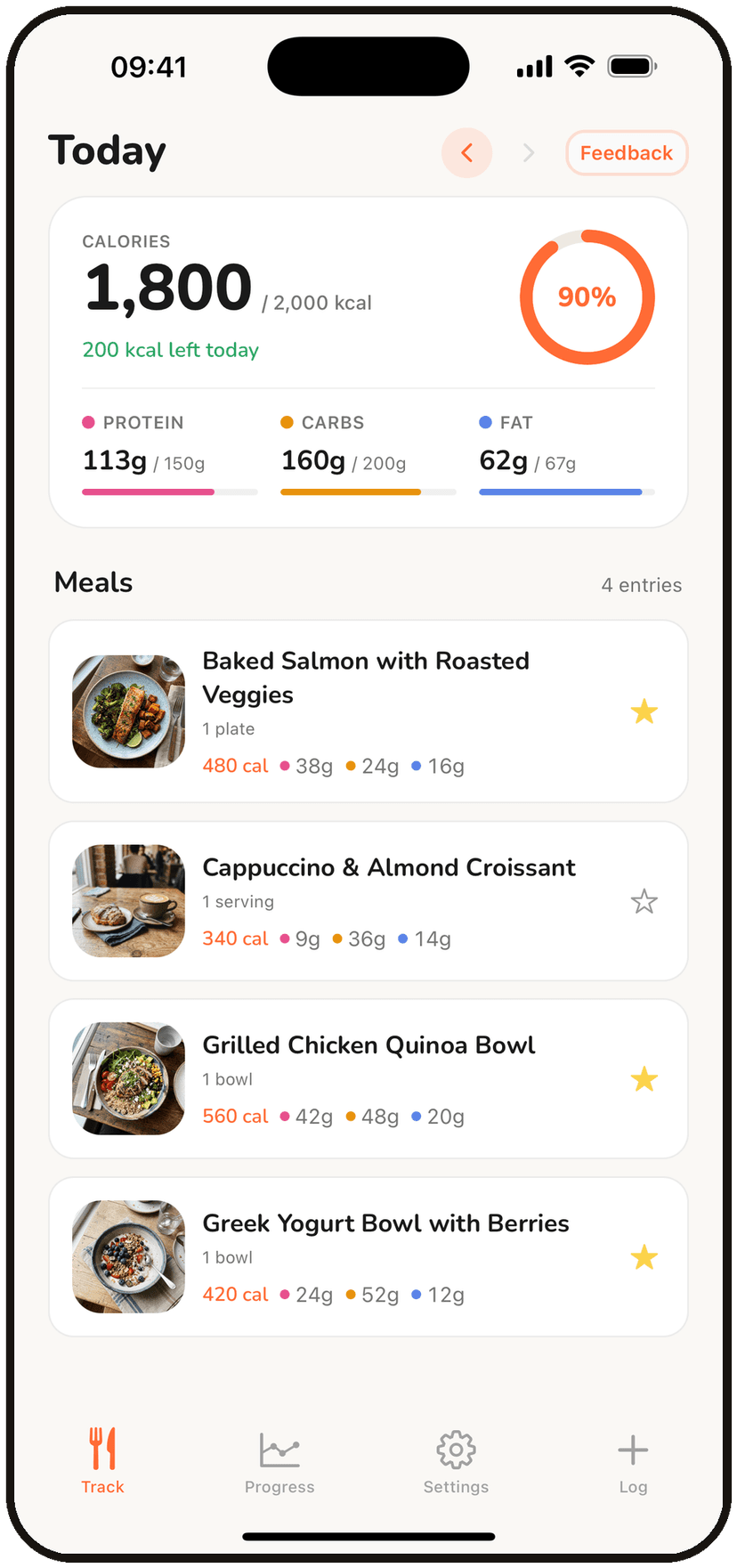
Portion guesses add up fast. BiteKit's AI estimates what's actually on your plate — oils, sides and all — so your log stays close to what you really ate.
- Log meals by photo, voice, or text
- Calories & macros estimated in seconds
- Syncs with Apple Health and Apple Watch
Free download · 3-day free trial, cancel anytime.
Scan with your iPhone camera