Macro Calculator
Calculate your optimal protein, carbohydrates, and fat intake based on your goals. Get personalized macro targets for weight loss, muscle building, or maintenance.
What Are Macros?
Macros (short for macronutrients) are the three main nutrients your body needs in large amounts: protein, carbohydrates, and fat. Each macronutrient provides calories and plays a unique role in your body.
Protein
4 calories per gram. Builds and repairs muscle, supports immune function, and keeps you feeling full. Essential for anyone trying to lose fat or build muscle.
Carbohydrates
4 calories per gram. Your body's preferred energy source, especially for high-intensity exercise. Includes sugars, starches, and fiber.
Fat
9 calories per gram. Supports hormone production, absorbs vitamins, and provides sustained energy. Essential for overall health.
How to Calculate Your Macros
Our macro calculator uses a simple three-step process to determine your optimal macronutrient intake:
Step 1: Calculate Your TDEE
Using the Mifflin-St Jeor equation, we calculate your Basal Metabolic Rate (BMR) and multiply it by your activity level to get your Total Daily Energy Expenditure (TDEE).
Step 2: Adjust for Your Goal
Weight loss: TDEE minus 20% (calorie deficit). Muscle gain: TDEE plus 10% (calorie surplus). Maintenance: Eat at TDEE. Body recomposition: TDEE minus 10% with higher protein.
Step 3: Split into Macros
Your target calories are divided between protein, carbs, and fat based on your diet preference. Convert percentages to grams using: protein/carbs = calories ÷ 4, fat = calories ÷ 9.
Macros for Different Goals
Weight Loss
Higher protein (30-40%) preserves muscle during a deficit. Moderate fat for satiety. Carbs can be flexible based on preference.
Suggested: 40/30/30 (P/C/F)
Maintenance
Balanced approach works well. Adequate protein for muscle, carbs for energy, fats for health.
Suggested: 30/35/35 (P/C/F)
Muscle Building
High protein for muscle synthesis. Adequate carbs fuel intense workouts. Moderate fat supports hormones.
Suggested: 35/40/25 (P/C/F)
Body Recomposition
Build muscle while losing fat. Requires high protein, slight deficit, and consistent strength training.
Suggested: 40/30/30 (P/C/F)
Macro-Friendly Foods
High Protein Foods
- Chicken breast (31g per 100g)
- Greek yogurt (10g per 100g)
- Eggs (13g per 100g)
- Lean beef (26g per 100g)
- Tofu (8g per 100g)
- Salmon (25g per 100g)
Complex Carbs
- Oats (66g per 100g)
- Brown rice (77g per 100g)
- Sweet potato (20g per 100g)
- Quinoa (64g per 100g)
- Whole wheat bread (41g per 100g)
- Legumes (60g per 100g)
Healthy Fats
- Avocado (15g per 100g)
- Olive oil (100g per 100g)
- Almonds (50g per 100g)
- Salmon (13g per 100g)
- Chia seeds (31g per 100g)
- Dark chocolate (43g per 100g)
Macros vs. Calories: What Matters More?
Both matter, but for different reasons. Calories determine weight change - eat more than you burn and you'll gain weight, eat less and you'll lose weight. Macros determine body composition - the right macro split helps you lose fat instead of muscle, or build muscle instead of fat.
The Bottom Line
- For weight loss/gain: Calories are king. You can't out-macro a calorie surplus/deficit.
- For body composition: Protein is priority #1. Hit your protein goal, then flex carbs/fats.
- For performance: Carbs matter more for high-intensity athletes. Fats matter for endurance.
Frequently Asked Questions
What are macros?
Macros (macronutrients) are the three main nutrients: protein, carbohydrates, and fat. Each provides calories and serves different functions. Tracking macros helps you optimize nutrition beyond just counting calories.
How important is hitting exact macros?
You don't need to be exact. Aim to be within 5-10g of your targets. Protein is most important to hit consistently. Carbs and fats can flex as long as total calories are on target.
What is the best macro ratio for weight loss?
Higher protein (30-40%) helps preserve muscle and increases satiety. A common split is 40% protein, 30% carbs, 30% fat. The best ratio is one you can sustain while in a calorie deficit.
Should I track net carbs or total carbs?
For most people, total carbs is fine. Net carbs (total minus fiber) matters mainly for keto dieters trying to stay under 20-50g to maintain ketosis.
How do I adjust macros if I'm not seeing results?
If not losing weight, reduce carbs or fats by 5-10% while keeping protein high. If not gaining muscle, increase calories by 100-200. Track for 2-3 weeks before adjusting.
What about fiber and sugar?
Fiber is a carb but doesn't spike blood sugar. Aim for 25-38g daily. Sugar counts toward carbs - minimize added sugars but don't stress about natural sugars in fruits and dairy.
Free app
You're likely eating 500 calories more than you think
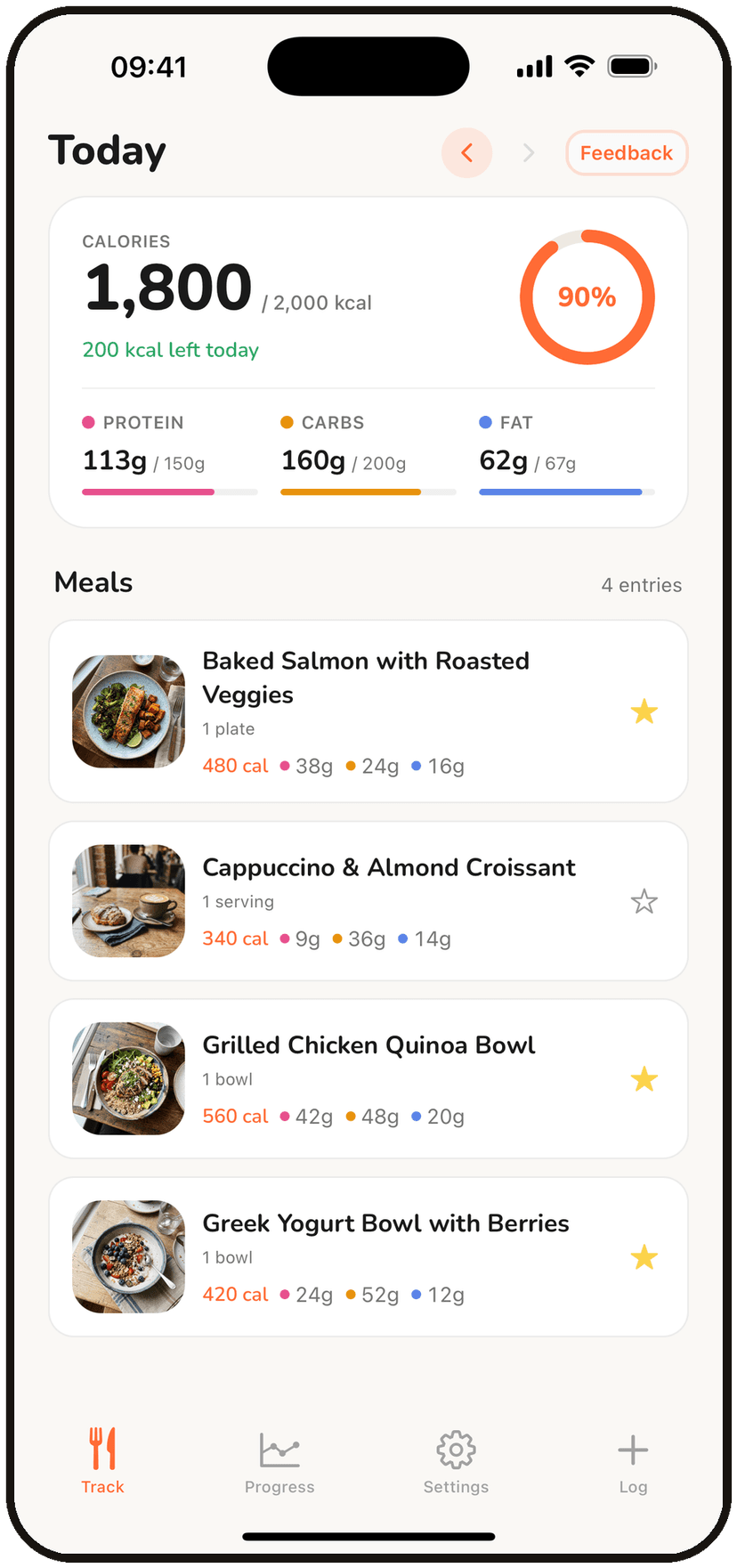
Portion guesses add up fast. BiteKit's AI reads your actual plate, so the number you track is the number you ate.
- Photo, voice, or text input
- Instant calorie & macro tracking
- Private by design — no password required
Free to download. No credit card required.
Scan to get the app