Marathon Fueling Calculator
Plan your carb-loading schedule, race-day gel timing, and calorie targets for any distance from 5K through ultra marathon. Fuel smarter, finish stronger.
Steady effort, can speak in short sentences
Why does race fueling matter?
Your body stores about 2,000 kcal of glycogen -- enough for roughly 90-120 minutes of running. Beyond that, you need to take in carbs during the race to avoid "hitting the wall." This calculator plans your carb-loading, gel timing, and hydration so you finish strong.
The Science of Carb Loading
Carb loading (glycogen supercompensation) is a proven strategy that can improve endurance performance by 2-3%. Your muscles and liver can store approximately 2,000 kcal of glycogen -- enough for roughly 90-120 minutes of moderate-intensity running.
By systematically increasing carbohydrate intake over 3 days before your race, you can push glycogen stores to their maximum capacity. Research shows that a 3-day protocol (ramping from 5-7g/kg up to 10-12g/kg) is just as effective as the older 6-day depletion/loading protocol, without the performance-sapping depletion runs.
Day 3 Before: Moderate Loading (5-7g/kg)
Begin increasing carbs above your normal intake. Reduce training to easy short runs. Focus on familiar, easily digestible carb sources like rice, pasta, and bread.
Day 2 Before: High Loading (8-10g/kg)
Significantly increase carb portions at every meal. Reduce protein and fat slightly to make room. This is when glycogen stores begin to supercompensate beyond normal levels.
Day 1 Before: Peak Loading (10-12g/kg)
Maximum carb intake day. Choose low-fiber, low-fat options to minimize GI risk. White rice, white bread, pancakes, fruit juice, and sports drinks are excellent choices. Rest completely.
Race-Day Nutrition Strategies
Even with full glycogen stores, races longer than 90 minutes require mid-race fueling to maintain performance. The goal is to replace a portion of the carbohydrates your muscles are burning.
Pre-Race Meal
Eat 1-4g of carbs per kg of body weight 3-4 hours before the start. Stick to foods you have tested during training. Avoid high fiber, excessive fat, and spicy foods.
First Gel at 45 Minutes
Start fueling before you feel depleted. Taking your first gel around 45 minutes into the race ensures a steady supply of glucose as glycogen stores begin to decline.
Consistent Gel Timing
Take a gel every 30-45 minutes after the first. Set reminders on your watch. Consistent intake prevents blood sugar dips that cause "bonking" or hitting the wall.
Always Take Gels With Water
Gels are concentrated and need water (150-250ml) for proper absorption. Never take a gel with a sports drink -- the combined sugar concentration can cause stomach distress.
Hydration During Running
Proper hydration is critical for performance and safety during distance running. Both dehydration and over-hydration (hyponatremia) carry serious risks, so finding the right balance is key.
Drink to Thirst
Modern sports science recommends drinking to thirst rather than following rigid schedules. Your body's thirst mechanism is well-calibrated for exercise. Aim for 400-800ml per hour as a general range, but let thirst guide you.
Electrolytes Matter
For events over 2 hours, plain water is not enough. You lose sodium through sweat (300-1,000mg per hour), and replacing it helps maintain fluid balance and prevent cramping. Use electrolyte drinks or salt tablets.
Practice your hydration strategy during long training runs. Know how much fluid you consume per hour and how your stomach handles drinking while running. Race day is never the time to experiment.
Common Marathon Fueling Mistakes
Even experienced runners make nutrition errors that can derail a race. Here are the most common mistakes and how to avoid them:
Trying new foods on race day
Never eat, drink, or use any nutrition product on race day that you have not tested multiple times during training. Your GI system is under stress during racing and is more sensitive to unfamiliar foods.
Starting fueling too late
Waiting until you feel depleted means you are already behind. Glycogen depletion causes an irreversible performance drop. Start taking gels by 45 minutes and maintain a consistent schedule throughout the race.
Taking too many carbs at once
The gut can only absorb 60-90g of carbs per hour (depending on training). Consuming more causes nausea, bloating, and diarrhea. Spread intake evenly rather than consuming large amounts at once.
Overhydrating
Drinking more water than you lose leads to hyponatremia (dangerously low blood sodium), which can be life-threatening. Drink to thirst, not on a fixed schedule. Slower runners are at highest risk because they have more time at aid stations.
Skipping carb loading for shorter races
Even half marathons benefit from 1-2 days of increased carb intake. Any event where you will be running hard for over 90 minutes will tap into glycogen reserves that benefit from being topped off.
Frequently Asked Questions
How many calories do you burn running a marathon?
The average runner burns approximately 2,600-3,500 calories during a marathon. A general estimate is about 1 calorie per kilogram of body weight per kilometer. A 70 kg (154 lb) runner would burn roughly 2,950 calories over 42.2 km. Heavier runners and faster paces burn more calories per hour.
What is carb loading and when should I start?
Carb loading is a strategy where you increase carbohydrate intake in the 3 days before a race to maximize glycogen stores. Start at 5-7g of carbs per kg body weight three days out, increase to 8-10g/kg two days before, and peak at 10-12g/kg the day before. This can improve endurance performance by 2-3%.
When should I take energy gels during a marathon?
Take your first gel at approximately 45 minutes into the race, then every 30-45 minutes thereafter. Each gel provides about 25g of carbs and 100 calories. Always take gels with water to aid absorption. For a 4-hour marathon, plan for 5-6 gels total.
How many carbs per hour do I need during a marathon?
For events lasting 1-2.5 hours, aim for 30-45g per hour. For marathons (2.5-4+ hours), target 45-60g per hour. Ultra marathon runners can train their gut to handle up to 90g per hour. Start conservatively and increase as your gut adapts through training.
How much water should I drink during a marathon?
Aim for 400-800ml per hour depending on intensity and weather, but drink to thirst rather than forcing fluids. For races over 2 hours, use electrolyte drinks to replace sodium. Over-hydrating can cause dangerous hyponatremia (low blood sodium).
What should I eat before a marathon?
Eat a pre-race meal 3-4 hours before the start containing 1-4g of carbs per kg body weight. Choose easily digestible, low-fiber, low-fat foods like oatmeal with banana, white toast with jam, or a bagel with peanut butter. Only eat foods you have tested during training.
iPhone app · 3-day free trial
You're likely eating 500 calories more than you think
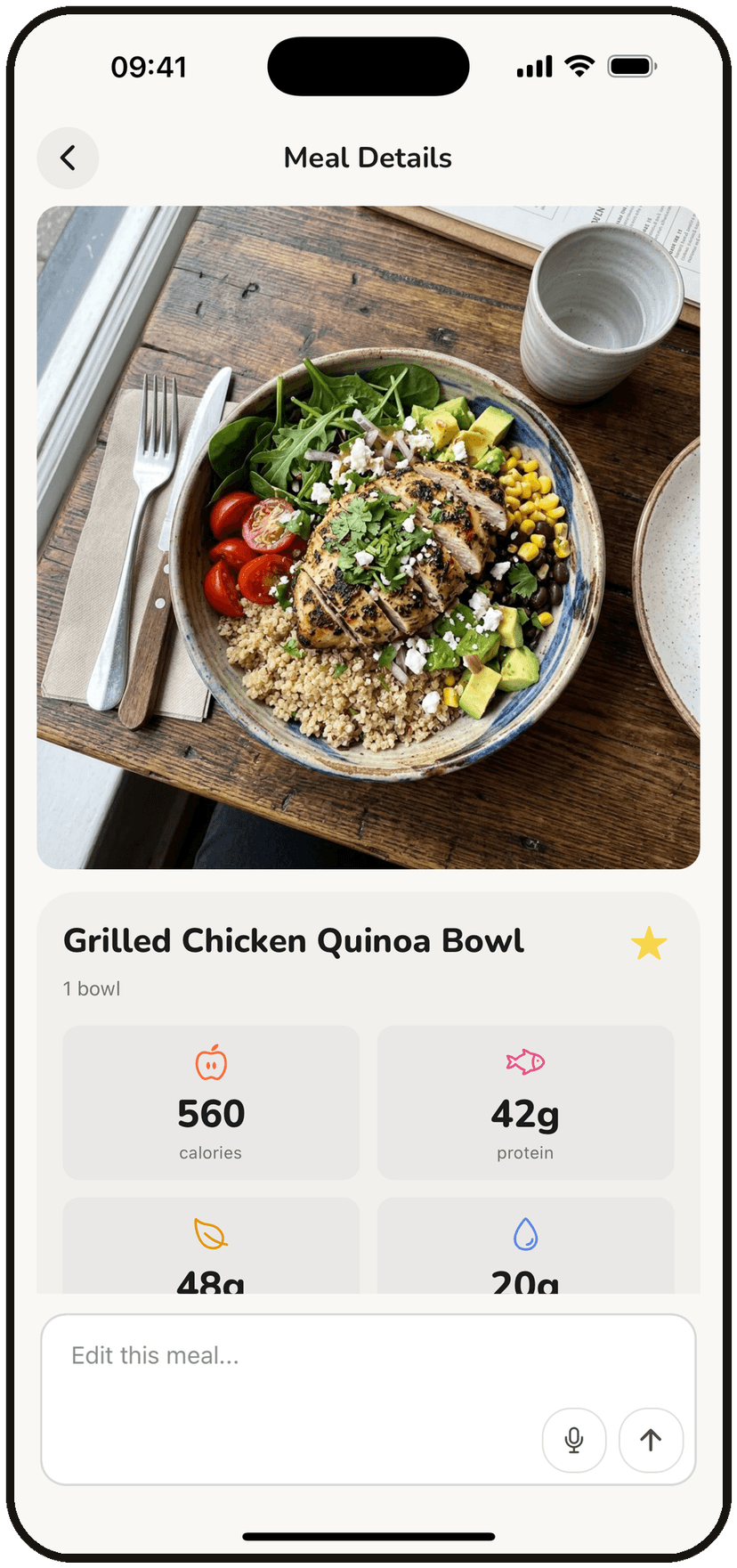
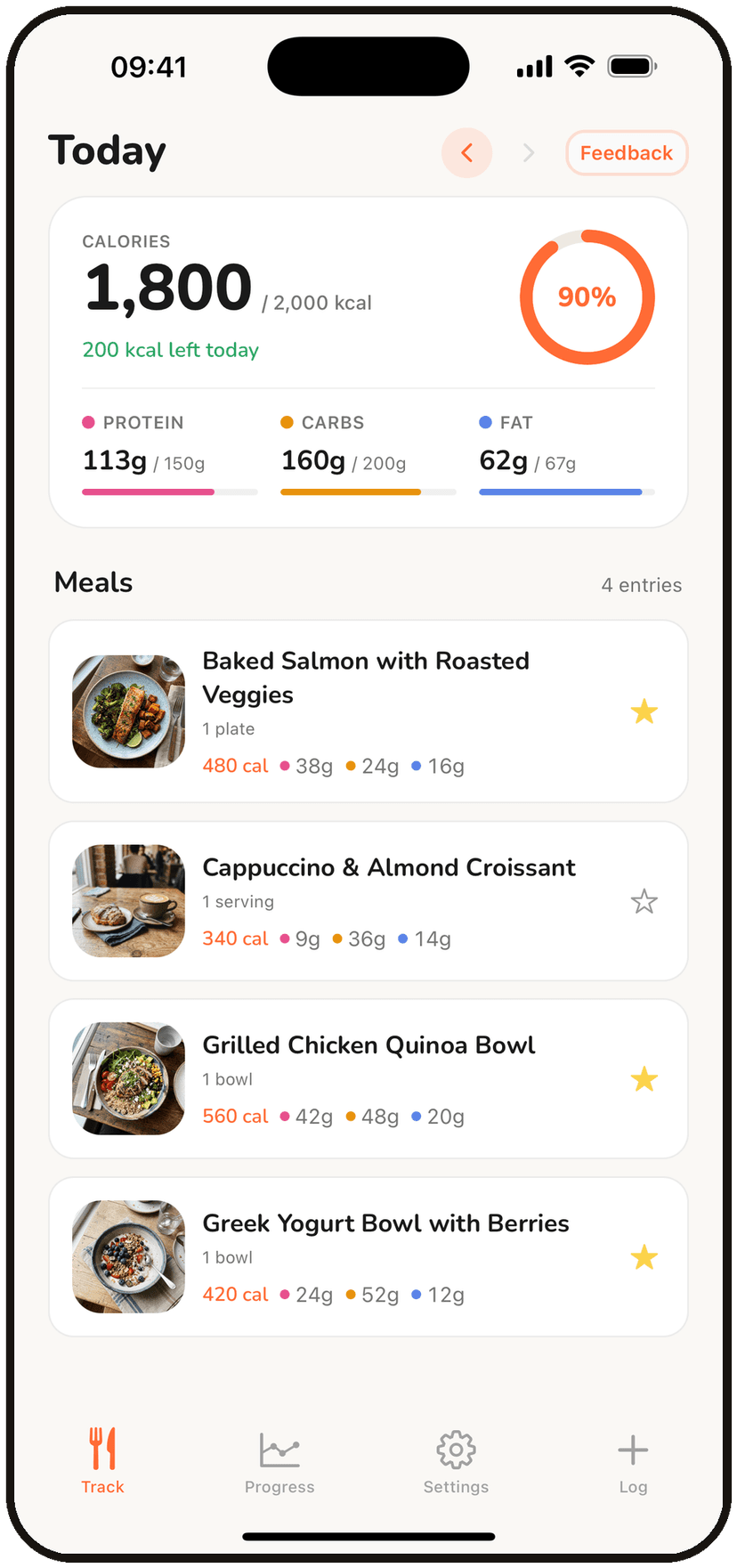
Portion guesses add up fast. BiteKit's AI estimates what's actually on your plate — oils, sides and all — so your log stays close to what you really ate.
- Log meals by photo, voice, or text
- Calories & macros estimated in seconds
- Syncs with Apple Health and Apple Watch
Free download · 3-day free trial, cancel anytime.
Scan with your iPhone camera