Meal Frequency Calculator
Find your optimal number of meals per day and get a personalized eating schedule. See exactly how many calories, protein, carbs, and fat to eat at each meal based on your goals, training time, and daily schedule.
How Many Meals Should You Eat Per Day?
The debate over optimal meal frequency has been ongoing for decades. Some experts recommend eating 6 small meals a day, while others advocate for 2-3 larger meals. The truth is that the best meal frequency depends on your individual goals, schedule, and preferences.
Research consistently shows that total daily calorie and protein intake matter far more than how many times you eat. Whether you split 2,000 calories into 2 meals or 6 meals, the overall metabolic effect is nearly identical. What matters most is finding a pattern you can stick with consistently.
Fewer Meals (2-3)
Larger, more satisfying portions at each sitting. Less time spent preparing and eating food. Works well with intermittent fasting protocols. May help people who tend to overeat with frequent snacking.
More Meals (4-6)
Steadier blood sugar and energy levels throughout the day. Better for those who get hungry between meals. Easier to fit high calorie targets for muscle gain. May improve protein synthesis with more frequent protein doses.
Meal Frequency and Metabolism
One of the most persistent myths in nutrition is that eating more frequently "boosts your metabolism." The theory suggests that each time you eat, your body burns calories through the thermic effect of food (TEF), so more meals equals more calorie burn. However, research has thoroughly debunked this idea.
The thermic effect of food is determined by what and how much you eat, not how often. If you eat 2,400 calories in 3 meals of 800 calories each, the total TEF is essentially the same as eating 6 meals of 400 calories. Your metabolism doesn't slow down if you skip a meal, and it doesn't speed up because you eat more frequently.
What Actually Affects Your Metabolic Rate
- Lean body mass: More muscle means a higher resting metabolism
- Total calorie intake: Very low calorie diets can slow metabolism over time
- Physical activity: Exercise and daily movement are the biggest variable you control
- Protein intake: Protein has a higher thermic effect (20-30%) than carbs (5-10%) or fat (0-3%)
Meal Timing Around Workouts
While total daily intake matters most, when you eat relative to your workout can make a meaningful difference for performance and recovery. This is especially true for athletes, those training at high intensity, or anyone exercising in a fasted state.
Pre-Workout Meal (1-3 Hours Before)
Focus on carbohydrates for energy and moderate protein for muscle protection. Keep fat low for faster digestion. Good options include oatmeal with protein, rice with chicken, or a banana with Greek yogurt.
Post-Workout Meal (Within 1-2 Hours After)
Prioritize protein for muscle repair and carbohydrates for glycogen replenishment. The "anabolic window" is more flexible than once thought, but eating within a couple hours of training is still a best practice for recovery.
Rest Day Meals
On non-training days, you don't need to time your meals around a workout. Distribute your calories evenly across your preferred number of meals. Keep protein intake consistent to support ongoing recovery from previous training sessions.
Intermittent Fasting and Meal Frequency
Intermittent fasting (IF) restricts your eating to a specific window, which naturally reduces the number of meals you can fit in. Popular protocols like 16:8 (16 hours fasting, 8 hours eating) typically allow for 2-4 meals, while more restrictive protocols like 20:4 may limit you to 1-2 meals.
IF doesn't inherently cause more weight loss than traditional dieting at the same calorie level. Its main benefit is that a compressed eating window makes it harder to overeat for some people, leading to a natural calorie deficit. If you combine IF with this calculator, your meals will be automatically spaced within your eating window.
IF + Muscle Gain
If your goal is muscle gain with IF, aim for at least 3 meals in your eating window. Distribute protein evenly (30-40g per meal) to maintain muscle protein synthesis throughout the feeding period.
IF + Weight Loss
For weight loss with IF, the reduced eating window can naturally limit calorie intake. Choose 2-3 satisfying meals rather than many small snacks. Front-load your calories toward the start of the eating window for better satiety.
Frequently Asked Questions
How many meals should I eat per day to lose weight?
There is no single best number of meals for weight loss. Research shows that total daily calorie intake matters more than meal frequency. However, many people find that 3-4 meals per day helps control hunger and prevents overeating. The key is finding a frequency that lets you stay within your calorie target consistently.
Does eating more frequent meals boost metabolism?
No, the idea that eating more often "stokes your metabolic fire" is a myth. The thermic effect of food is determined by total calorie and macronutrient intake, not meal frequency. Whether you eat 2000 calories in 2 meals or 6 meals, the metabolic cost of digestion is roughly the same.
What is the best meal timing for muscle gain?
For muscle gain, distribute protein evenly across 3-5 meals with 20-40g per meal to maximize muscle protein synthesis. Place a protein-rich meal within 1-2 hours after your workout. Total daily protein intake is more important than exact timing, but spreading it out gives a slight advantage.
Can I combine intermittent fasting with multiple meals?
Yes, you can eat multiple meals within your intermittent fasting eating window. For example, on a 16:8 protocol with an 8-hour eating window, you could fit 3-4 meals. This calculator adjusts meal spacing to fit within your chosen eating window while maintaining proper calorie and macro distribution.
How should I time meals around my workout?
Eat a balanced meal with carbs and protein 1-3 hours before training for energy, and a protein-rich meal within 1-2 hours after training for recovery. For performance goals, allocate more calories to these peri-workout meals. The calculator automatically identifies and labels your pre-workout and post-workout meals.
Is it better to eat 3 big meals or 6 small meals?
Neither approach is inherently superior. Three larger meals work well for people who prefer feeling full at each sitting, while 5-6 smaller meals can help those who get hungry between meals. The best approach is the one you can follow consistently. Choose based on your schedule, hunger patterns, and personal preference.
iPhone app · 3-day free trial
You're likely eating 500 calories more than you think
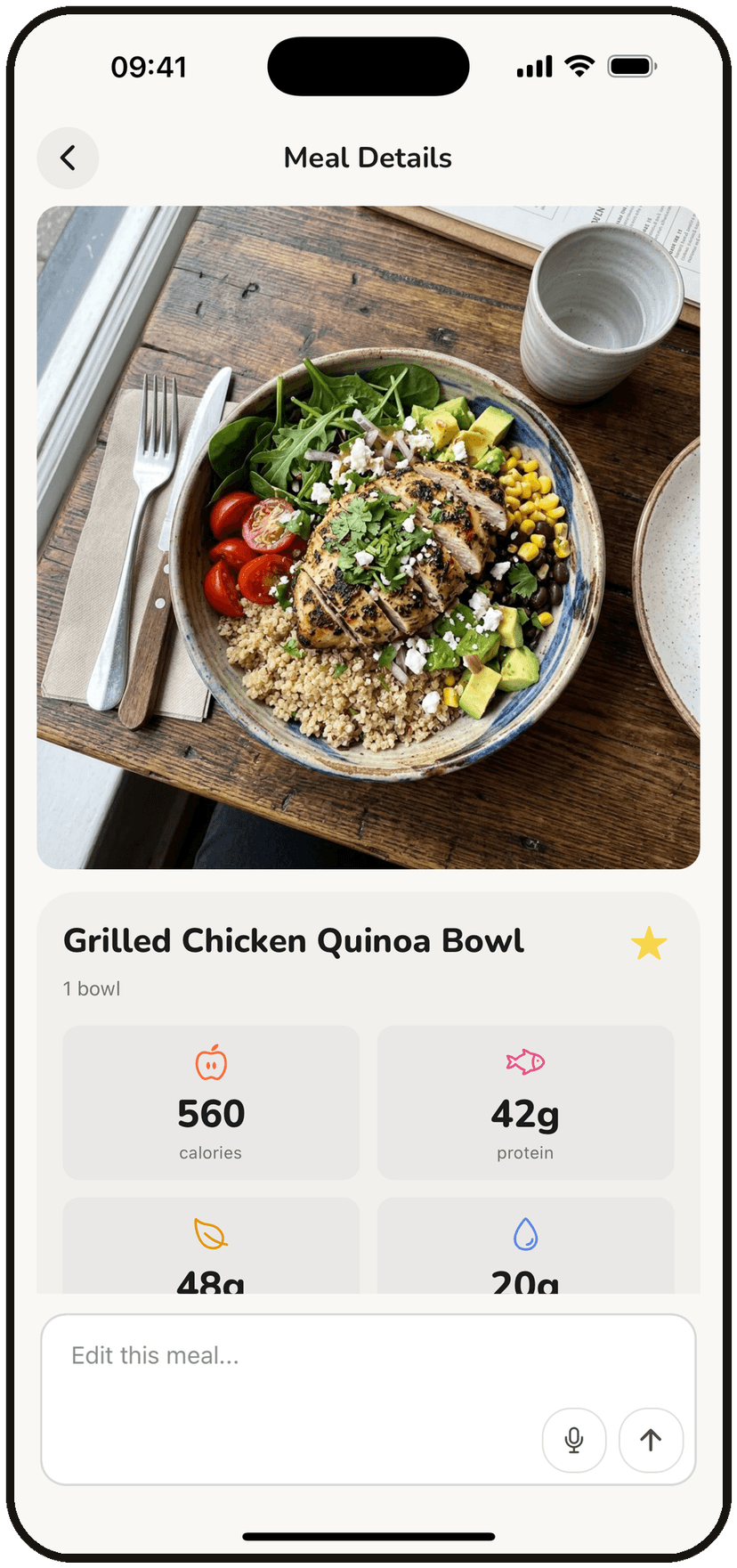
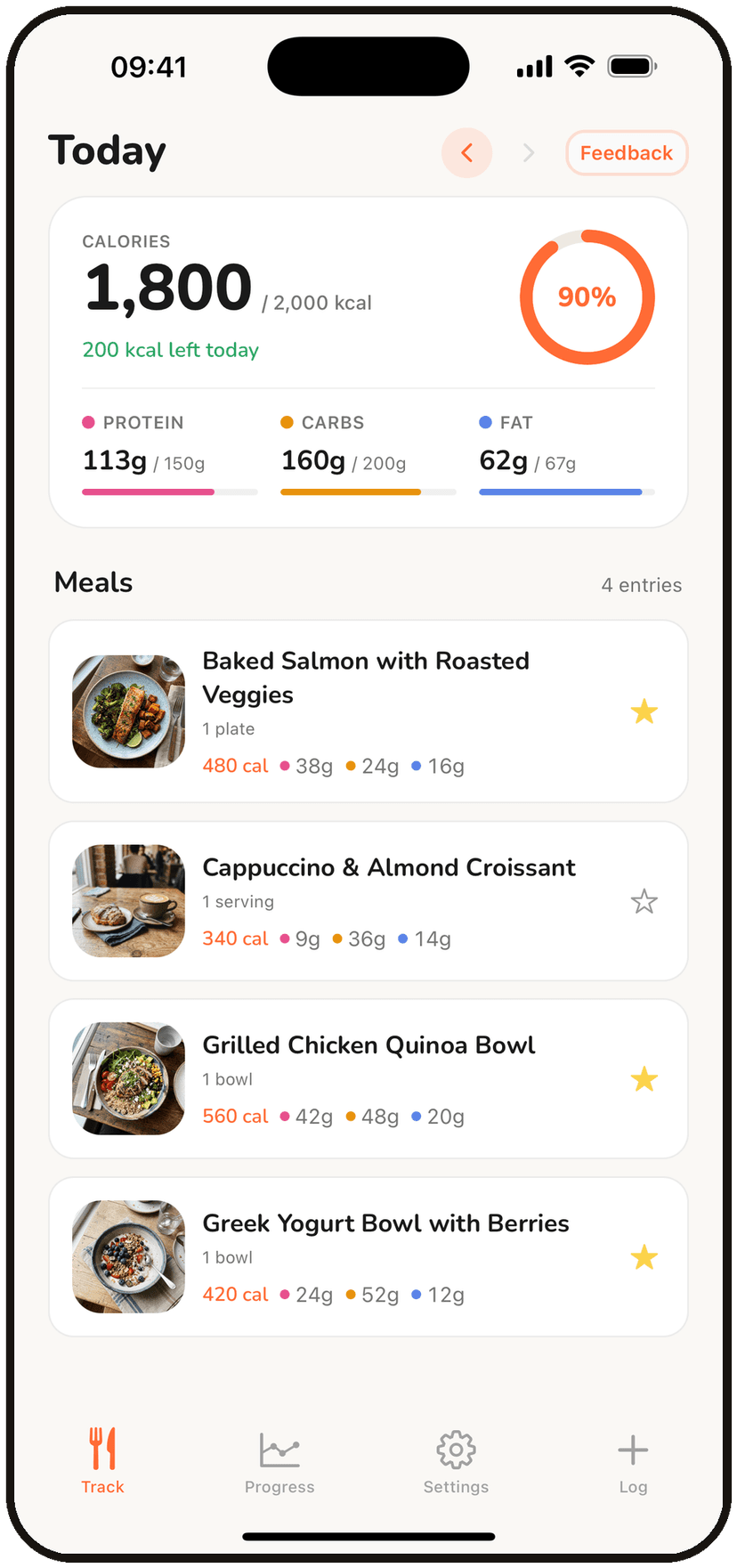
Portion guesses add up fast. BiteKit's AI estimates what's actually on your plate — oils, sides and all — so your log stays close to what you really ate.
- Log meals by photo, voice, or text
- Calories & macros estimated in seconds
- Syncs with Apple Health and Apple Watch
Free download · 3-day free trial, cancel anytime.
Scan with your iPhone camera