Meal Prep Cost Calculator
Enter your batch cooking ingredients to calculate total grocery cost, cost per serving, and exactly how much you save compared to eating out every week.
Quick-start templates
How Much Can Meal Prep Actually Save You?
The average American spends $3,000–$5,000 per year eating out. A typical restaurant meal costs $15–20 per person; a homemade batch-cooked equivalent typically costs $3–8. At just 5 replaced meals per week, that is $50–$85 in weekly savings — $2,600–$4,400 per year from a single habit change.
Beyond raw dollar savings, meal prep delivers nutritional precision — you know exactly what went into your food, enabling accurate calorie and macro tracking that is nearly impossible when relying on restaurant meals with unknown portion sizes and preparation methods.
Most Cost-Efficient High-Protein Meal Prep Staples
| Food | Approx. cost | Protein | Cost/10g protein |
|---|---|---|---|
| Dried lentils | $1.80/lb | 18g/100g dry | ~$0.10 |
| Eggs | $3.50/dozen | 6g each | ~$0.10 |
| Canned tuna | $1.50/can | 25g/can | ~$0.06 |
| Greek yogurt | $1.00/cup | 17g/cup | ~$0.06 |
| Chicken thighs | $2.50/lb | 26g/100g | ~$0.09 |
| Black beans (can) | $1.00/can | 7.5g/½ cup | ~$0.13 |
| Chicken breast | $5.00/lb | 31g/100g | ~$0.16 |
| Ground turkey | $6.00/lb | 25g/100g | ~$0.24 |
Meal Prep Strategy by Goal
Minimum Cost per Calorie
For maximum calorie-per-dollar, build meals around oats, rice, dried beans, eggs, and chicken thighs. These are calorie-dense and extremely cheap per 100 kcal. A simple oat + egg + bean combination can deliver 500 calories for under $1.50.
Maximum Protein at Low Cost
Prioritize canned tuna, eggs, Greek yogurt, chicken thighs, and lentils. These typically deliver protein at $0.04–0.10 per gram — 3-5x cheaper than buying pre-made high-protein meals or protein bars ($0.20–0.50 per gram).
The 5-Container Method
Many meal preppers use a structured approach: cook one protein (4-6 servings), one starch (4-6 servings), and two vegetables in a single 1-2 hour session on Sunday. This creates 5 complete lunches or dinners for roughly $20-30 total — $4-6 per meal.
How This Calculator Works
For each ingredient, the calculator determines the cost per gram (package cost ÷ package size), then multiplies by the amount you actually use in your batch. This gives the exact cost contribution of each ingredient — not the cost of the whole package.
Total batch cost is divided by servings to get cost per serving. If you enter macros, cost per 100 calories and cost per 10g protein are calculated as additional value metrics. Savings are calculated against the US average restaurant meal cost of $17.50 (midpoint of $15–$20).
Frequently Asked Questions
How much does meal prepping actually save?
Typical meal prep costs $3-8 per serving vs. $15-20 at a restaurant. At 5 meals per week replaced, that is $50-85 in weekly savings or $2,600-$4,400 per year from a single habit change.
What is a good cost per gram of protein for meal prep?
Under $0.10/g protein is competitive. Chicken breast, canned tuna, eggs, and Greek yogurt deliver protein in the $0.03-0.08/g range. Lentils and beans can be under $0.02/g.
What are the most cost-efficient meal prep foods?
Eggs, canned tuna, dried lentils, chicken thighs, dried beans, Greek yogurt, oats, and brown rice. These provide the best cost per calorie and cost per gram of protein of any whole foods.
How do I calculate cost per serving accurately?
Divide the package cost by the package size to get cost per gram. Multiply by grams used in your batch. Sum all ingredients. Divide by number of servings. This calculator does it automatically.
Does meal prep save money even accounting for food waste?
Yes. Meal-prepped food in sealed containers lasts 4-7 days refrigerated and up to 3 months frozen. Purposeful batch cooking eliminates the spontaneous purchases that often go unused.
How many servings should I prep at once?
Most meal preppers find 5-10 servings per batch optimal. This covers a full workweek of lunches in one cooking session, maximizing the time efficiency of batch cooking.
Related Tools
iPhone app · 3-day free trial
You're likely eating 500 calories more than you think
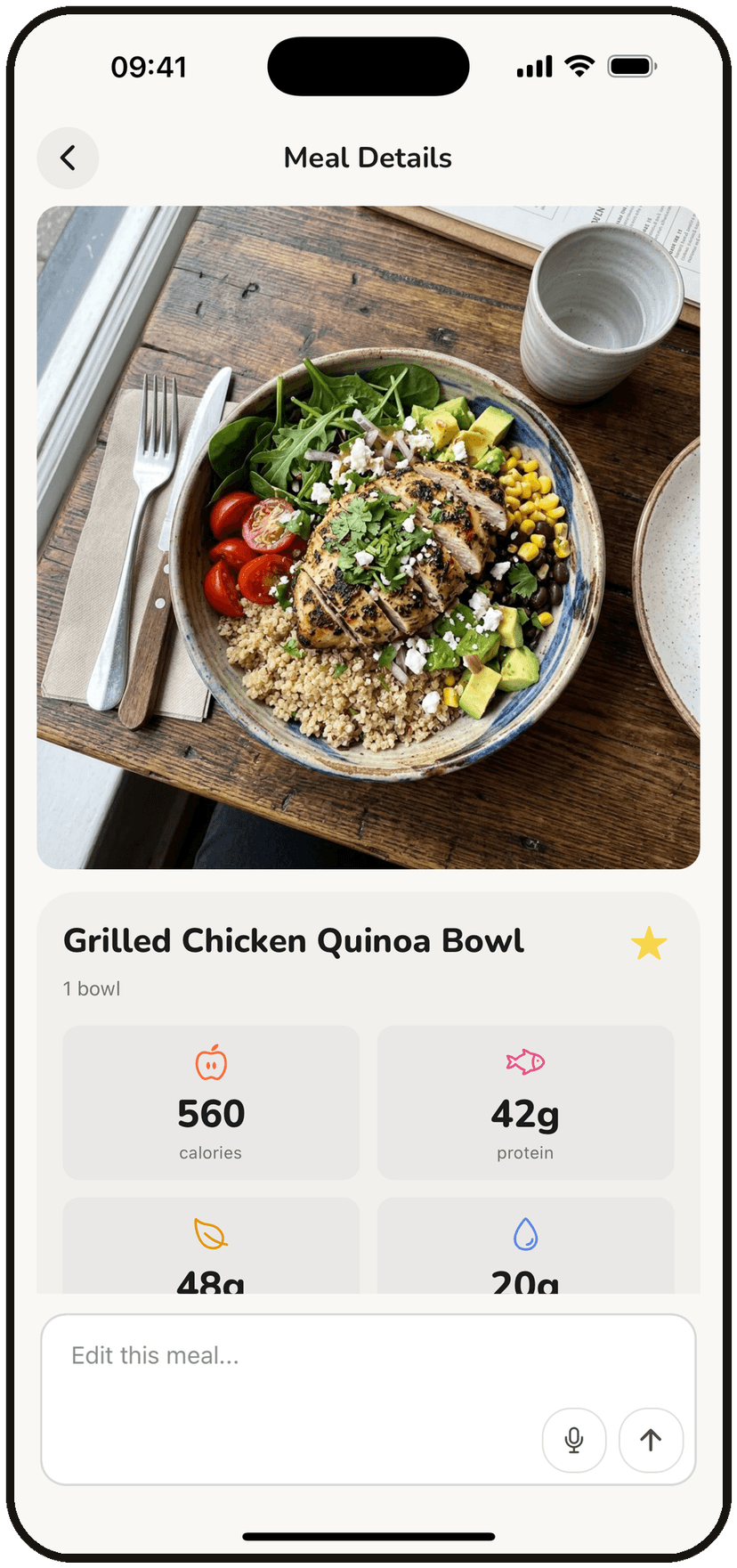
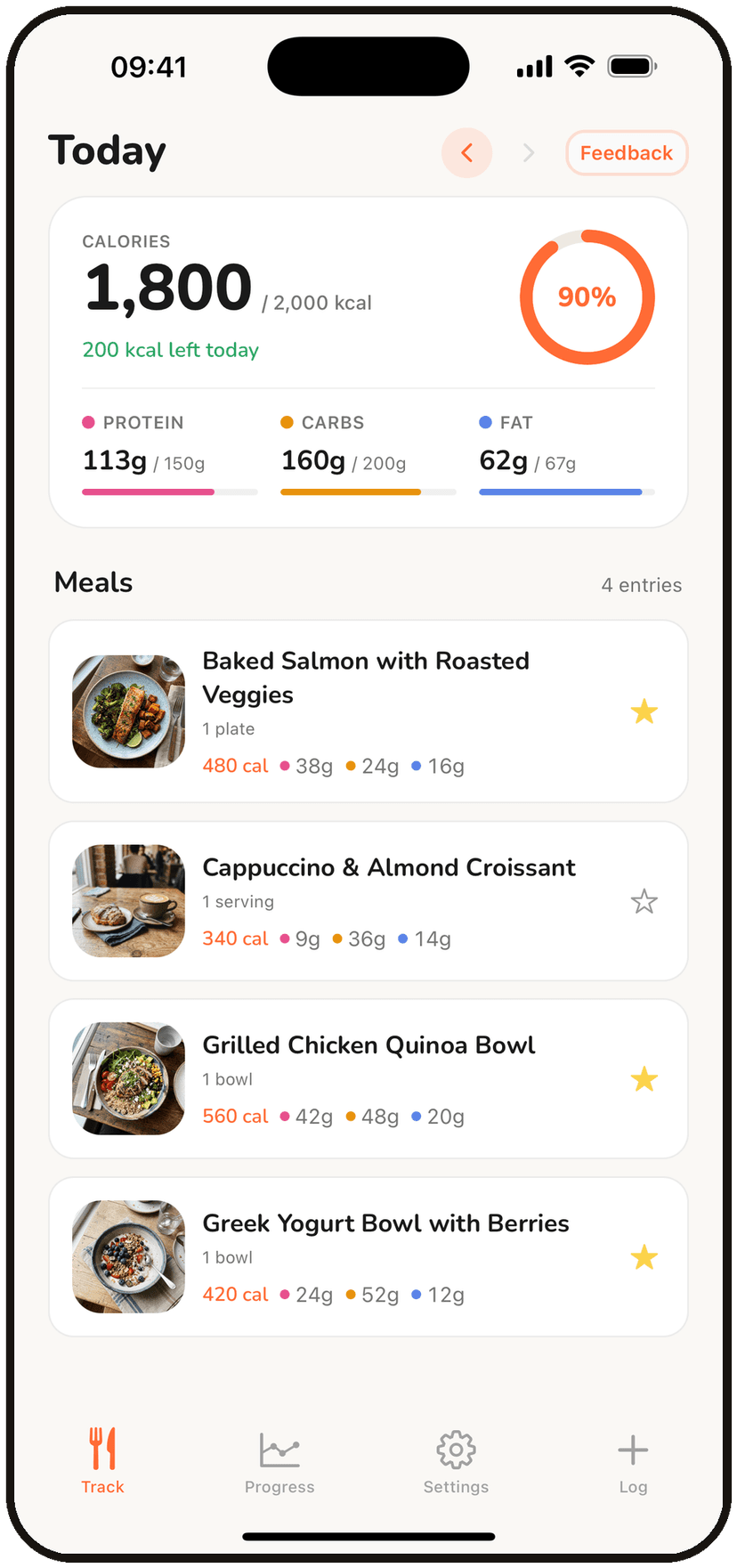
Portion guesses add up fast. BiteKit's AI estimates what's actually on your plate — oils, sides and all — so your log stays close to what you really ate.
- Log meals by photo, voice, or text
- Calories & macros estimated in seconds
- Syncs with Apple Health and Apple Watch
Free download · 3-day free trial, cancel anytime.
Scan with your iPhone camera