Muscle Gain Potential Calculator
Discover your maximum natural muscular potential using the Casey Butt, Martin Berkhan, and Lyle McDonald formulas — and find out how many years it will take to get there.
Understanding Your Natural Muscle Potential
Why Natural Limits Exist
Muscle growth is regulated by a complex interplay of hormones (primarily testosterone, IGF-1, and growth hormone), satellite cell activity, and the mechanical capacity of your skeleton to support added mass. Natural athletes operate within the boundaries set by their endogenous hormone production, which is largely determined by genetics and is reflected indirectly in structural measurements like bone size.
Research on elite drug-free bodybuilders — who have optimized every variable over decades — gives us a reliable ceiling for what's achievable naturally. The formulas in this calculator are derived from those populations.
The Casey Butt Formula (Men Only)
Dr. Casey Butt analyzed measurements from hundreds of the greatest drug-free bodybuilders throughout history and derived a formula linking height, wrist circumference, and ankle circumference to maximum lean body mass. This is the most scientifically rigorous formula available for natural men because it was empirically derived from real elite athletes rather than theoretical assumptions.
Wrist and ankle measurements are used because they are predominantly bone with minimal muscle covering, making them reliable indicators of skeletal robustness. A person with a 7-inch wrist will have more structural capacity for muscle than one with a 6-inch wrist, even at the same height.
The Martin Berkhan (Leangains) Formula
Martin Berkhan, creator of the Leangains intermittent fasting protocol, proposed a simpler model: maximum stage-lean body weight (kg) equals height in centimeters minus 100. “Stage lean” for men is approximately 4–5% body fat; for women, approximately 10–12%.
This formula works for both men and women and correlates well with observed natural bodybuilding competitors. Because it uses only height, it provides a quick reference without needing bone measurements. It tends to be slightly more conservative than Casey Butt for men with larger frames.
Lyle McDonald's Annual Gain Rates
Lyle McDonald modeled how quickly natural athletes can gain muscle across their training career:
- Year 1:~20 lbs (9 kg) — the beginner's advantage is real; newbies gain fastest
- Year 2:~10 lbs (4.5 kg) — still significant progress with consistent effort
- Year 3:~5 lbs (2.3 kg) — intermediate plateau requires more precise programming
- Year 4+:~2 lbs (0.9 kg) per year — advanced lifters fight for every pound
Women gain muscle at roughly half these rates due to lower testosterone. These figures represent upper limits under near-optimal conditions (consistent training, 0.7–1 g protein per lb body weight, adequate sleep, and appropriate calorie surplus).
How to Use These Numbers Practically
Your muscular potential is a long-term benchmark, not a short-term target. Most natural lifters reach 70–80% of their genetic ceiling within 3–5 years of serious training and approach 90%+ after a decade. Getting from 90% to 100% can take another 5–10 years of meticulous effort.
Rather than obsessing over the ceiling, use these numbers to:
- Set realistic multi-year physique goals
- Understand that slower progress in later years is normal — not a sign of failure
- Calibrate your calorie surplus (more is not better — the muscle synthesis rate has a ceiling)
- Compare progress against your personal trajectory rather than others'
Optimizing Nutrition for Muscle Growth
To approach your maximum natural rate of muscle gain, nutrition plays as important a role as training:
- Protein:0.7–1 g per lb of body weight (1.6–2.2 g/kg) daily for maximal muscle protein synthesis
- Calorie surplus:200–400 kcal above TDEE for lean bulking; larger surpluses mainly add fat
- Meal timing:Distribute protein across 3–5 meals with 20–40 g per sitting to maximize MPS
- Carbohydrates:Adequate carbs fuel training and spare protein for muscle synthesis
Frequently Asked Questions
How much muscle can a natural athlete gain in a year?
According to Lyle McDonald's model, a natural male beginner can gain roughly 20 lbs (9 kg) in year one, 10 lbs in year two, 5 lbs in year three, and ~2 lbs per year thereafter. Women gain at roughly half these rates. These are optimistic upper bounds requiring consistent training, adequate protein, and quality sleep.
What is the Casey Butt formula?
Casey Butt's formula estimates a natural man's maximum lean body mass from height, wrist, and ankle circumference. It was derived from measurements of elite natural bodybuilders and is the most empirically validated formula for men. It is not applicable to women.
What is the Martin Berkhan formula?
Martin Berkhan proposed that maximum stage-lean weight (kg) equals height in centimeters minus 100. For example, a 180 cm man has a 80 kg stage-lean potential at ~5% body fat, which equates to roughly 84 kg at 10% body fat. This formula applies to both men and women.
Does bone structure really affect how much muscle I can gain?
Yes. Larger, denser bones provide more attachment surface for muscles and indicate a more robust hormonal and structural constitution. Wrist and ankle circumferences are used as proxies because they're mostly bone with minimal soft tissue, making them reliable indicators of frame size.
How accurate are these formulas?
These formulas represent statistical upper limits based on elite drug-free athletes — not averages. Most natural lifters will reach 80–90% of their theoretical maximum with consistent years of training. They don't account for individual hormonal variation beyond bone structure, so treat them as useful benchmarks rather than precise predictions.
How many calories do I need to gain muscle?
Each pound of muscle requires approximately 2,500 calories to build. For a beginner gaining at the maximum first-year rate, this means a daily surplus of roughly 135–200 kcal. A moderate surplus of 200–400 kcal above TDEE is the evidence-based recommendation for lean bulking.
Related Tools
iPhone app · 3-day free trial
You're likely eating 500 calories more than you think
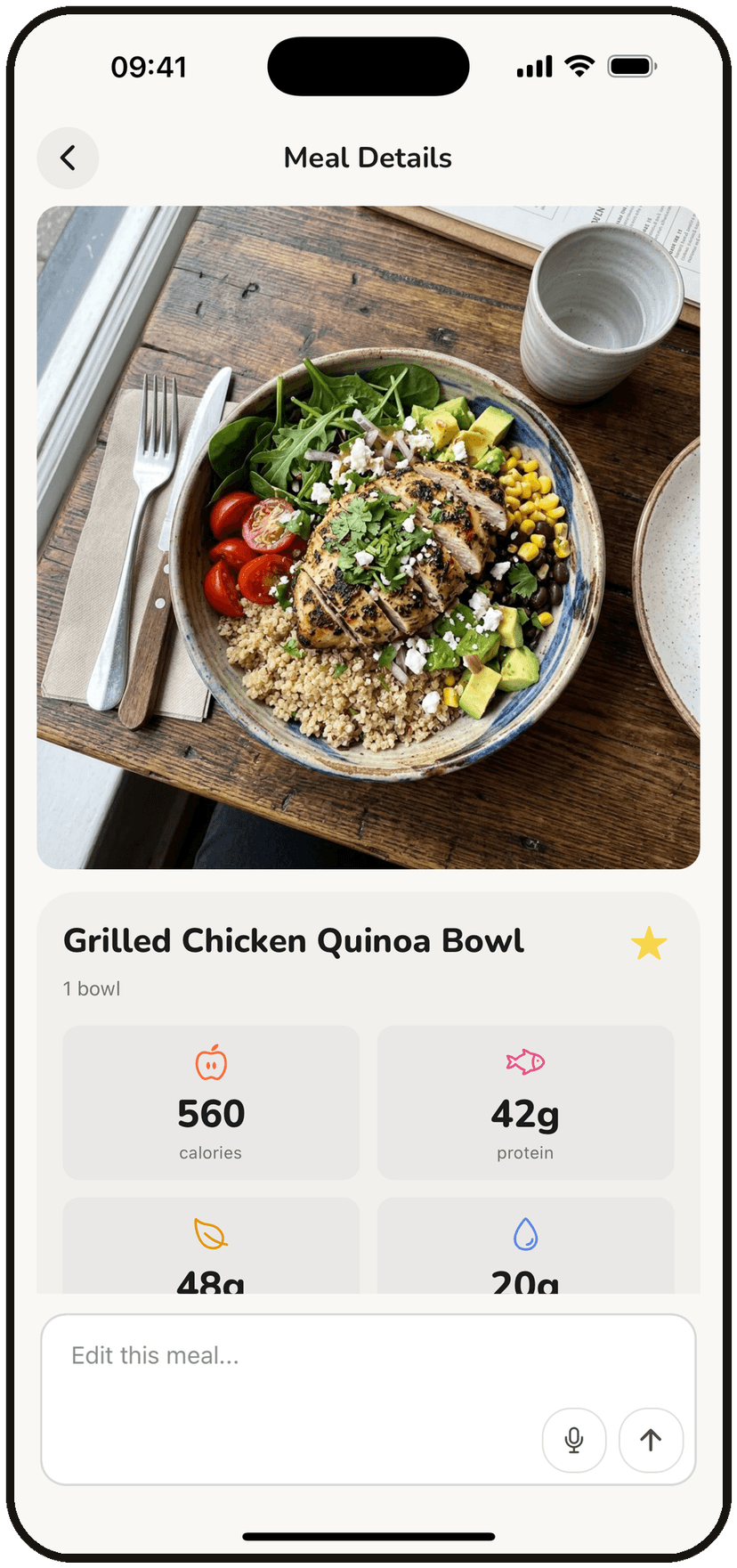
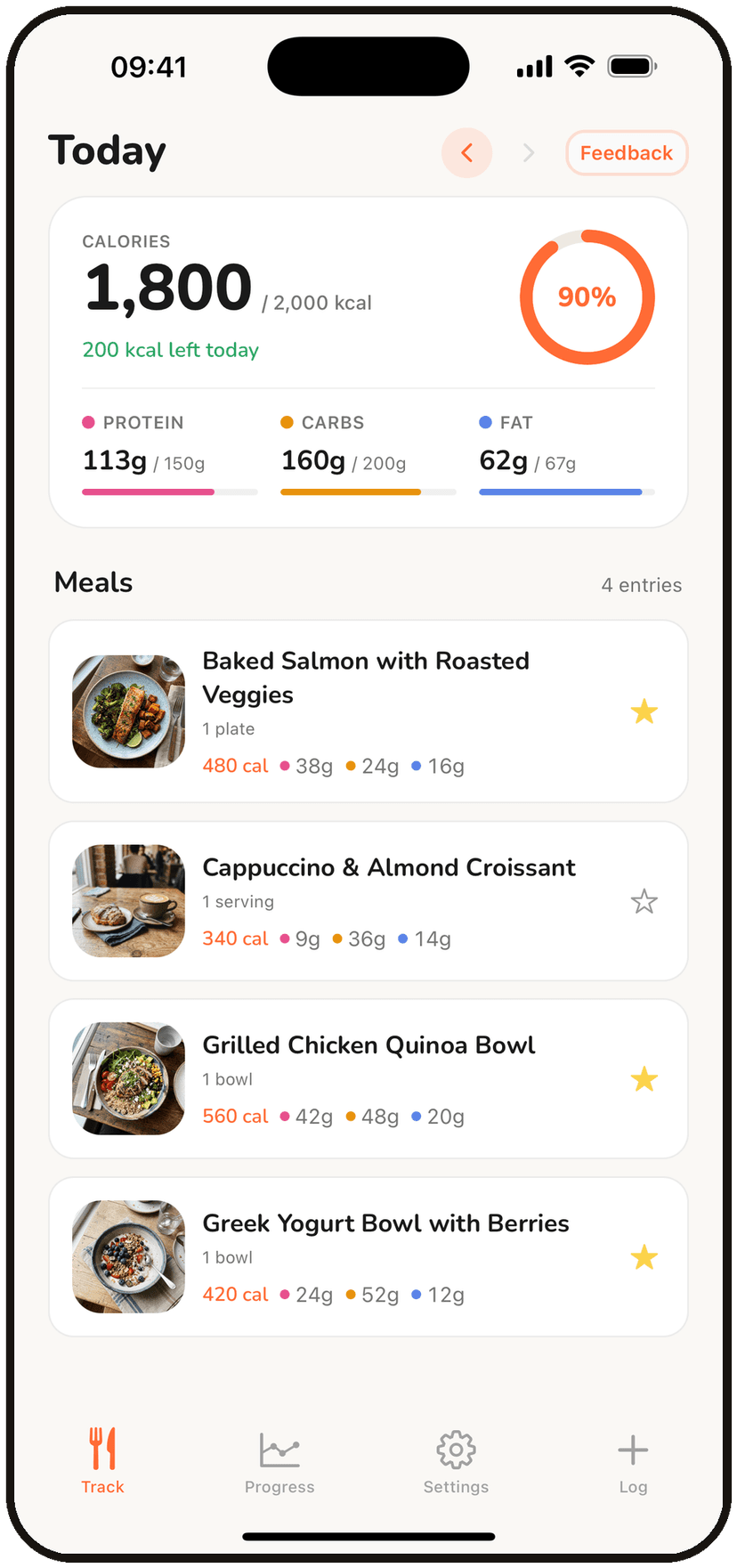
Portion guesses add up fast. BiteKit's AI estimates what's actually on your plate — oils, sides and all — so your log stays close to what you really ate.
- Log meals by photo, voice, or text
- Calories & macros estimated in seconds
- Syncs with Apple Health and Apple Watch
Free download · 3-day free trial, cancel anytime.
Scan with your iPhone camera