Oatmeal Nutrition Calculator
Choose your oat type, liquid, and toppings to get the complete calorie and macro breakdown for your oatmeal breakfast — including a side-by-side breakdown of every component.
Why Oatmeal Is One of the Best Breakfast Foods
Oatmeal is a nutritional powerhouse that earns its reputation as a top breakfast choice. A single serving delivers complex carbohydrates for sustained energy, beta-glucan fiber for heart health, and more protein than most cereals. The slow-digesting nature of oats helps stabilize blood sugar and keeps you full far longer than refined grain alternatives.
The key nutritional advantage of oats over processed breakfast options is their lack of added sugars and artificial ingredients in plain form. What you add determines how healthy your bowl actually is — which is why tracking toppings and liquid choice matters as much as the oats themselves.
Oat Types Compared
All plain oat varieties (rolled, steel-cut, quick, and plain instant) start from the same whole grain — the differences come from how they are processed, which affects texture and cook time but not significantly affects nutrition.
- Rolled oats (old-fashioned): Steamed and rolled flat. Classic texture, 5-minute cook time. Excellent all-purpose oat.
- Steel-cut oats: Whole oat groats cut into pieces. Chewiest texture, 20-30 minute cook time, lowest glycemic index of the group.
- Quick oats: Rolled thinner than old-fashioned oats. Cook in 1-2 minutes. Same nutrition as rolled oats.
- Plain instant oats: Pre-cooked and dried. Ready in seconds with boiling water. Nutritionally similar to rolled oats.
- Flavored instant oats: Pre-sweetened with added sugars and flavorings. Higher in carbs and calories (~160 kcal vs. 150) with less fiber. Convenient but less optimal for blood sugar control.
How Your Liquid Choice Affects Calories
The liquid you use to prepare oatmeal is often an overlooked calorie source. Cooking 80 g of rolled oats (a generous serving) in water gives you roughly 300 calories. Switch to whole milk and you add another 149 calories per cup — a 50% increase from the liquid alone.
| Liquid (1 cup) | Calories | Protein | Carbs | Fat |
|---|---|---|---|---|
| Water | 0 | 0g | 0g | 0g |
| Almond milk (unsweetened) | 30 | 1g | 1g | 2.5g |
| Coconut milk (carton) | 45 | 0g | 6g | 2g |
| Soy milk | 80 | 7g | 4g | 4g |
| Oat milk | 120 | 3g | 16g | 5g |
| 2% milk | 122 | 8g | 12g | 5g |
| Whole milk | 149 | 8g | 12g | 8g |
Smart Topping Strategies by Goal
For Weight Loss
Stick to low-calorie, high-volume toppings: strawberries (24 cal), blueberries (42 cal), and chia seeds (58 cal with excellent fiber). Avoid liquid sweeteners like honey and maple syrup — they add 50-64 calories with no fiber to keep you full.
For Muscle Building
Maximize protein by using soy milk or cow's milk as your liquid (7-8 g protein per cup) and adding protein-rich toppings: walnuts (5 g protein), peanut butter (4 g), almond butter (3 g), and protein powder (6 g per tbsp). A well-built bowl can exceed 30-40 g of protein.
For Heart Health
Lean into toppings with proven cardiovascular benefits: flaxseed and chia seeds (omega-3 fatty acids), walnuts (polyunsaturated fats), and blueberries (antioxidants). The beta-glucan fiber in oats itself is clinically shown to reduce LDL cholesterol.
For Energy Before a Workout
Add a banana for fast-acting carbohydrates (23 g carbs, 89 cal) and a tablespoon of peanut butter for moderate fat to slow digestion slightly. Avoid very high-fat toppings like a large serving of walnuts immediately before training as fats slow gastric emptying.
Frequently Asked Questions
How many calories are in a bowl of oatmeal?
A standard serving of plain rolled oats (40 g dry) cooked in water has about 150 calories. A typical larger bowl (80 g dry oats + 1 cup whole milk + banana + peanut butter) can exceed 500 calories. Use the calculator above to get the exact number for your specific bowl.
What is the difference between rolled oats, steel-cut oats, and instant oats?
All plain oat types have nearly identical nutrition per gram — the differences are texture and cook time. Steel-cut oats are the least processed and chewiest. Rolled oats are flatter and cook in about 5 minutes. Quick and instant oats cook faster due to more processing. Flavored instant oats are the only type with meaningfully different nutrition due to added sugars.
Is oatmeal high in protein?
Oats provide about 5 g of protein per 40 g serving — higher than most grains, but modest on its own. Boost protein by using milk or soy milk as your liquid and adding toppings like peanut butter, walnuts, chia seeds, or a scoop of protein powder.
Does the liquid I use significantly change oatmeal calories?
Yes. Water adds zero calories, while whole milk adds 149 calories per cup. Plant milks range from 30 calories (unsweetened almond milk) to 120 calories (oat milk). Your liquid choice can change your total breakfast calories by 100-150 calories or more.
How much fiber does oatmeal have?
Rolled, steel-cut, and quick oats each provide about 4 g of fiber per 40 g serving, including soluble beta-glucan fiber. Flavored instant oats provide about 3 g. Adding chia seeds, flaxseed, or fruit toppings increases fiber further.
What are the healthiest oatmeal toppings for weight loss?
Strawberries (24 cal), blueberries (42 cal), chia seeds (58 cal), and flaxseed (55 cal) offer the best nutritional value per calorie. Protein powder (30 cal, 6 g protein) is excellent for high-protein goals. Avoid calorie-dense sweeteners if minimizing calories is the priority.
Related Tools
iPhone app · 3-day free trial
You're likely eating 500 calories more than you think
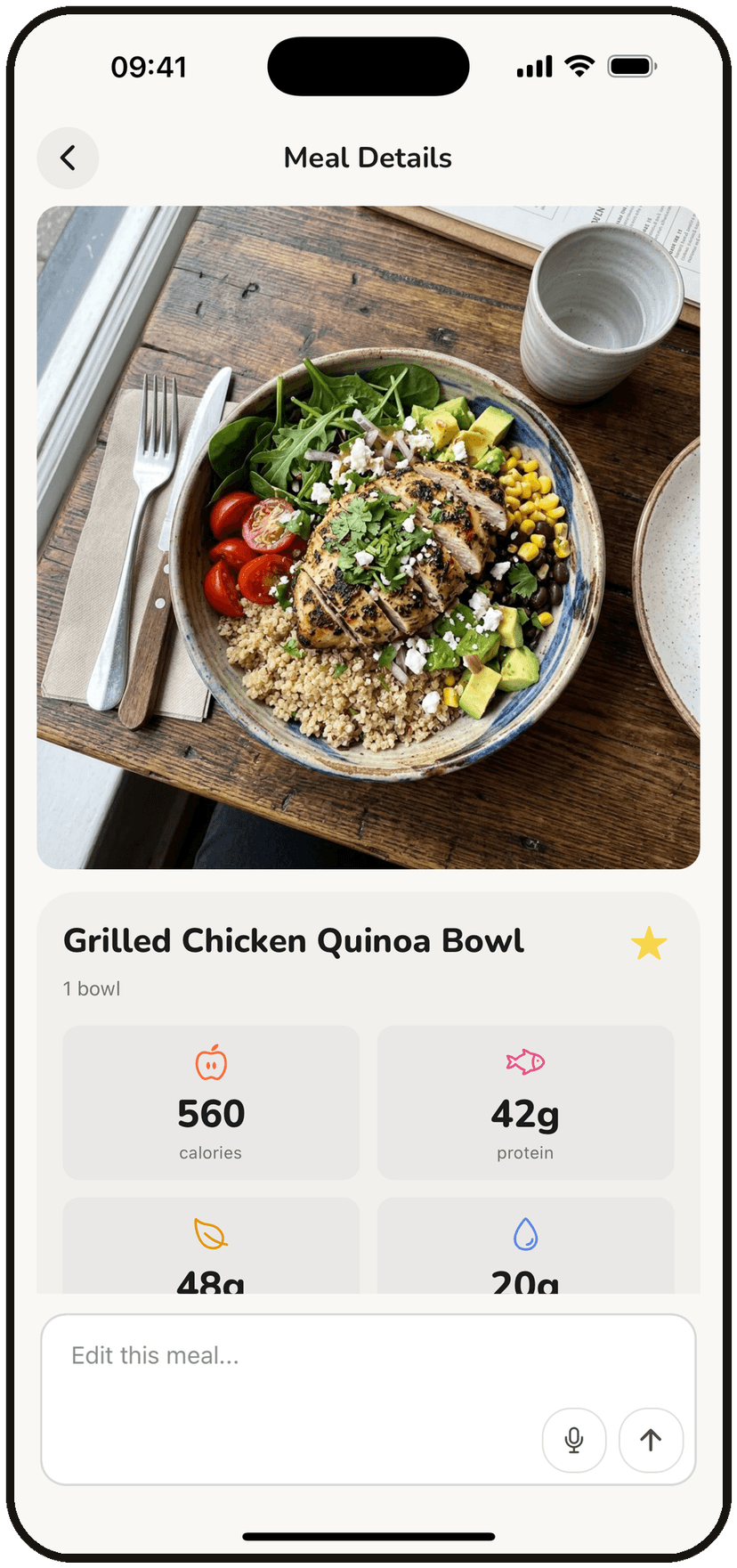
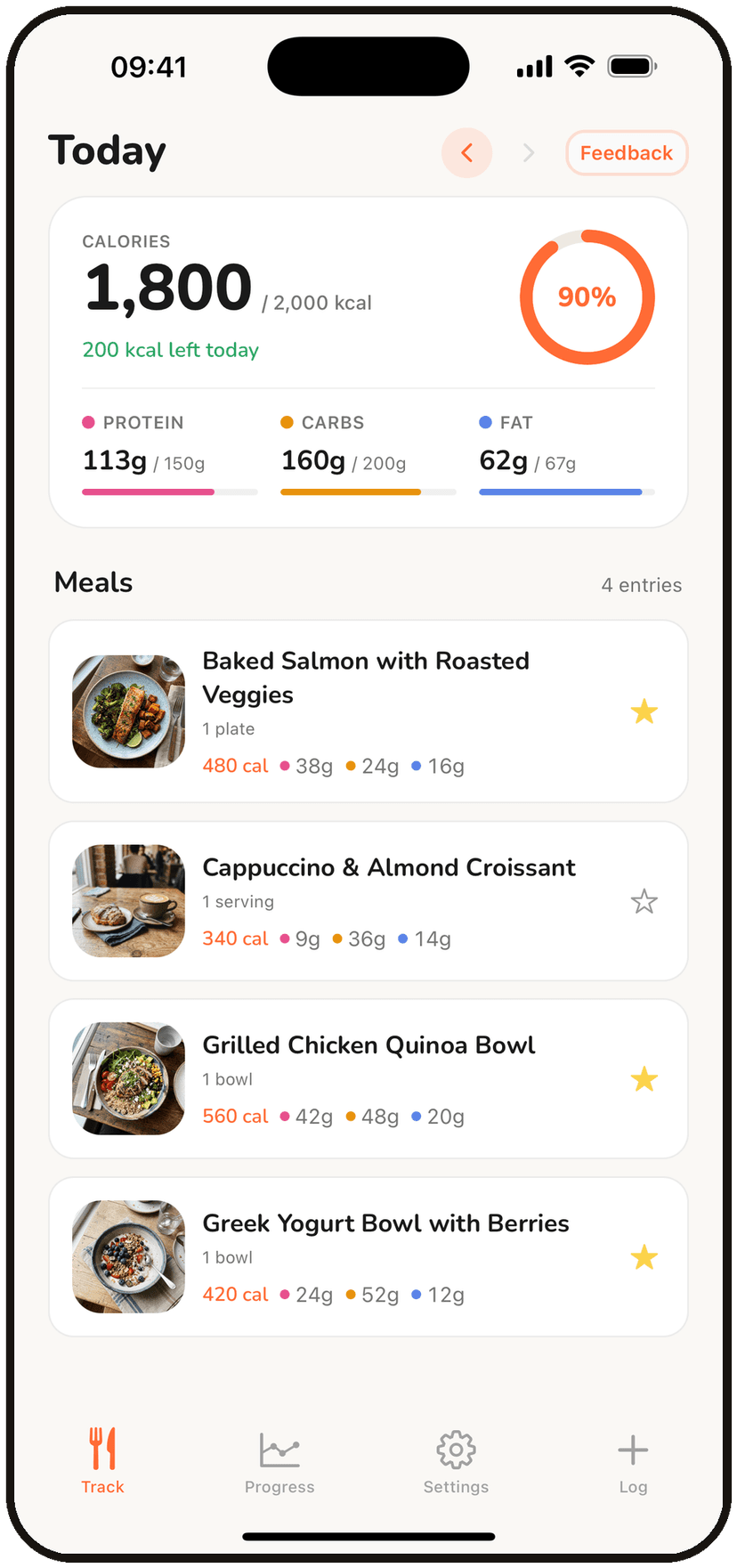
Portion guesses add up fast. BiteKit's AI estimates what's actually on your plate — oils, sides and all — so your log stays close to what you really ate.
- Log meals by photo, voice, or text
- Calories & macros estimated in seconds
- Syncs with Apple Health and Apple Watch
Free download · 3-day free trial, cancel anytime.
Scan with your iPhone camera