Plate Method Calculator
Build a balanced meal following the USDA MyPlate method — ½ vegetables, ¼ protein, ¼ grains — and instantly see the calories and macros for every section of your plate.
Plate Size
Plate size adjusts portion weights for the main plate sections.
½ Plate — Non-Starchy Vegetables
¼ Plate — Lean Protein
¼ Plate — Grains / Starchy Foods
Side — Dairy / Calcium Source (optional)
Side — Fruit (optional)
What Is the Plate Method?
The Plate Method is a simple, visual way to build balanced meals without counting calories. Instead of weighing food or tracking numbers, you use the size of a standard dinner plate as a guide:
½ Non-Starchy Vegetables
Fill half the plate with low-calorie, high-fibre vegetables like broccoli, spinach, or peppers to add volume and nutrients.
¼ Lean Protein
A quarter of the plate holds your protein source — chicken, fish, tofu, legumes — for satiety and muscle maintenance.
¼ Grains / Starchy Foods
The remaining quarter goes to grains or starchy foods — rice, pasta, sweet potato — for energy and fibre, ideally whole-grain.
Rounding out the meal are optional sides: a dairy or calcium-rich food (such as milk, Greek yogurt, or string cheese) and a piece of fruit. This combination supplies calcium, vitamin C, and additional micronutrients without dramatically increasing calories.
USDA MyPlate vs. the ADA Plate Method
The concept of a divided plate has two closely related versions:
USDA MyPlate
Introduced in 2011 to replace the Food Pyramid, MyPlate divides a 9-inch plate into four sections — fruits, vegetables, grains, and protein — with a small dairy cup on the side. It is a general healthy eating guide for the public.
ADA Diabetes Plate Method
Endorsed by the American Diabetes Association, the ADA Plate Method specifically allocates half the plate to non-starchy vegetables and combines fruit and dairy as optional sides. Its primary goal is limiting carbohydrate load to manage blood glucose.
Why Plate Size Matters
Research by Cornell University food psychologist Brian Wansink showed that people eat approximately 22% more when using a 12-inch plate versus a 10-inch plate — without feeling any more full. The visual illusion of a full plate satisfies the brain even when the actual volume of food is smaller.
For weight management, switching from a 12-inch to a 9-inch plate and eating the same types of food can reduce daily calorie intake by 200–300 kcal — enough to produce meaningful weight loss over time without any dietary change.
Practical Tips for Following the Plate Method
- ✓Start with vegetables. Serving veggies first ensures you actually hit the half-plate target before filling the rest.
- ✓Choose whole grains over refined. Brown rice, quinoa, and sweet potato digest more slowly than white rice or white bread, leading to more stable blood sugar.
- ✓Vary your proteins. Rotating between animal proteins (chicken, salmon) and plant proteins (lentils, chickpeas) increases micronutrient diversity.
- ✓Use a 9-inch plate. This is the standard recommended size in most guidelines. Anything larger makes the portion sizes too large; anything smaller may leave you under-fuelled.
- ✓Build the pattern, not the perfection. The plate method is a guide, not a rigid rule. A meal where vegetables cover 45% of the plate is still excellent.
- ✓Add colour deliberately. Each colour of vegetable brings different antioxidants and phytonutrients. Red peppers, dark leafy greens, and orange sweet potato together cover far more nutritional ground than one single vegetable.
What Macros Does a Plate Method Meal Deliver?
Because food choices vary widely, exact macros differ by meal. However, a typical medium-plate balanced meal falls in these approximate ranges:
25–40%
Protein calories
~20–35 g per meal
35–50%
Carbohydrate calories
~45–75 g per meal
15–30%
Fat calories
~8–18 g per meal
Total: typically 450–800 calories depending on food choices and plate size
Frequently Asked Questions
What is the Plate Method?
The Plate Method is a simple visual meal-planning guide: fill half your plate with non-starchy vegetables, one quarter with lean protein, and one quarter with grains or starchy foods. An optional side of dairy and fruit completes the meal. It was popularised by USDA MyPlate and adopted by the American Diabetes Association as an easy tool for balanced eating and blood sugar control.
How many calories does a plate method meal have?
It depends on your food choices and plate size. A typical medium plate meal sits between 500 and 800 calories. Leaner proteins (shrimp, turkey) and skipping the optional sides keep the total closer to 500–600. Richer proteins (salmon) or adding both dairy and fruit can push it toward 800.
Is the Plate Method good for diabetes?
Yes. The American Diabetes Association officially recommends the Plate Method as a carb-conscious meal planning strategy. By limiting grains to a quarter of the plate and loading up on non-starchy vegetables, the approach naturally moderates carbohydrate intake and glycemic load — without complicated carb counting.
What counts as a non-starchy vegetable?
Non-starchy vegetables are low in carbohydrates: broccoli, cauliflower, leafy greens, zucchini, asparagus, bell peppers, tomatoes, green beans, and cucumber. Starchy vegetables like corn, peas, and potatoes belong in the grains quarter, not the vegetable half.
Can vegetarians and vegans use the Plate Method?
Absolutely. The protein quarter is not limited to animal products. Tofu, lentils, chickpeas, and black beans are all excellent plant-based choices. These legumes also contribute carbohydrates, but their fibre and protein density still make them beneficial for satiety and blood sugar management.
Does plate size really matter?
Yes. Research shows that people serve and eat larger portions on larger plates without noticing. Using a 9-inch (medium) plate instead of a 12-inch plate is one of the easiest ways to reduce portion size and calorie intake. The calculator adjusts estimated portion weights for each plate section based on your plate size choice.
iPhone app · 3-day free trial
You're likely eating 500 calories more than you think
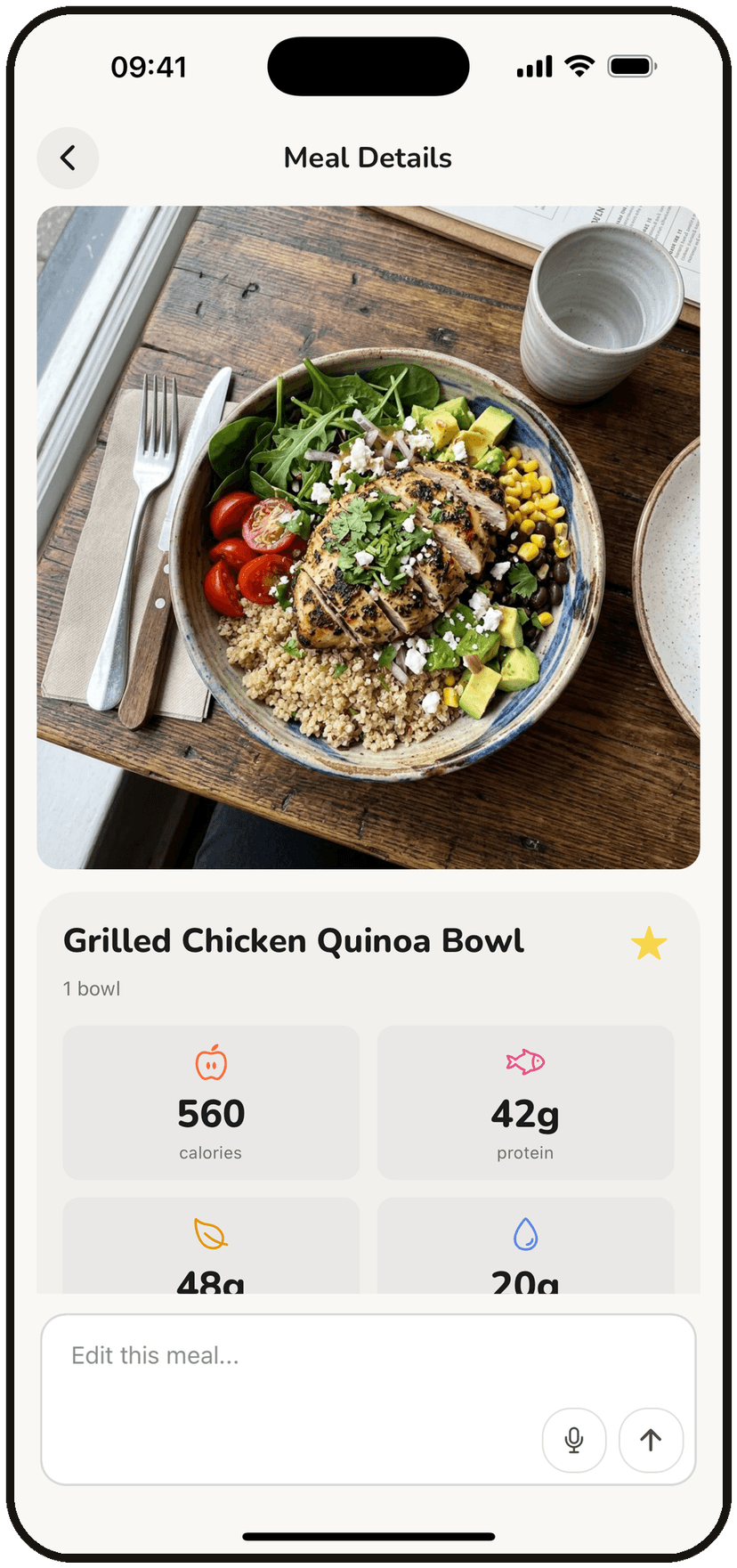
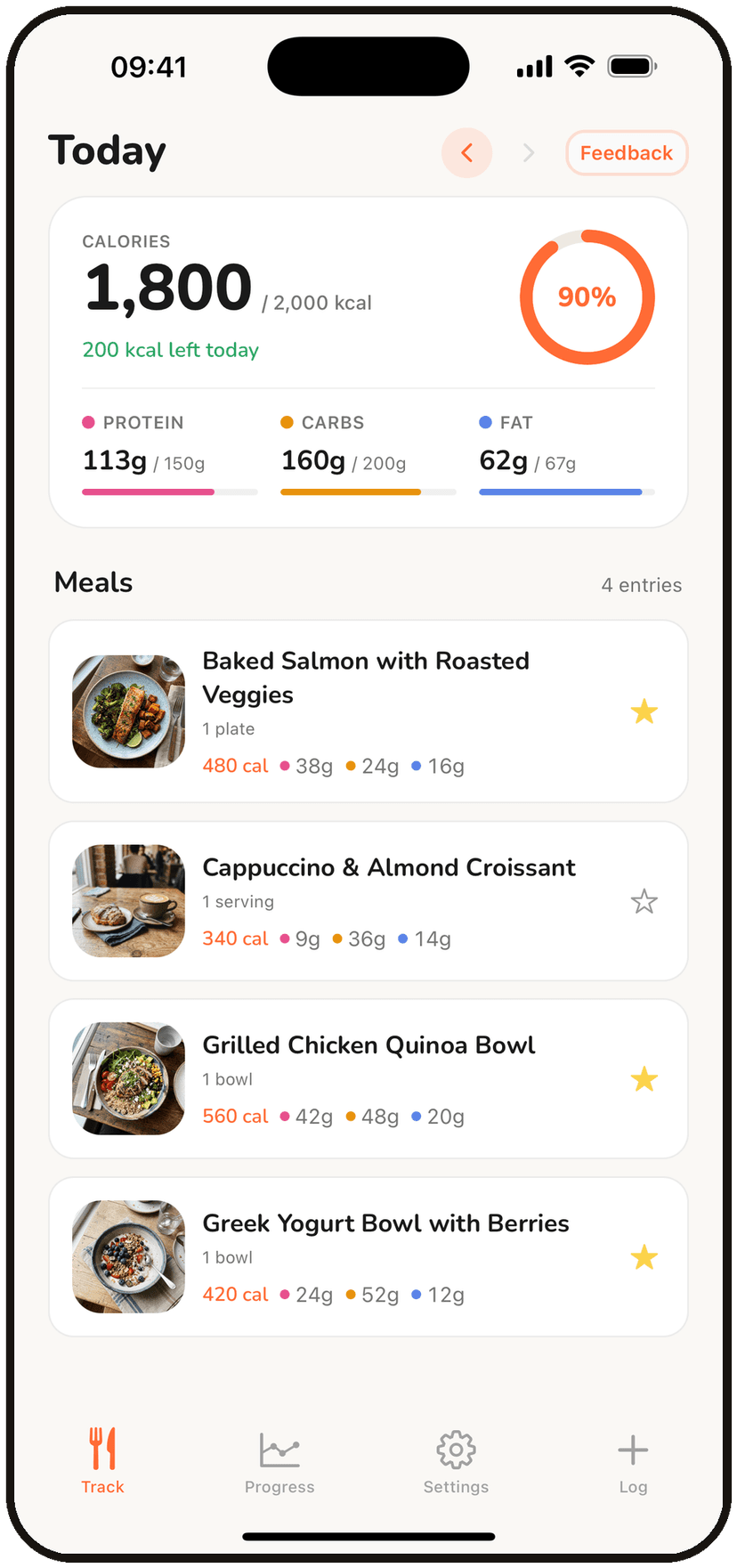
Portion guesses add up fast. BiteKit's AI estimates what's actually on your plate — oils, sides and all — so your log stays close to what you really ate.
- Log meals by photo, voice, or text
- Calories & macros estimated in seconds
- Syncs with Apple Health and Apple Watch
Free download · 3-day free trial, cancel anytime.
Scan with your iPhone camera