Prebiotic Intake Calculator
Log the prebiotic-rich foods you eat today and see how your intake of inulin, FOS, GOS, resistant starch, and more stacks up against the research-backed 5g daily target for microbiome health.
Log Today's Prebiotic Foods
Select the foods you ate today and choose how many servings. Each serving size is listed next to the food.
Alliums & Roots
Garlic
1 clove · 0.6g Inulin / FOS
Garlic
3 cloves · 1.8g Inulin / FOS
Onion (raw)
1/2 cup · 2.1g Inulin / FOS
Leek (cooked)
1/2 cup · 2.5g Inulin / FOS
Jerusalem Artichoke
1/2 cup · 10g Inulin / FOS
Chicory Root Tea
1 cup · 3g Inulin / FOS
Vegetables
Asparagus
6 spears · 2.5g Inulin / FOS
Dandelion Greens
1 cup · 3.5g Inulin / FOS
Mushrooms
1 cup · 0.7g Beta-Glucan
Carrots
1 cup · 1.4g Pectin
Fruits
Banana (ripe)
1 medium · 0.5g Inulin / FOS
Banana (green/unripe)
1 medium · 4.7g Resistant Starch
Apple (with skin)
1 medium · 1.3g Pectin
Orange
1 medium · 1.8g Pectin
Legumes
Lentils (cooked)
1/2 cup · 1.5g GOS
Chickpeas (cooked)
1/2 cup · 1.5g GOS
Black Beans (cooked)
1/2 cup · 1.2g GOS
Grains
Rice (cooked & cooled)
1 cup · 3.5g Resistant Starch
Pasta (cooked & cooled)
1 cup · 3g Resistant Starch
Potato (cooked & cooled)
1 medium · 3.2g Resistant Starch
Rolled Oats (dry)
1/2 cup · 1g Resistant Starch
Wheat Bran
2 tbsp · 1g Arabinoxylan
Whole Wheat Bread
2 slices · 0.8g Arabinoxylan
Rye Bread
2 slices · 1g Arabinoxylan
Rolled Oats (dry)
1/2 cup · 1g Beta-Glucan
Barley (cooked)
1/2 cup · 1.5g Beta-Glucan
Supplements
Psyllium Husk
1 tsp · 2g Inulin / FOS
What Are Prebiotic Fibers?
Prebiotics are specific types of dietary fiber that your body cannot digest but that serve as food for the trillions of bacteria living in your large intestine. Unlike most dietary fiber — which simply adds bulk to stool — prebiotic fibers are selectively fermented by beneficial bacterial species, promoting their growth and activity while suppressing harmful bacteria.
The main prebiotic fiber types each feed different bacterial communities and produce different fermentation byproducts. Getting a mix of types is more beneficial than maximizing any single one:
- Inulin and FOS: Found in garlic, onions, leeks, asparagus, chicory root, and Jerusalem artichoke. Selectively feeds Bifidobacterium and produces acetate and lactate. The most researched prebiotic type.
- GOS (Galactooligosaccharides): Found in legumes (lentils, chickpeas, black beans). Feeds both Bifidobacterium and Lactobacillus and supports immune function.
- Resistant Starch: Found in unripe bananas, and in any starchy food that has been cooked and cooled (rice, pasta, potatoes). Feeds a broad range of bacteria and produces the most butyrate — a short-chain fatty acid that is the preferred fuel of colon cells.
- Beta-Glucan: Found in oats and barley. Supports gut health and is separately validated for lowering LDL cholesterol — one of the few dietary fibers with an FDA-approved health claim.
- Arabinoxylan: Found in wheat bran and rye. Feeds Bifidobacterium and Bacteroidetes species and ferments more slowly than inulin, with less gas.
- Pectin: Found in apples, citrus, and carrots. Ferments rapidly, supports Akkermansia muciniphila — a keystone species linked to gut barrier integrity and metabolic health.
Why the 5g Daily Target?
The 5g per day benchmark comes from controlled human intervention studies that used specific doses of inulin/FOS to measure measurable changes in microbiome composition. At doses of 5-8g per day, researchers consistently observed statistically significant increases in Bifidobacterium counts, increased production of short-chain fatty acids, and improved markers of gut barrier function.
The average Western diet provides only 1-3g of specific prebiotic fiber daily, despite meeting general fiber recommendations. This matters because total fiber intake and prebiotic fiber intake are different metrics — a diet can be high in insoluble fiber (which adds bulk) while being very low in the specific fermentable fibers that feed beneficial bacteria.
Gradual increase prevents discomfort
If you are currently eating less than 2g per day, jumping to 5g+ immediately may cause temporary bloating and gas as your gut bacteria adjust. This is normal and expected — the bacteria are fermenting the fiber and producing gas as a byproduct. Increase intake by 1-2g per week over 3-4 weeks for a comfortable transition.
The Cook-and-Cool Resistant Starch Strategy
One of the most practical ways to boost prebiotic intake is by changing how you prepare starchy foods you already eat. When rice, pasta, and potatoes are cooked and then cooled (refrigerated for at least 12 hours), a significant portion of their digestible starch is converted to type 3 resistant starch through a process called retrogradation.
| Food (1 cup) | Freshly Cooked RS | After Cooling | Increase |
|---|---|---|---|
| White rice | 0.5g | 3.5g | +3.0g |
| Pasta | 0.3g | 3.0g | +2.7g |
| Potato | 0.6g | 3.2g | +2.6g |
You can reheat these foods and still retain most of the resistant starch benefit — reheating partially reverses retrogradation but typically reduces RS by only 10-15%. Meal prepping grains in advance is therefore both convenient and nutritionally superior from a microbiome perspective.
Highest Prebiotic Foods by Type
Best Inulin/FOS Sources
Jerusalem artichoke is the highest-concentration source at roughly 10g per 1/2 cup — an impressive amount from a single food. Dandelion greens, chicory root tea, leeks, and asparagus are more commonly available options providing 2.5-3.5g per serving. Garlic is potent by weight (20-30% inulin by dry weight) but is consumed in small amounts, providing about 0.6g per clove.
Best Resistant Starch Sources
Green/unripe bananas are the most concentrated source with 4.7g per medium banana. The catch: as bananas ripen, resistant starch is converted to sugars, dropping to near zero in a fully ripe banana. If you eat bananas for gut health, eat them slightly green. Cooked-and-cooled grains are the most practical source for daily intake since most people already eat rice, pasta, or potatoes regularly.
Best GOS Sources
Legumes are the dominant source of GOS in most diets. Lentils and chickpeas provide approximately 1.5g GOS per 1/2 cup cooked. Canned and drained legumes retain roughly 50-70% of their GOS compared to home-cooked — still a meaningful amount.
Getting Multiple Types in One Day
A practical high-prebiotic day might include: oatmeal with a green banana (beta-glucan + resistant starch + inulin), a lentil soup with garlic and leeks (GOS + inulin/FOS), and an apple as a snack (pectin). This combination easily exceeds 10g of total prebiotic fiber across 4 distinct types — ideal for microbiome diversity.
Prebiotics vs. Probiotics: What's the Difference?
Probiotics are live bacteria found in fermented foods (yogurt, kefir, sauerkraut, kimchi, kombucha) and supplements. Prebiotics are the food that feeds beneficial bacteria already living in your gut. Both have value, but research increasingly suggests that sustaining a diverse microbiome through prebiotic-rich foods may have more durable effects than periodically adding live bacteria that may not survive in your specific gut environment.
The most effective approach is often a combination — prebiotics provide the fuel, probiotics provide additional bacterial strains. When you eat both together (a "synbiotic" approach), the prebiotic fibers help the probiotic organisms establish and survive in the gut.
Frequently Asked Questions
What are prebiotics and why do they matter?
Prebiotics are specific dietary fibers that selectively feed beneficial gut bacteria (like Bifidobacterium and Lactobacillus) without being digested by the human body. They are the fuel that keeps your microbiome thriving — research links adequate prebiotic intake to better digestion, stronger immunity, reduced inflammation, and even improvements in mood and metabolic health.
How much prebiotic fiber do I need per day?
Research-backed studies show that 5g per day of specific prebiotic fiber is the minimum to produce meaningful changes in microbiome composition and short-chain fatty acid production. Most Western diets provide only 1-3g. Aim for 5-10g daily, increasing gradually to avoid temporary gas and bloating.
What is the difference between inulin, FOS, GOS, and resistant starch?
Each type feeds different bacterial species. Inulin and FOS from garlic and onions primarily boost Bifidobacterium. GOS from legumes supports both Bifidobacterium and Lactobacillus. Resistant starch from cooled grains feeds the widest range of bacteria and produces the most butyrate — a critical short-chain fatty acid for colon health. Eating a mix of types is more beneficial than focusing on one.
Why does cooling cooked rice, pasta, and potatoes increase resistant starch?
During cooling, cooked starch molecules reorganize into a crystalline structure (retrogradation) that human digestive enzymes cannot break down. This converts regular starch into type 3 resistant starch. The process is largely preserved even when you reheat the food, making meal-prepped grains more prebiotic-rich than freshly cooked ones.
Can prebiotics cause bloating?
Yes, especially if you increase intake quickly. Fermentation of prebiotic fibers by gut bacteria produces gas as a byproduct — this is a sign the bacteria are active, not harmful. Increase intake gradually: start at 2-3g per day for 1-2 weeks before moving toward 5g+. People with IBS or SIBO may need extra caution as some prebiotic sources are also high-FODMAP.
What is the easiest way to increase prebiotic intake?
The easiest strategy is to cook grains in batch and use them cold or reheated the next day (adds 3-3.5g resistant starch per cup). Adding half a cup of lentils or chickpeas to meals (1.2-1.5g GOS), using garlic and onions liberally in cooking (0.6-2.1g inulin), and eating an apple with the skin (1.3g pectin) can consistently get you to 5g+ with minimal effort.
Related Tools
iPhone app · 3-day free trial
You're likely eating 500 calories more than you think
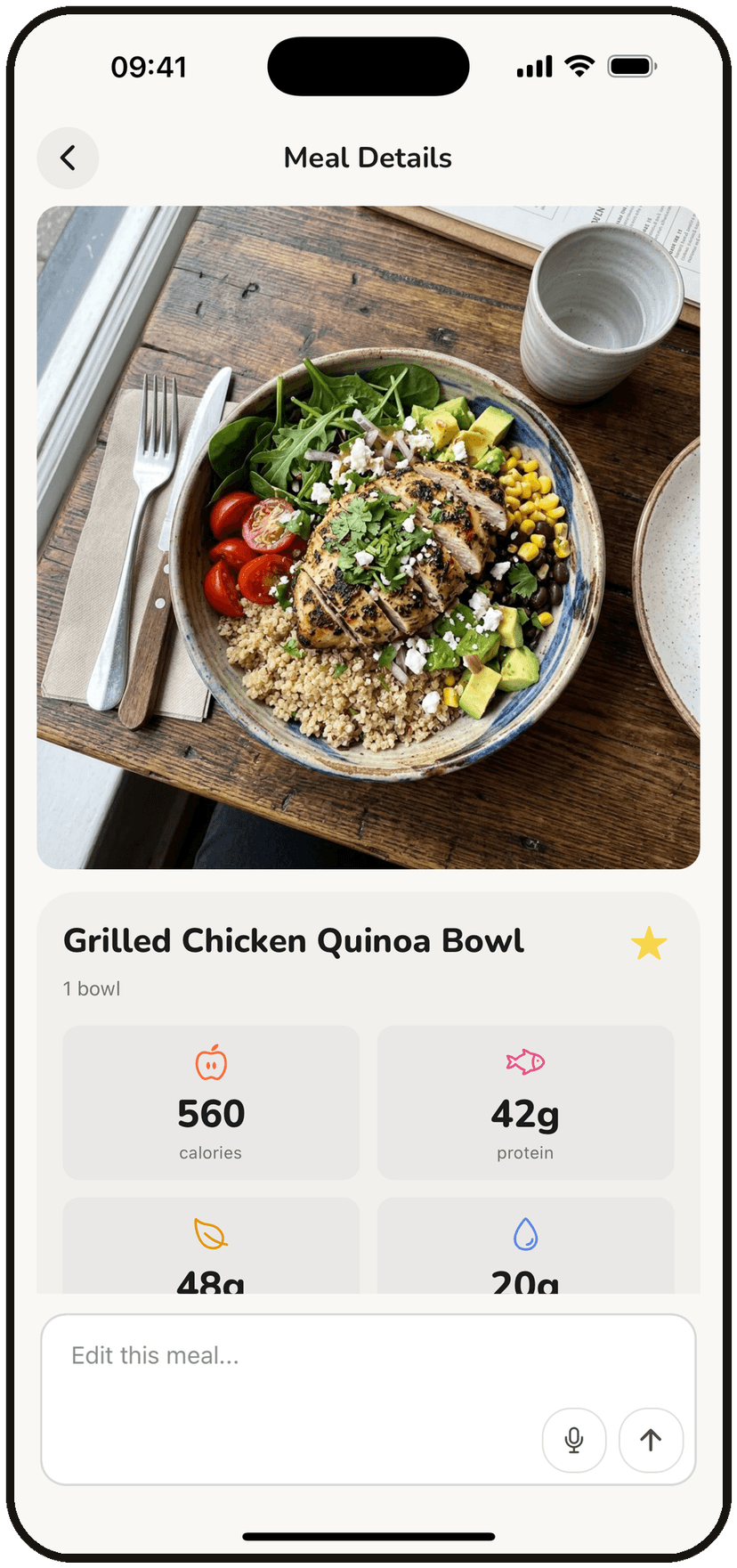
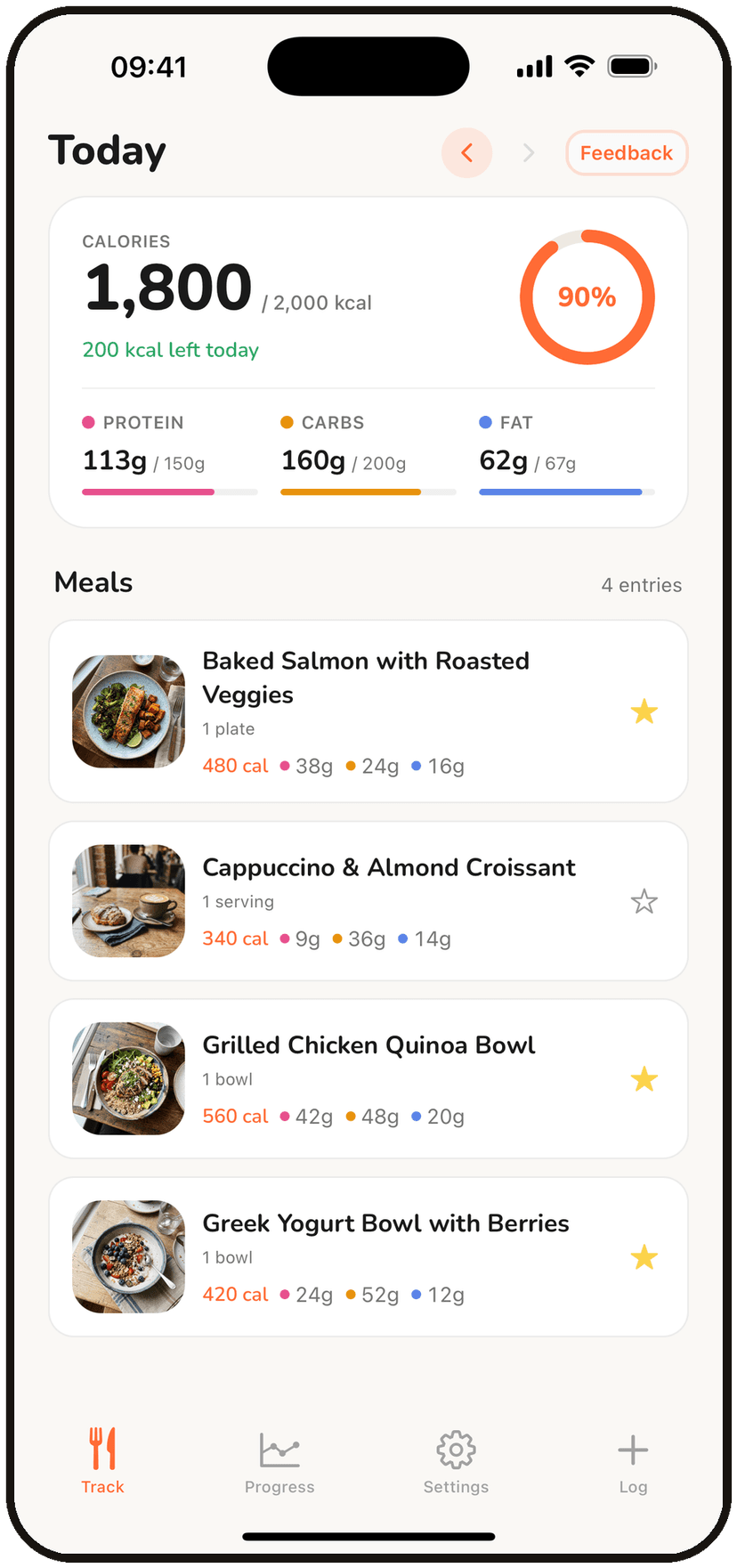
Portion guesses add up fast. BiteKit's AI estimates what's actually on your plate — oils, sides and all — so your log stays close to what you really ate.
- Log meals by photo, voice, or text
- Calories & macros estimated in seconds
- Syncs with Apple Health and Apple Watch
Free download · 3-day free trial, cancel anytime.
Scan with your iPhone camera