Progressive Overload Planner
Input your current lifts and get a personalized 12-week progressive overload schedule with weekly weight and rep increments, deload weeks, and projected strength gains tailored to your experience level.
How it works
Enter your current working weights and we will generate a 12-week progressive overload schedule tailored to your experience level and goals. The plan includes structured weight and rep increases, deload weeks for recovery, and projected strength gains based on proven periodization models.
What is Progressive Overload?
Progressive overload is the single most important principle in strength training. It states that in order for muscles to grow stronger and larger, they must be subjected to a stimulus that exceeds what they have previously adapted to. Without progressively increasing the demands on your muscles, your body has no reason to continue building strength.
The concept was first formalized by physician Thomas Delorme in the 1940s during post-war rehabilitation research, but the principle has been understood by athletes for centuries. The legendary wrestler Milo of Croton reportedly carried a calf on his shoulders every day, and as the calf grew into a bull, Milo grew proportionally stronger — an ancient example of progressive overload in action.
In modern strength training, progressive overload is achieved through several mechanisms: increasing the weight lifted, adding reps or sets, improving technique efficiency, increasing training frequency, or decreasing rest periods. The most straightforward and measurable approach — and the one used in this planner — is systematically increasing the weight on the bar while managing volume and recovery through periodized programming.
Types of Progressive Overload
While adding weight to the bar is the most common form, progressive overload can take several forms. Understanding each type helps you choose the right approach for your goals and break through plateaus.
Weight Increase (Load Progression)
The most direct form of overload. Adding small, consistent increments to the bar — typically 2.5 kg for upper body lifts and 5 kg for lower body lifts — is the foundation of beginner and intermediate programs. This approach works best when you can recover between sessions and continue making weight jumps.
Rep Increase (Volume Progression)
When you cannot add weight, adding reps at the same weight increases total training stimulus. For example, progressing from 3 sets of 8 to 3 sets of 10 at the same weight before increasing load. This is especially useful for hypertrophy-focused training and for lifters approaching their strength ceiling on a given exercise.
Set Increase (Volume Progression)
Adding sets while keeping weight and reps constant increases total volume load. Going from 3 sets to 4 sets of an exercise represents a 33% increase in training volume — a significant stimulus. This is a cornerstone of block periodization programs used by advanced lifters.
Density Increase (Same Work, Less Time)
Performing the same total work in less time by reducing rest periods between sets. This improves work capacity and metabolic conditioning without adding load. While less common in pure strength programs, density progression is valuable for general fitness and conditioning phases.
Progression Models by Experience Level
The optimal progression model depends on how advanced you are. Beginners recover faster and can increase loads more frequently, while advanced lifters need more sophisticated periodization to continue progressing.
Beginner: Linear
- Add weight every week
- Simple and predictable
- 2.5-5 kg increments
- Deload every 4th week
- Works for 3-12 months
- Programs: Starting Strength, StrongLifts
Intermediate: Undulating
- Alternate volume and intensity weeks
- Manage fatigue through variation
- 1-2.5 kg per block
- 4-week repeating blocks
- Works for 1-5 years
- Programs: 5/3/1, Juggernaut
Advanced: Block
- Accumulation then intensification
- Volume builds then peaks
- Small weight increases per block
- Planned peaking phases
- Works for 5+ years
- Programs: Sheiko, RTS, Calgary Barbell
How do you know which level you are? If you can add weight to the bar every session or every week and continue progressing, you are a beginner (this is a good thing — enjoy the rapid gains). If linear progress has stalled and you need weekly variation to keep progressing, you are intermediate. If you have been training seriously for 5+ years and need multi-week planned blocks to see progress, you are advanced. These categories refer to training advancement, not the amount of weight you lift.
When and How to Deload
A deload is a planned reduction in training volume (typically 40-50% fewer sets) while maintaining training intensity (same weight on the bar). Deloads are essential for long-term progress because they allow accumulated fatigue to dissipate, enabling supercompensation — the process by which your body rebuilds stronger than before.
Signs You Need a Deload
- Persistent fatigue that does not resolve with a good night of sleep
- Missed reps on weights you previously handled comfortably
- Nagging joint or tendon soreness that worsens during training
- Decreased motivation or mental burnout in the gym
- Elevated resting heart rate or disrupted sleep patterns
How to Deload Effectively
- Keep the same exercises and the same weight on the bar
- Reduce sets by 40-50% (e.g., from 4 sets to 2 sets)
- Maintain rep quality — every rep should be technically sharp
- Use the extra time and energy for mobility work and recovery
- Do NOT skip the gym entirely — active recovery is better than complete rest
- Prioritize sleep, nutrition, and hydration during the deload week
This planner automatically includes deload weeks in your 12-week schedule. Beginner and intermediate plans deload every 4th week, while advanced plans use strategic deloads between accumulation blocks. Trust the process — skipping deloads is one of the most common mistakes that leads to stagnation and injury.
Frequently Asked Questions
What is progressive overload?
Progressive overload is the fundamental principle of strength training that involves gradually increasing the demands placed on your muscles over time. This can be achieved by adding weight to the bar, increasing reps or sets, or reducing rest periods. Without progressive overload, your body has no reason to adapt and grow stronger.
How much weight should I add per week?
For beginners, add 2.5 kg (5 lbs) per week for upper body lifts and 5 kg (10 lbs) per week for lower body lifts. Intermediate lifters should add 1-2.5 kg per block (every 4 weeks). Advanced lifters may only add weight every 2-4 weeks using block periodization. The key is consistent, small increases.
When should I take a deload week?
Take a deload every 3-4 weeks of hard training. During a deload, reduce training volume by 40-50% while keeping the weight the same. Signs you need a deload include persistent fatigue, stalled progress, joint aches, poor sleep, and decreased motivation. Deloads are built into this planner automatically.
What is the difference between linear and undulating periodization?
Linear periodization adds weight in a straight line every session or week — ideal for beginners who recover quickly. Undulating periodization alternates between higher-rep volume days and lower-rep intensity days within each block, providing varied stimuli and better fatigue management. Undulating approaches are more effective for intermediate and advanced lifters.
Can I use progressive overload for muscle building?
Absolutely. Progressive overload is essential for hypertrophy (muscle growth). While strength programs emphasize adding weight, hypertrophy programs can also progress by adding reps, sets, or reducing rest periods. The key is that total training volume (sets x reps x weight) increases over time. Select the "Hypertrophy" goal in this planner for a muscle-building-optimized progression.
What should I do if I hit a plateau?
First, repeat the week at the same weight. If you still stall, try adding reps instead of weight. If you stall for two or more consecutive weeks, take a deload week. Also check your recovery: sleep 7-9 hours, eat enough protein (1.6-2.2 g/kg body weight), and ensure you are eating at maintenance or in a surplus. If stalls persist, reduce starting weights by 10% and rebuild.
iPhone app · 3-day free trial
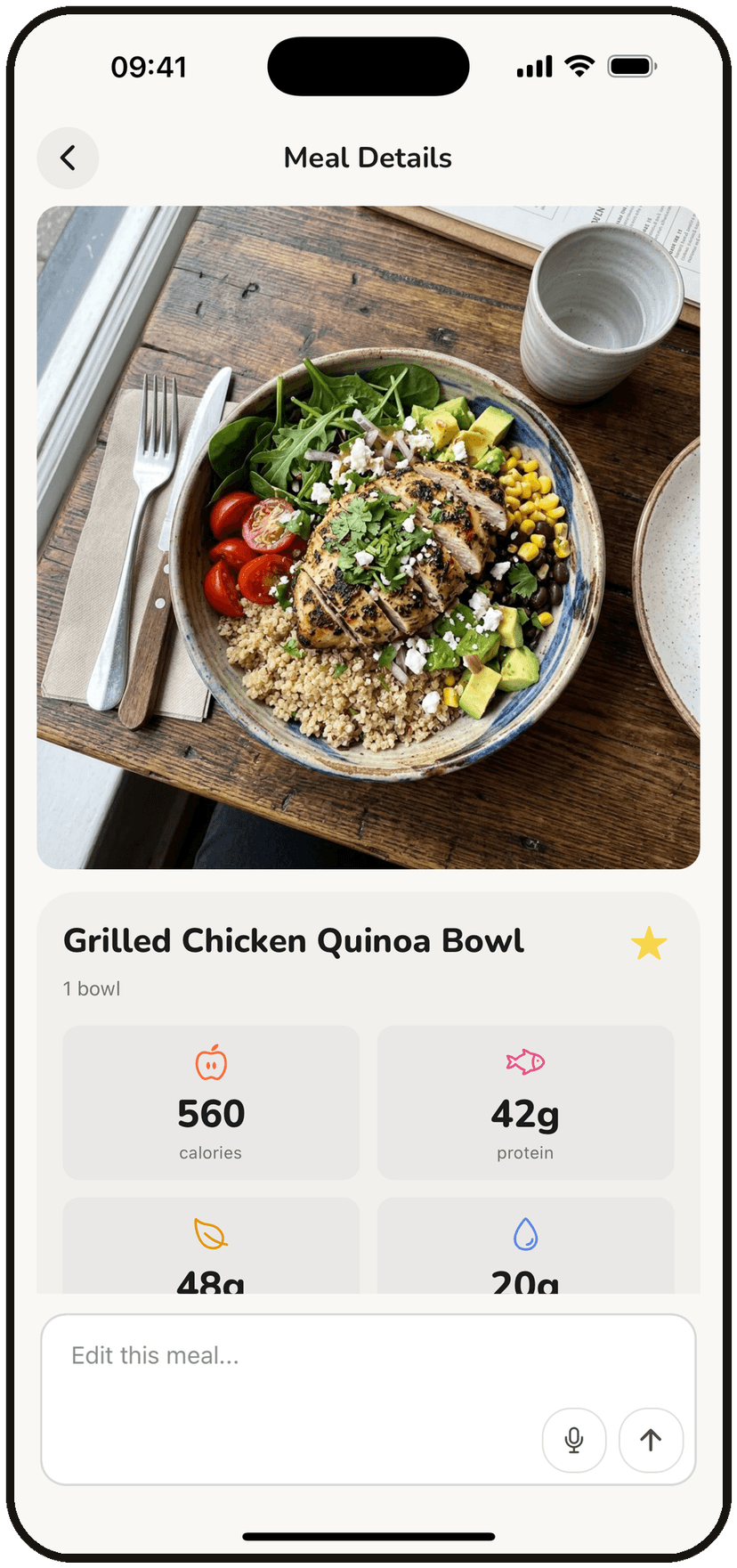
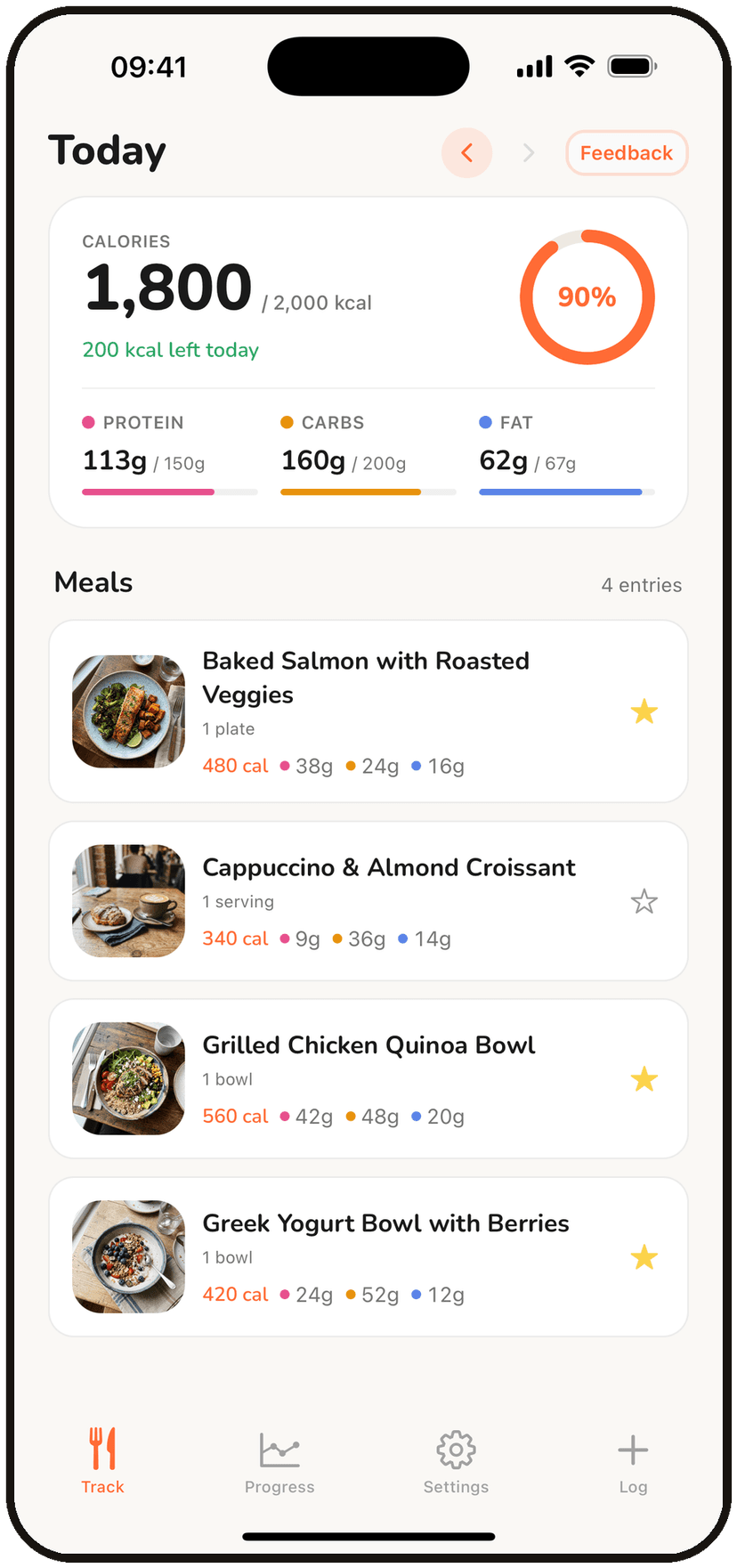
You're likely eating 500 calories more than you think
Portion guesses add up fast. BiteKit's AI estimates what's actually on your plate — oils, sides and all — so your log stays close to what you really ate.
- Log meals by photo, voice, or text
- Calories & macros estimated in seconds
- Syncs with Apple Health and Apple Watch
Free download · 3-day free trial, cancel anytime.
Scan with your iPhone camera