Protein Leverage Calculator
Discover how your protein percentage controls your total calorie intake. Based on the protein leverage hypothesis, low protein diets silently drive overeating — find out where you stand and what to target.
What Is Protein Leverage?
The protein leverage hypothesis was developed by nutritional ecologists David Raubenheimer and Stephen Simpson at the University of Sydney. Their research, originally conducted on insects and later extended to humans, revealed a striking biological mechanism: organisms prioritize reaching a specific protein intake target above all other nutritional goals.
When protein makes up a lower percentage of your diet, your body compensates by increasing total food consumption — eating more carbohydrates and fats in the process — until it hits its protein quota. This means a low-protein-density diet does not just leave you hungry for protein: it drives overconsumption of everything else.
This mechanism helps explain why ultra-processed foods, which are often protein-dilute (high in refined carbs and fats, low in protein by calorie percentage), are so easy to overeat. Your body keeps signaling hunger because the protein target is never met efficiently.
The Math Behind Protein Leverage
The leverage effect is straightforward once you see the numbers. Suppose your body needs 150g of protein per day for satiety and muscle maintenance. Here is what happens at different protein densities:
| Protein % of Diet | Calories to Hit 150g | Extra Calories vs 20% |
|---|---|---|
| 10% | 3,000 kcal | +1,500 |
| 15% | 2,000 kcal | +500 |
| 20% | 1,500 kcal | — |
| 25% | 1,200 kcal | −300 |
| 30% | 1,000 kcal | −500 |
At 10% dietary protein, you would need to eat 3,000 calories just to hit 150g — consuming 1,500 extra calories compared to a 20% protein diet. This is the leverage effect in numbers.
Why Ultra-Processed Foods Drive Overeating
A 2019 NIH clinical trial by Kevin Hall and colleagues provided direct experimental evidence for protein leverage. Participants eating ultra-processed diets consumed spontaneously 500 more calories per day than those on unprocessed diets — and critically, the ultra-processed diet was also significantly lower in protein as a percentage of energy.
Ultra-processed foods are engineered to be calorie-dense and protein-dilute: chips, cookies, breakfast cereals, fast food buns, and sweetened beverages contribute a high share of calories while contributing little to the protein target. The body responds by continuing to signal hunger until the protein need is met, regardless of how many carb and fat calories have already been consumed.
Low Protein % Foods to Minimize
- Refined grains and bread: 8–12% protein, high in starchy carbs
- Pastries and baked goods: 5–8% protein, concentrated fat + sugar
- Chips and crackers: 5–10% protein, mostly refined carbs and fat
- Sweetened beverages: near 0% protein, pure calorie dilution
- Most fast food sides (fries, buns): 5–8% protein by calorie
High Protein % Foods to Prioritize
- Chicken breast (skinless): ~75% of calories from protein
- Non-fat Greek yogurt: ~65–70% protein calories
- Egg whites: ~85% protein calories
- Canned tuna (in water): ~85% protein calories
- Cottage cheese (low-fat): ~55–60% protein calories
- Lentils and legumes: ~28–35% protein calories, also high in fiber
Finding Your Optimal Protein Percentage
Research consistently identifies 20–25% of calories from protein as the range that satisfies the protein drive without requiring excess total calorie intake. Below 15%, the leverage effect becomes significant. Above 30%, returns diminish for most people — appetite suppression plateaus and the practical challenge of high-protein eating increases.
By Goal
- Reduce overeating / weight loss: Target 20–22% protein. This is enough to neutralize the leverage drive without extreme dietary changes. Focus on replacing low-protein snacks with protein-dense options.
- Optimize body composition: Target 25–30%. Higher protein intakes (around 2.2 g/kg) support muscle retention on a calorie deficit and maximize muscle synthesis when combined with resistance training.
- Maintenance / general health: Target 18–22%. This range provides good satiety, supports muscle maintenance, and is sustainable long-term without requiring extreme food selection.
Frequently Asked Questions
What is the protein leverage hypothesis?
Developed by Raubenheimer and Simpson, the protein leverage hypothesis states that humans prioritize hitting a daily protein target. When protein is a low percentage of your diet, your body drives you to eat more total calories to reach that target — making low-protein diets a hidden driver of overeating.
What protein percentage stops overeating?
Research suggests protein below 15% of calories significantly increases total food consumption. The 20–25% range is where the protein leverage effect reverses — your body hits its protein target without excess calorie intake. Most adults need roughly 1.6–2.2 g of protein per kg of body weight per day to reach this.
How is protein leverage different from just counting calories?
Calorie counting treats all energy equally. Protein leverage focuses on protein density — what percentage of your calories come from protein. A diet at 10% protein may leave you constantly hungry even if you technically ate enough calories, because the protein quota is unmet. Shifting to 20% protein can reduce appetite without changing total calories dramatically.
How is the leverage score calculated?
The leverage score (0–100) rates how well your protein percentage aligns with research-optimal ranges. Scores below 40 indicate poor leverage (protein under 15%), scores of 65–85 reflect moderate leverage, and scores above 85 reflect optimal leverage (20–28% protein). The score accounts for the non-linear relationship between protein percentage and appetite control.
What is the recommended protein intake?
This calculator uses 1.9 g/kg body weight — the midpoint of the 1.6–2.2 g/kg range supported by most satiety and body composition research. Sedentary individuals may need closer to 1.2–1.6 g/kg, while those training regularly or in a calorie deficit benefit from the higher end.
What foods help increase protein percentage?
Focus on protein-dense, lower-fat options: chicken breast, egg whites, canned tuna, non-fat Greek yogurt, cottage cheese, lentils, and protein powder. Reducing refined carb snacks (chips, cookies, crackers) also improves protein percentage by lowering total calorie density without reducing protein.
Related Tools
iPhone app · 3-day free trial
You're likely eating 500 calories more than you think
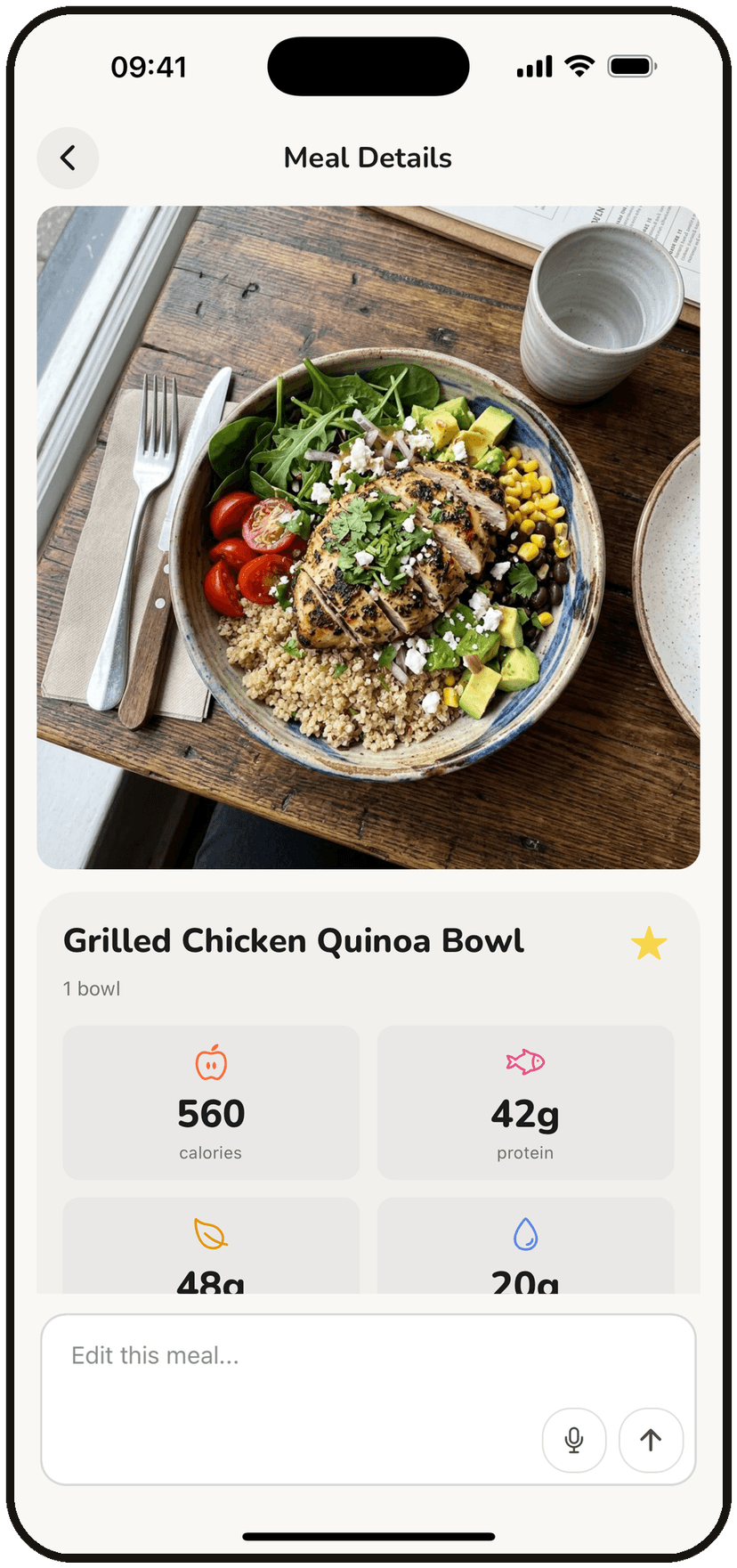
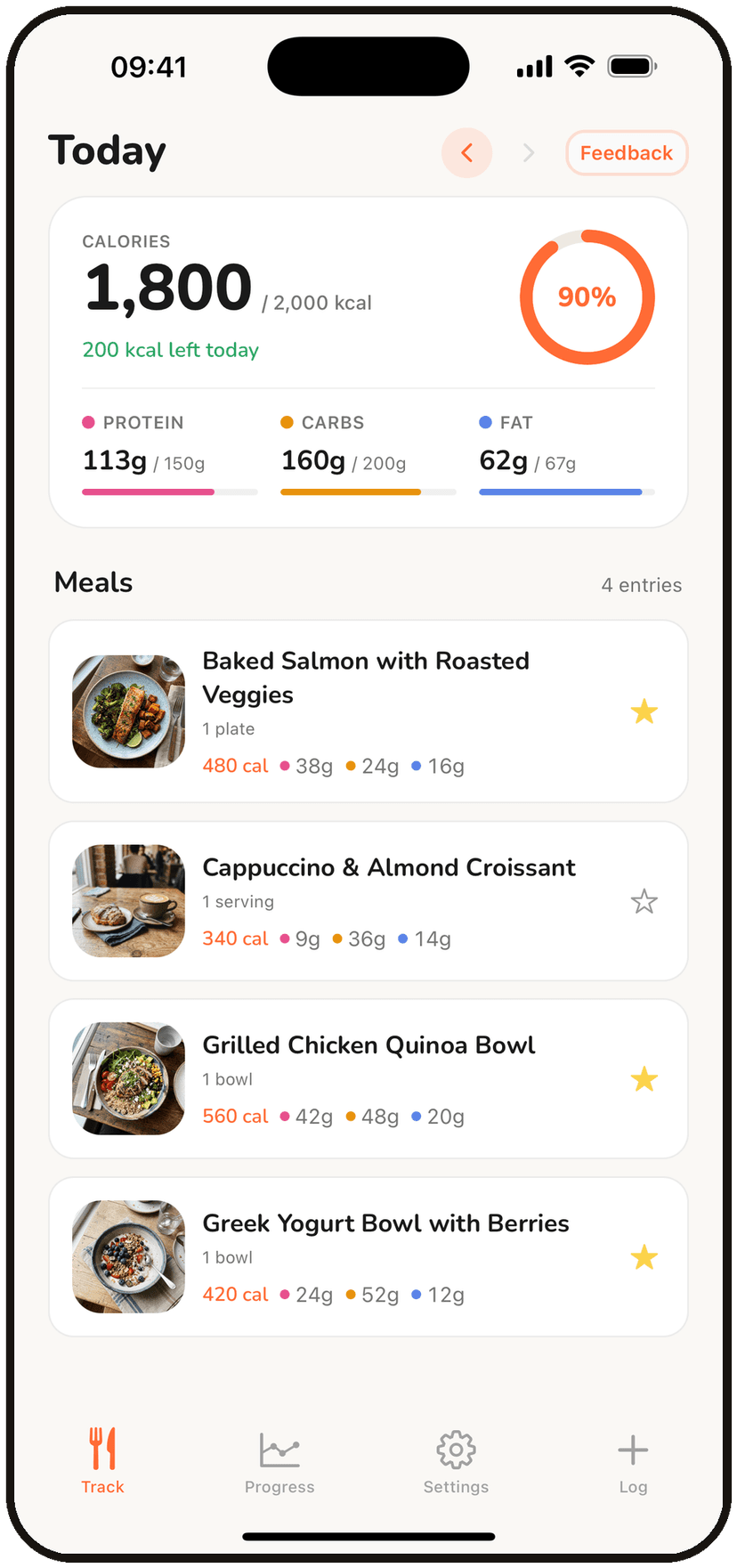
Portion guesses add up fast. BiteKit's AI estimates what's actually on your plate — oils, sides and all — so your log stays close to what you really ate.
- Log meals by photo, voice, or text
- Calories & macros estimated in seconds
- Syncs with Apple Health and Apple Watch
Free download · 3-day free trial, cancel anytime.
Scan with your iPhone camera