Recipe Serving Scaler
Scale any recipe up or down instantly. Enter your ingredients and desired serving count to get perfectly adjusted quantities with automatic unit conversions.
Ingredients
4/20 ingredientsWhy Scale Recipes?
Recipes rarely serve exactly the number of people you need to feed. Whether you're cooking for one, doubling a family recipe for a dinner party, or batch prepping meals for the week, accurate scaling ensures your dish turns out right every time. Getting the proportions wrong can mean a too-salty soup, a dense cake, or a bland stir-fry.
Recipe scaling is also essential for portion control and nutrition tracking. If a recipe serves 8 but you only want 2 servings, scaling down by 4x ensures you know exactly how much of each ingredient goes into your portion. This is especially important for people tracking macros, managing dietary restrictions, or following specific calorie targets.
2x
Double for Parties
Scale up your best recipes for gatherings
0.5x
Halve for Two
Scale down family recipes for smaller meals
4x
Batch for Meal Prep
Scale up for a full week of meals
Scaling Baking vs. Cooking Recipes
Not all recipes scale equally. Cooking recipes like soups, stir-fries, and stews are generally forgiving and scale linearly. Baking recipes, however, involve precise chemical reactions where proportions truly matter. Understanding the difference is key to successful recipe scaling.
Cooking Recipes
Most savory recipes scale linearly with few adjustments needed. Seasonings and salt can be added to taste.
- Soups & Stews: Scale all ingredients directly
- Stir-fries: May need a larger pan or batches
- Sauces: Scale linearly, adjust seasoning at end
- Salads: Scale everything proportionally
- Tip: Taste and adjust seasonings after scaling
Baking Recipes
Baking is chemistry. Leaveners, eggs, and liquids need careful attention when scaling beyond 2x.
- Flour & Sugar: Scale directly
- Baking Powder/Soda: Use slightly less at 3x+
- Eggs: Round to nearest whole egg
- Yeast: Use 75% when doubling, not 100%
- Tip: Scale by even multiples when possible
Unit Conversion Reference
When scaling recipes, you often end up with awkward quantities. Knowing your measurement conversions makes it easy to translate scaled amounts into practical measurements you can actually use in the kitchen. This scaler handles conversions automatically, but it helps to know the basics.
Volume Conversions
3 teaspoons = 1 tablespoon. 16 tablespoons = 1 cup. 2 cups = 1 pint. 4 cups = 1 quart. These are the most common conversions you will encounter when scaling recipes. For example, if you triple a recipe calling for 2 tablespoons of vanilla, you get 6 tablespoons, which is easier to measure as 3/8 cup (or just under half a cup).
Weight Conversions
16 ounces = 1 pound. 1000 grams = 1 kilogram. 1 ounce ≈ 28.35 grams. For the most accurate baking results, weigh ingredients in grams rather than using volume measurements. A kitchen scale eliminates the variability of how tightly you pack a cup of flour.
Liquid Conversions
1 cup ≈ 237 ml. 1 fluid ounce ≈ 30 ml. 1 liter ≈ 4.23 cups. When working with metric and imperial recipes, these conversions help you switch between systems without losing accuracy.
Common Recipe Scaling Pitfalls
Even with a calculator, there are practical considerations that affect how a scaled recipe turns out. Here are the most common mistakes to avoid when adjusting serving sizes.
Cooking Time Changes
Doubling a recipe does not mean doubling the cooking time. A larger batch of soup may take slightly longer to come to a boil, but once it is simmering, the cooking time is usually the same. For baked goods, a larger pan or deeper batter may need 10-15% more time. Always check doneness rather than relying solely on time.
Pan and Equipment Size
Doubling a recipe often means you need a bigger pot, pan, or baking dish. Crowding ingredients in too-small cookware affects heat distribution and results. For baking, either use a larger pan or bake in two batches. For stir-fries, cook in batches to maintain high heat and avoid steaming.
Seasoning and Spice Caution
While most ingredients scale linearly, strong spices, salt, and hot peppers are better scaled to about 75% and then adjusted to taste. Garlic, chili, and certain herbs can become overpowering when strictly doubled. Start with less and add more during cooking.
Egg Rounding Issues
Scaling a recipe that calls for 3 eggs by 1.5x gives 4.5 eggs. You cannot use half an egg, so round to 4 or 5 and adjust liquid slightly to compensate. For recipes where eggs provide structure (like cakes), round down and add a splash more liquid. For recipes where eggs add richness, round up.
Batch Cooking and Meal Prep
One of the most popular uses for recipe scaling is meal prep. By tripling or quadrupling your favorite recipes, you can cook once and eat well all week. This saves time, money, and makes it easier to stick to nutrition goals.
Best Recipes for Batch Scaling
Soups, chili, grain bowls, casseroles, and slow cooker meals scale up beautifully and reheat well. Stir-fries and pasta dishes are also great candidates. Avoid scaling dishes that rely on precise timing or texture, like delicate sauces or fried foods, as they lose quality when reheated.
Storage and Portioning Tips
After scaling and cooking, divide into individual portions before refrigerating or freezing. This ensures consistent serving sizes for nutrition tracking. Most batch meals keep 3-4 days refrigerated or 2-3 months frozen. Label containers with the recipe name, date, and per-serving macros for easy tracking.
Calculating Nutrition Per Scaled Serving
When you scale a recipe, the per-serving nutrition stays the same as long as you divide into the new number of servings. If you scale from 4 to 12 servings, each of the 12 portions has the same calories and macros as one of the original 4. This makes meal prep tracking straightforward.
Frequently Asked Questions
How do you scale a recipe to a different number of servings?
Divide the desired number of servings by the original number to get a scale factor. Then multiply every ingredient quantity by that factor. For example, scaling a recipe from 4 servings to 8 means a scale factor of 2x, so 1 cup of flour becomes 2 cups. This calculator handles all the math and unit conversions automatically.
Can you scale baking recipes the same way as cooking recipes?
Baking recipes require more care when scaling. Chemical leaveners like baking powder and baking soda should only be scaled up to about 3x before adjusting. Yeast-based recipes often need less than double the yeast when doubled. Eggs can be tricky at odd multiples. For best results with baking, scale by even multiples (2x, 3x) and make small adjustments to leaveners and liquids as needed.
What units does the recipe scaler support?
The recipe serving scaler supports cups, tablespoons, teaspoons, ounces, grams, milliliters, pounds, kilograms, pieces, pinch, dash, and to taste. It also performs automatic smart conversions, for example converting 16 tablespoons to 1 cup or 48 teaspoons to 1 cup for easier measuring.
How does the automatic unit conversion work?
The scaler automatically converts quantities to more practical units when the scaled amount is too large or too small. For example, if scaling produces 24 teaspoons of an ingredient, it converts that to 8 tablespoons or half a cup. Conversions include 3 tsp = 1 tbsp, 16 tbsp = 1 cup, 16 oz = 1 lb, and 1000g = 1kg.
Why does the scaler show fractions instead of decimals?
Most measuring cups and spoons are marked in fractions (1/4, 1/3, 1/2, 2/3, 3/4), so displaying results as friendly fractions makes it much easier to measure ingredients in the kitchen. The scaler rounds to the nearest common fraction for practical use while keeping the measurement as accurate as possible.
Can I scale a recipe to half or a quarter?
Yes, you can scale recipes to any amount including fractions. Enter your original serving count and your desired serving count, even if the desired amount is smaller. The quick scale buttons include a 0.5x option for halving recipes. You can also enter any custom number for the desired servings, such as scaling from 12 servings down to 3.
iPhone app · 3-day free trial
You're likely eating 500 calories more than you think
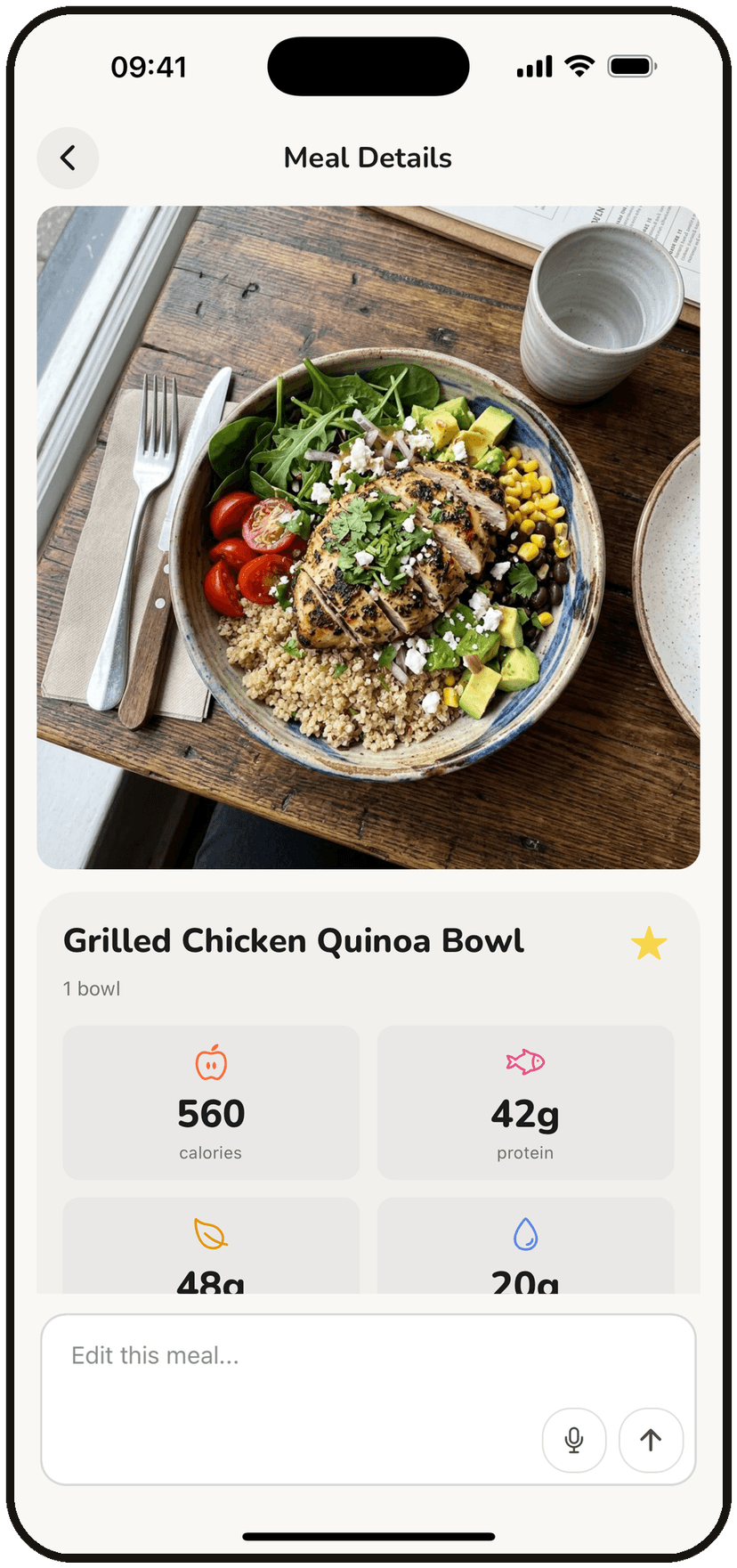
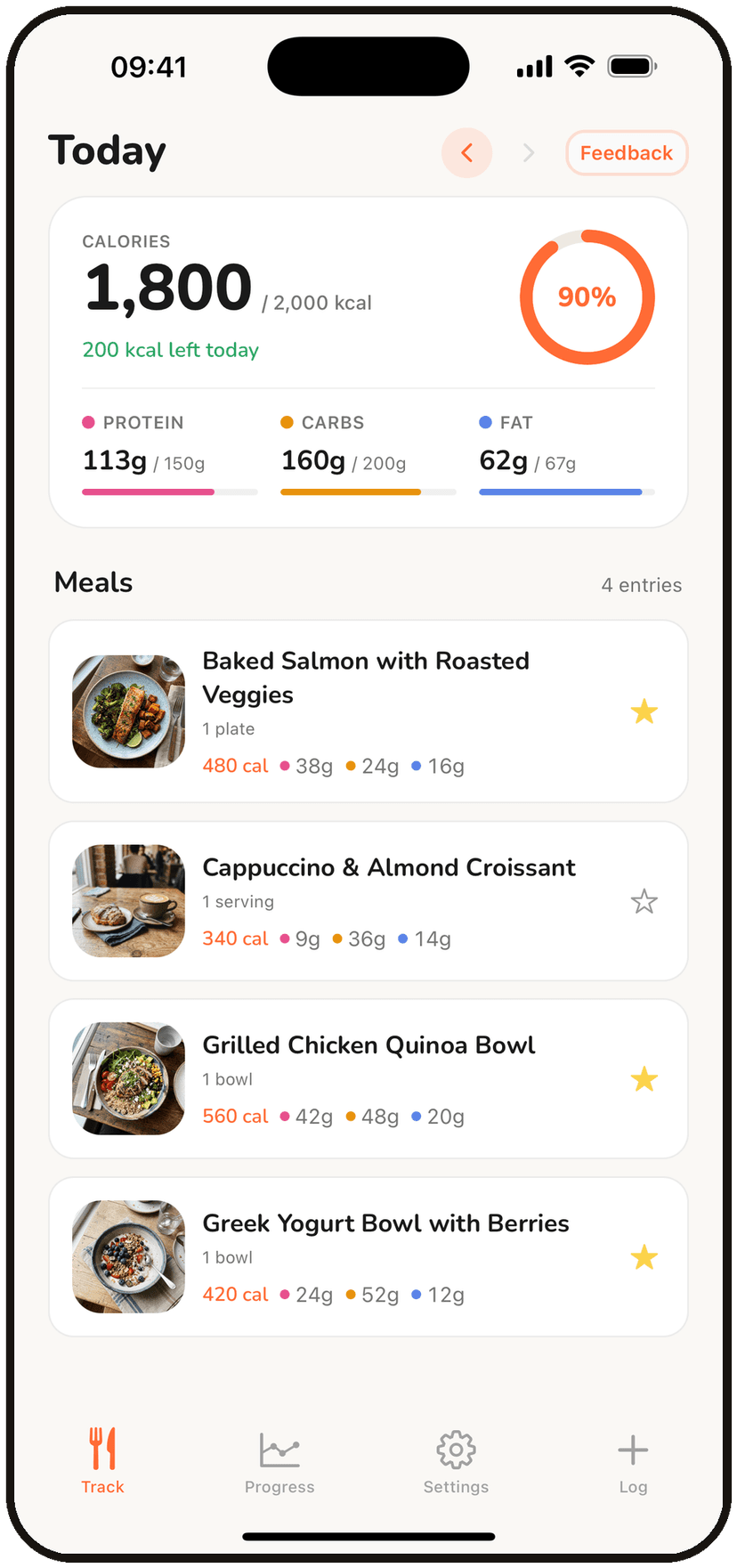
Portion guesses add up fast. BiteKit's AI estimates what's actually on your plate — oils, sides and all — so your log stays close to what you really ate.
- Log meals by photo, voice, or text
- Calories & macros estimated in seconds
- Syncs with Apple Health and Apple Watch
Free download · 3-day free trial, cancel anytime.
Scan with your iPhone camera