Reverse Dieting Calculator
Gradually increase calories after a diet to restore your metabolism and minimize fat regain. Get a personalized week-by-week macro progression plan based on your current intake and goals.
Enter the macros you're eating now at the end of your diet
How fast do you want to add calories back?
What is Reverse Dieting?
Reverse dieting is the strategic process of slowly increasing your calorie intake after a period of dieting or calorie restriction. Instead of jumping straight back to your pre-diet eating habits, you add small, controlled increments of calories each week - typically 50 to 150 calories.
This approach helps your metabolism gradually adapt to higher calorie levels, minimizing the fat regain that often happens when people suddenly stop dieting. It's commonly used by bodybuilders, fitness competitors, and anyone coming off a sustained calorie deficit.
Why Should You Reverse Diet?
After prolonged dieting, your body adapts by reducing metabolic rate, lowering hormone levels, and increasing hunger signals. A reverse diet addresses these adaptations gradually:
Restore Metabolism
Gradually increasing calories allows your metabolic rate to recover. Your body begins producing more thyroid hormones and increasing non-exercise activity thermogenesis (NEAT).
Minimize Fat Regain
By adding calories slowly, your body can use the extra energy rather than store it as fat. This is far better than the rapid weight regain from binge eating after a diet.
Improve Hormones
Dieting suppresses leptin, testosterone, and thyroid hormones. A reverse diet helps these crucial hormones recover, improving energy, mood, and body composition.
Better Training
More calories mean more fuel for workouts. Many people see strength and performance gains during a reverse diet as carbohydrate intake increases.
How to Reverse Diet Successfully
Follow these principles for a successful reverse diet:
1. Keep protein constant
Your protein intake should stay the same throughout the reverse. The extra calories come from carbohydrates and fats, which are the macros most affected by dieting.
2. Prioritize carbs for the increase
About 60% of the calorie increase should come from carbohydrates. Carbs fuel workouts, restore glycogen, and support thyroid function and leptin levels.
3. Monitor weekly progress
Track your weight, measurements, and how you feel each week. Some weight gain from water and glycogen is normal and expected. Adjust the rate if needed.
4. Be patient
A reverse diet takes weeks to months. The slower and more controlled your approach, the better your long-term results will be. Resist the urge to rush.
Common Reverse Dieting Mistakes
Increasing Too Fast
Jumping straight to maintenance or adding too many calories per week leads to unnecessary fat gain. Patience is key to a successful reverse.
Panicking at Weight Gain
Initial weight gain from water and glycogen is normal. Don't cut calories again at the first sign of scale movement - this defeats the purpose.
Not Tracking Intake
A reverse diet requires precision. Eyeballing portions makes it impossible to know if you're hitting the right weekly targets. Track consistently.
Reducing Exercise
Keep training intensity high during a reverse diet. The extra calories should fuel better workouts and muscle recovery, not replace exercise.
Frequently Asked Questions
What is reverse dieting?
Reverse dieting is the practice of gradually increasing calories after a period of dieting. Instead of jumping straight to maintenance, you add small weekly increments (50-150 calories) to minimize fat regain and allow your metabolism to recover.
How fast should I increase calories?
A moderate approach of 100 calories per week works well for most people. If you're very lean or concerned about fat gain, go conservative at 50 per week. If you're eager to get back to maintenance and accept some water weight, try 150 per week.
Will I gain fat during a reverse diet?
Some weight gain is normal, but most of it is water, glycogen, and food volume - not body fat. A well-executed reverse diet minimizes actual fat gain by giving your metabolism time to adapt to higher calorie levels.
How long does a reverse diet take?
It depends on how far below maintenance you are and your chosen increase rate. Someone 500 calories below maintenance adding 100 per week would take about 5 weeks. Our calculator generates a personalized timeline based on your specific situation.
Should I change my protein during a reverse diet?
No, protein stays constant. The extra calories are distributed to carbohydrates (60%) and fats (40%). This maintains muscle mass while restoring the energy macros that support training and hormonal recovery.
When should I start a reverse diet?
Start after any prolonged calorie deficit - cutting phases, competition prep, or extended weight loss. Signs you need to reverse include persistent fatigue, poor training performance, constant hunger, and weight loss plateaus despite low calories.
iPhone app · 3-day free trial
You're likely eating 500 calories more than you think
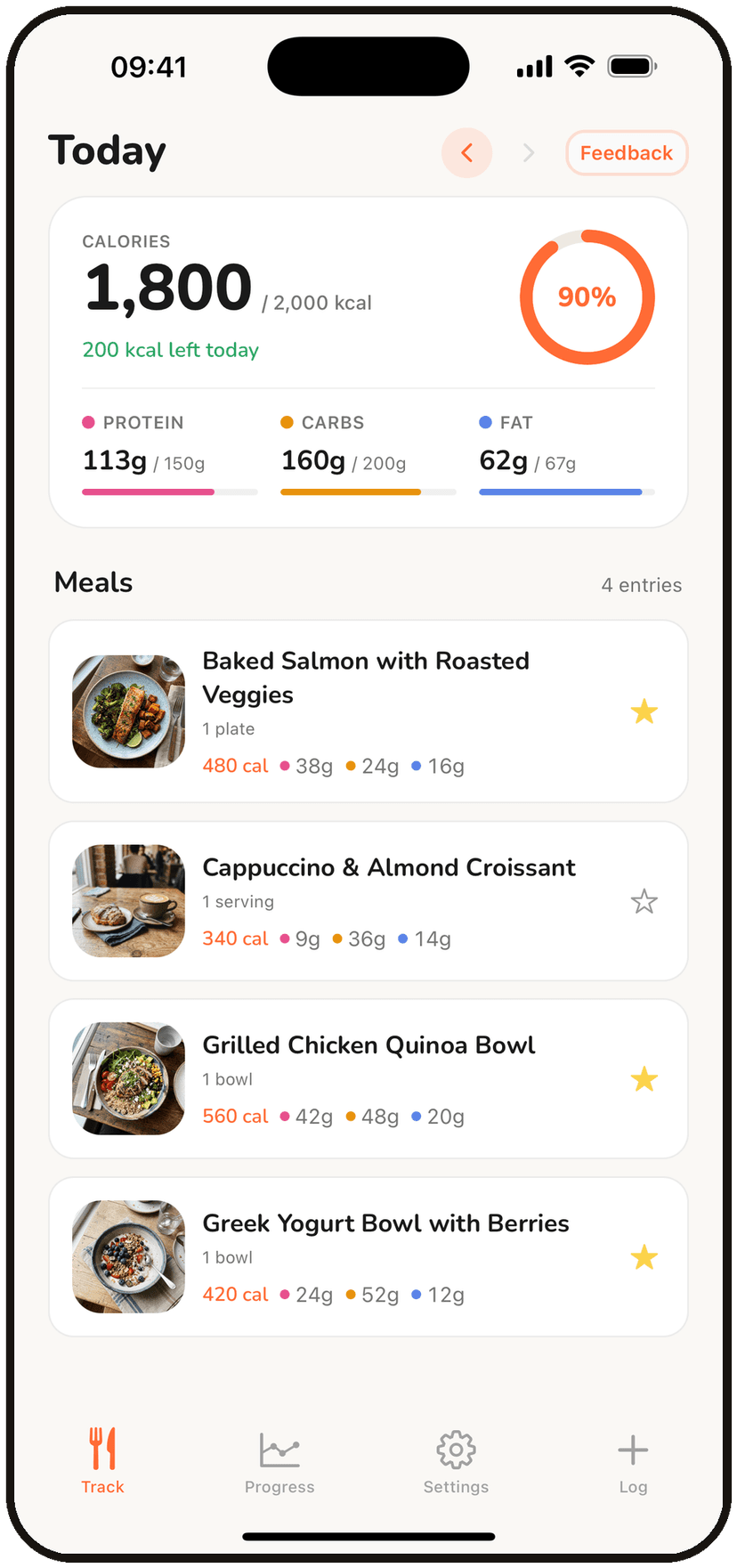
Portion guesses add up fast. BiteKit's AI estimates what's actually on your plate — oils, sides and all — so your log stays close to what you really ate.
- Log meals by photo, voice, or text
- Calories & macros estimated in seconds
- Syncs with Apple Health and Apple Watch
Free download · 3-day free trial, cancel anytime.
Scan with your iPhone camera