Satiety Score Calculator
Score any food or meal on a 0–100 satiety scale based on protein density, fiber, water content, and energy density. Compare up to 4 foods side by side using principles from the Holt Satiety Index.
Food 1
Holt Satiety Index Reference
White bread = 100 (baseline). Foods above 100 are more satiating per 240 kcal portion than white bread.
What Is Satiety — and Why Does It Matter?
Satiety is the feeling of fullness and satisfaction that suppresses appetite after eating. It is distinct from satiation (the process of becoming full during a meal). A food with high satiety keeps you feeling full for longer after you have finished eating — meaning you eat less at your next meal and experience fewer cravings between meals.
For weight management, satiety is often more actionable than calorie restriction alone. When you choose foods that naturally suppress appetite, you can maintain a calorie deficit without fighting constant hunger — the most common reason diets fail. Understanding which foods keep you full is one of the highest-leverage nutrition skills you can develop.
The Four Main Drivers of Satiety
1. Protein Density
Protein is the most satiating macronutrient, gram for gram. It stimulates the release of satiety hormones including GLP-1, PYY, and CCK while suppressing ghrelin (the hunger hormone) more effectively than carbohydrates or fat. Research shows that increasing dietary protein from 15% to 30% of calories reduces spontaneous daily intake by approximately 441 kcal without deliberate restriction. High-protein foods include fish, lean poultry, eggs, Greek yogurt, cottage cheese, legumes, and tofu.
2. Dietary Fiber
Fiber slows gastric emptying, prolonging the time food spends in your stomach and keeping you fuller for longer. Soluble fiber (found in oats, legumes, apples, and chia seeds) forms a gel-like substance in the digestive tract that further slows digestion and stabilizes blood sugar, preventing the rapid crash that drives hunger. Insoluble fiber (found in whole grains and vegetables) adds bulk and promotes regularity. Both types contribute to satiety through different mechanisms.
3. Water Content and Volume
Foods with high water content occupy more volume in your stomach per calorie, triggering stretch receptors that signal fullness to the brain. This is why soup is remarkably filling despite being relatively low in calories — the water is incorporated into the food itself, rather than consumed alongside it (studies show that drinking water with a meal does not have the same satiety effect as eating food with equivalent water content). Fruits, vegetables, cooked grains, and lean proteins are all high-water foods.
4. Energy Density
Energy density is the number of calories per gram of food. Low-energy-dense foods let you eat more food by weight for the same number of calories. For example, 100 calories of broccoli is about 350 g — you physically cannot eat that without feeling full. By contrast, 100 calories of almonds is only about 15 g — you could eat it in two bites and barely notice. The Volumetrics approach to weight management, developed by Barbara Rolls at Penn State, is built entirely around the principle of choosing low-energy-dense foods to increase volume without increasing calories.
Key Lessons from the Holt Satiety Index Research
The 1995 Holt Satiety Index study measured actual hunger suppression in people after eating 240-calorie portions of 38 different foods. The results were striking and counterintuitive in several ways:
- Boiled potatoes beat everything else. With a score of 323, boiled potatoes were the most satiating food tested — more filling than oatmeal, fish, eggs, and even brown bread. They contain a unique compound (protease inhibitor 2) that triggers CCK release. French fries, however, scored much lower due to added fat and reduced water content.
- Croissants are the least satisfying tested. Scoring just 47, croissants suppressed hunger far less than white bread despite having a similar calorie count. Their high fat and refined flour combination delays satiety signals.
- Whole fruit outperforms fruit juice. Oranges scored 202 despite having similar calories to their juice. The intact fiber matrix and chewing requirement significantly boost satiety compared to liquid fruit calories.
- Protein quality matters within protein foods. Fish (225) scored higher than beef or chicken in the original study, partly due to its lower fat content and high-quality protein profile.
- Eating speed affects satiety independently. Foods requiring more chewing (whole foods vs. processed) trigger greater satiety, in part because slower eating allows time for fullness hormones to reach the brain.
Practical Strategies to Maximize Meal Satiety
Anchor Meals with Protein
Include at least 20–30 g of protein at every major meal. This is the single highest-impact change for appetite control. Lean protein sources — chicken breast, fish, eggs, Greek yogurt, cottage cheese, and legumes — are your most reliable tools for satiety.
Start with Soup or a Large Salad
Research by Barbara Rolls found that eating a low-calorie soup (100–150 kcal) before a meal reduced total meal calorie intake by 20%. The high water content and volume of soup triggers early fullness signals. A large salad with non-starchy vegetables achieves a similar effect through volume.
Choose Whole Foods Over Processed
Ultra-processed foods are engineered to have a calorie density, texture, and flavor combination that bypasses normal satiety mechanisms. Choosing whole-food equivalents (whole fruit vs. juice, whole grains vs. refined, meat vs. deli slices) consistently improves satiety for the same calorie intake.
Pair High-Calorie Foods with High-Volume Foods
If you are eating calorie-dense foods (nuts, cheese, olive oil), pair them with large portions of low-energy-dense foods (leafy greens, cucumber, zucchini). The volume of the vegetables physically dilutes the calorie density of the meal while adding fiber and water.
Frequently Asked Questions
What is the Holt Satiety Index?
The Holt Satiety Index (1995) measured hunger suppression in people after eating 240-calorie portions of 38 foods, with white bread set as the baseline (100). Boiled potatoes scored 323, fish 225, and oatmeal 209 — all far more filling than white bread. Croissants (47) and chocolate bars (70) scored below the baseline. The index reveals that calorie count alone does not predict how full a food will make you feel.
What makes a food high in satiety?
Four factors drive satiety: high protein density (protein triggers the most powerful fullness hormones), dietary fiber (slows digestion and adds bulk), high water content (creates volume without calories), and low energy density (allows larger portions for the same calorie budget). Fat contributes a smaller satiety effect by slowing gastric emptying.
Why do boiled potatoes score so high on the Holt Satiety Index?
Boiled potatoes score 323 — over three times more filling than white bread. This is due to their high water content (78%), very low energy density, and a compound called protease inhibitor 2 that stimulates the release of cholecystokinin, a powerful fullness hormone. Frying potatoes removes most of this benefit by dramatically increasing calorie density.
How is this score different from counting calories?
Calories tell you how much energy is in food. Satiety scores tell you how effectively that food suppresses hunger. Two 400-calorie meals can have vastly different satiety effects: 400 calories of grilled fish and vegetables might suppress hunger for 4–5 hours, while 400 calories of ultra-processed snacks might leave you hungry again in under an hour. Using satiety scores alongside calorie targets helps you choose foods that make staying within your calorie budget much easier.
Can I use satiety scores for weight loss?
Yes. Building meals around high-satiety foods — lean protein, high-fiber whole foods, water-rich vegetables and fruits — is one of the most effective approaches to managing calorie intake without constant hunger. Research shows high-protein diets reduce spontaneous calorie intake by 400+ kcal per day. The goal is to eat satisfying portions while naturally eating fewer total calories.
What is energy density and why does it matter?
Energy density is calories per gram of food. Low energy-dense foods (most vegetables, broth-based soups, lean proteins) let you eat more food by weight for fewer calories. High energy-dense foods (nuts, cheese, pastries, fried foods) deliver many calories in small portions. Choosing lower energy-dense foods naturally reduces calorie intake without requiring you to eat smaller portions by weight.
Related Tools
iPhone app · 3-day free trial
You're likely eating 500 calories more than you think
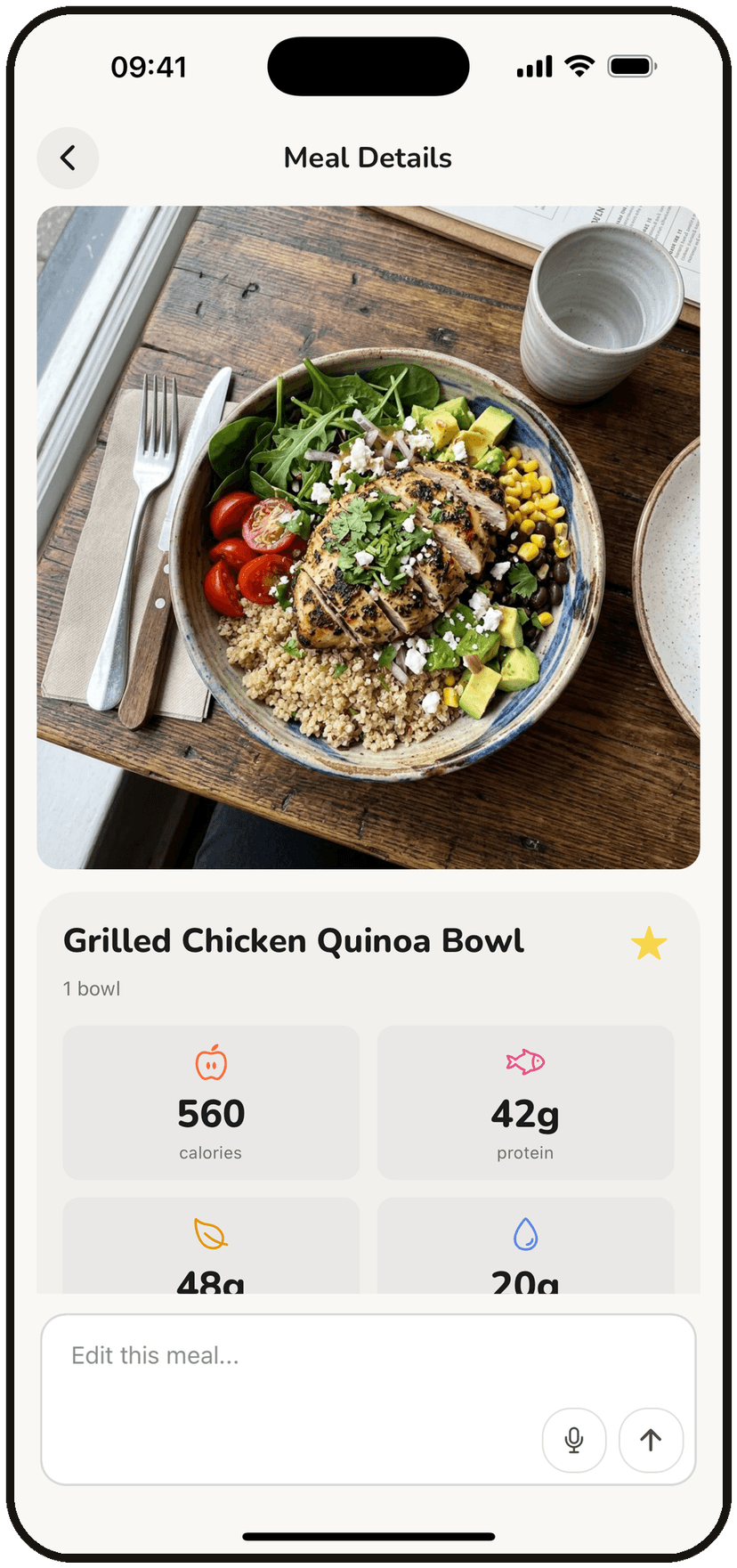
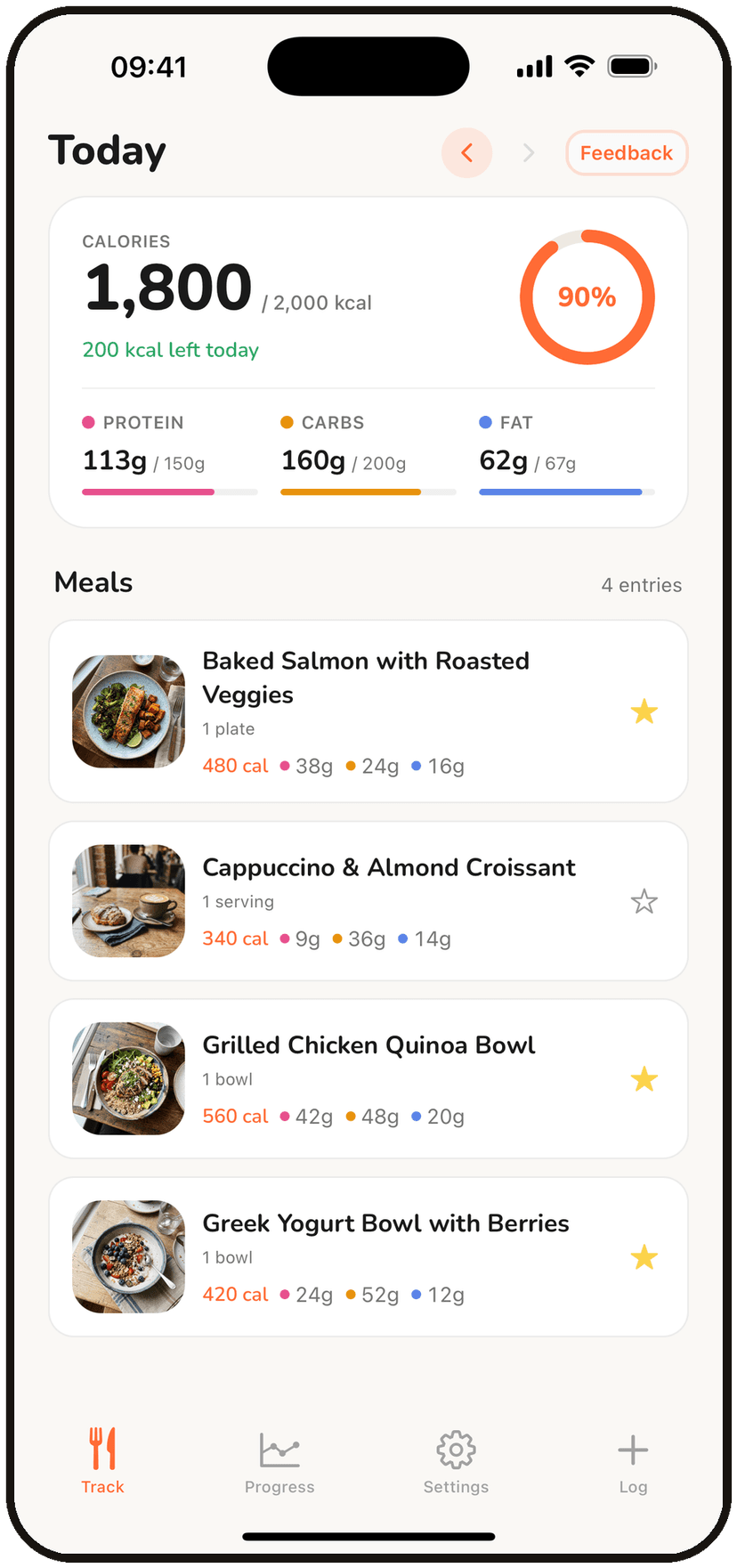
Portion guesses add up fast. BiteKit's AI estimates what's actually on your plate — oils, sides and all — so your log stays close to what you really ate.
- Log meals by photo, voice, or text
- Calories & macros estimated in seconds
- Syncs with Apple Health and Apple Watch
Free download · 3-day free trial, cancel anytime.
Scan with your iPhone camera