Steps to Calories Calculator
Convert your daily step count into estimated calories burned. Enter your weight, height, and walking pace to see distance covered, time spent, and progress toward your 10,000-step goal.
How Steps Are Converted to Calories
Converting steps to calories requires three pieces of information: your stride length (to find how far you walked), your walking speed (to find how long you walked), and your body weight (to scale energy expenditure). The calculator links all three using validated MET-based calorie formula.
The Formula
- Stride length = height × 0.415 (men) or 0.413 (women)
- Distance = steps × stride length
- Duration = distance ÷ walking speed
- Calories = MET × weight (kg) × duration (hours)
Walking Pace and MET Values
MET (Metabolic Equivalent of Task) measures how much energy an activity uses relative to sitting at rest (1 MET). Walking at different speeds corresponds to different MET values from the Compendium of Physical Activities, the gold-standard reference for exercise energy expenditure.
Slow Walk
MET 2.0
~2 mph
Window shopping, easy stroll
Moderate Walk
MET 2.8
~2.8 mph
Normal everyday walking
Brisk Walk
MET 3.5
~3.5 mph
Purposeful, slightly elevated heart rate
The Science Behind 10,000 Steps
The 10,000-step daily goal originated in Japan in the 1960s but has since been validated by extensive research. Studies published in JAMA Internal Medicine and other leading journals found that people who consistently walk 7,000–10,000 steps per day have significantly lower risks of cardiovascular disease, type 2 diabetes, and premature death compared to those taking fewer than 5,000 steps.
- Sedentary: Under 5,000 steps/day
- Low active: 5,000–7,499 steps/day
- Somewhat active: 7,500–9,999 steps/day
- Active: 10,000–12,499 steps/day
- Highly active: 12,500+ steps/day
Even if 10,000 steps feels out of reach, every additional 1,000 steps reduces mortality risk. Starting from a base of 3,000 steps and adding 1,000 steps per week is an evidence-based approach for gradually building daily movement habits.
Tips for Burning More Calories with Steps
Walk faster
Increasing pace from slow (2 mph) to brisk (3.5 mph) raises MET from 2.0 to 3.5 — nearly doubling calorie burn per hour.
Add incline
Walking uphill significantly increases energy expenditure. Even a 5% gradient adds 25–40% more calories compared to flat ground.
Take more steps throughout the day
Breaking up sitting with short 5-minute walks every hour accumulates quickly and is better for metabolic health than one long walk.
Use stairs
Stair climbing burns 3–4 times more calories per minute than flat walking and counts toward your daily step total.
Frequently Asked Questions
How many calories do 10,000 steps burn?
A 160 lb (72 kg) person walking 10,000 steps at a moderate pace typically burns 300–400 calories. The exact number depends on your body weight, height (stride length), and walking speed. Use the calculator above for a personalised estimate.
How is stride length estimated from height?
Stride length is calculated using your height: men use a multiplier of 0.415 and women 0.413, based on research averages. For example, a 5'10" (177 cm) man has an estimated stride length of about 73.5 cm (29 inches). Your actual stride may vary slightly.
Why does sex affect the calorie calculation?
Sex influences the stride length multiplier used in the formula. On average, men have slightly longer strides relative to their height than women. This means a man and woman of the same height walking the same number of steps cover slightly different distances, affecting both duration and calories.
Does 10,000 steps a day lead to weight loss?
Walking 10,000 steps burns roughly 300–500 calories for most adults. Combined with a modest calorie deficit through diet, this level of activity supports gradual, sustainable weight loss of 0.5–1 lb per week. Consistency is more important than the exact step count.
How do I increase my daily step count?
Practical strategies include parking further from your destination, taking stairs instead of elevators, walking during phone calls, adding a 10-minute walk after each meal, and setting hourly reminders to stand and walk. Small habit changes compound quickly.
Related Tools
iPhone app · 3-day free trial
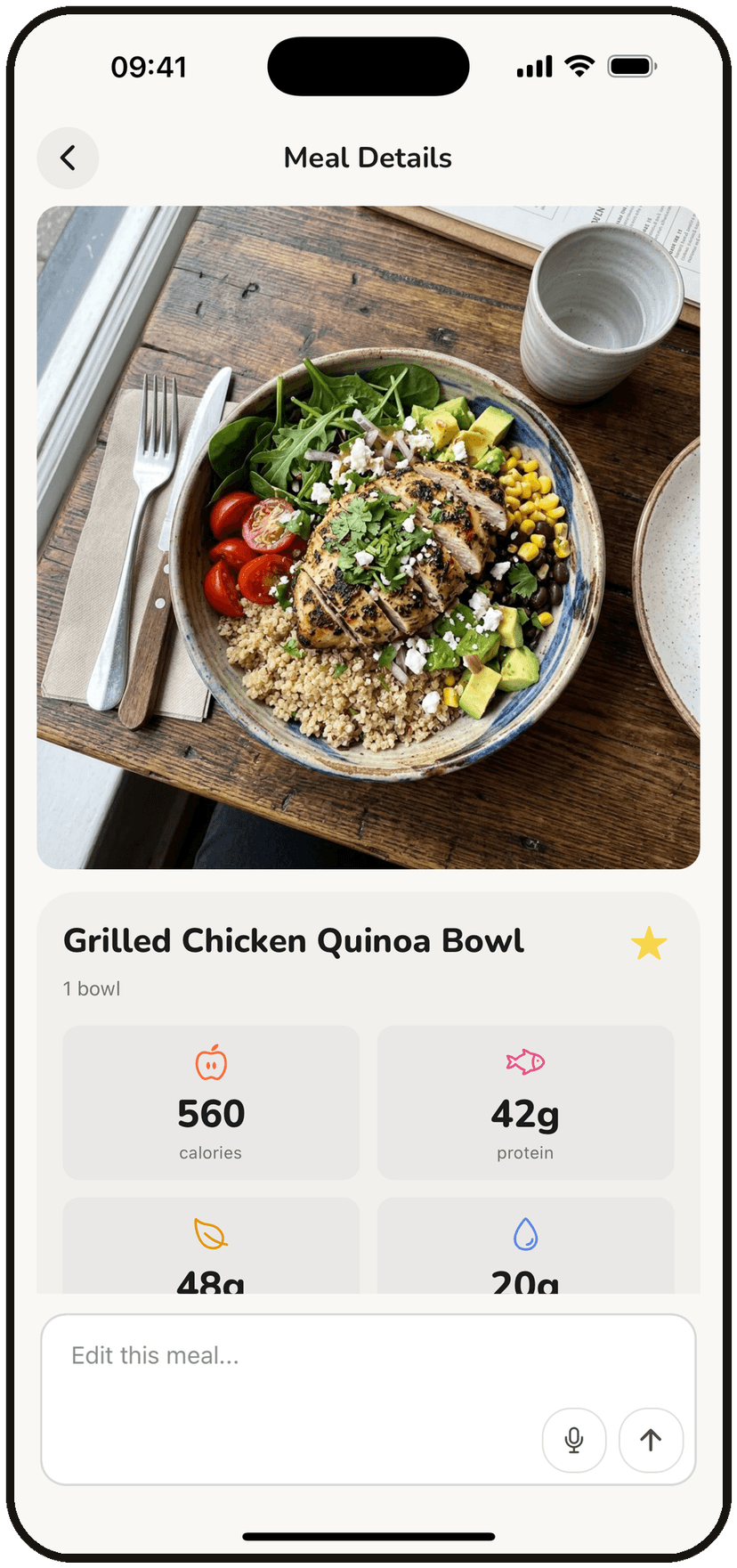
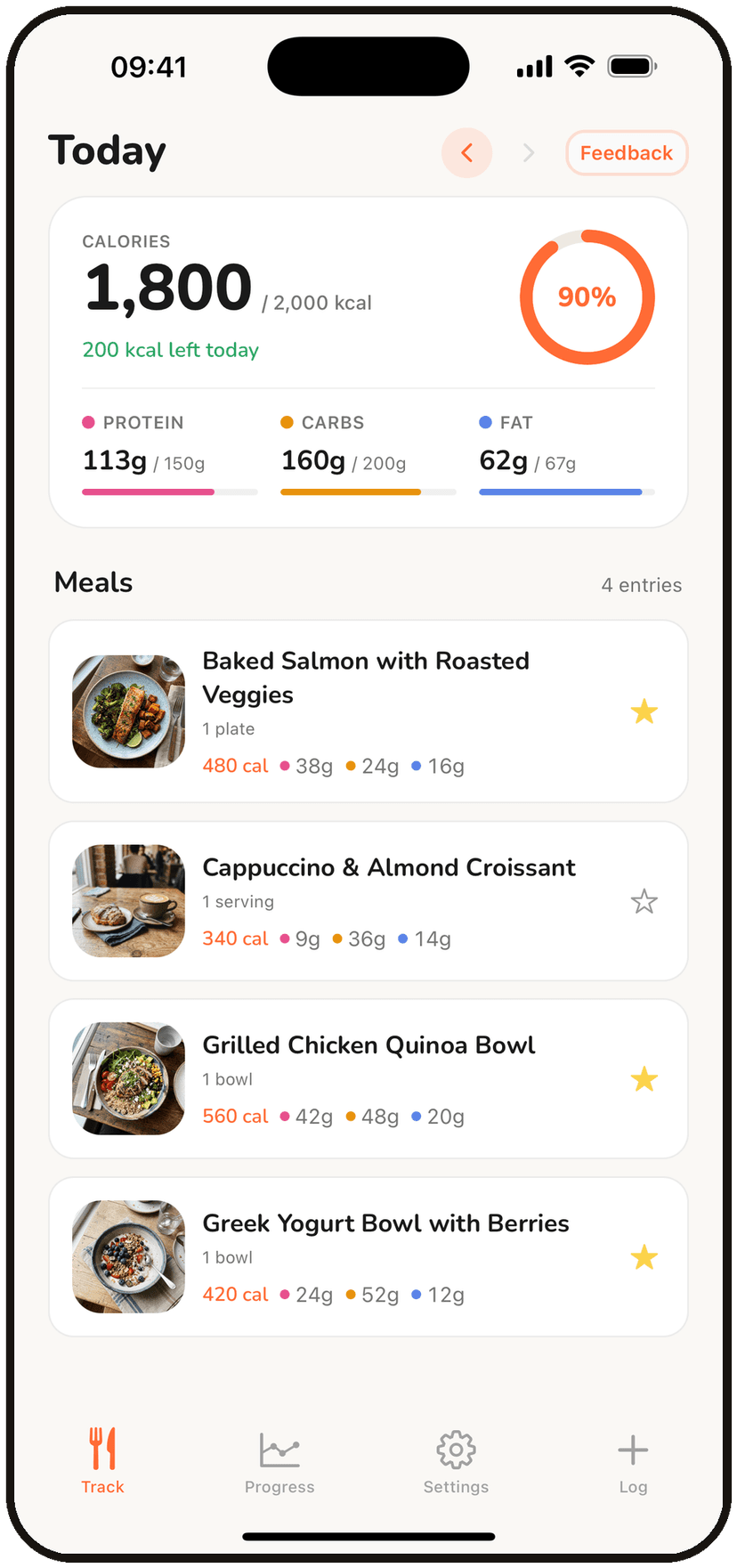
You're likely eating 500 calories more than you think
Portion guesses add up fast. BiteKit's AI estimates what's actually on your plate — oils, sides and all — so your log stays close to what you really ate.
- Log meals by photo, voice, or text
- Calories & macros estimated in seconds
- Syncs with Apple Health and Apple Watch
Free download · 3-day free trial, cancel anytime.
Scan with your iPhone camera