Thermic Effect of Food Calculator
Calculate how many calories your body burns digesting different macronutrients. Protein costs the most energy to digest, while fat costs the least. See how your macro ratios affect your daily calorie burn.
4 cal/g | 25% TEF
4 cal/g | 7.5% TEF
9 cal/g | 1.5% TEF
7 cal/g | 15% TEF (1 standard drink is about 14g)
What is the Thermic Effect of Food?
The thermic effect of food (TEF) is the energy your body uses to digest, absorb, and process nutrients. Protein has the highest TEF (20-30%), meaning your body burns more calories digesting protein than carbs (5-10%) or fat (0-3%). This calculator uses the midpoint of each range.
What is the Thermic Effect of Food?
The thermic effect of food (TEF), also known as diet-induced thermogenesis (DIT) or the specific dynamic action of food, is the increase in metabolic rate that occurs after eating. Your body requires energy to digest food, absorb nutrients, and transport them to cells throughout the body. This metabolic cost typically accounts for about 10% of your total daily energy expenditure.
TEF is one of the three main components of your daily calorie burn, alongside your Basal Metabolic Rate (BMR) and physical activity. While it is the smallest component, it is also one of the easiest to influence through dietary choices, particularly by adjusting your macronutrient ratios.
How Each Macronutrient Contributes to TEF
Not all calories are created equal when it comes to digestion costs. Each macronutrient has a different thermic effect based on the complexity of its metabolic processing.
Protein: 20-30% TEF
Protein has the highest thermic effect of any macronutrient. For every 100 calories of protein you eat, your body uses 20-30 calories just to digest and process it. This is because breaking peptide bonds, deaminating amino acids, and synthesizing new proteins are energy-intensive processes.
Carbohydrates: 5-10% TEF
Carbohydrates have a moderate thermic effect. Simple sugars require less energy to process than complex carbohydrates and fiber. High-fiber foods and whole grains tend to have a slightly higher TEF than refined carbs because they require more mechanical and enzymatic processing.
Fat: 0-3% TEF
Fat has the lowest thermic effect because it is already in a form that is close to how the body stores it. Dietary fat requires minimal chemical modification before being stored as adipose tissue or used for energy. This is why high-fat diets result in the lowest TEF overall.
Alcohol: 10-30% TEF
Alcohol has a surprisingly high thermic effect (around 15% on average) because the body prioritizes metabolizing it and the conversion process is inefficient. However, this does not make alcohol beneficial since it provides no essential nutrients and impairs fat oxidation.
How to Optimize TEF for Weight Management
While TEF alone will not make or break your diet, strategically optimizing it is a simple way to increase your daily calorie burn without any extra effort. Here are evidence-based strategies to maximize your thermic effect.
Increase Your Protein Intake
The single most effective way to boost TEF is to eat more protein. Replacing some carbs or fat with protein increases the thermic effect significantly. A diet with 30% of calories from protein will have a noticeably higher TEF than one with only 15% protein. As a bonus, protein also increases satiety, helping you eat less overall.
Choose Whole, Unprocessed Foods
Whole foods require more digestion effort than processed foods. A study published in Food & Nutrition Research found that a whole-food meal resulted in nearly 50% higher TEF compared to an equivalent processed-food meal. Choose brown rice over white, whole fruits over juice, and intact grains over refined flour.
Include High-Fiber Carbohydrates
Fiber-rich carbohydrate sources like vegetables, legumes, and whole grains take more energy to digest than simple sugars. Fiber is not fully digested itself, but it slows the overall digestive process and may modestly increase the thermic effect of the entire meal.
Do Not Rely on TEF Alone
While optimizing TEF is helpful, it typically accounts for only 20-50 extra calories per day from diet adjustments. For meaningful weight loss, focus on total calorie balance first, then use TEF optimization as one of many small advantages that add up over time.
TEF and Meal Frequency: Busting the Myth
One of the most persistent nutrition myths is that eating more frequent, smaller meals "stokes your metabolic fire" and increases the thermic effect of food. This claim has been thoroughly debunked by research.
The Myth
Eating 6 small meals per day boosts your metabolism and burns more calories from digestion than eating 2-3 larger meals.
The Reality
Multiple controlled studies show that total daily TEF is determined by what you eat, not how often you eat. Three meals of 600 calories produce the same total TEF as six meals of 300 calories with the same macro composition.
The bottom line: choose a meal frequency that fits your lifestyle and helps you control your total calorie intake. Whether that is two meals, three meals, or six meals per day, the thermic effect will be the same as long as your total macros are the same.
Frequently Asked Questions
What is the thermic effect of food (TEF)?
The thermic effect of food is the energy your body uses to digest, absorb, and process nutrients. It typically accounts for about 10% of total daily energy expenditure, though it varies significantly based on what you eat. Protein-rich diets have a higher TEF than high-fat diets.
Why does protein have the highest thermic effect?
Protein requires 20-30% of its calories to digest because breaking amino acid bonds, converting amino acids to usable forms, and synthesizing new proteins are complex, energy-intensive biochemical processes that demand far more ATP than processing carbs or fat.
Can eating more protein help with weight loss?
Yes. Increasing protein intake boosts TEF, increases satiety so you feel fuller longer, and helps preserve lean muscle mass during a calorie deficit. While the TEF boost alone is modest (20-50 extra calories per day), combined with better appetite control and muscle preservation, higher protein diets consistently outperform lower protein diets for fat loss.
Does meal frequency affect TEF?
No. Research consistently shows that total daily TEF is determined by what and how much you eat, not how many meals you split it across. Eating 6 small meals does not burn more calories than eating 3 larger meals with the same total macros. Choose a meal frequency that helps you stick to your calorie goals.
How does TEF compare to other parts of metabolism?
TEF accounts for roughly 10% of total daily energy expenditure. Basal Metabolic Rate (BMR) is the largest component at about 60-70%, and physical activity makes up the remaining 20-30%. While TEF is the smallest piece, it is easy to optimize through smarter macronutrient choices.
Does alcohol have a thermic effect?
Yes, alcohol has a thermic effect of about 10-30% (averaging around 15%). However, this does not make alcohol a good dietary choice. It provides 7 calories per gram with zero nutritional value, impairs fat burning, and often leads to increased food intake due to lowered inhibitions.
iPhone app · 3-day free trial
You're likely eating 500 calories more than you think
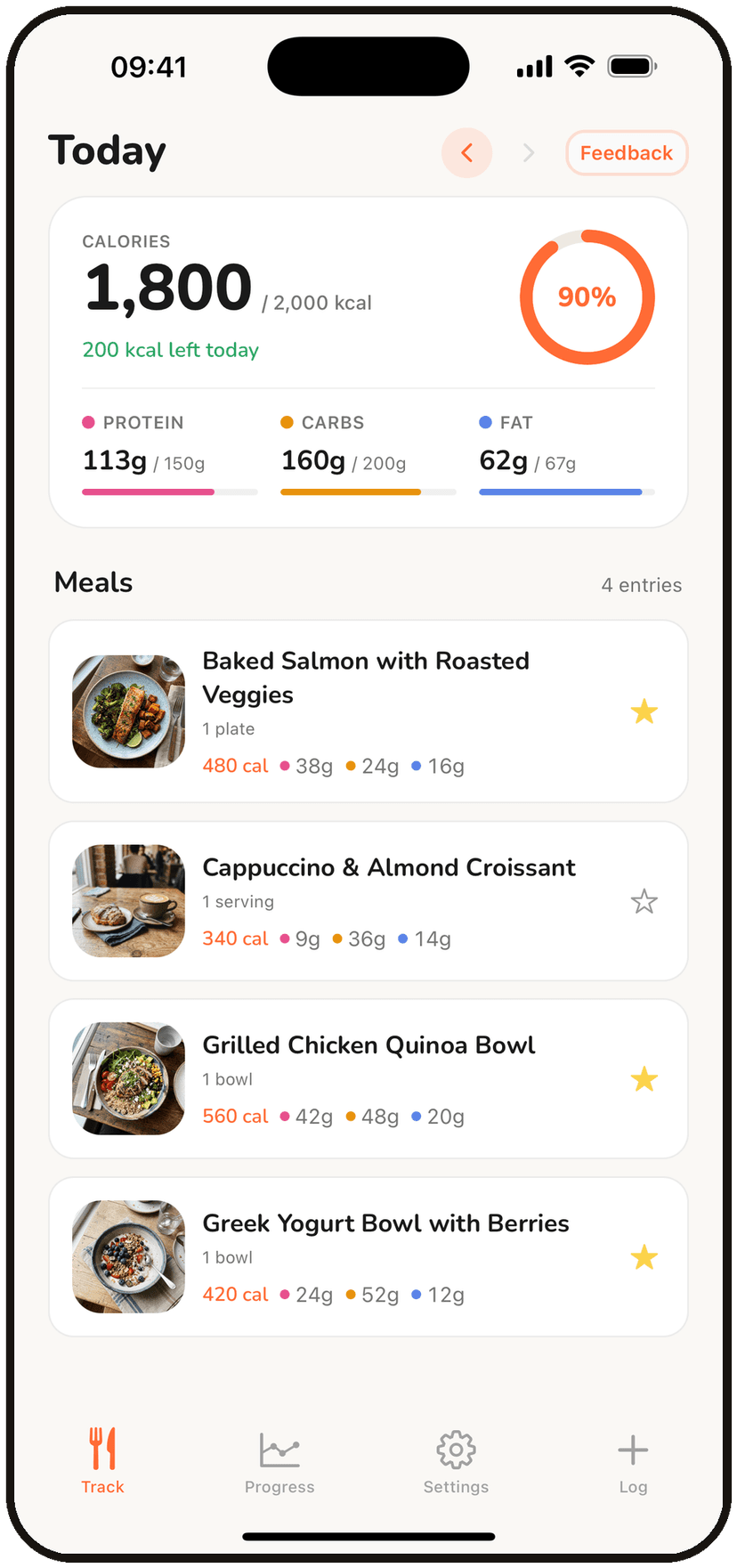
Portion guesses add up fast. BiteKit's AI estimates what's actually on your plate — oils, sides and all — so your log stays close to what you really ate.
- Log meals by photo, voice, or text
- Calories & macros estimated in seconds
- Syncs with Apple Health and Apple Watch
Free download · 3-day free trial, cancel anytime.
Scan with your iPhone camera