UPF Score Calculator
Log your meals and see what percentage of your daily calories come from ultra-processed foods using the NOVA classification system — with a health risk rating and swap suggestions.
What Are Ultra-Processed Foods?
Ultra-processed foods (UPFs) are industrial formulations produced from substances extracted or derived from foods — or synthesized in laboratories. They are NOVA Group 4 and contain ingredients you would never find in a home kitchen: emulsifiers, flavor enhancers, artificial colors, modified starches, hydrogenated oils, synthetic sweeteners, and preservatives.
Unlike simple processed foods such as canned tomatoes or aged cheese, UPFs are engineered for maximum palatability, long shelf life, and low production cost — properties that often come at the expense of satiety, fiber content, and micronutrient density. A useful rule of thumb: if a product has more than five ingredients and any of them sound like a chemistry experiment, it is likely ultra-processed.
The NOVA Classification System Explained
NOVA was developed by researcher Carlos Monteiro and colleagues at the University of São Paulo. It classifies foods by the extent and purpose of processing — not nutrient content — because processing itself changes how food interacts with appetite, the gut microbiome, and metabolic health.
Group 1 — Unprocessed or Minimally Processed
Examples: Fresh or frozen fruits and vegetables, plain meat, fish, eggs, milk, legumes, nuts, seeds, whole grains, plain yogurt, plain tofu
Foods are modified only by drying, crushing, roasting, boiling, freezing, or pasteurization — without adding salt, sugar, or fat.
Group 2 — Processed Culinary Ingredients
Examples: Olive oil, butter, flour, cornstarch, sugar, honey, table salt, vinegar, coconut milk, dried herbs and spices
These are not usually eaten alone — they are used to prepare and cook Group 1 foods at home. They are the ingredients of traditional diets.
Group 3 — Processed Foods
Examples: Canned fish in brine, canned vegetables, artisan bread, cheese, cured and smoked meats, salted nuts, beer and wine
Made by adding salt, sugar, oil, or other Group 2 substances to Group 1 foods. They may have 2–5 ingredients and are recognizable whole-food products.
Group 4 — Ultra-Processed Foods
Examples: Soft drinks, energy drinks, packaged chips, cookies, crackers, breakfast cereals, instant noodles, chicken nuggets, hot dogs, flavored yogurt, margarine, fast food, meal replacement bars
Industrial formulations with five or more ingredients, typically including additives. The product often bears no resemblance to any whole food.
What the Research Says About UPF Intake
The evidence linking high UPF consumption to poor health outcomes has grown substantially in the last decade. Large prospective cohort studies spanning hundreds of thousands of participants across multiple countries consistently report that higher UPF intake is associated with:
- Obesity and weight gain: UPFs are calorie-dense and engineered to override satiety signals. Randomized controlled trials have demonstrated that ad-libitum UPF diets cause 500+ kcal/day overconsumption compared to matched unprocessed diets.
- Type 2 diabetes: A 10-percentage-point increase in UPF calories is associated with a 12–15% higher risk of type 2 diabetes in large cohort studies.
- Cardiovascular disease: UPF intake is independently associated with higher LDL cholesterol, blood pressure, and incident coronary heart disease.
- Cancer: A 10% increase in the proportion of UPF in the diet is associated with a 12% higher overall cancer risk in French NutriNet-Santé cohort data.
- All-cause mortality: Higher UPF consumption is associated with 26–62% higher all-cause mortality depending on the study and dose.
Critically, these associations remain significant after adjusting for total calorie intake, saturated fat, sodium, and added sugar — suggesting the processing itself (additives, altered food matrix, disrupted fiber) contributes to health risk independently of traditional “bad nutrient” markers.
High-Impact Swap Strategies
Reducing UPF intake does not require a complete dietary overhaul. Targeting the highest-calorie UPFs in your log and making one swap at a time is the most sustainable approach.
| UPF (Group 4) | Swap Suggestion | NOVA Group |
|---|---|---|
| Chips / crisps | Unsalted mixed nuts or air-popped popcorn | Group 1–2 |
| Soda / soft drinks | Sparkling water or fruit-infused still water | Group 1 |
| Breakfast cereal | Plain rolled oats with fresh fruit | Group 1 |
| Flavored yogurt | Plain Greek yogurt + fresh fruit | Group 1 |
| Packaged cookies | Homemade oat & date energy balls | Group 1–2 |
| Instant noodles | Brown rice or whole-grain pasta with homemade sauce | Group 1–2 |
| Chicken nuggets | Baked seasoned chicken breast strips | Group 1–2 |
| Energy drink | Black coffee, green tea, or electrolyte water | Group 1 |
| Margarine | Extra-virgin olive oil or grass-fed butter | Group 1–2 |
| Flavored protein bar | Hard-boiled eggs or plain Greek yogurt | Group 1 |
Practical Tips to Improve Your UPF Score
Read ingredient lists, not nutrition panels
Nutrient profiles can be misleading — a “protein bar” may have 20 g of protein but still be highly ultra-processed. Focus on the ingredients list instead. If it has more than five ingredients and includes emulsifiers, artificial flavors, or modified starches, it is almost certainly Group 4.
Cook in batches
The primary driver of UPF consumption is convenience. Batch-cooking whole-food staples — grains, legumes, roasted vegetables, and protein sources — removes the convenience gap that makes ultra-processed options tempting. A Sunday cook session of 1–2 hours can cover most of your weekday meals.
Rethink beverages
Liquid UPFs (sodas, flavored coffees, energy drinks, fruit-flavored drinks) are among the highest-calorie UPF categories and the easiest to swap without food satisfaction loss. Shifting to water, sparkling water, plain coffee, and plain tea alone can meaningfully reduce your UPF score.
Use the 80/20 approach
You do not need to eliminate all UPFs. Aiming for 80–90% of calories from Groups 1–3 and allowing 10–20% flexibility for UPF foods preserves social eating, convenience, and sustainability. Perfection is not the goal — meaningful reduction is.
Frequently Asked Questions
What is a UPF (ultra-processed food)?
Ultra-processed foods are NOVA Group 4 industrial formulations that contain little or no whole food and use ingredients not found in home kitchens — emulsifiers, artificial flavors, modified starches, preservatives. Examples include soft drinks, chips, instant noodles, breakfast cereals, nuggets, hot dogs, flavored yogurt, and fast food.
What is the NOVA classification system?
NOVA groups all foods into four categories by degree of industrial processing: Group 1 (unprocessed), Group 2 (culinary ingredients like oil and flour), Group 3 (processed foods like cheese and canned fish), and Group 4 (ultra-processed). It was developed at the University of São Paulo and is now used in Brazilian, Canadian, and other national dietary guidelines.
What UPF percentage is healthy?
Research consistently links UPF intakes above 20–30% of daily calories to elevated risks of obesity, type 2 diabetes, cardiovascular disease, and cancer. Keeping UPF calories below 10–20% is the target associated with the most favorable health outcomes. The average in the US and UK is 50–60% — meaning most people have significant room to improve.
Are all processed foods bad?
No. Groups 2 and 3 — culinary ingredients and processed foods like cheese, canned fish, artisan bread, and cured meats — are not associated with the health risks linked to Group 4 ultra-processed foods. The NOVA system specifically identifies Group 4 as the problematic category.
Can I eat ultra-processed foods occasionally?
Yes. The health risks are dose-dependent. Occasional UPF consumption within an otherwise whole-food diet appears to carry minimal additional risk. The concerning outcomes in the literature are associated with consistently high UPF intake over months and years.
What are the easiest UPF swaps?
The highest-impact swaps: replace soda with sparkling water; chips with nuts or popcorn; flavored yogurt with plain Greek yogurt and fruit; breakfast cereal with oatmeal or eggs; instant noodles with brown rice or pasta. Starting with your highest-calorie UPF items and making one swap per week produces substantial improvement.
Related Tools
iPhone app · 3-day free trial
You're likely eating 500 calories more than you think
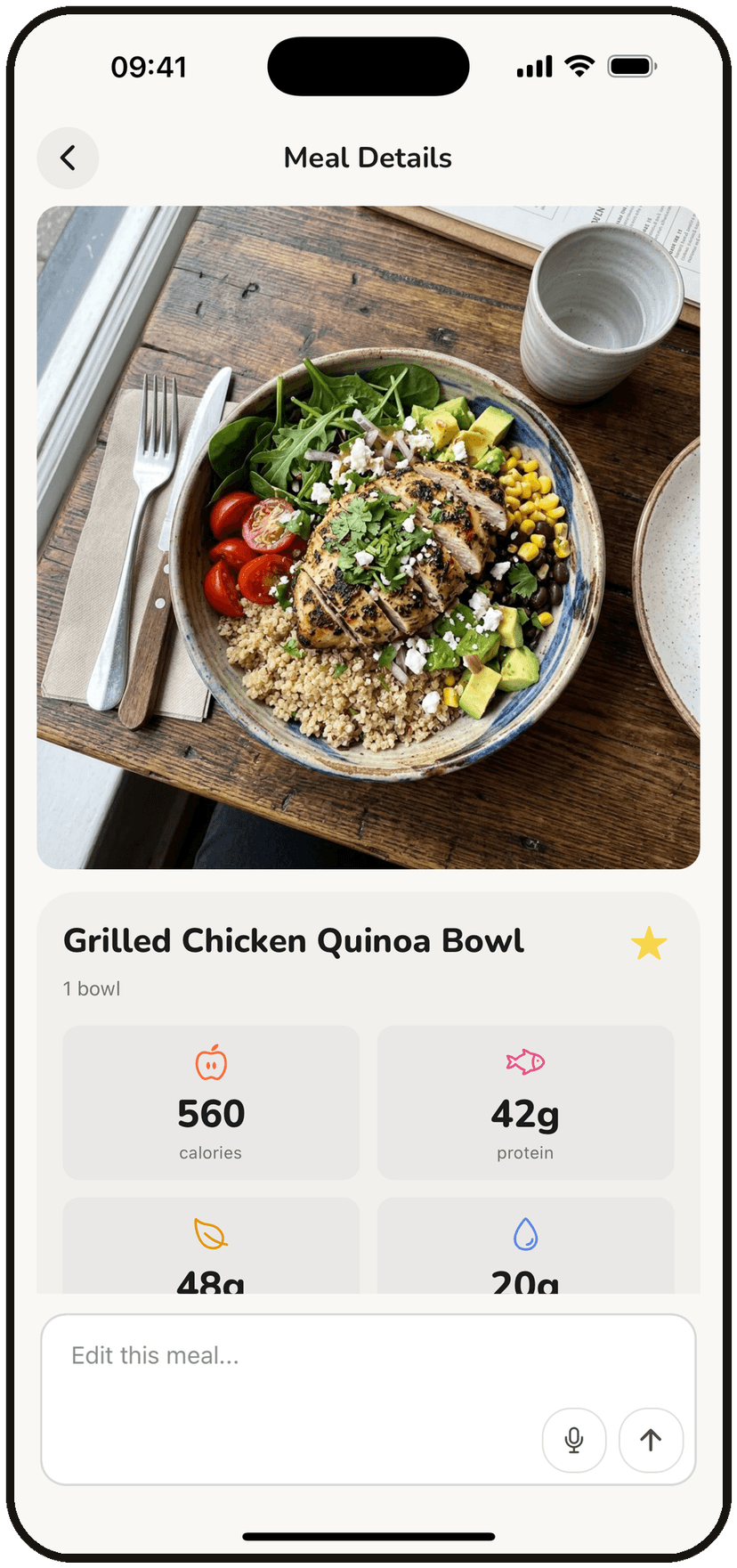
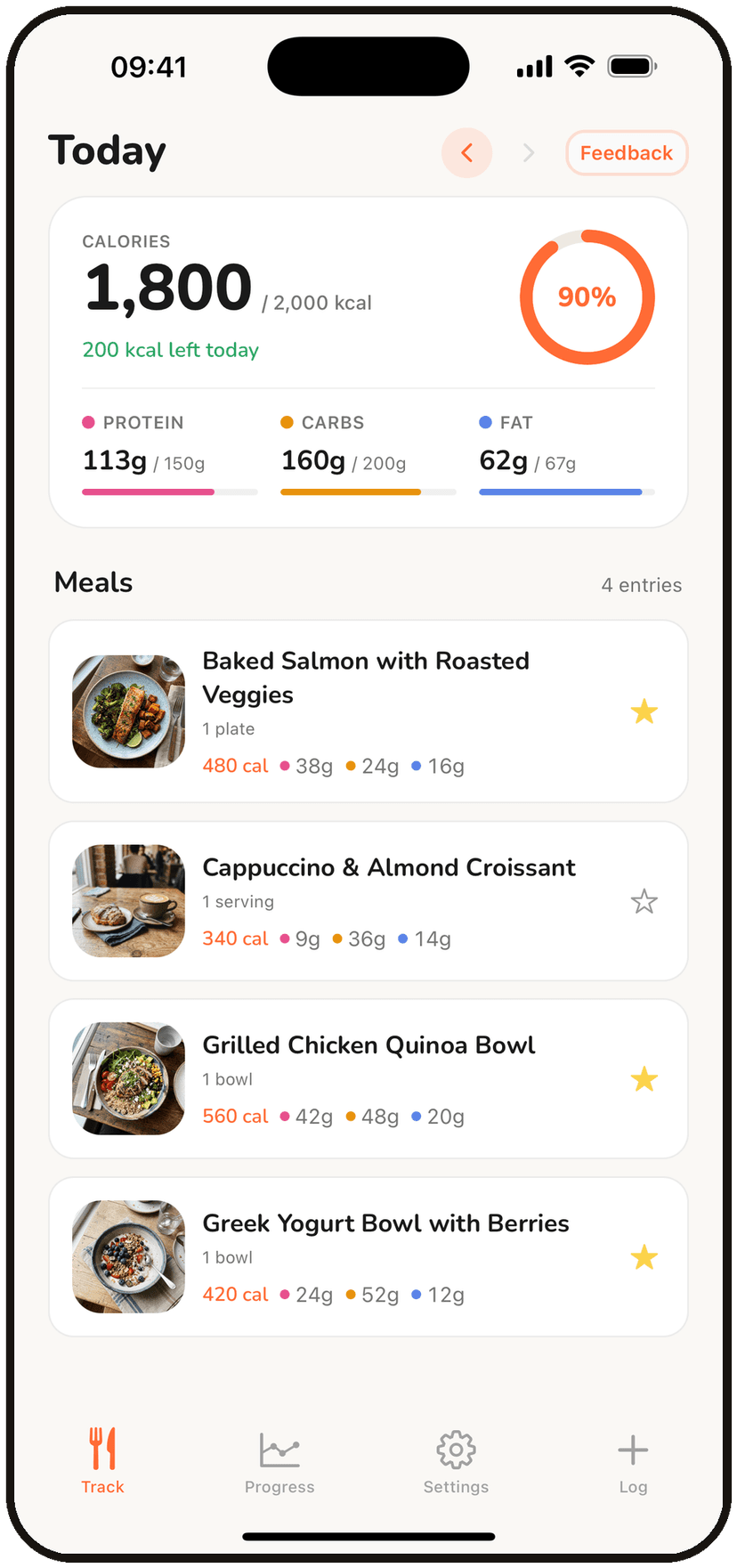
Portion guesses add up fast. BiteKit's AI estimates what's actually on your plate — oils, sides and all — so your log stays close to what you really ate.
- Log meals by photo, voice, or text
- Calories & macros estimated in seconds
- Syncs with Apple Health and Apple Watch
Free download · 3-day free trial, cancel anytime.
Scan with your iPhone camera