Walking Calorie Calculator
Find out how many calories you burn walking based on your body weight, pace, distance or time, and terrain incline. Powered by validated MET values used by exercise scientists.
Calculate by
Walking Pace
Terrain
How Walking Calorie Burn Is Calculated
This calculator uses the MET (Metabolic Equivalent of Task) formula, which is the gold standard method used in exercise science research and clinical settings:
Calories = MET × Weight (kg) × Duration (hours)
One MET represents the energy cost of sitting quietly. Walking at different speeds and inclines multiplies your resting calorie burn by the corresponding MET value.
MET Values by Pace
- Casual (~2.0 mph)MET 2.5
- Moderate (~2.5 mph)MET 3.0
- Brisk (~3.0–3.5 mph)MET 3.5
- Power Walk (~4.0 mph)MET 5.0
Incline Adjustments
- Flat (0%)+0 MET
- Slight incline (5%)+0.5 MET
- Moderate incline (10%)+1.0 MET
- Steep incline (15%)+1.5 MET
Walking for Weight Loss
Walking is one of the most accessible and sustainable forms of exercise for weight loss. While a single walk burns a modest number of calories, the cumulative effect of consistent daily walking is powerful.
3,500
Calories in one pound of fat. Walk off roughly 1 lb per month with daily 30-minute brisk walks.
10,000
Steps per day is a common goal. At 2,000 steps/mile that's 5 miles, burning 400–500 calories for most adults.
30%
More calories burned walking uphill vs flat. A 10% incline raises your MET by 1.0 point.
Tips to Burn More Calories Walking
Increase your pace
Moving from a casual stroll to a brisk walk doubles your hourly calorie burn. Power walking at 4 mph burns the same calories as a slow jog for many people.
Add incline
Walking on hills or raising your treadmill incline to 5–10% significantly increases calorie burn without requiring a faster pace. It's also easier on the joints than running.
Use walking poles
Nordic walking poles engage your upper body, increasing calorie burn by 20–46% compared to regular walking at the same pace.
Walk after meals
A 10–15 minute walk after meals helps manage blood sugar levels and contributes to your daily calorie burn. Multiple shorter walks throughout the day can add up to significant calorie expenditure.
Increase distance gradually
Add 10% more distance or time each week to avoid overuse injuries while progressively increasing your total calorie burn over time.
Walking vs. Other Cardio Activities
How does walking compare to other common exercises for calorie burn? For a 160 lb (73 kg) person over 30 minutes:
Estimates for a 160 lb person over 30 minutes on flat terrain.
Frequently Asked Questions
How many calories do you burn walking a mile?
The average person burns roughly 80–100 calories per mile on flat ground. A 160 lb person walking briskly burns about 90 calories per mile. Body weight is the biggest factor — heavier individuals burn more calories for the same distance.
Does walking pace affect calorie burn?
Yes, significantly. A faster pace burns more calories per hour. Power walking at 4 mph burns roughly twice as many calories per hour as a casual 2 mph stroll. Per mile, the difference is smaller since you cover the distance faster.
How does incline affect calories burned walking?
Walking uphill dramatically increases calorie burn. A 10% incline adds approximately 1.0 MET to your effort, increasing calorie burn by 30–40% compared to flat walking at the same pace.
How accurate is this walking calorie calculator?
MET-based calculators are accurate to within 10–15% for most people. Individual factors like fitness level, walking mechanics, and exact terrain variation can affect actual calorie burn. Use the result as a reliable estimate and adjust based on your real-world progress.
How many steps are in a mile?
The average person takes approximately 2,000 steps per mile. This varies with height and stride length. Taller people with longer strides may take 1,800 steps/mile, while shorter individuals may take over 2,200 steps/mile.
Is walking enough exercise for weight loss?
Walking can absolutely support weight loss when combined with a calorie deficit. A consistent daily 30-minute brisk walk burns 100–200 calories, contributing meaningfully to a weekly deficit. Consistency matters more than intensity for long-term success.
iPhone app · 3-day free trial
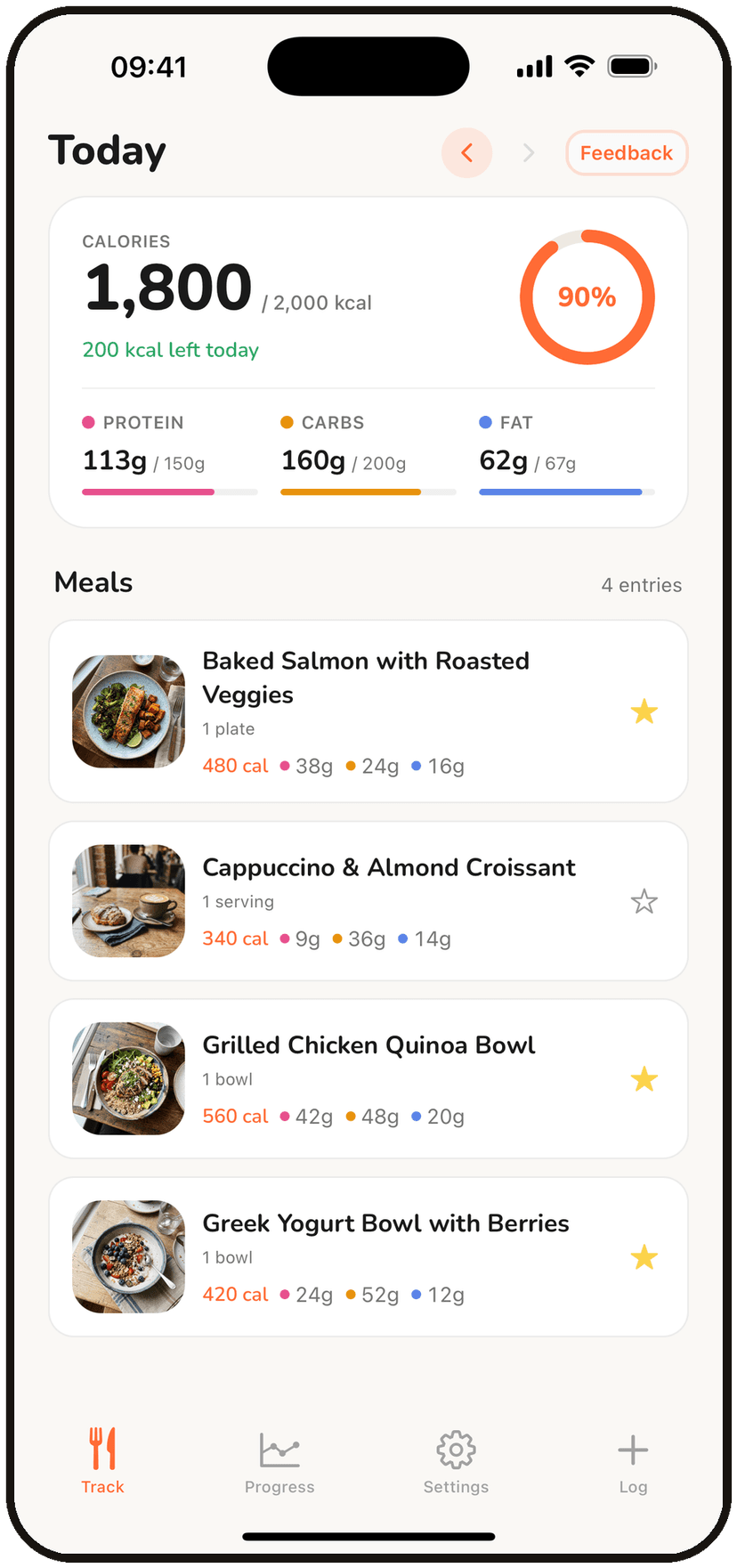
You're likely eating 500 calories more than you think
Portion guesses add up fast. BiteKit's AI estimates what's actually on your plate — oils, sides and all — so your log stays close to what you really ate.
- Log meals by photo, voice, or text
- Calories & macros estimated in seconds
- Syncs with Apple Health and Apple Watch
Free download · 3-day free trial, cancel anytime.
Scan with your iPhone camera