Weight Gain Timeline Calculator
Project how long your lean bulk will take. Get milestone dates, muscle vs fat gain estimates, and calorie adjustments as your weight increases.
If provided, we'll project your body fat percentage at your target weight.
Beginners gain a higher ratio of muscle to fat. Advanced lifters gain proportionally more fat per unit of weight gained.
Understanding the Lean Bulk
A lean bulk is a controlled weight-gaining phase focused on maximizing muscle growth while minimizing fat accumulation. Unlike a "dirty bulk" where you eat everything in sight, a lean bulk uses a precise calorie surplus to provide just enough extra energy for muscle protein synthesis.
Calculate Your Surplus
Start with your TDEE and add 200-300 calories for a lean bulk. This provides enough energy for muscle growth without excessive fat storage. Beginners can use a slightly larger surplus.
Prioritize Protein
Aim for 1.6-2.2g of protein per kilogram of body weight daily. Protein is the building block of muscle tissue and the most important macronutrient during a bulk.
Progressive Overload
Without progressive overload in your training, the extra calories will be stored as fat instead of building muscle. Gradually increase weight, reps, or sets over time.
Adjust as You Grow
Your TDEE increases as you gain weight. Recalculate every 4-6 weeks and increase your calorie intake to maintain your surplus and keep the gains coming.
Realistic Muscle Gain Rates
Understanding how fast you can naturally build muscle helps set realistic expectations and prevents frustration. The rate of muscle gain depends heavily on your training experience:
Beginner (0-1 year): 1-1.5 lbs/month
"Newbie gains" are real. Your body responds dramatically to new training stimuli, and you can gain muscle at the fastest rate you will ever experience. Take full advantage with a solid program and adequate nutrition.
Intermediate (1-3 years): 0.5-1 lb/month
Gains slow as you become more trained. You need better programming, more recovery, and precise nutrition to continue progressing. A moderate surplus of 200-300 calories works best.
Advanced (3+ years): 0.25-0.5 lb/month
Diminishing returns are significant for advanced lifters. Muscle gain is slow, and a smaller surplus (150-250 cal) is critical to avoid unnecessary fat gain. Patience and consistency are key.
Choosing the Right Surplus
The size of your calorie surplus has a major impact on the ratio of muscle to fat you gain. Here is how different surplus levels compare:
Conservative (+200)
- Best muscle:fat ratio
- Minimal cutting needed after
- Slower overall progress
- Best for advanced lifters
Moderate (+300)
Best- Good muscle:fat balance
- Steady, visible progress
- Moderate cutting needed
- Best for most lifters
Aggressive (+500)
- More fat gain expected
- Fastest scale movement
- Longer cut phase after
- Best for beginners only
When to End Your Bulk
Knowing when to transition from bulking to cutting is just as important as the bulk itself. Here are the key signals that it is time to stop gaining:
Body Fat Threshold
Men should consider ending their bulk around 15-18% body fat, women around 25-28%. Beyond these levels, the muscle-to-fat gain ratio worsens significantly and insulin sensitivity decreases.
Performance Plateau
If strength gains have stalled despite progressive overload and adequate recovery, additional weight gain may not be productive. A maintenance period or mini-cut could help repartition nutrients.
Visual Assessment
Take regular progress photos. If you are no longer comfortable with how you look and feel, it may be time to transition. A bulk should enhance your physique, not make you feel worse.
Time-Based Approach
Many lifters follow a structured approach: bulk for 4-6 months, then cut for 2-3 months. This cyclical approach allows consistent long-term muscle building while keeping body fat in check.
Common Lean Bulking Mistakes
Avoid these frequent pitfalls to get the most out of your lean bulk:
Too Large a Surplus
Eating 800+ calories above TDEE does not build muscle faster. Your body has a maximum rate of muscle protein synthesis, and excess calories are stored as fat.
Not Tracking Weight Trends
Weigh yourself daily and track the weekly average. If you are gaining more than 0.5-1% of body weight per month, your surplus is likely too high.
Insufficient Protein
Even in a surplus, you need adequate protein. Without 1.6-2.2g/kg of protein, much of your weight gain will be fat instead of muscle.
Poor Training Program
Without a structured program with progressive overload, extra calories have nowhere to go but fat cells. Training stimulus is what signals your body to build muscle.
Frequently Asked Questions
How long does it take to gain 10 pounds of muscle?
For beginners, gaining 10 pounds of muscle typically takes 5-10 months with proper training and nutrition. Intermediate lifters may need 10-20 months, and advanced lifters 20+ months. Total weight gained will include some fat alongside the muscle.
What is the ideal calorie surplus for lean bulking?
The ideal surplus for a lean bulk is 200-300 calories per day above your TDEE. Beginners can use a slightly higher surplus (300-500 cal) since they build muscle faster. Advanced lifters should stick to a smaller surplus (150-250 cal).
How much muscle can you gain per month?
Beginners can gain 1-1.5 lbs of muscle per month, intermediates 0.5-1 lb, and advanced lifters 0.25-0.5 lb. These rates assume proper training, adequate protein, sufficient sleep, and a calorie surplus.
Should I adjust calories as I gain weight?
Yes. As your body weight increases, your TDEE rises too. If you keep eating the same calories, your surplus shrinks over time. Recalculate every 4-6 weeks and increase intake to maintain your target surplus.
What body fat percentage should I bulk up to?
Most experts recommend bulking until you reach about 15-18% body fat for men and 25-28% for women. Beyond these levels, the muscle-to-fat gain ratio worsens and the subsequent cut becomes longer.
What is the muscle to fat gain ratio during a bulk?
Beginners may achieve a 65:35 muscle-to-fat ratio with proper training. Intermediate lifters typically see 50:50, and advanced lifters often gain closer to 35:65. A smaller calorie surplus improves the ratio for all experience levels.
iPhone app · 3-day free trial
You're likely eating 500 calories more than you think
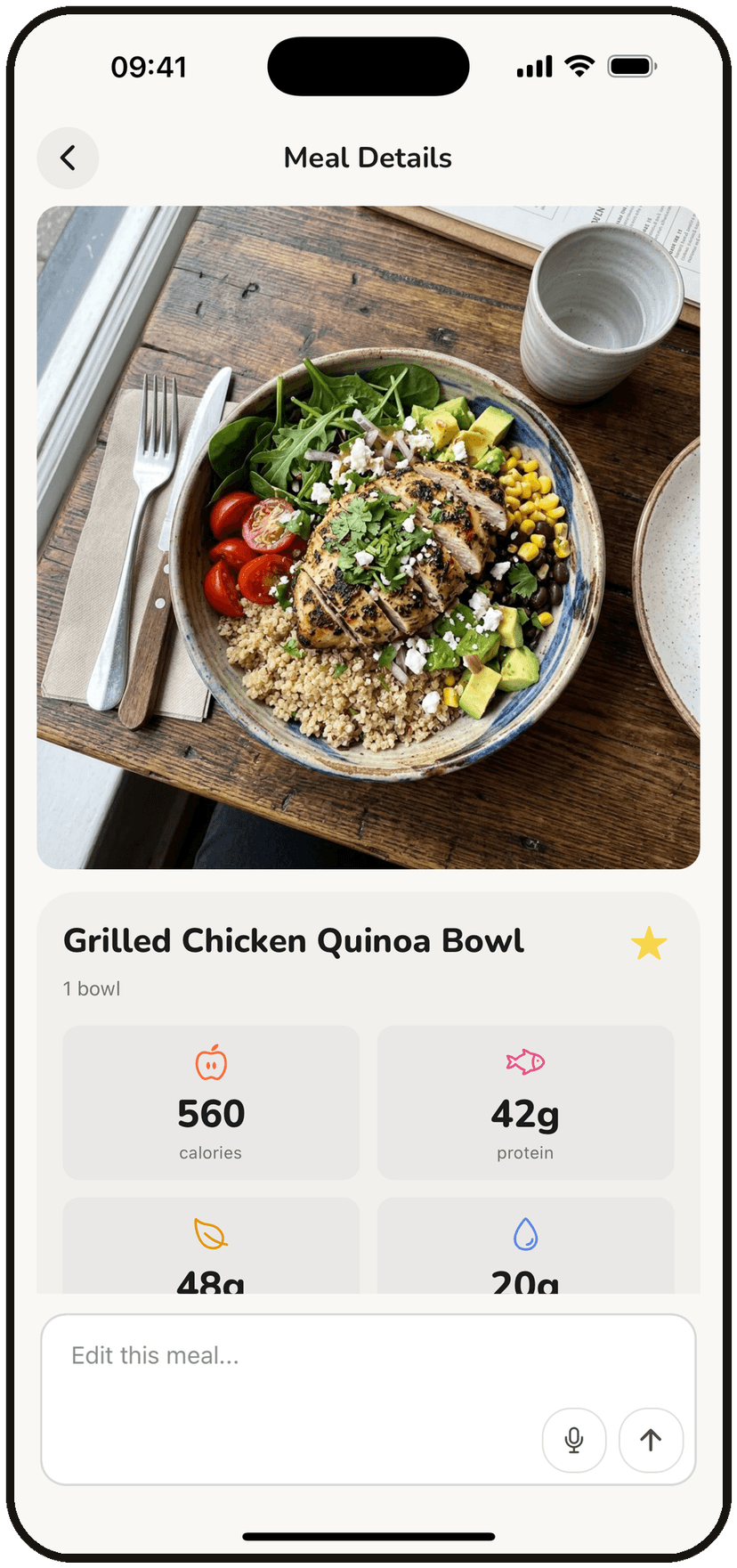
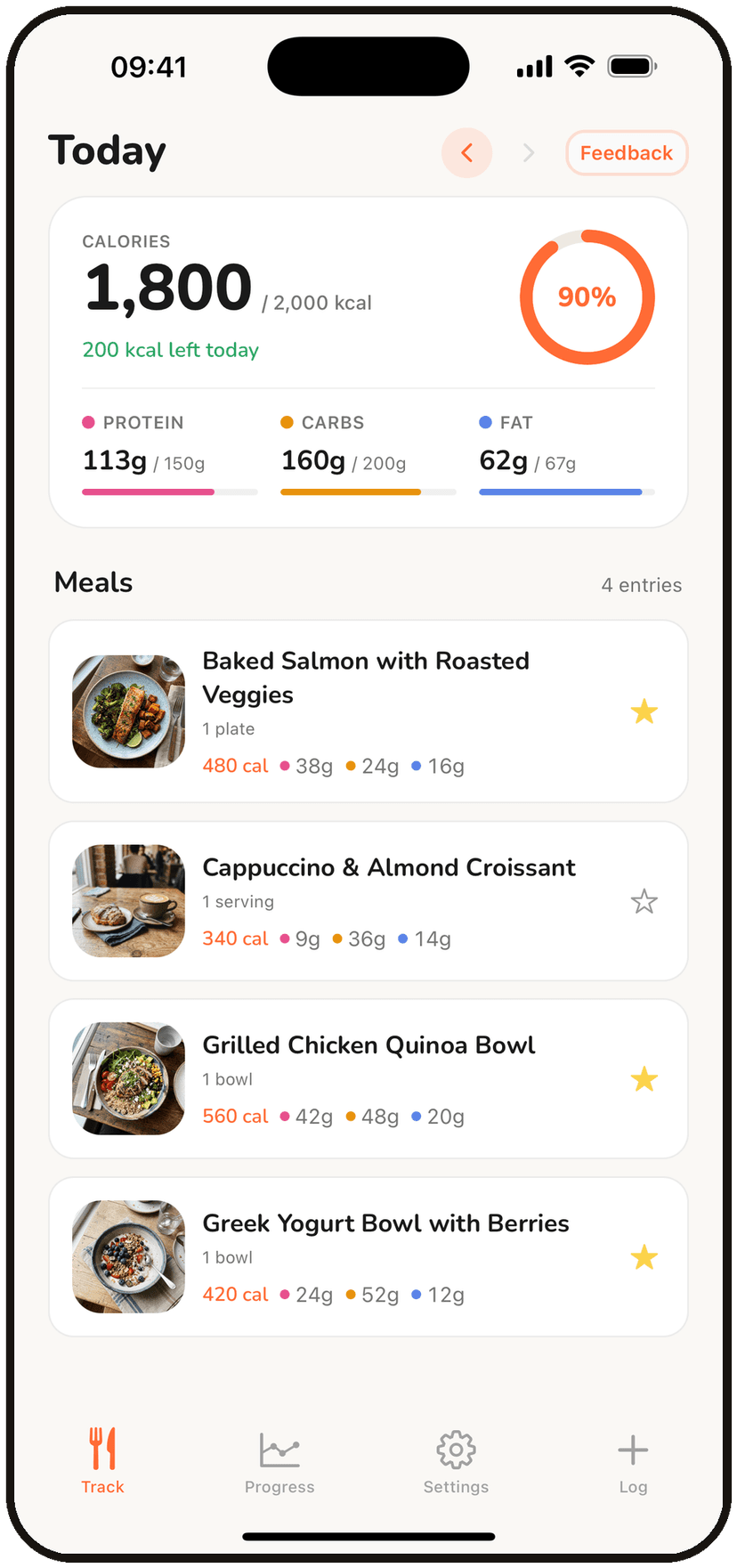
Portion guesses add up fast. BiteKit's AI estimates what's actually on your plate — oils, sides and all — so your log stays close to what you really ate.
- Log meals by photo, voice, or text
- Calories & macros estimated in seconds
- Syncs with Apple Health and Apple Watch
Free download · 3-day free trial, cancel anytime.
Scan with your iPhone camera