Is Ranch Dressing a Friend or Foe on Your Diet? A Scientific Look
Are there carbs in ranch? Yes, but not all are equal. Learn to spot hidden sugars, choose keto-friendly options, and track macros for your low-carb diet.
For many, the thought of giving up creamy ranch dressing is a roadblock to starting a healthier diet. The good news? You might not have to. While often associated with high-calorie indulgence, understanding the nutritional science behind ranch reveals it can have a place in a balanced eating plan, provided it's used strategically.
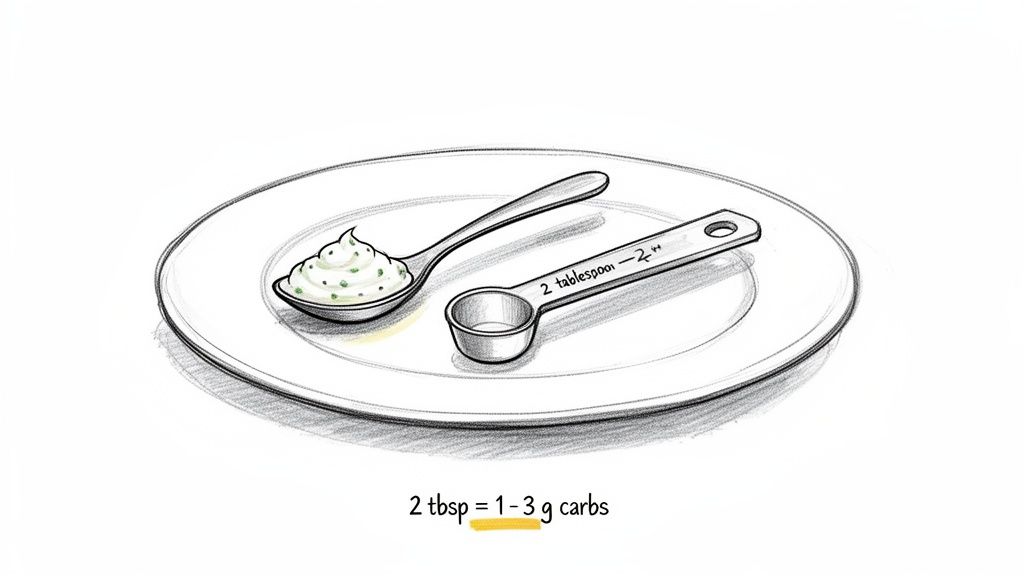
A standard two-tablespoon serving of classic, full-fat ranch dressing typically contains just 1-3 grams of carbohydrates. This low carbohydrate profile makes it seemingly compatible with popular low-carb and ketogenic diets. However, a deeper analysis of its macronutrient composition is crucial for anyone managing their weight or overall health.
The Nutritional Impact of Ranch Dressing on a Balanced Diet
While the carbohydrate count is low, the details of ranch's nutritional profile are what truly matter for dietary adherence. It's essential to view ranch as a flavor enhancer, not a health food. The low-carb nature is counterbalanced by a high concentration of fat and calories, making portion control the cornerstone of its responsible use.
Before examining brand variations, it's important to establish a scientific baseline for a typical serving and understand its metabolic implications.
A Closer Look at the Macronutrient Breakdown
What does a standard serving of ranch contribute to your daily intake? An analysis of its macronutrient content provides a clearer picture.
Typical Nutrition in a 2-Tablespoon (30g) Serving of Ranch Dressing
| Nutrient | Average Amount |
|---|---|
| Calories | 130-150 kcal |
| Fat | 13-16 g |
| Protein | < 1 g |
| Total Carbohydrates | 1-3 g |
As indicated, the carbohydrate load is minimal, but the fat and calorie content are significant. A single serving can add richness and palatability to a meal, but excessive use can quickly contribute to a calorie surplus, undermining weight management goals.
The carbohydrates present are almost entirely simple sugars, with negligible dietary fiber. This composition underscores the importance of mindful portioning to prevent unintended sugar intake and caloric overload.
The primary dietary challenge with ranch dressing is not its carbohydrate content but managing the high caloric density derived from its fat base. A small, measured serving can be accommodated, but overconsumption can transform an otherwise nutritious meal into a high-calorie one.
Understanding this caloric trade-off is fundamental. The goal is to consciously use ranch to improve the appeal of nutrient-dense foods, not to inadvertently add hidden calories that can hinder health progress.
The Science of Caloric Density in Dressings
It's tempting to focus solely on the low carbohydrate count of ranch dressing and classify it as "diet-friendly." However, a comprehensive nutritional assessment reveals the full story lies in its fat content and overall caloric density. The satisfying, creamy texture is a direct result of its high-fat ingredients, a critical factor for anyone monitoring their energy intake.
Fundamentally, ranch dressing is an emulsion of high-fat ingredients like oil, mayonnaise, and buttermilk. These components are responsible for its rich flavor profile but also make it exceptionally calorie-dense. From a dietary perspective, it functions as a "fat-delivery system."
Consider your daily dietary intake as a caloric budget. A generous pour of ranch can expend a significant portion of this budget, even while contributing minimally to your carbohydrate limit.
The Anatomy of a High-Calorie Condiment
The caloric load of ranch dressing is directly attributable to its core ingredients. This high-fat base is the primary contributor to its energy content.
Let's dissect a typical serving from a scientific standpoint:
- A standard 1-ounce (28g) serving—equivalent to two tablespoons—of regular ranch dressing contains approximately 140 calories.
- That same serving provides about 14 grams of fat, which accounts for the vast majority of its caloric value, as fat contains 9 calories per gram.
- This energy density makes portion control absolutely critical, especially for individuals aiming to create or maintain a caloric deficit for weight loss. You can explore further with official nutrition data from the USDA.
This means that while ranch is low in carbohydrates, it can be a significant source of fat-based calories. These calories do not provide the same satiety or muscle-building benefits as protein or the sustained energy of complex carbohydrates.
Ranch dressing is a classic example of how a food can be low-carb without being conducive to weight loss. The high number of calories from fat can easily derail weight management efforts if not consumed with careful measurement and moderation.
A strategic approach is to use ranch to increase consumption of nutrient-dense foods, such as large salads or lean proteins, making them more palatable. By measuring and tracking servings, one can enjoy the flavor without compromising overall dietary goals.
The Pitfalls of "Light" and "Fat-Free" Formulations
A common consumer behavior is to select "light" or "fat-free" ranch dressing under the assumption that it is a healthier alternative. However, food science reveals a frequent trade-off: when manufacturers reduce fat, they often alter the flavor and texture profile significantly.
To compensate, they commonly add sugars, starches, and other fillers. This results in a product that, while lower in fat, may be substantially higher in carbohydrates. This phenomenon, often termed "carb creep," can subtly undermine low-carbohydrate diets. A diligent review of the ingredients list is the most effective way to avoid this trap.
Identifying Hidden Sugars and Starches
When examining the nutrition label, it's crucial to identify ingredients that are essentially forms of sugar or refined carbohydrates. Food manufacturers use these inexpensive fillers to improve texture and palatability, but they can double or triple the carbohydrate count compared to full-fat versions.
Be vigilant for these common additives:
- Maltodextrin: A highly processed polysaccharide that acts as a bulking agent but is a fast-digesting carbohydrate.
- Corn Syrup: A liquid sweetener that contributes directly to the sugar and carbohydrate content.
- Modified Food Starch: A processed carbohydrate used as a stabilizer and thickener.
The irony of 'fat-free' ranch is the frequent exchange of fat for sugar. A traditional, full-fat dressing may contain only 1-2 grams of carbohydrates per serving. In contrast, its 'light' counterpart can easily contain 5-7 grams or more.
Comparing a standard commercial Creamy Ranch dressing label to a "light" version often illustrates this trade-off clearly. Even restaurant formulations vary; analyzing the Chick-fil-A Garden Herb Ranch dressing, for instance, provides insight into what to expect when dining out. Understanding these formulations is key to selecting a product that aligns with your health objectives.
Preparing your own dressing is a simple and effective method for controlling its macronutrient content. While commercially prepared dressings offer convenience, they often contain hidden sugars and starches that can accumulate and impact dietary goals.
A homemade approach puts you in full control of the ingredients, eliminating unnecessary fillers and preservatives. The result is a fresh, flavorful dressing with a macronutrient profile tailored to your needs, often with almost zero carbohydrates.
The Simplicity of Homemade Preparation
Creating a high-quality ranch dressing does not require advanced culinary skills. With a bowl and a whisk, you can combine a few simple ingredients to produce a dressing superior in both taste and nutritional value.
A basic, scientifically sound recipe includes:
- The Base: Combine equal parts full-fat mayonnaise and sour cream. This mixture provides a rich, creamy texture without the need for starchy thickeners.
- The Flavor: Incorporate dried dill, garlic powder, onion powder, and dried parsley. Salt and freshly ground black pepper will enhance and unify the flavors.
- The Consistency: Adjust the viscosity with a small amount of water, unsweetened almond milk, or heavy cream to achieve the desired consistency for dipping or drizzling.
This formula delivers the classic ranch flavor without the added carbohydrates and questionable additives found in many commercial products. For precise macronutrient tracking of homemade recipes, a tool like an AI Recipe Calculator can provide an instant breakdown.
The chart below illustrates the typical trade-off between full-fat and "fat-free" commercial dressings. When fat is removed, sugar is often increased to maintain palatability, causing the carbohydrate count to rise.
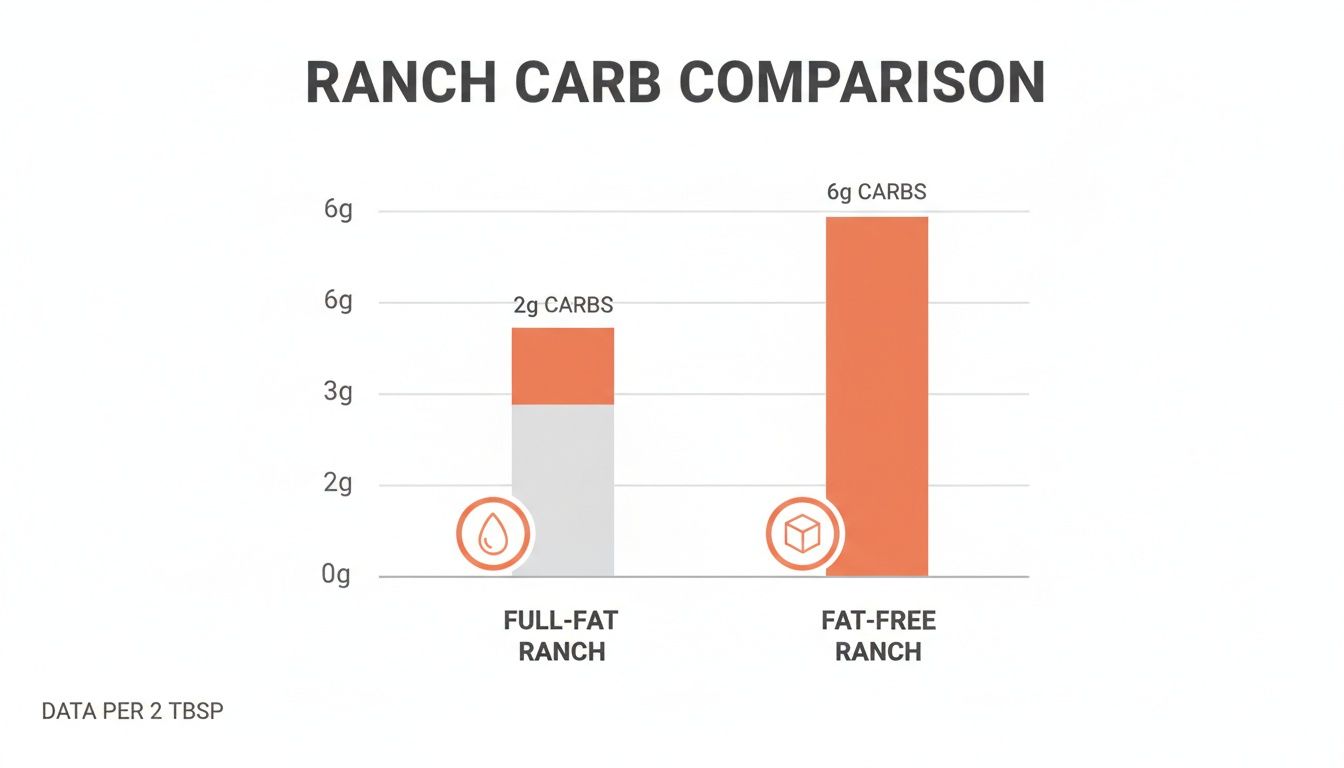
The data is clear: choosing the fat-free option may involve an undesirable exchange of fat for sugar.
Homemade vs. Commercial: A Nutritional Comparison
Let's examine the ingredient differences between a typical commercial dressing and the simple homemade recipe. This side-by-side comparison highlights the advantages of home preparation.
Carb Comparison Homemade vs Store-Bought Ranch (per 2 Tbsp)
| Ranch Type | Typical Total Carbs | Primary Ingredients |
|---|---|---|
| Commercial Ranch | 2g+ | Soybean or Canola Oil, Water, Sugar, Modified Food Starch, Natural Flavors |
| Simple Homemade | <1g | Mayonnaise, Sour Cream, Spices, Water or Unsweetened Nut Milk |
The ingredient list reveals the underlying nutritional story. Commercial dressings often rely on processed oils, sugar, and starches, whereas a homemade version is built on a simple, clean, full-fat base.
Ultimately, making your own ranch is about more than just carbohydrate reduction; it's about quality and flavor. Using real, whole-food ingredients results in a product that not only tastes better but also supports your body's nutritional needs.
The Role of Ranch Dressing in Protein Intake
Many individuals use ranch dressing to enhance the palatability of high-protein foods like grilled chicken, fish, or vegetable-rich salads. But does the dressing itself contribute to protein goals?
The direct answer is no. Ranch dressing should be viewed as a flavor adjunct, not a significant source of protein. Its primary function in a healthy diet is to make nutrient-dense proteins and vegetables more appealing, which can improve long-term dietary adherence. However, it does not provide meaningful protein content on its own.
The Protein Content in Ranch: A Minimal Contribution
A review of the nutritional facts panel reveals that the protein content in ranch dressing is negligible. This is an important consideration for individuals tracking macronutrients for muscle synthesis or satiety.
A typical two-tablespoon serving of ranch contains only about 0.5 grams of protein. To put this into a broader context, even a large 100-gram portion would yield only approximately 1.3 grams of protein. This amount is too small to contribute meaningfully to daily protein targets. Further nutritional data can be explored at health resources like Virta Health.
Given the near-zero protein content, the calories in ranch are derived almost entirely from fat, which poses a different set of dietary considerations.
The primary risk associated with ranch dressing is inadvertently converting a lean, protein-rich meal into a high-calorie one. Generously applying a high-fat dressing to a healthy salad or grilled chicken breast can easily negate the caloric benefits of the meal itself.
The key is strategic use. Treat ranch as a tool to enhance the enjoyment of your meals, not as a primary component. By carefully measuring portions, you can leverage its flavor without disrupting your protein-to-fat ratio or overall caloric intake. It’s about striking a balance between palatability and achieving your fitness objectives.
Best Practices for Tracking Ranch in a Diet App
For those who track their macronutrient intake, accurate logging of condiments is crucial for reliable data. Simply entering "ranch" into a food diary is imprecise and can lead to significant tracking errors. To maximize the utility of a tracking app like BiteKit, specificity is key.
A common question is how to estimate serving sizes when measuring tools are unavailable. A useful visual cue is a ping pong ball; a dollop of dressing of this approximate size is equivalent to about two tablespoons. This mental model can help maintain portion control in various settings.
The objective is to develop a consistent logging habit that is both accurate and efficient. A user-friendly interface, such as that found in BiteKit, facilitates quick and precise meal entry.
Instead of a generic entry like "ranch," be more descriptive. For instance, logging "Caesar salad with 2 tablespoons of ranch dressing" provides the app with the specific data needed for an accurate calculation. This is particularly important when using advanced features like voice or photo logging.
Clear entries generate reliable data, which in turn allows you to see precisely how condiments fit into your daily nutritional budget. When choosing between products at the grocery store, a digital tool like an AI Nutrition Label Comparator can offer a quick, evidence-based comparison.
Frequently Asked Questions About Ranch in a Low-Carb Diet
Adopting a low-carbohydrate eating plan often raises questions about previously enjoyed foods. Here are evidence-based answers to common queries about ranch dressing to help you make informed decisions.
Is Fat-Free Ranch a Nutritionally Superior Choice?
The term "fat-free" can be misleading for those on a low-carb diet. When manufacturers remove fat, they often add sugar and starchy fillers to compensate for the loss of flavor and texture. This frequently results in a higher carbohydrate count.
It is always advisable to examine the nutrition facts panel and ingredients list. Do not rely solely on marketing claims like "light" or "fat-free" on the front of the packaging.
Can I Consume Ranch Daily on a Ketogenic Diet?
Yes, daily consumption is possible, provided it is done mindfully. A single serving—typically 1-2 tablespoons—of a low-carbohydrate brand or a homemade version can be incorporated into most daily macronutrient targets.
The key is strict portion control and accurate tracking of all foods consumed. The calories and grams of fat from the dressing must be accounted for within your daily dietary goals.
For individuals committed to a low-carbohydrate lifestyle, understanding how different ingredients impact macronutrient ratios is fundamental to success. This guide on finding recipes for ketogenic diet success offers valuable strategies.
What Are Some Low-Carb Alternatives to Ranch Dressing?
For a similar creamy texture, consider mixing plain, full-fat Greek yogurt with dill, garlic powder, and onion powder. This alternative provides a comparable sensory experience with the added benefit of protein and often fewer calories.
For a different flavor profile that is also zero-carb, a classic vinaigrette made from high-quality olive oil and vinegar is a nutritionally sound and delicious option.