The Ultimate Guide to Chicken Wings Nutrition Facts
Explore the complete chicken wings nutrition facts. Learn about calories, protein, and fat in fried, baked, and sauced wings for smarter, healthier choices.
On its own, a single, large chicken wing contains approximately 124 calories, with the majority of those calories—roughly 62%—originating from fat and the remaining 38% from protein. But that's just the starting point. The real nutritional story of any wing is determined by how it's cooked and what it's tossed in.
Your Quick Guide To Chicken Wing Nutrition
Let's establish a key fact: chicken wings are a fantastic, high-protein food that's naturally carbohydrate-free. Their reputation as a diet-wrecker isn't about the wing itself, but about the common cooking methods and massive portion sizes we’ve all come to love.
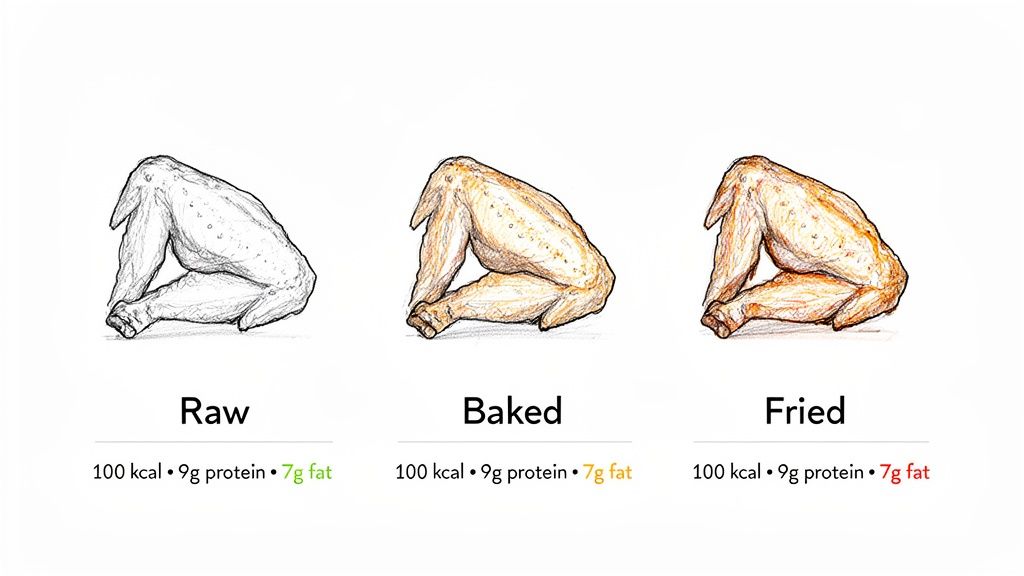
The nutritional numbers can swing wildly. A 100g serving of plain, raw wings clocks in at around 191 calories. Cook those same wings, and the calorie count can easily jump past 320 calories. The gap between a baked wing and a deep-fried, sauced-up wing is even more dramatic. For instance, an order of 10 baked wings might land around 690 calories. Their fried and sauced cousins? They can skyrocket to 1,640 calories for the same number of wings. This massive difference comes down to two main culprits: oil absorption during frying and the sugar-laden coatings and sauces. You can explore more in-depth data on wing nutrition at NutritionValue.org.
Chicken Wing Nutrition At A Glance
For a quick reference when you're trying to make a smarter choice, here’s a look at how the numbers for a single, average-sized wing change based on how it's prepared.
| Preparation Method | Calories (kcal) | Protein (g) | Fat (g) |
|---|---|---|---|
| Raw, with Skin | 89 | 9 | 6 |
| Baked, with Skin | 99 | 9 | 7 |
| Fried, with Skin | 159 | 10 | 12 |
This simple breakdown gives you a clear picture of how quickly calories and fat can add up. Frying alone nearly doubles the calories of a single wing compared to its raw state. Now, let’s dig a little deeper into the complete chicken wings nutrition facts you need to know.
A Scientific Breakdown Of Chicken Wing Calories
While counting individual wings is a good starting point, looking at their nutrition per 100 grams provides a much clearer, more accurate picture. This standardized weight is how nutrition experts compare foods, and it’s perfect for getting a handle on what you’re really eating.
So, why are wings so high in calories? It all comes down to their natural fat-to-protein ratio. A chicken wing just isn't lean like a chicken breast; it’s packed with skin and fat, which is precisely what makes it so tender and delicious. Remember, fat contains 9 calories per gram, while protein only has 4 calories per gram. That difference adds up fast.
Skin and Breading: The Calorie Multipliers
The two biggest factors that send wing calories soaring are the skin and the breading. They are the ultimate calorie multipliers.
First, the skin. A 100g serving of wings with the skin on can have over 40% more calories than the same portion without it. The skin is mostly fat, and when you cook it, that fat crisps up, concentrating the calories. Simply removing the skin before you cook is one of the easiest and most effective ways to lower the calorie count.
Breading takes things to another level. A coating of flour or breadcrumbs acts like a tiny sponge, soaking up a massive amount of oil during frying. This step alone can pile on an extra 100-200 calories to a 100g serving, turning a decent protein source into a high-fat, high-carb bomb.
Think about it this way: a typical restaurant order of just 10 deep-fried, breaded wings can easily top 1,200 calories. For many people, that's more than half their daily calorie budget in one sitting, which really puts the impact of cooking methods into perspective.
For example, 100g of plain, baked wings lands around 203 calories. But take that same amount of chicken, bread it, and deep-fry it, and the count jumps to over 320 calories. Understanding these chicken wings nutrition facts is the key to enjoying them without derailing your diet.
Decoding The Macronutrient Profile Of Wings
Calories tell part of the story, but to truly fit chicken wings into your diet, you need to understand their macronutrient breakdown: protein, fat, and carbohydrates. The great thing about wings is that in their plainest form, they're a high-protein, zero-carb food, making them a fantastic starting point for almost any eating plan.
Protein is the star of the show here. It's essential for building and repairing muscle, and it plays a huge role in making you feel full and satisfied after a meal. This makes wings a go-to for athletes, people hitting the gym, or anyone trying to manage their appetite.
Protein, Fat, and Carbs In Detail
So, what do the numbers look like? Chicken wings pack a serious protein punch. A typical serving of 4.4 ounces (that's about 4 wings with the skin on) provides around 16 grams of protein. Zooming in, a 100g portion contains between 20-30.5g of protein, which can make up as much as 64% of the total calories. For a deeper look at the data, you can explore the numbers on Strongr Fastr.
The other major player, of course, is fat. The skin and the natural makeup of the wing mean it has a significant fat content, a mix of both saturated and unsaturated fats. While your body needs fat to function, it’s wise to keep an eye on the total amount—especially saturated fat, which can affect heart health. For more context on this, understanding your cholesterol levels is a really helpful resource.
Plain wings are practically made for low-carb and keto diets. With 0-11g of net carbs per 100g, they easily fit into even the strictest macro targets. For example, a 200g portion of simple grilled wings would give you roughly 40g of protein, 40-60g of fat, and less than 10g of carbs.
This clean, low-carb profile changes fast once breading and sugary sauces get involved. A heavy breading can easily tack on an extra 10-15 grams of carbs to your meal. Sweet sauces like BBQ or teriyaki are even bigger offenders, often piling on 20+ grams of sugar. This is why the cooking method is so critical—it directly shifts these macro ratios.
The nutritional value of a wing shares some similarities with other cuts. For a good comparison, check out our guide on chicken drumstick nutrition.
How Cooking Methods Transform Wing Nutrition
How you cook your chicken wings isn't just a matter of taste—it completely changes their nutritional profile. A raw wing is one thing, but the final chicken wings nutrition facts are written in the kitchen. The cooking method, more than anything else, dictates the final calorie and fat count.
Deep frying, without a doubt, is the biggest offender. When you submerge wings in hot oil, they don't just cook; they soak up a significant amount of that oil. This process can easily tack on an extra 50-60 calories and more than double the fat content per wing compared to other methods.
Healthier Ways to Get That Crispy Skin
The good news is you don't need a vat of oil for that satisfying crunch. You can get fantastic, crispy wings using methods that rely on hot, circulating air. This approach cleverly renders the fat already in the chicken skin, crisping it up beautifully while letting the excess drip away.
Baking and air frying are masters of this technique. Instead of adding fat, they actually reduce it, giving you a leaner, lighter wing that still delivers that delicious, crispy bite.
- Baking: Place wings on a wire rack inside a baking sheet. The hot oven air circulates all around the wings, crisping the skin from every angle as the fat melts off.
- Air Frying: An air fryer works like a super-powered convection oven, blasting the wings with high-temperature air to get a deep-fried texture with little to no oil.
- Grilling: Much like baking on a rack, grilling lets fat drip away through the grates. You get a crispy skin and a great smoky flavor without adding a drop of oil.
Before any cooking or sauces are involved, a plain chicken wing is naturally high in protein and fat. Carbohydrates are virtually non-existent, which is why wings are a popular starting point for many low-carb and keto diets.
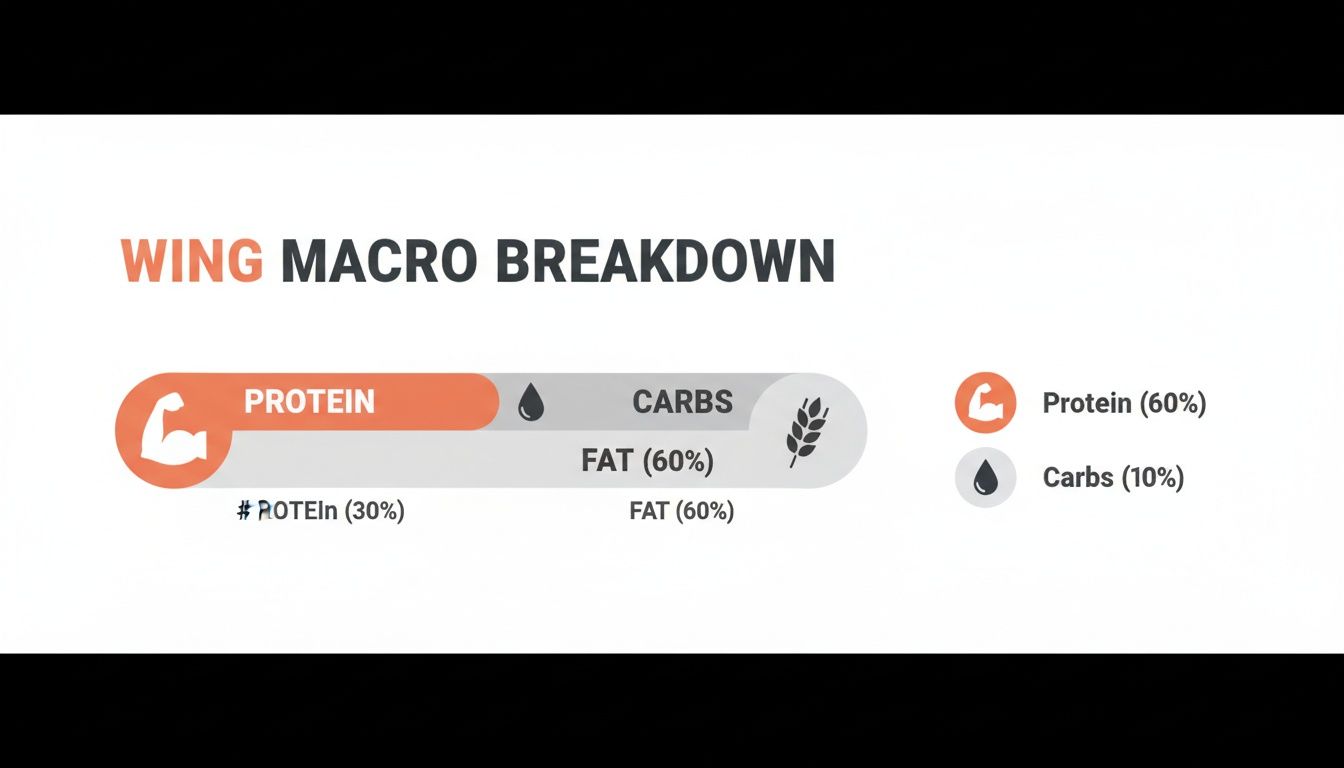
This macro breakdown shows the natural composition of a wing—mostly protein and fat, with zero carbs. But as we've seen, cooking can shift these numbers dramatically.
Comparing the Nutritional Trade-Offs
Let’s look at just how much the numbers change side-by-side. The table below shows the typical nutritional values for 100g of cooked chicken wings (about 3-4 wings), plain, without sauce. Notice how frying adds a considerable amount of calories and fat compared to the other methods.
Nutrition Comparison By Cooking Method (per 100g)
| Cooking Method | Calories (kcal) | Fat (g) | Protein (g) | Sodium (mg) |
|---|---|---|---|---|
| Baked / Roasted | 290 | 20 | 27 | 95 |
| Grilled | 265 | 18 | 28 | 90 |
| Air Fried | 270 | 19 | 27 | 95 |
| Deep Fried | 335 | 24 | 25 | 110 |
Note: Sodium can vary widely based on brines and seasonings.
The difference is staggering when you look at it on a per-wing or per-meal basis. To see how cooking impacts the weight and final nutrition of meat, you can play around with this meat cooking yield calculator.
While a single deep-fried wing can easily top 110 calories, its grilled counterpart might have as few as 35-50 calories. Across a typical serving of 10 wings, that’s a difference of over 600 calories—enough to be a full meal for many people.
Don't Forget the Sauce: The Real Nutritional Game-Changer
A plain chicken wing is just the beginning. The real nutritional story is written by the sauces and rubs you choose, and this is where calories, sugar, and sodium can quickly spiral.
Think of it this way: a simple two-tablespoon serving of a sweet BBQ sauce can easily pile on an extra 70 calories and 18 grams of sugar. That's the equivalent of dumping four teaspoons of sugar onto your wings. Honey garlic can be even more surprising, often packing over 20 grams of sugar into the same small serving.
Sweet vs. Creamy Sauces
The type of sauce you choose makes a massive difference. You're generally looking at two main offenders: sugar-heavy glazes and fat-loaded creamy sauces.
-
Sweet Sauces (BBQ, Teriyaki, Honey Garlic): These are loaded with sugar, which means a flood of empty calories and carbs. A teriyaki glaze, for instance, can tack on 10-12 grams of carbs to what is otherwise a very low-carb food.
-
Creamy Sauces (Ranch, Blue Cheese, Garlic Parmesan): Here, the primary concern is fat. A rich garlic parmesan sauce can add another 100-130 calories and 12 grams of fat per serving, effectively doubling the fat from baked or grilled wings.
A single serving of ten wings tossed in a creamy garlic sauce can contain more fat than a double cheeseburger. It’s a stark reminder of how a sauce can single-handedly turn a protein-rich snack into a high-fat meal.
For those keeping a close eye on their intake, dry rubs can feel like a much safer bet. They deliver a huge punch of flavor without the liquid calories, sugar, or fat of a sauce. While that's mostly true, you have to watch out for the sodium. Many commercial rubs are packed with salt. A zesty lemon pepper rub might only add 15-20 calories, but the sodium hit can be substantial.
The best move? Make your own rub at home. Blending your favorite herbs and spices gives you all the flavor and complete control over the salt.
Mastering Portion Control For Accurate Tracking
Let's be honest: trying to accurately track the chicken wings nutrition facts can feel like a total guessing game. Unlike a perfectly portioned protein bar, wings come in all shapes and sizes. This wild inconsistency is where even the most careful calorie counters get tripped up.
But getting your portion size right is everything. If your estimate is off, all the detailed nutrition data in the world won't help you. Let's break down how you can stop guessing and start getting a much clearer picture of what you're eating.
From Wing Parts To Whole Weights
First things first, you need to know what you’re looking at. A "whole wing" actually has three parts: the drumette (the bit that looks like a mini drumstick), the flat (the two-boned middle part), and the tip (which is usually thrown out). When you order a plate of wings, you're almost always getting a mix of just drumettes and flats.
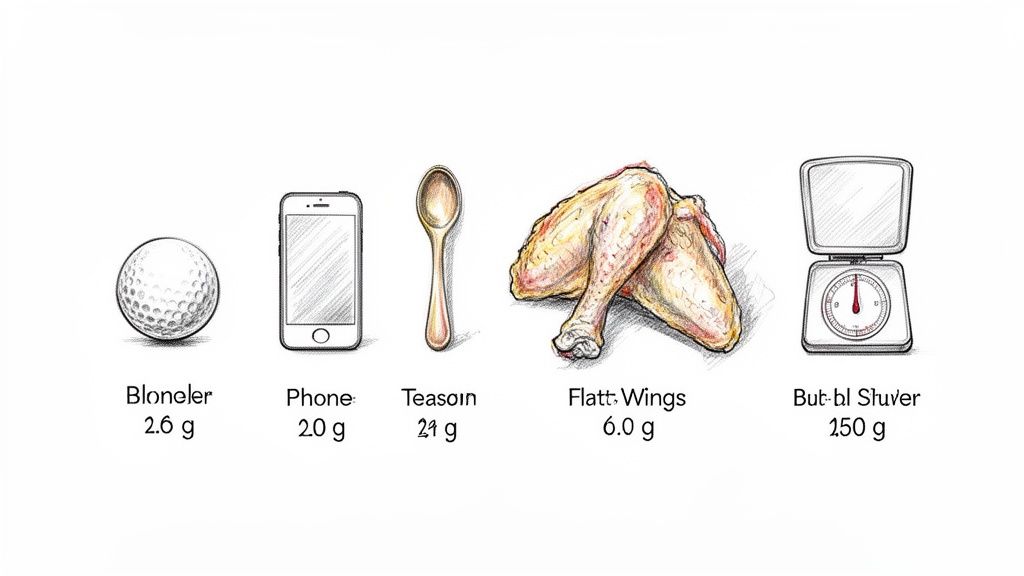
The most accurate way to track your intake is by using a food scale. A raw, average-sized chicken wing flat weighs around 25-35 grams, while a drumette is slightly heavier at 30-40 grams.
If you don't have a scale handy, you can use visual cues. A single drumette is roughly the size and weight of a large golf ball, which is a surprisingly helpful comparison when you're staring at a basket of wings at a restaurant. Getting a feel for these real-world portions is a huge part of our portion size guide for weight loss.
Knowing these averages is a game-changer for logging on the fly. Let's say you had four flats and four drumettes. A quick bit of math tells you that's roughly 220-300 grams of chicken. When you pair that weight estimate with the nutrition info for whatever cooking method and sauce you had, you’re no longer just guessing—you're making an educated estimate.
Frequently Asked Questions About Chicken Wings And Health
Let's clear up a few common questions about how chicken wings fit into a healthy lifestyle. When it comes to wings, the details matter—a lot. Here are some straightforward answers to help you make smarter choices.
Are Chicken Wings Healthy?
They certainly can be. On their own, plain chicken wings cooked via grilling or baking are a fantastic protein source, great for keeping you full and supporting muscle. They're also naturally very low in carbohydrates, which makes them a go-to for anyone on a keto or low-carb diet.
The health factor takes a nosedive once they're deep-fried and swimming in sugary or creamy sauces. This is where a perfectly good food gets loaded with extra calories, unhealthy fats, and sodium. The secret is simple: stick to lean cooking methods and be mindful of your sauces and seasonings.
How Many Calories Are In 10 Wings?
The calorie count for 10 wings can swing wildly. A plate of 10 plain, baked wings will generally land somewhere between 400-600 calories. That's a reasonable meal.
However, if those same 10 wings are breaded, deep-fried, and then tossed in a rich sauce, the calories can skyrocket to over 1,100.
To put that in perspective, 10 fried wings can pack more calories than a large cheeseburger meal from a fast-food joint. This is exactly why understanding the full chicken wings nutrition facts, including cooking and sauce choices, is so critical for accurate tracking.
Are Boneless Wings Healthier?
This is a common misconception. "Boneless wings" aren't actually wings at all; they're pieces of chicken breast meat that have been breaded, deep-fried, and sauced, making them much closer to a chicken nugget.
Because of the heavy breading and deep-frying process, they almost always contain more calories, carbohydrates, and sodium than traditional, bone-in wings. If you're looking for the healthier option, bone-in wings that are grilled, baked, or air-fried are the clear winner. You get all the flavor without the extra carbs and fat.