Portion size guide for weight loss: A science-backed approach
Portion size guide for weight loss: Learn simple, science-backed steps to control calories and sustain results in 2026.
When trying to lose weight, it’s easy to get fixated on what to eat. But scientific evidence and years of practical experience show that how much you eat is often the real game-changer. Sustainable, long-term success isn't about banning foods or feeling miserable. It's about mastering portion sizes.
This single skill puts you in control, turning every meal from a source of stress into a step toward your goal.
Why Portion Control Is a Cornerstone of Weight Loss
Let’s be realistic. Most conventional diets fail because they are built on an unsustainable, all-or-nothing mindset. They often force a cycle of severe restriction, leading to feelings of deprivation and eventual overindulgence. Portion control is the antidote. It’s not another restrictive diet; it’s a practical, lifelong skill.
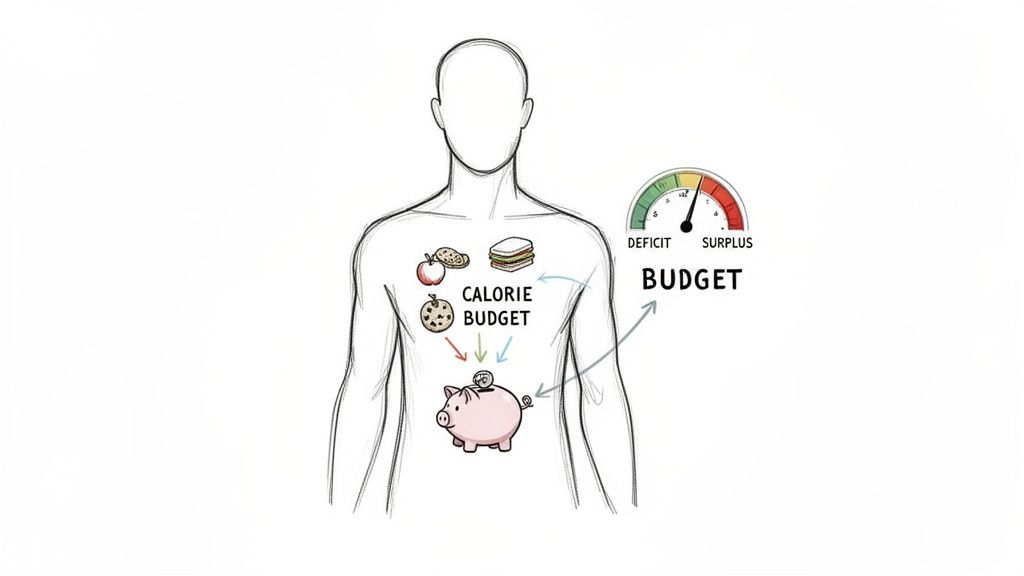
Think of your body's energy needs as a daily calorie budget. To maintain your current weight, you "spend" a specific number of calories each day. To lose weight, you must create a calorie deficit by consuming slightly fewer calories than your budget allows. Portion control is the most effective method for managing this budget without eliminating the foods you enjoy.
The Undeniable Impact of Serving Size
It’s surprisingly easy to overeat without realizing it, and there’s a scientific basis for this phenomenon: the "portion size effect." A large-scale Cochrane review, which analyzed 72 randomized controlled trials, found that when people are consistently offered larger servings, they consume significantly more food. Specifically, the evidence indicates that eliminating large-sized portions from the diet could reduce average daily energy intake by up to 16% (279 kcal).
This direct link between serving size and calorie intake is a major driver of unintentional weight gain. You can read more about how portion sizes influence our eating habits in the research yourself, but the takeaway is clear: managing portions is a powerful, evidence-based tool for weight loss.
This isn't just a matter of willpower. Our modern food environment—from oversized restaurant meals to family-style snack bags—is structured to encourage overconsumption. Learning portion control is how you successfully navigate that environment.
Your Quick Start Portion Control Cheat Sheet
Getting started doesn't require you to immediately purchase a food scale and count every calorie. You can make a substantial impact by simply beginning to eyeball your portions and making small adjustments to how you construct your plate.
Here’s a simple cheat sheet to help you visualize what a portion-controlled meal looks like for different calorie goals. Consider this a starting guide, not a set of rigid rules.
| Calorie Target | Protein (Palm-sized) | Complex Carbs (Cupped Hand) | Vegetables (Two Hands) | Fats (Thumb-sized) |
|---|---|---|---|---|
| 1500 kcal | 1 Serving | 1 Serving | 1+ Servings | 1 Serving |
| 1800 kcal | 1-2 Servings | 1-2 Servings | 1+ Servings | 1-2 Servings |
| 2200 kcal | 2 Servings | 2 Servings | 1+ Servings | 2 Servings |
Use this table as your initial road map. Over time, you’ll develop a natural sense for these amounts, making portion control an automatic and effortless part of your daily routine.
The Real Science Behind Portions and Calories
Before we dive into what to eat, let's discuss the fundamental science that underpins successful weight management. It’s easy to get lost in fad diets and complex nutritional claims, but the foundation of weight loss is remarkably straightforward. Think of calories as the energy unit your body uses for fuel. Every biological process—from breathing and cellular repair to physical activity—expends this fuel.
To lose weight, you must create an energy deficit. This scientific term simply means you need to burn more calories than you consume. This core principle, known as energy balance, is the mechanism behind every effective weight loss strategy. A portion size guide is your roadmap to controlling your energy intake without feeling deprived.
Why a Handful of Nuts Isn't a Handful of Carrots
Here’s where a common misunderstanding occurs: the assumption that the volume of food is all that matters. The critical concept to grasp is calorie density. Simply put, some foods concentrate a large number of calories into a small volume, while others allow for a much larger serving size for very few calories.
For example, a small handful of almonds is rich in healthy fats and nutrients but is also very calorie-dense. An equivalent volume of carrots, which are mostly water and fiber, is incredibly low in calories. Understanding this difference is key to constructing meals that promote satiety without exceeding your calorie budget.
- High-Density Foods: These include items like nuts, seeds, oils, cheese, and most processed snacks. They can be part of a healthy diet, but mindful portioning is essential.
- Low-Density Foods: Vegetables, fruits, and lean proteins are your greatest allies. You can enjoy these in larger volumes, which is highly effective for managing hunger.
Make Protein the Star of Your Plate
When constructing a meal, prioritize protein. This isn't just advice for athletes or bodybuilders. For anyone pursuing weight loss, protein is a crucial macronutrient for managing hunger and preserving lean body mass.
Numerous scientific studies have demonstrated that protein is the most satiating macronutrient, meaning it promotes a greater feeling of fullness for longer compared to fats or carbohydrates. A protein-rich meal is your best defense against the hunger cues that can undermine weight loss efforts.
There's another significant benefit. During a calorie deficit, the body may break down muscle tissue for energy. Consuming adequate protein helps preserve metabolically active muscle mass, ensuring that the weight you lose is primarily from fat stores.
A practical starting point is to include a palm-sized portion of lean protein—such as chicken, fish, tofu, or legumes—with every meal. It's a simple habit that makes portion control significantly easier. For a deeper look, check out our guide on how to calculate your daily calorie needs.
Our Brains Have Been Tricked by "Portion Distortion"
Have you ever looked at vintage photographs and been struck by how small the dinner plates were? That’s portion distortion in action. Over the past few decades, our perception of a "normal" serving size has been skewed by escalating restaurant portions, "super-sized" meal deals, and family-sized packaging.
This environmental shift makes it incredibly difficult to visually estimate an appropriate serving. The discrepancy between what we perceive as normal and what global health guidelines recommend is often substantial. For example, a recent analysis found the global median for meat, fish, and eggs is just 1.43 servings daily. In North America? The guideline is a whopping 4.86 servings.
This illustrates that you could reduce a typical North American meat portion by half and still be consuming well above the global average, significantly cutting your calorie intake with a single adjustment. Recognizing that our environment promotes overeating is the first step toward reclaiming control and making choices that align with your health goals.
Visual Portion Control You Can Use Anywhere
While understanding the science of calories is beneficial, you don't need a laboratory or a food scale permanently attached to your hip to achieve results. The most effective portion control methods are those you can use consistently—at home, at work, or in social settings.
The key is to learn to use visual cues that are always with you. This isn't about being encumbered by tools; it's about developing a skill that becomes second nature. Let's explore two of the most effective techniques you can implement today.
Master Your Portions With the Hand Guide
Believe it or not, one of the best measurement tools you own is at the end of your arm. Your hand is always available, it is naturally scaled to your body size, and it makes estimating portion sizes incredibly simple.
This method isn't about achieving gram-perfect accuracy. It's about fostering consistency.
To give you a quick reference, here’s how you can match different parts of your hand to the main food groups.
The Everyday Hand Portion Guide
This simple table breaks down how to use your hand to estimate portion sizes for common food groups on the fly.
| Hand Measurement | Food Group | Visual Example | Approximate Size |
|---|---|---|---|
| Palm | Lean Proteins | Chicken breast, fish fillet, lean steak | 3-4 ounces |
| Cupped Hand | Complex Carbs | Cooked rice, pasta, quinoa, potatoes | ~1/2 cup |
| Thumb | Fats & Oils | Butter, peanut butter, salad dressing | ~1 tablespoon |
| Two Hands | Non-Starchy Veggies | Leafy greens, broccoli, peppers | ~1-2 cups |
Using these simple hand measurements helps you stay mindful of calorie density without any complicated math.
This concept map really drives the point home.
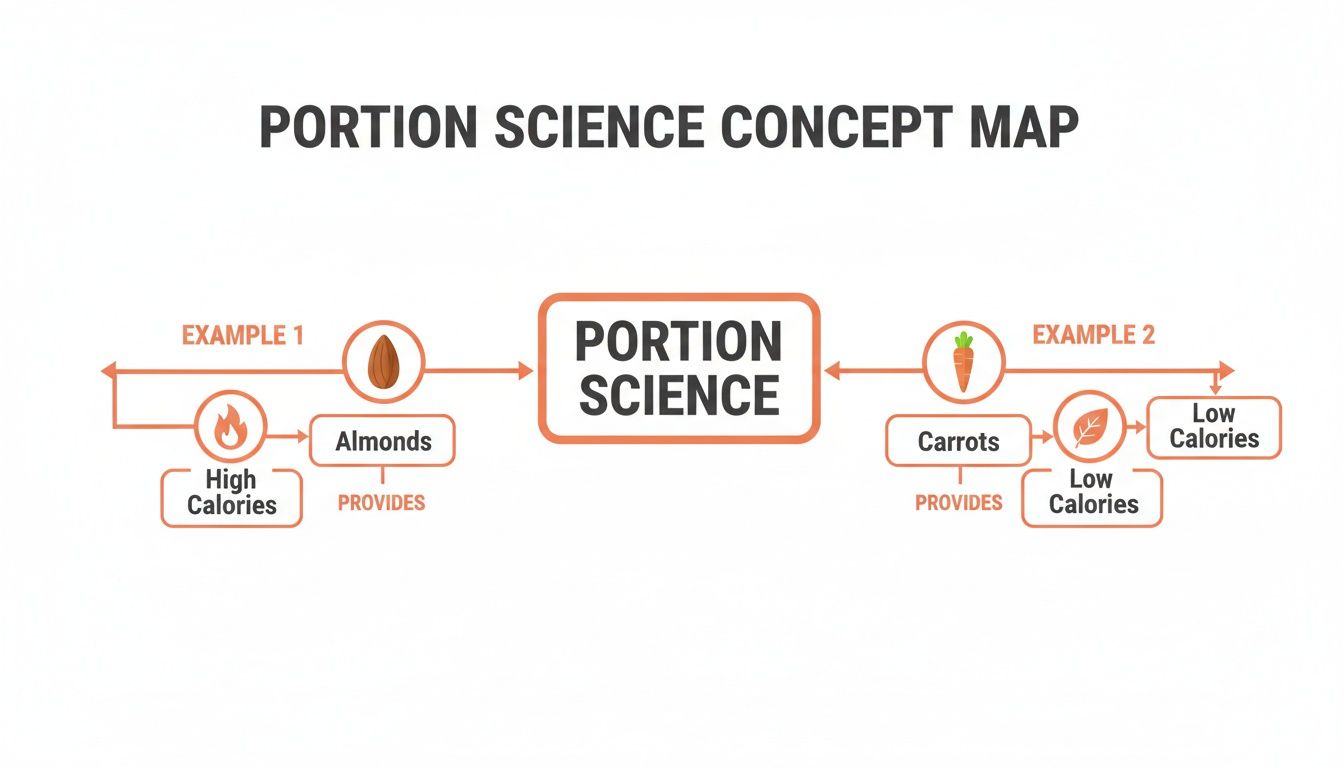
As you can see, a small handful of almonds has way more calories than a huge portion of carrots. This is exactly why getting a handle on portion sizes is a game-changer for weight loss.
The Healthy Plate Method Simplified
Another excellent visual tool is the Healthy Plate Method. Instead of counting calories, you simply divide your plate into sections. This framework helps you automatically build a balanced, satiating meal.
Picture your dinner plate broken into three parts:
- Fill Half Your Plate with Vegetables: This is your foundation. Load it with non-starchy vegetables like a large salad, roasted Brussels sprouts, green beans, or bell peppers. They provide high volume, fiber, and micronutrients for very few calories, which is key to feeling full.
- Fill One Quarter with Lean Protein: Dedicate one quarter of the plate to a palm-sized serving of lean protein. Think grilled chicken, baked fish, tofu, or lentils. As we've discussed, protein is crucial for satiety and muscle preservation during weight loss.
- Fill One Quarter with Complex Carbs: The final quarter is for your energy source—high-fiber, complex carbohydrates. This includes quinoa, brown rice, sweet potato, or whole-wheat pasta. These provide sustained energy without a sharp blood sugar spike.
This method transforms healthy meal construction into a simple visual exercise. By prioritizing vegetables and protein, you automatically control calories while enhancing fullness and nutritional intake. That is the essence of intelligent portion control.
Taking Your Skills to Restaurants
Eating out can feel like a minefield when you’re trying to lose weight, but it’s the perfect real-world test for your new visual skills. You don't have to stress about social events; just apply what you know.
Here are a few tips to stay on track:
- Apply the Plate Method Mentally: Look at what’s on your plate. If your meal arrives with a mountain of pasta, just eyeball what a proper quarter-plate serving looks like and focus on that.
- Use Your Hand as a Guide: When that huge steak or piece of salmon arrives, use your palm to estimate a proper 3-4 ounce portion. You can eat the rest later.
- Ask for a To-Go Box Immediately: This is a pro move. When your food arrives, immediately ask for a box and pack up half of it. It prevents mindless eating and sets you up with a perfectly portioned lunch for the next day.
By using these visual guides, you can walk into any restaurant and enjoy yourself without derailing your progress. For even more practical tips on this, check out our guide on how to measure food without a scale.
Building Your Plate With Sample Meal Templates
Alright, you've learned the theory behind using your hands and your plate to eyeball portions. Now, let’s make it real. Knowing the "rules" is one thing, but seeing how they work on an actual plate is what makes the habit stick. A good portion guide isn't just about rules; it’s about showing you what a satisfying day of eating actually looks like.
These templates are blueprints, not strict prescriptions. They show how to assemble breakfast, lunch, dinner, and snacks for common weight loss calorie targets. You'll see how to use the simple visual tools we've covered to build meals that match your goals.
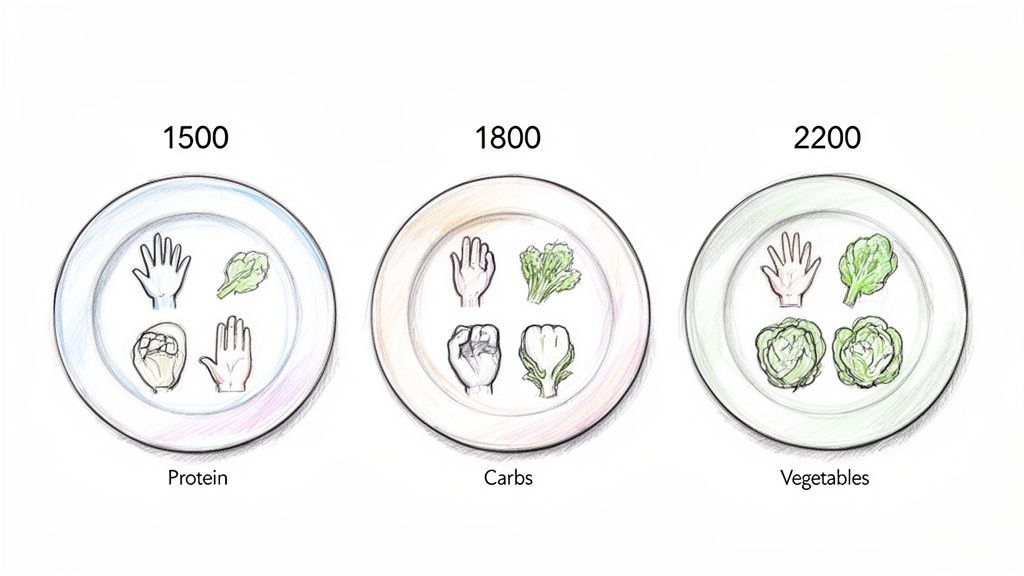
Sample 1500 Calorie Day
A 1500 calorie target is a common starting point for smaller individuals or anyone with a less active lifestyle who wants steady, consistent weight loss. The name of the game here is maximizing food volume with nutrient-dense choices to keep you feeling full.
- Breakfast: 2 scrambled eggs with a handful of spinach and one slice of whole-grain toast. That’s roughly one palm of protein from the eggs.
- Lunch: A large salad with mixed greens (two hands), grilled chicken breast (one palm), and a light vinaigrette (one thumb of oil).
- Dinner: Baked cod (one palm), a side of roasted asparagus (one fist), and a small serving of quinoa (one cupped hand).
- Snack: A medium apple with one thumb of peanut butter.
This plan gives you a steady stream of energy and protein, all while using your hand as a guide to keep portions on track without obsessive counting.
Sample 1800 Calorie Day
Hitting around 1800 calories is a popular goal for many people trying to create a moderate deficit without feeling overly restricted. This level gives you a bit more flexibility and slightly larger portions, which can make it a sustainable choice for the long haul.
The key here is balance. You're not just piling on more food; you're strategically adding more protein and complex carbs to fuel your day and keep hunger from derailing you.
Here’s what an 1800-calorie day might look like:
- Breakfast: Greek yogurt (one cupped hand) topped with berries and a small sprinkle of nuts (one thumb).
- Lunch: A hearty lentil soup (about two cupped hands) with a side of whole-grain crackers.
- Dinner: A palm-sized salmon fillet (one palm), a larger serving of quinoa (one generous cupped hand), and a double portion of roasted broccoli (two fists).
- Snacks: A protein shake and a piece of fruit.
Look at that dinner—it’s a perfect example of the Healthy Plate Method. Half the plate is veggies, a quarter is protein, and a quarter is carbs. You can easily build and tweak your own plates using our handy Plate Method Calculator.
Sample 2200 Calorie Day
This higher calorie target works well for more active people, larger individuals, or anyone aiming for a slower rate of loss or body recomposition (building muscle while losing fat). There’s plenty of room here for nutrient-packed foods, post-workout fuel, and truly satisfying meals.
- Breakfast: Oatmeal (one large cupped hand) made with milk, then topped with a banana and two tablespoons of almond butter (two thumbs).
- Lunch: A whole-wheat wrap stuffed with lean ground turkey (one palm), lots of lettuce and tomato (one to two hands), and half an avocado (about two thumbs of healthy fats).
- Dinner: A larger, 6-ounce steak (one and a half palms), a baked sweet potato (one cupped hand), and a side of green beans (one fist).
- Snacks: Cottage cheese with peaches and a handful of almonds.
These examples prove that portion control for weight loss is about smart assembly, not deprivation. Use them as a foundation and feel free to swap in your favorite proteins, carbs, and veggies while keeping those visual portion cues consistent.
Tracking Progress Without the Hassle
Visual guides like the hand and plate methods are brilliant for getting started and building a routine. But to really dial things in and make sure you're getting the results you want, you need some data.
Anyone who’s tried to lose weight in the past knows the old drill: meticulously weighing every ounce of chicken, endlessly scrolling through food databases, and logging every last bite in a diary. It's a tedious, soul-crushing process, and honestly, it’s the number one reason most people throw in the towel.
The Modern Way to Track Your Intake
What if tracking your food wasn't such a chore? What if you could just snap a picture of your plate and instantly know where you stand for the day? That’s exactly what modern AI-powered apps have made possible, and it’s a total game-changer for consistency.
Tools like BiteKit are leading this charge. They handle all the heavy lifting, turning a dreaded task into a simple, two-second habit. You can log your meals just by:
- Taking a photo: The AI instantly identifies the food on your plate and estimates the portion sizes for you.
- Using your voice: Simply tell the app, "I had a chicken breast with a cup of rice," and it's logged.
- Typing naturally: Forget searching for "chicken, grilled, skinless." Just type what you ate, and the app figures it out.
This approach strips away all the friction, making it ridiculously easy to stay on track.
See Your Portions in Real Time
Here’s a look at just how simple it is inside the BiteKit app.
The moment you log a meal, the app gives you immediate feedback on your daily calories and macros. This is incredibly motivating. You get to see exactly how your food choices fit into your daily "budget."
This is where everything starts to click. You begin to connect the visual portion guides we talked about with their actual nutritional numbers. You stop seeing just a "palm-sized" piece of salmon and start seeing ~30 grams of protein. This constant feedback sharpens your own estimation skills over time, empowering you to make smarter choices without even thinking about it.
Consistency is the single most important factor in successful weight loss. By removing the friction from tracking, you make it far more likely that you'll stick with it long enough to build lasting habits and see real, sustainable results.
Using Data to Make Smart Adjustments
The point of tracking isn't to chase perfection—it's to gather information. Armed with a clear picture of what you're eating, you can stop guessing and start making truly informed decisions.
If you hit a plateau or notice you’re consistently going over your calorie goal, you can just look back at your log. Maybe that "thumb" of peanut butter is a little more generous than you thought, or your "cupped hand" of pasta is overflowing. Effortless tracking gives you this kind of insight without the headache. This is how a simple portion size guide for weight loss transforms into a personal, flexible plan that helps you navigate bumps in the road and stay on course to your goals.
Overcoming Common Portion Control Hurdles
Let's be real—even with the perfect plan, life gets in the way. You're going to feel hungry sometimes. You'll get invited out to dinner. And at some point, the scale will probably get stubborn. These aren't failures; they're just part of the process.
Think of this section as your field guide for those inevitable bumps in the road. It’s all about having a game plan so you can handle these moments with confidence and keep moving forward.
What to Do When You Feel Hungry
One of the biggest fears people have about portioning their food is the idea of being constantly hungry. If your stomach is rumbling all the time, that’s a clear signal your meals might need a tune-up—it’s not a sign you need to throw in the towel.
But the answer isn’t just to eat more. It’s to eat smarter.
- Pump Up the Protein: Protein is your secret weapon for staying full. It’s hands-down the most satisfying nutrient, which means a meal built around a solid protein source will keep you feeling full much longer than a meal of just carbs or fat. If you're hungry an hour after lunch, ask yourself: did I really get a full, palm-sized portion of protein?
- Fill the Gaps with Fiber: Non-starchy vegetables are your best friend here. They're packed with fiber and water but have very few calories, so you can eat a lot of them. If a meal feels a little skimpy, just double your portion of broccoli, add a huge handful of spinach, or throw a big side salad on the plate.
Hunger isn't always a cry for more calories. Often, it's your body signaling a need for specific nutrients. By giving it quality protein and fiber, you're addressing the root cause of the hunger, which helps silence those cues and keeps you satisfied until your next meal.
How to Handle Social Events and Eating Out
Restaurants and social gatherings can feel like they're designed to wreck your progress. But they don't have to. With a little strategy, you can absolutely enjoy yourself without going overboard. This is where your visual portioning skills really shine.
Your Game Plan for Social Dining:
- Do a 5-Minute Recon: Most restaurants have their menus online. Take a quick look before you go to scout out a few good, protein-forward options. This way, you’re making a calm, smart choice ahead of time, not a rushed one when you're already starving.
- Use the Plate Method on Arrival: When your food shows up, mentally divide that plate. Is about half of it vegetables? Is there a solid, palm-sized piece of protein? If the plate is mostly carbs, make a point to eat your protein and veggies first.
- Ask for a To-Go Box—Immediately: Restaurant portions can be enormous. As soon as your meal arrives, ask for a box and pack away half of it. Out of sight, out of mind. Plus, you’ve just made yourself a perfectly-portioned lunch for tomorrow.
Breaking Through a Weight Loss Plateau
Sooner or later, it happens to almost everyone: the dreaded plateau. You’re sticking to the plan, but the number on the scale just won't budge. It’s incredibly frustrating, but it’s also a completely normal and fixable part of the process.
A plateau typically means your body has adapted. As you lose weight, your metabolism naturally adjusts because a smaller body simply needs less energy (calories) to run. The portion sizes that helped you lose weight initially might now be just enough to maintain your new, lower weight.
To get things moving again, you just need to make a few small adjustments.
- Shrink Your Portions (Slightly): Go back to your hand guides. Could your "cupped hand" of rice be a little less full? Is your "thumb" of olive oil a little too generous? Shaving off a small amount from your carb and fat portions can be enough to restart progress.
- Add a Little More Movement: You don't have to start training for a marathon. Just adding a brisk 20-minute walk to your daily routine can increase your energy output enough to break through the stall.
Your Top Portion Size Questions Answered
Even the best-laid plans run into a few real-world questions. Let's tackle some of the most common ones that come up when you start dialing in your portion sizes. Think of this as your go-to FAQ for staying on track with confidence.
How Accurate Are Hand Estimates Compared to a Food Scale?
I get this question all the time. A food scale will always win for pure precision—it gives you the exact numbers. When you're just starting out, using one is a fantastic way to see what 100 grams of chicken or 50 grams of oats actually looks like.
But the whole point of this portion size guide for weight loss is to build a skill you can use for life, not to chain you to a kitchen gadget.
The hand-measuring method isn't about being gram-perfect; it’s about consistency. It trains your eye to recognize a proper portion whether you're at home, at a restaurant, or at a friend's BBQ. For long-term success and navigating the real world, your hand is the most practical tool you own.
Should I Weigh Food Raw or Cooked?
Honestly, the most important thing here is just to pick a method and stick with it. The nutritional data changes when you cook food—meat shrinks as it loses water, while grains like rice and pasta expand as they absorb it.
The key is consistency. If you start by weighing 4 ounces of raw chicken breast, always weigh your chicken raw. If you prefer to measure out one cup of cooked rice, then always measure your rice cooked. As long as you're consistent, you can accurately track your intake and make adjustments when needed.
What if I’m Still Hungry After My Meal?
Feeling a bit hungry after a properly portioned meal is a very common hurdle, especially in the beginning. But before you dish out a second helping, let's run through a quick checklist.
- Wait 20 Minutes: It can take a little while for your stomach to signal to your brain that it's full. Give your body a chance to catch up before deciding you're truly still hungry.
- Drink a Glass of Water: Our brains are notorious for mixing up thirst and hunger signals. A big glass of water can often do the trick and make you feel more satisfied.
- Add More Veggies: This is my favorite trick. Non-starchy vegetables are your secret weapon—they're packed with volume and fiber but have very few calories. Adding an extra handful of spinach, a side of steamed broccoli, or some sliced cucumbers can fill you up without derailing your calorie goals.