How Many Calories in a Chicken Wrap: A Scientific Guide
how many calories in chicken wrap? Compare grilled vs fried, learn what drives the count, and tips to build a lighter, delicious wrap.

When examining the caloric content of a chicken wrap, it's evident that the nutritional profile varies dramatically. A single wrap can range from a lean 300 calories to over 800 calories. This significant discrepancy is not arbitrary; it's a direct result of its constituent ingredients and preparation methods.
The Calorie Spectrum of a Chicken Wrap
The term "chicken wrap" is a broad descriptor for a highly customizable food item, which is a primary reason for the wide range of calorie counts. The flexibility that makes wraps popular also creates a substantial nutritional gap between a light, protein-focused meal and a high-calorie, high-fat option comparable to a fast-food burger and fries.
To understand this variability, let's analyze the composition of two distinct wrap types, focusing on how different ingredient choices impact the overall energy density.
A Tale of Two Wraps
Consider a wrap prepared with a focus on nutrient density. This version would typically include grilled chicken breast, fresh vegetables like lettuce and tomato, and a light, yogurt-based sauce, all enclosed in a whole-wheat tortilla. Such a composition provides a high-protein, satiating meal at the lower end of the caloric spectrum, aligning with weight management and fitness goals.
Conversely, a wrap designed for maximum palatability often found in fast-food settings, presents a starkly different nutritional profile. It frequently contains crispy, deep-fried chicken, high-fat additions like cheese and bacon, and energy-dense sauces such as ranch dressing, all wrapped in a large, refined flour tortilla. This combination significantly increases the calorie, saturated fat, and sodium content.
The quantitative differences are substantial.
Calorie Snapshot: Homemade vs. Fast Food
This table illustrates the macronutrient differences between the two wrap archetypes. The fast-food version's higher calorie count is primarily driven by its elevated fat and carbohydrate content, a direct result of frying and the use of refined, larger tortillas and creamy sauces.
| Wrap Type | Estimated Calories | Fat (g) | Carbs (g) | Protein (g) |
|---|---|---|---|---|
| Homemade Grilled Chicken Wrap | ~350 | 12 | 35 | 28 |
| Fast-Food Fried Chicken Wrap | ~650+ | 35 | 55 | 30 |
The key takeaway is the profound impact of ingredient selection and preparation on the final caloric value. Understanding these factors empowers individuals to make choices aligned with their dietary objectives.
A homemade chicken wrap using lean protein and fresh vegetables can contain under 350 calories. However, commercial versions often have a much higher energy load. According to the USDA FoodData Central, some restaurant-style crispy chicken wraps can reach 610 calories with 37 grams of fat. You can explore more data on wrap calories to see how preparation methods affect nutritional values.
This comparison highlights that the consumer has significant control over a wrap's final nutritional profile. By understanding the caloric contribution of each component—the cooking method, tortilla size, and sauces—one can construct a wrap that meets specific health and fitness goals. This guide will provide a detailed breakdown of each ingredient to enable informed decision-making.
Breaking Down Your Chicken Wrap, Ingredient by Ingredient
A chicken wrap should be viewed not as a monolithic food item, but as an assembly of individual components. Each choice—the chicken, the tortilla, the fillings, and the sauce—contributes to the final energy and macronutrient content.
The construction of the wrap is the determining factor in whether it's a lean, high-protein meal or a calorie-dense dish.
This infographic clearly illustrates the potential variance.
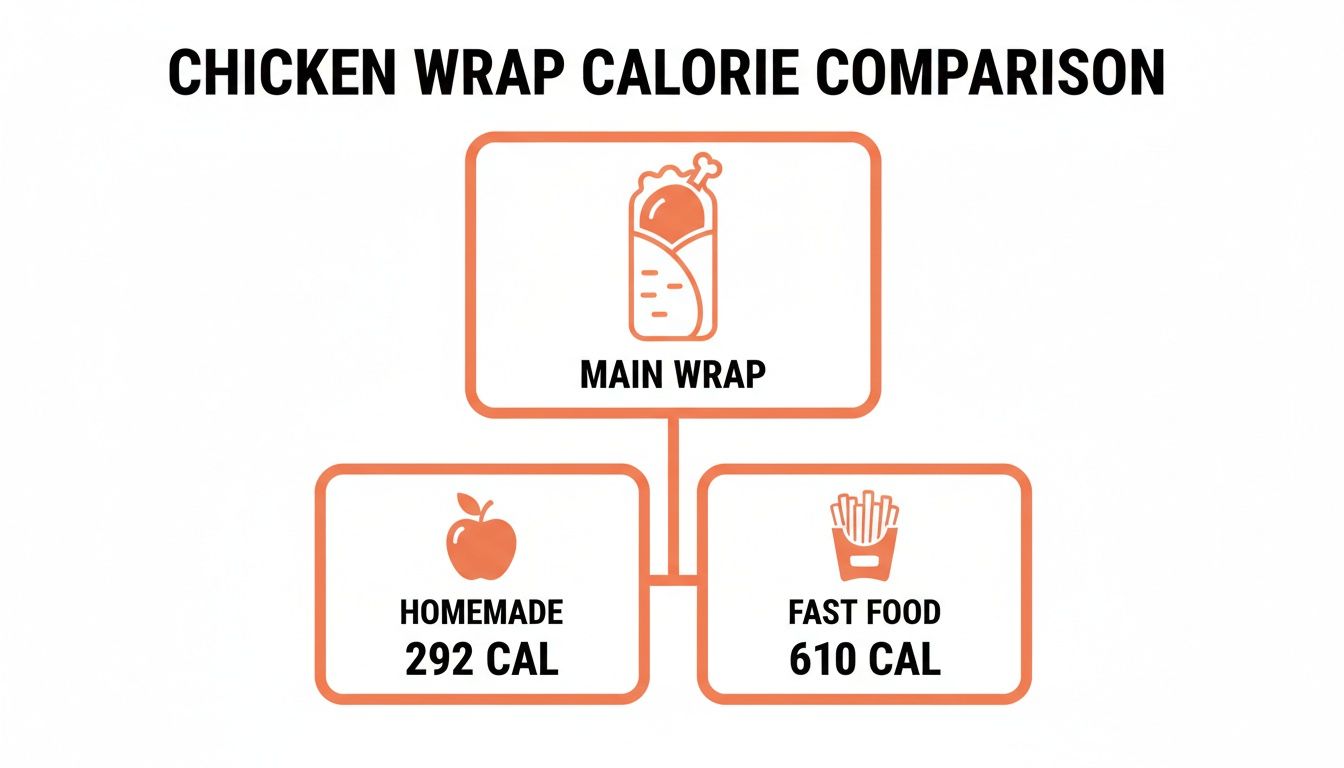
As shown, a commercially prepared wrap can easily contain more than double the calories of a homemade version. Let's examine the scientific reasons for this difference.
The Chicken: The Protein Foundation
The primary ingredient, chicken, presents the first major variable affecting the wrap's calorie count. The preparation method is critical.
- Grilled or Roasted Chicken: This is the leanest option. A 4-ounce (113g) serving of skinless grilled chicken breast contains approximately 188 calories. It is a high-quality protein source with minimal fat, providing a solid foundation for a nutrient-dense meal.
- Crispy or Fried Chicken: This method dramatically increases caloric content. The same 4-ounce serving, when breaded and fried, can exceed 350 calories. The breading adds carbohydrates, and the frying process introduces significant amounts of absorbed oil, nearly doubling the energy value.
Opting for grilled over fried chicken can reduce the calorie count by 150 to 200 calories. This single modification can be pivotal in aligning a meal with specific dietary targets.
Pre-cooked rotisserie chicken (skin removed) is a convenient and lean alternative. For a more detailed analysis, you can review the nutrition facts of cooked chicken breast.
The Tortilla: The Carbohydrate Wrapper
The tortilla serves as the wrap's structural base and contributes significantly to the baseline calorie count.
- A large, restaurant-style 12-inch flour tortilla can contain 300 calories or more, often from refined carbohydrates with little dietary fiber.
- A standard 8-inch whole-wheat tortilla is a more moderate choice, typically providing 120-150 calories and a beneficial amount of fiber, which aids in satiety.
- Specialty low-carb or high-fiber tortillas offer an even lower-calorie base, with some products containing as few as 50-80 calories.
The size and type of tortilla vary widely in commercial settings. For example, some large fast-food wraps using fried chicken can surpass 890 calories and 61g of fat, largely due to the oversized tortilla and high-fat fillings. In contrast, a typical homemade grilled chicken wrap averages closer to 290 calories. This knowledge empowers the consumer to build a more nutritionally sound wrap.
A Calorie Guide to Popular Chicken Wraps
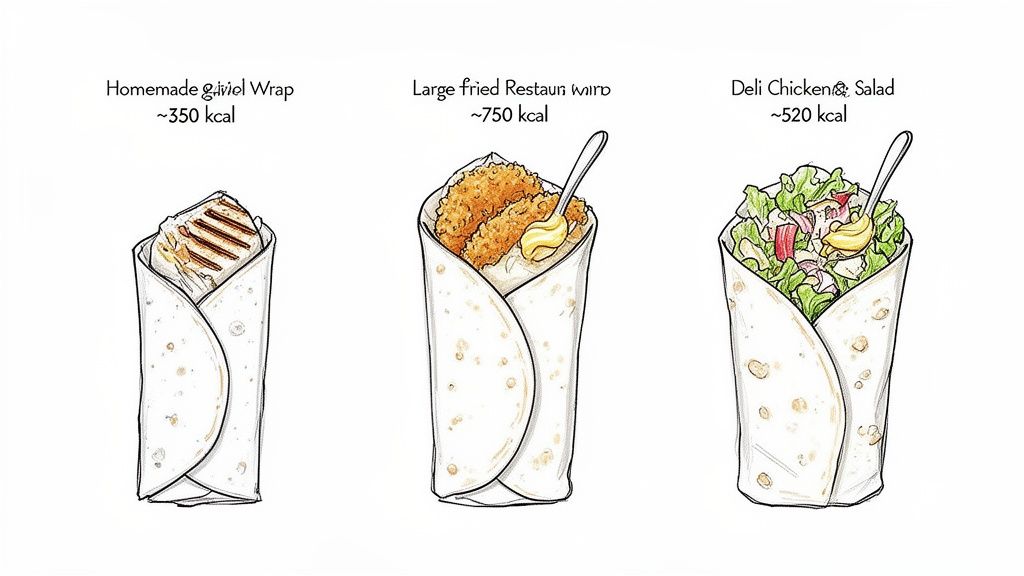
While the term "chicken wrap" is singular, its caloric reality is diverse, with significant variations based on preparation style. The difference between a home-prepared wrap and a fast-food version can amount to hundreds of calories.
This section serves as a practical guide to the most common wrap styles, clarifying their typical nutritional profiles.
To visualize these differences, consider this quick comparison.
Estimated Calories in Common Chicken Wraps
Here is an analysis of the average calorie counts for popular chicken wrap styles, identifying the primary drivers of their energy content.
| Wrap Style | Typical Calorie Range | Main Calorie Drivers |
|---|---|---|
| Homemade Grilled Chicken | 300–400 kcal | Lean chicken, tortilla size, light sauce |
| Deli-Style Chicken Salad | 450–600 kcal | Mayonnaise-based dressing, tortilla size |
| Restaurant Fried Chicken | 600–800+ kcal | Fried chicken, large tortilla, creamy sauces, cheese |
The data clearly indicates that the preparation method and key ingredients are the most influential factors.
The Lean Homemade Grilled Chicken Wrap
This represents the baseline for a healthy, balanced wrap. Home preparation allows for complete control over every ingredient, which is a critical advantage for managing caloric intake.
A typical homemade grilled chicken wrap falls within the 300 to 400 calorie range. By using lean grilled chicken, an abundance of fresh vegetables, and a low-calorie dressing like hummus or a yogurt-based sauce, you create a satiating meal rich in protein and fiber without excessive calories.
This style is effective because the combination of lean protein and dietary fiber from vegetables promotes satiety, the feeling of fullness. This physiological response makes it an excellent choice for individuals focused on weight management or muscle maintenance.
The Restaurant-Style Fried Chicken Wrap
In commercial food service, flavor and indulgence are often prioritized, which can lead to higher calorie counts.
A fried chicken wrap from a restaurant or fast-food chain commonly ranges from 600 to 800 calories, with some versions exceeding this. The primary contributors are the deep-fried, breaded chicken and the use of high-fat, creamy sauces like ranch, Caesar, or aioli.
Furthermore, portion sizes are typically larger. Restaurants often utilize oversized flour tortillas that can contribute 300+ calories alone. This combination can transform a lunch into a meal that consumes a significant portion of a person's daily recommended calorie intake.
The Deli-Style Chicken Salad Wrap
The classic deli chicken salad wrap occupies a middle ground. While it may seem like a lighter choice than a fried version, it contains hidden sources of calories.
A deli-style wrap generally contains between 450 and 600 calories. The main driver is the chicken salad itself, which is typically bound with full-fat mayonnaise. Just two tablespoons of mayonnaise can add nearly 200 calories and 20 grams of fat.
Therefore, even with lean poached or baked chicken, the creamy dressing significantly elevates the total energy content. A healthier alternative is to prepare chicken salad at home using Greek yogurt instead of mayonnaise, which provides a similar creamy texture while increasing protein content and reducing fat and calories.
Build a Better Wrap with Smart Calorie Swaps
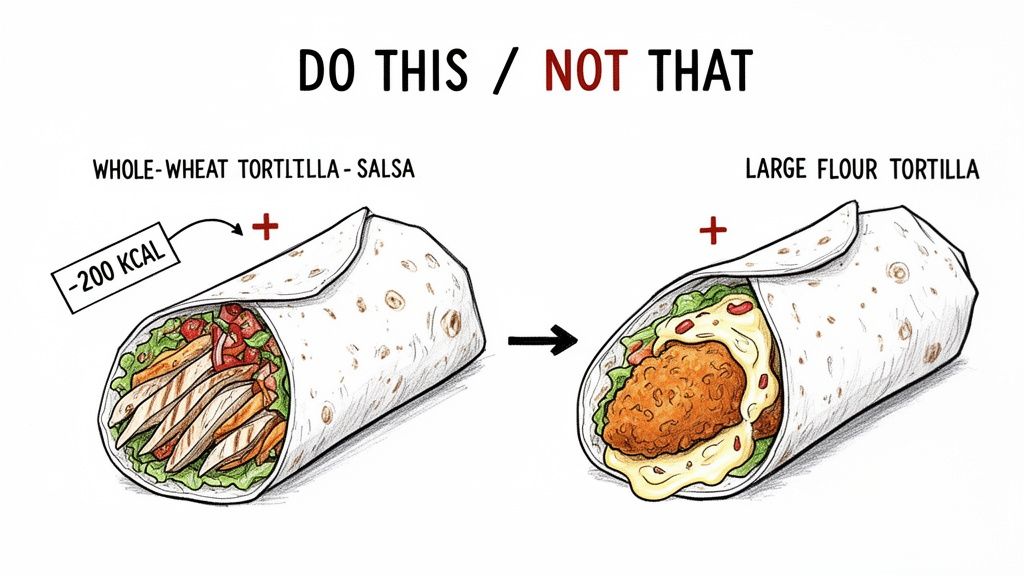
Understanding the caloric variability of a chicken wrap provides the power to modify it. Through strategic ingredient substitutions, you can significantly reduce the calorie count without sacrificing flavor or satisfaction.
This approach focuses on making targeted, evidence-based changes to the highest-calorie components: the chicken, the tortilla, and the sauce.
The Most Impactful Swaps You Can Make
These three substitutions offer the most significant caloric savings for constructing a leaner wrap.
-
SWAP Crispy Chicken for Grilled Chicken: This is the single most effective modification. The breading and oil absorption during deep-frying can add over 200 extra calories compared to a grilled chicken breast. This swap alone can dramatically lower the meal's energy density.
-
SWAP a Large Flour Tortilla for a Smaller, Whole-Wheat One: A 12-inch flour tortilla can contain over 300 calories from refined carbohydrates. Switching to a medium (8-inch) whole-wheat or low-carb wrap can save 150+ calories while increasing dietary fiber content, which aids in satiety.
-
SWAP Creamy Dressings for Lighter, Flavorful Options: Sauces are often a hidden source of fat and calories. Two tablespoons of a creamy dressing can add 150 calories. Instead, opt for salsa, hot sauce, mustard, or a Greek yogurt-based dressing. This can save over 100 calories while still providing ample flavor.
Implementing these three swaps can result in a wrap that is 400-500 calories lighter than a typical restaurant version. For more ideas on nutritious fillings, exploring high protein low calorie snacks can provide inspiration.
Load Up on Volume, Not Calories
To create a wrap that is both large and satiating, prioritize high-volume, low-calorie vegetables. They add bulk, texture, and micronutrients with minimal caloric impact.
Instead of relying on cheese and creamy sauces for substance, pack your wrap with spinach, sliced bell peppers, cucumbers, and tomatoes. The fiber and water content of these vegetables increases feelings of fullness and satisfaction.
This doesn't mean completely eliminating higher-calorie favorites. If you enjoy cheese, use a smaller portion of a strongly flavored variety like feta or sharp cheddar. This provides the desired taste with fewer calories compared to a larger amount of a milder cheese.
For more substitution ideas, a food swap suggester tool can offer smart, healthier alternatives for any wrap ingredient. Making these deliberate choices is key to creating a chicken wrap that supports your health goals.
How to Effortlessly Track Your Wrap Calories
While understanding a wrap's calorie potential is crucial, accurately logging it presents a practical challenge. Manually entering each ingredient—the chicken, tortilla, sauce, cheese—is a tedious process that often leads to inaccurate estimations or abandonment of tracking altogether.
Modern technology, particularly AI-powered nutrition applications, has streamlined this process significantly.
By taking a photo of your meal, these apps can analyze the components and provide a reasonably accurate estimate of calories and macronutrients. The AI can differentiate between a homemade grilled chicken wrap and a commercially prepared fried version, offering a clear and objective overview of your meal's nutritional content. This technology saves time and enhances accuracy.
Logging Made Simple with Visuals
Visual tracking eliminates the guesswork inherent in manual logging. Instead of searching a database for "fried chicken wrap with ranch," you provide a direct visual of your meal.
Here is an example of how an app like BiteKit can analyze a meal from a single photograph.
The application identifies individual ingredients—tortilla, chicken, lettuce, sauce—and aggregates them into a comprehensive nutritional summary. This transforms the logging of complex, multi-ingredient meals into a simple, efficient task.
Meal Prep for Seamless Tracking
Integrating simple meal prep strategies can further simplify calorie tracking. By preparing wraps in advance, you maintain full control over ingredients and portion sizes.
This habit facilitates near-automatic logging. You can create a "custom meal" in your tracking app for your standard wrap recipe, allowing you to log it with a single tap. This combines the accuracy of home cooking with grab-and-go convenience. For assistance in calculating custom recipes, a sandwich calorie calculator can be an effective tool for wraps as well.
The principle "what gets measured gets managed" is fundamental to dietary adherence. However, if the measurement process is burdensome, consistency suffers. AI-powered tracking reduces this friction, making long-term adherence more attainable.
Using these modern tools transforms calorie tracking from a cumbersome chore into a quick, sustainable habit, enabling you to maintain focus on your health goals without getting bogged down in minutiae.
Your Top Chicken Wrap Questions, Answered
When tracking nutrition, several common questions arise regarding chicken wraps. This section provides concise, evidence-based answers to help clarify these points.
Understanding these key concepts can make it easier to make choices that align with your health and fitness objectives.
Which Type of Chicken Is Lowest in Calories for a Wrap?
The choice of chicken is a primary determinant of a wrap's caloric content. For a high-protein, low-calorie option, skinless grilled chicken breast is the superior choice. A 100g (approximately 3.5 ounces) portion contains around 165 calories, offering a substantial protein base with minimal fat.
In contrast, the same quantity of breaded, fried chicken can exceed 300 calories. The additional calories come from carbohydrates in the breading and significant oil absorption during the frying process. Skinless rotisserie chicken is another excellent lean protein alternative.
How Much Do Sauces Really Add to a Wrap's Calories?
Sauces are a common source of "hidden" calories. The energy density of creamy, fat-based dressings can be substantial. Just two tablespoons of ranch, Caesar, or aioli can add 150-200 calories and a significant amount of fat to a meal.
Mayonnaise-based sauces are similarly calorie-dense.
For a flavorful, low-calorie alternative, consider these swaps: salsa (approximately 10-20 calories per two tablespoons), mustard (5-10 calories), hot sauce, or a light vinaigrette (20-40 calories). This single change can significantly reduce the wrap's total calorie count without sacrificing flavor.
Being mindful of sauce selection is one of the most effective strategies for controlling the caloric content of your wrap.
Is a Chicken Wrap Healthier Than a Chicken Sandwich?
This is a common question, and the answer is nuanced: it depends entirely on the composition. A wrap is not inherently healthier than a sandwich.
A large, 12-inch refined flour tortilla can contain more calories and carbohydrates than two slices of whole-wheat bread. Consequently, a wrap filled with fried chicken, bacon, and ranch dressing is nutritionally inferior to a simple grilled chicken sandwich on whole-grain bread. The reverse can also be true. The healthfulness is determined by the "building blocks" of the meal, not its format.
What Is the Best Tortilla for a Low-Calorie Wrap?
The tortilla forms the foundation of the meal and is a major contributor to its calorie count. Large flour tortillas common in restaurants can contain 300 calories or more.
For a lower-calorie base, consider these options:
- Whole-Wheat Tortillas: A standard 8-inch whole-wheat tortilla typically has 120-150 calories and provides beneficial dietary fiber.
- Low-Carb Tortillas: These are engineered to be lower in calories, often by increasing fiber content. Options are available for as low as 50-80 calories per wrap.
- Lettuce Wraps: For the lowest possible calorie and carbohydrate option, use large leaves of crisp lettuce (e.g., romaine, iceberg, or butter lettuce) as the wrapper. This adds texture and freshness with virtually zero calories.