Your Guide to the Cyclical Ketogenic Diet
Learn how the cyclical ketogenic diet can help you break plateaus and build muscle. This guide covers protocols, benefits, and common mistakes to avoid.

The cyclical ketogenic diet (CKD) represents an advanced application of standard ketogenic principles. It involves more than just maintaining ketosis; it's about strategically cycling out of it to combine the fat-burning state of ketosis with the performance-enhancing benefits of carbohydrates.
This approach is particularly popular among experienced keto dieters, bodybuilders, and athletes seeking to overcome performance plateaus. By alternating strict ketogenic days with planned high-carb refeeds, CKD aims to replenish muscle glycogen, support anabolic hormones, and provide a sophisticated method for body composition management.
What Is the Cyclical Ketogenic Diet?
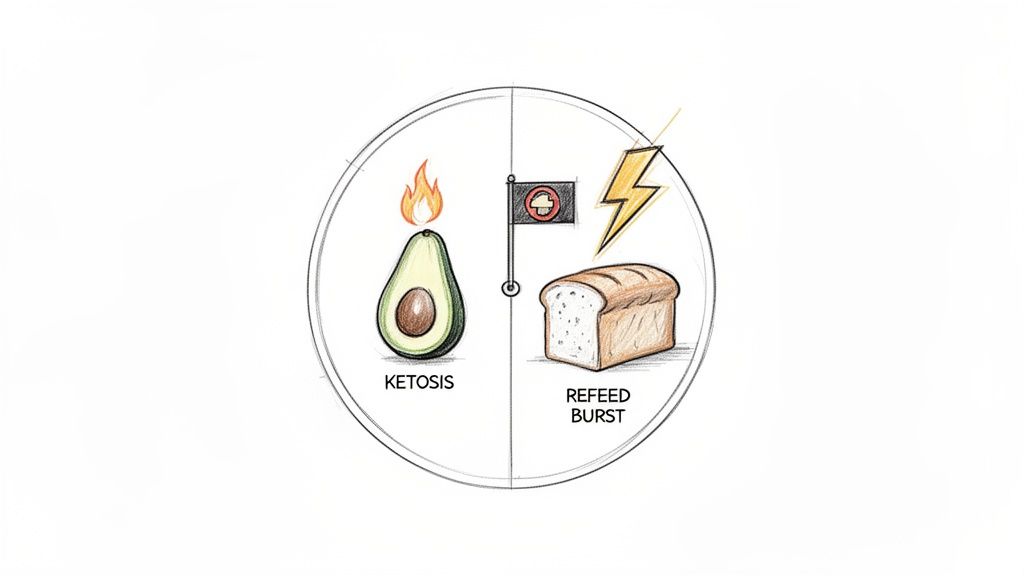
Imagine a standard keto diet as a steady-state system, consistently burning fat for fuel. The cyclical ketogenic diet (CKD), in contrast, functions like a dual-fuel engine. It operates on efficient, clean-burning fat for the majority of the time but strategically injects a burst of high-octane fuel—carbohydrates—to maximize power and performance when needed.
This is not an unstructured "cheat day." It’s a calculated protocol. A typical CKD schedule involves following a strict ketogenic diet for 5-6 days a week, then intentionally shifting to a high-carbohydrate, low-fat diet for 1-2 days.
How CKD Differs From Other Keto Diets
The defining feature of CKD lies in its planned carbohydrate refeeds. A standard ketogenic diet (SKD) aims to maintain a constant state of ketosis, whereas CKD intentionally interrupts it on a regular schedule to achieve specific physiological goals.
It also differs significantly from a targeted ketogenic diet (TKD). With TKD, an individual might consume a small amount of fast-acting carbohydrates (typically 20-50g) immediately before a workout to enhance performance. CKD is more comprehensive, dedicating entire days to carbohydrate replenishment.
At its core, CKD is about leveraging the anabolic, performance-driving benefits of carbohydrates while still spending the majority of time in a fat-burning ketogenic state.
This is precisely why it is favored by bodybuilders and strength athletes. Prolonged, strict ketosis can sometimes lead to muscles appearing "flat" due to glycogen depletion and may reduce power during explosive, anaerobic exercise. The carb-up days are designed to solve this by refilling muscle glycogen, which contributes to a fuller muscle appearance and fuels high-intensity training.
Ketogenic Diet Variations at a Glance
To understand where the cyclical approach fits within the ketogenic landscape, it is useful to compare it with other common variations. Each protocol has a distinct structure and is tailored for a different primary objective.
This table breaks down the three main ketogenic diets to quickly illustrate their differences.
| Diet Type | Carbohydrate Strategy | Primary Goal |
|---|---|---|
| Standard Keto (SKD) | Consistently low carbs (5-10% of calories) to maintain ketosis. | General weight loss, metabolic health, and sustained energy. |
| Targeted Keto (TKD) | Low carbs daily, with a small carb intake (20-50g) around workouts. | Improved performance for athletes during high-intensity training sessions. |
| Cyclical Keto (CKD) | Alternating periods of low-carb days (5-6) with high-carb refeed days (1-2). | Maximizing muscle growth and performance while cutting fat. |
As shown, CKD is the most complex of the protocols. It requires meticulous planning and an understanding of one's individual physiological response to both low-carb and high-carb phases. When executed correctly, it is a powerful tool for fine-tuning body composition, but success is contingent on precise macronutrient and timing management.
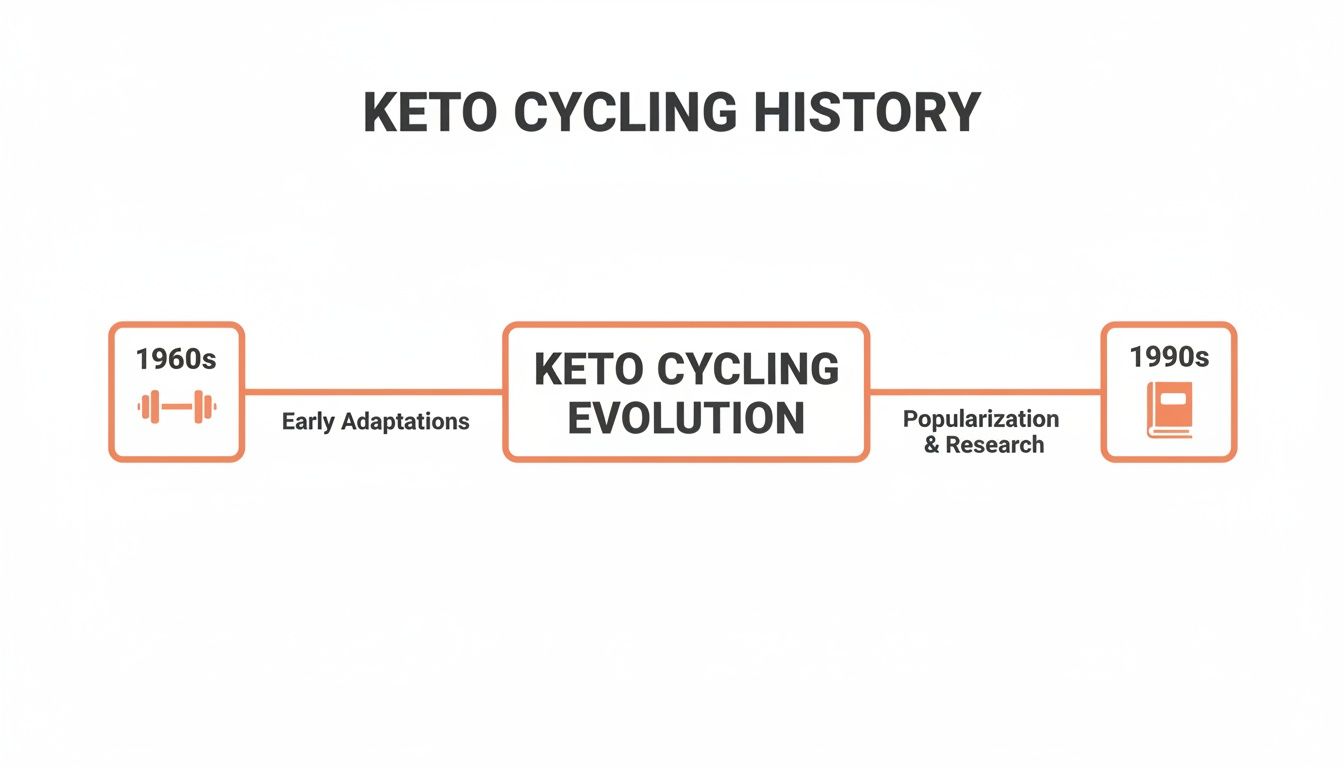
You might think of keto cycling as a recent trend, but its real story begins decades ago, long before keto was on everyone's radar. The concept was actually born in the gritty, golden-era gyms of the 1960s, pioneered by bodybuilders trying to crack the code of ultimate physique conditioning.
These athletes quickly figured out that while a strict, low-carb diet was a powerhouse for melting away fat, it came with a frustrating side effect: it left their muscles looking flat and depleted on competition day. They needed a way to get shredded to the bone without sacrificing the full, pumped-up look that wins shows.
From Gym Secret to Contest Prep Staple
This wasn't a scientific discovery; it was pure trial and error on the gym floor. Picture legends like Vince Gironda, who was way ahead of his time, tinkering with his clients' diets. He realized that a few days of ultra-low carbs followed by a calculated high-carb meal could completely transform a physique. This strategic carb-up was the key to refilling muscle glycogen stores right before stepping on stage.
This early version of keto cycling became an underground secret weapon. It allowed competitors to reap all the fat-burning benefits of going low-carb while using carbs as a tool to look bigger, fuller, and more impressive when it counted. For a deeper dive into how keto went from a medical diet to a bodybuilding essential, check out this great piece on Barbend.com. The visual impact was undeniable—without glycogen, muscles can look significantly smaller.
Giving the Method a Name: The Anabolic Diet
What started as gym wisdom eventually caught the attention of sports scientists. By the 1970s and through the 90s, figures like Dan Duchaine and Dr. Mauro Di Pasquale began to put a formal structure and a scientific lens on what bodybuilders were already doing instinctively.
Dr. Di Pasquale, in particular, packaged these ideas into a clear, repeatable system he famously called the "Anabolic Diet." This wasn't just a loose idea; it was a detailed protocol.
The Anabolic Diet laid out a precise cycle: five to six days of a low-carbohydrate, high-fat, high-protein diet, followed by one to two days of a high-carbohydrate, moderate-protein, low-fat "refeed."
The goal was to manipulate the body's hormones for maximum results. The low-carb phase was designed to boost fat burning and growth hormone, while the high-carb refeed would strategically spike insulin—a powerful anabolic (muscle-building) hormone—to shuttle nutrients directly into the muscles and trigger growth.
Keto Cycling in the Modern Age
Today, the cyclical ketogenic diet has broken out of the niche bodybuilding world. As the standard keto diet became a global phenomenon, people started looking for more flexible approaches, and CKD got a second life. Now, athletes and everyday fitness enthusiasts use it for more than just looks; they're chasing better metabolic flexibility, hormonal health, and the power to fuel high-intensity workouts.
The core principles haven't changed, but following the protocol has gotten a whole lot easier. In the past, you'd be stuck with a notepad and calculator, painstakingly tracking your macros for both keto and refeed days. Now, you can use an app like BiteKit to do the heavy lifting. Just snap a photo of your meal or use a voice command, and the app instantly tells you where your macros stand, taking all the guesswork out of your cycle.
How the Cyclical Ketogenic Diet Actually Works
At its core, the cyclical ketogenic diet (CKD) is designed to enhance metabolic flexibility, turning your body into an efficient dual-fuel system. The process initiates similarly to a standard keto diet: drastic carbohydrate reduction forces the body to shift its primary fuel source from glucose to fat.
This metabolic switch induces a state called ketosis. During ketosis, the liver breaks down fatty acids to produce energy molecules called ketones, which the brain and body can use for clean, steady energy. This state serves as the diet's fat-burning "base mode."
However, while ketones are excellent for sustained, low-intensity energy, they are not the optimal fuel for high-intensity, anaerobic exercise like heavy weightlifting or sprinting. For such activities, muscles preferentially use glycogen, the stored form of carbohydrates in muscle tissue. A prolonged standard ketogenic diet will deplete these glycogen stores.
The Magic of the Carb Refeed
This is where the "cyclical" component becomes critical. The planned, high-carb refeed days are designed to strategically and rapidly replenish depleted muscle glycogen stores. It’s analogous to a high-performance vehicle making a pit stop for a full tank of racing fuel.
After several days of carbohydrate restriction, the body becomes primed to handle a carbohydrate surge. This phenomenon, often termed "super-compensation," results from increased insulin sensitivity in muscle cells.
The hormone insulin plays a key role. Following a low-carb period, muscle cells exhibit heightened sensitivity to insulin. The insulin spike from a carb refeed acts like a key, unlocking muscle cells to absorb glucose at an accelerated rate. This prioritizes the shuttling of glucose into muscles for glycogen storage rather than into adipose tissue.
Regulating Key Hormones for Better Results
The carb refeed serves a purpose beyond workout fuel; it helps regulate key metabolic hormones that can be negatively affected by long-term dieting or strict low-carb protocols.
Two of the most relevant hormones are:
- Leptin: As the body's primary satiety hormone produced by fat cells, leptin signals energy sufficiency to the brain, regulating hunger and metabolic rate. Prolonged caloric restriction can cause leptin levels to fall, increasing hunger and slowing metabolism. Research has shown that a high-carbohydrate refeed can cause a significant, albeit temporary, boost in leptin levels, signaling that the body is not in a state of starvation.
- Thyroid Hormones: The thyroid gland produces hormones like T3, which regulate metabolic rate. Extended calorie and carbohydrate restriction can lead to a downregulation of active thyroid hormone (a condition sometimes called euthyroid sick syndrome) as an energy conservation mechanism. Strategically reintroducing carbohydrates can help support healthy thyroid function and may prevent the metabolic slowdown observed in some continuous diets.
This concept of carbohydrate cycling is not new. As this timeline shows, the principles behind it have evolved over decades, from observational practices in bodybuilding to a more structured dietary strategy.
This is not a fleeting fad; it's a method refined over years. By combining the deep, fat-burning state of ketosis with the muscle-preserving and hormone-balancing power of carb refeeds, CKD creates a powerful environment for body recomposition. It allows you to build or maintain lean muscle while aggressively losing fat—a holy grail that's tough to achieve with most other diets.
How to Structure Your CKD Protocol
Now, let's detail the practical application of a cyclical ketogenic plan. Unlike standard keto's consistent low-carb approach, CKD operates on a distinct weekly rhythm, alternating between two different metabolic phases.
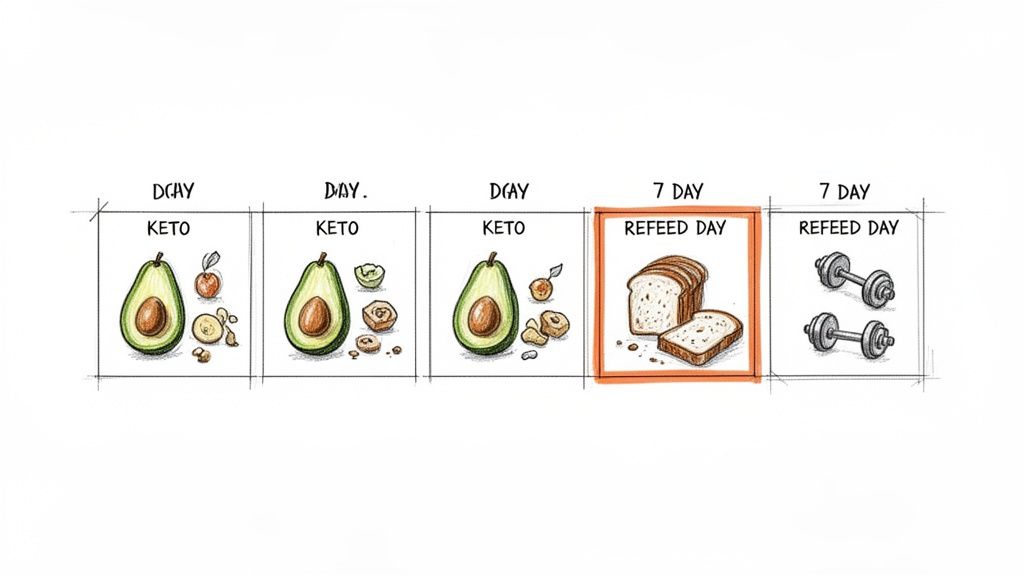
The most common starting point is the 5:2 schedule: five days of a strict ketogenic diet followed by two days of a high-carb, low-fat diet, typically scheduled over a weekend. This structure provides ample time for fat oxidation while allowing for a weekend carb-up to replenish muscle glycogen and support metabolic rate.
Setting Your Keto Day Macros
During your five ketogenic days, the primary objective is to induce and maintain ketosis. This requires macronutrient ratios familiar to anyone with keto experience: high fat, moderate protein, and minimal carbohydrates.
A typical target split for these days is:
- Fat: 70% of total daily calories
- Protein: 25% of total daily calories
- Carbohydrates: 5% of daily calories (approx. 20-30g net carbs)
For a 2,000-calorie diet, this translates to approximately 156g of fat, 125g of protein, and 25g of carbohydrates. Emphasis should be on high-quality sources like avocado, olive oil, fatty fish, and nuts. Knowing the best keto snacks to buy can be invaluable for meeting high-fat targets without resorting to poor choices.
Structuring Your Refeed Day Macros
After five days of carbohydrate restriction, the macronutrient profile is inverted for the two refeed days. The explicit goal is to restock muscle glycogen by strategically increasing carbohydrate intake.
For refeed days, the macronutrient targets shift dramatically:
- Carbohydrates: 60-70% of total daily calories
- Protein: 15-20% of total daily calories
- Fat: 5-10% of total daily calories
On the same 2,000-calorie plan, this would mean aiming for 300-350g of carbs and 75-100g of protein, while keeping fat intake very low at just 11-22g. This high-carb, low-fat combination is critical; it ensures that carbohydrates are preferentially used to refill glycogen stores rather than being converted and stored as new body fat.
It is crucial to distinguish a refeed day from a cheat day. The goal is replenishment with clean, complex carbohydrates like sweet potatoes, oatmeal, rice, and quinoa. It is a calculated metabolic reset, not an excuse for unrestricted consumption of processed foods.
The table below provides a clear snapshot of the drastic macronutrient shift between the two phases, based on a 2,000-calorie diet.
Sample CKD Macro Split (5:2 Protocol)
| Day Type | Carbohydrates | Protein | Fat |
|---|---|---|---|
| Keto Day | 5% (25g) | 25% (125g) | 70% (156g) |
| Refeed Day | 60-70% (300-350g) | 15-20% (75-100g) | 5-10% (11-22g) |
Visualizing the numbers highlights the "cycle" in cyclical keto. It's a precisely managed shift between two distinct fueling strategies, not an arbitrary process.
To illustrate, here is what a typical day of eating might look like in each phase. For a more detailed guide, see our article on building a keto meal plan.
Sample Keto Day Meal Plan (Approx. 2,000 Calories)
- Breakfast: Three scrambled eggs cooked in butter with half an avocado and a few strips of bacon.
- Lunch: A large salad with grilled chicken thighs, leafy greens, olive oil vinaigrette, and crumbled feta cheese.
- Dinner: Baked salmon with a side of asparagus roasted in butter.
- Snack: A handful of macadamia nuts or a spoonful of almond butter.
Sample Refeed Day Meal Plan (Approx. 2,000 Calories)
- Breakfast: A large bowl of oatmeal made with water, topped with berries and a scoop of whey protein isolate.
- Lunch: Grilled skinless chicken breast with a large sweet potato and a side of steamed broccoli (no butter or oil).
- Dinner: Lean ground turkey with a generous serving of white rice and black beans.
- Snack: A couple of plain rice cakes with a little bit of jam.
As you can see, this requires some attention to detail. Eyeballing your portions is a recipe for disaster—you might eat too much fat on refeed days or sneak in too many carbs on keto days. Using a tool like BiteKit takes the guesswork out of it. You can just snap a picture of your meal to log it, making it simple to stay on track and ensure you're hitting your exact macro targets for each phase of the cycle.
Is the Cyclical Ketogenic Diet Right for You?
The concept of a cyclical ketogenic diet (CKD)—combining the fat-burning benefits of keto with scheduled carbohydrate intake—is appealing. However, it is an advanced strategy that is not suitable for everyone. Its success is highly dependent on individual goals, experience with ketosis, and physiological response.
Before adopting CKD, it is critical to determine who benefits most from this approach and who should adhere to a standard ketogenic plan. For some, the psychological relief of planned refeeds can be a major benefit, making the diet more sustainable long-term compared to continuous restriction.
The Ideal Candidate for CKD
To be clear, CKD is not a beginner's protocol. It's a specialized tool for individuals who have already established a solid foundation with a standard keto diet and are looking to optimize their results.
You may be a suitable candidate for CKD if you fit into one of these categories:
-
Experienced Keto Dieters: If you have followed a strict keto diet for several months and have encountered a plateau in weight loss or athletic performance, CKD could provide the necessary stimulus for renewed progress. The carb refeeds can act as a strategic reset for metabolic hormones like leptin, potentially restarting fat loss.
-
Bodybuilders and Physique Athletes: This is the demographic where CKD arguably provides the most benefit. The diet facilitates aggressive fat loss during the low-carb phase while the refeed dramatically increases muscle glycogen, resulting in a full, "pumped" appearance essential for competition or achieving an exceptionally lean and muscular physique.
-
Strength and Power Athletes: Athletes in sports requiring short bursts of explosive power—such as CrossFit, heavy weightlifting, or sprinting—often find their top-end performance compromised on a standard keto diet. Studies on high-intensity exercise and ketogenic diets have shown mixed results, but glycogen repletion via CKD is a common strategy used by athletes to ensure fuel availability for peak anaerobic efforts.
Who Should Avoid the Cyclical Ketogenic Diet
Understanding who CKD is not for is as important as identifying ideal candidates. Implementing this protocol prematurely can lead to frustration, poor results, and a cycle of energy fluctuations and cravings.
A cyclical ketogenic diet is a tool for optimization, not a starting point. It requires your body to be highly efficient at switching between fuel sources, a skill that takes time to develop.
You should probably postpone trying CKD if any of these apply to you:
-
Keto Beginners: If you are new to the ketogenic diet, your sole focus should be on becoming fully fat-adapted. This metabolic adaptation process can take 4-6 weeks or longer. Introducing high-carb days before your body can efficiently utilize ketones will disrupt this process, making it harder to re-enter ketosis after each cycle.
-
Individuals with Certain Medical Conditions: The significant fluctuations in blood sugar and insulin levels make CKD contraindicated for individuals with type 1 diabetes, kidney disease, or a history of disordered eating, unless under the close supervision of a medical professional. The potential risks outweigh the benefits.
-
Those Prone to Binge Eating: An honest self-assessment is critical here. For some individuals, a planned "refeed" can easily trigger an uncontrolled binge. If you struggle with dietary adherence following a high-carb day, CKD may exacerbate unhealthy eating patterns. Your relationship with food is a paramount consideration.
Troubleshooting Common CKD Challenges
Even with meticulous planning, encountering challenges with a cyclical keto diet is normal. This advanced protocol demands significant metabolic flexibility. View these issues not as failures, but as feedback to help refine your individual approach.
Let's address some of the most common hurdles faced on CKD and outline evidence-based solutions to overcome them.
The Post-Refeed "Carb Hangover"
A common experience after a carbohydrate refeed is a feeling of lethargy, brain fog, or bloating, often termed a "carb hangover." After days of running on efficient ketones, a sudden influx of glucose can be a physiological shock, particularly if refeed days involved simple sugars and processed foods.
The solution lies in smarter carbohydrate choices and strategic exercise timing.
- Choose 'Clean' Carbs: A refeed day is not a license for a free-for-all. To mitigate negative effects, prioritize complex carbohydrates with a lower glycemic index, such as sweet potatoes, quinoa, brown rice, and oatmeal. These provide a more sustained release of glucose, avoiding a dramatic blood sugar spike and subsequent crash.
- Schedule a Post-Refeed Workout: One of the most effective ways to counteract sluggishness is to engage in a workout the morning after your refeed. A high-intensity training session will help your muscles begin to utilize the newly stored glycogen, accelerating the return to a fat-burning state.
By scheduling a demanding resistance training or HIIT workout on day one of your new keto cycle, you actively deplete glycogen stores. This not only alleviates the "hangover" but also signals the body to restart ketone production more rapidly.
Struggling to Flip the Switch Back to Ketosis
The efficacy of CKD depends on a rapid transition back into ketosis post-refeed. If it takes three or four days to detect ketones, you are losing valuable time in the prime fat-burning state, which can negate the benefits of the cycle.
If this transition is prolonged, consider these strategies to expedite the process:
- Layer in Intermittent Fasting: A 16:8 intermittent fasting protocol can be highly effective. Following your final refeed meal, simply fast for 16 hours. This extended period without caloric intake allows your body to burn through remaining glucose and restart ketogenesis more quickly.
- Go Hard on Your Depletion Workout: I can't stress this enough—that post-refeed workout is crucial. Make it count. Focus on big, compound movements like squats, deadlifts, and presses that recruit a ton of muscle and torch glycogen stores fast.
- Stay on Top of Electrolytes: As you re-enter ketosis, your body excretes water and, with it, essential electrolytes. This can induce symptoms of the "keto flu" and reduce energy. To prevent this, ensure adequate replenishment of sodium, potassium, and magnesium. You can find some of the best electrolyte supplements for keto diet specifically formulated for this transition.
Dealing with Bloating and Digestive Issues
Bloating is common after a refeed, especially when reintroducing high-fiber carbohydrates after a period of low intake. The gut microbiome adapts to your diet, so a sudden shift can cause temporary digestive distress.
To minimize this, avoid consuming all your carbohydrates in one or two large meals. Instead, distribute your intake more evenly throughout the day. It also helps to stick with carbohydrate sources that you know you tolerate well.
And remember, planning is key. You can better map out your intake by calculating exactly what your body needs on these days. For some help with that, check out our handy refeed day calculator to dial in your numbers.
Frequently Asked Questions About CKD
As you delve into the cyclical ketogenic diet, questions are inevitable. It's a complex protocol, and seeking clarity is part of the process. Let's address some of the most common inquiries.
How Long Should I Be Fat-Adapted Before Starting CKD?
This is a critical point: you must be fully fat-adapted before attempting CKD. Do not rush this phase.
For most individuals, this requires adhering to a strict standard ketogenic diet for a minimum of 4 to 6 weeks. Some experts and experienced users suggest waiting up to 12 weeks for optimal adaptation. This period trains your body's metabolic machinery to efficiently oxidize fat and utilize ketones for energy. Attempting CKD prematurely will lead to difficulty re-entering ketosis and will likely result in lethargy and frustration.
A successful cyclical ketogenic diet depends on your body's ability to switch between fuel sources seamlessly, a skill that only develops after a solid period of strict ketosis.
Can I Drink Alcohol on a Cyclical Ketogenic Diet?
Yes, but with significant caveats. On ketogenic days, the best choices are zero-carb spirits like vodka or gin mixed with soda water. However, it's important to understand that the body prioritizes alcohol metabolism over all other processes. This means that while your body is processing alcohol, fat oxidation is paused.
On refeed days, the situation is more complex. Alcohol calories contribute to your total energy intake, and combining them with high carbohydrate consumption significantly increases the likelihood of de novo lipogenesis (fat storage). For optimal results, it is advisable to limit or avoid alcohol, particularly when first implementing CKD, to accurately assess your body's response to the protocol.
What Are the Best Carb Sources for Refeed Days?
The focus should be on clean, whole-food sources. The objective of refeed days is to strategically replenish muscle glycogen, not to indulge in processed foods. Prioritizing complex carbohydrates will yield superior results and help prevent bloating and energy crashes.
Excellent choices include:
- Sweet potatoes and yams
- Quinoa
- Brown or white rice
- Oats
- Whole fruits
These foods provide essential micronutrients along with carbohydrates. Using refeed days as an excuse for donuts and pizza will cause sharp blood sugar spikes and can completely derail your progress. To precisely calculate your needs, you can learn more about our keto calculator.