Decoding Fruit Bowl Calories: A Scientific Guide to a Healthier Meal
Curious about fruit bowl calories? This guide reveals how to build a delicious, low-calorie fruit bowl that supports your weight loss and health goals.

A typical medium-sized fruit bowl, weighing around 500 grams, generally contains between 300 and 400 calories. This positions it as a nutrient-dense meal choice, not a high-calorie trap. It offers a large, satisfying portion for a relatively low caloric investment—a significant advantage over a breakfast pastry or a bowl of sugary cereal.
How Many Calories Are in a Fruit Bowl?
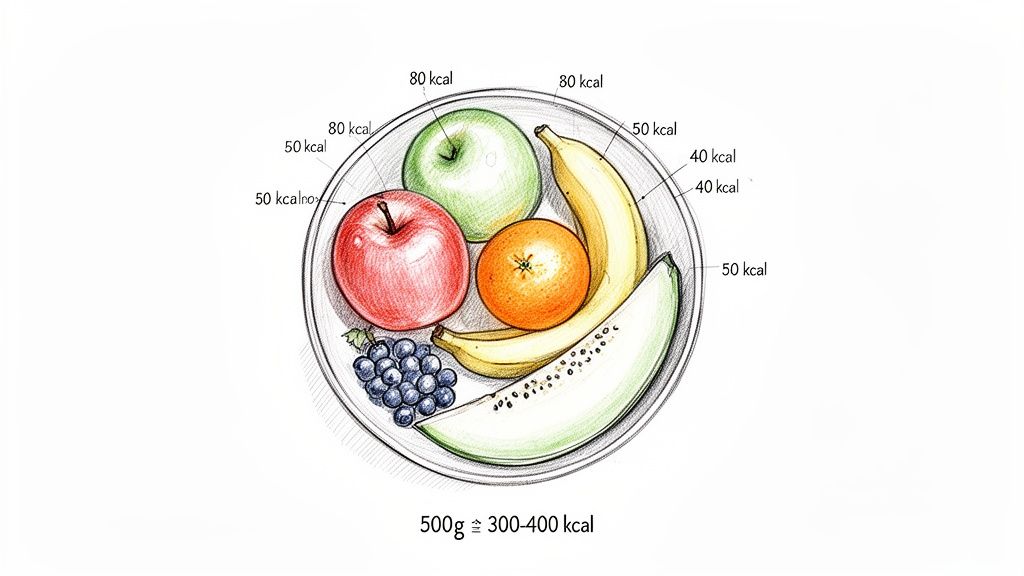
For individuals monitoring their food intake for health or weight management, understanding the caloric content of meals is crucial. A fruit bowl, while seemingly innocent, can have a widely variable calorie count depending on its composition. This is where the concept of nutrient density is key—maximizing nutritional value per calorie.
For instance, a large apple (242g) contains about 130 calories, two medium kiwis (148g) add 90 calories, and a cup of honeydew melon cubes (134g) contributes only 50 calories. Fruits with high water content, like melon, provide volume and promote satiety without significantly increasing the total calorie count.
Understanding Individual Fruit Calories
The total calories in a fruit bowl are the sum of its ingredients. To achieve an accurate count, it's beneficial to know the caloric values of commonly used fruits. For example, knowing How Many Calories in a Watermelon Slice can help you construct a larger, more satisfying bowl with fewer calories.
Consider building your fruit bowl like managing a budget:
- High-Volume, Low-Calorie Fruits: These are ideal for adding bulk. Berries, watermelon, cantaloupe, and honeydew offer significant volume and hydration for minimal calories.
- Denser, Higher-Calorie Fruits: Bananas, mangoes, and grapes are more calorie-dense. They provide excellent energy but should be used in moderation if weight loss is the primary goal.
The effectiveness of a fruit bowl for satiety lies in high-volume eating. The high water and fiber content allows for a large, visually satisfying meal that promotes fullness for a fraction of the calories found in processed snacks.
Manually calculating these values can be tedious. To simplify this process, you can use tools and methods that automate calorie calculation, transforming your fruit bowl from just a snack into a strategic choice for feeling full and nourished.
The Physiological Benefits of Whole Fruits
It is easy to fixate on the caloric content of a fruit bowl and worry about its sugar content. However, not all calories are processed by the body in the same way. The metabolic response to energy from whole fruits is distinctly different from the response to processed sugars, a crucial distinction for health.
The key lies in the synergistic action of fiber, water, and micronutrients. Water-rich fruits, like melons and berries, increase stomach volume without adding substantial calories. Simultaneously, the dietary fiber slows digestion. This combination induces satiety—the feeling of fullness that signals to the brain that energy needs have been met, which can help regulate overall food intake.
The Scientific Edge for Weight Management
Scientific evidence supports the role of fruit in weight management. A large-scale European investigation, the EPIC study, provided compelling data.
Researchers found that a daily increase of 100 kcal from fruit was associated with a smaller waist circumference over time. After an average of 5.5 years, individuals with higher fruit consumption demonstrated long-term benefits not observed with other foods, such as potatoes. For a deeper analysis, you can review the in-depth research on fruit intake and weight management.
This effect is partly due to how the body metabolizes fructose from whole fruit. Unlike refined sugar, the fructose in an apple or a handful of grapes is co-ingested with fiber. This fiber acts as a natural buffer, preventing the rapid blood glucose spikes and subsequent crashes associated with processed foods, which often trigger cravings. Instead, energy is released slowly and steadily. Our article on high-fiber meals delves further into how fiber can positively impact your diet.
More Than Just Vitamins and Minerals
The benefits extend beyond weight management. Whole fruits are crucial for maintaining a healthy digestive system. The prebiotic fiber in many fruits serves as a substrate for beneficial gut bacteria, promoting a balanced microbiome.
A healthy gut is linked not only to improved digestion but also to a more robust immune system and even mood regulation. You can explore how certain foods contribute to natural probiotics for optimal health.
Therefore, when assessing fruit bowl calories, it's vital to recognize they are part of a nutrient-dense package that supports bodily functions. Viewing fruit as a strategic dietary component—rather than merely a source of sugar—is key to building a diet that promotes well-being and achieves long-term results.
Don't Let "Healthy" Add-Ins Sabotage Your Fruit Bowl
A fruit bowl can be a pillar of healthy eating—until we start adding toppings. The "health halo" effect can be misleading. While the fruit itself is beneficial, seemingly innocuous additions can convert a light, nutritious meal into a calorie-dense dessert.
This transformation can happen quickly. A mere quarter-cup of commercial granola, for example, can add 200 calories and 15 grams of sugar. In such cases, the toppings contribute more calories and sugar than the fruit itself. These additions are the primary reason a fruit bowl might not be as "light" as perceived.
Watch Out for These Common Calorie Traps
It's a common misconception that all products in the "health food" aisle are inherently good for you. Many popular fruit bowl additions are laden with processed sugars and fats that alter the meal's nutritional profile significantly. Identifying these is the first step toward building a genuinely healthy bowl.
Be mindful of these common culprits:
- Sweetened Yogurt: A single serving of flavored yogurt can contain 20-25 grams of sugar, equivalent to about six teaspoons.
- Honey and Agave: While they sound natural, the body metabolizes these simple sugars similarly to table sugar. One tablespoon adds 60-65 calories of pure sugar.
- Dried Fruit: The dehydration process concentrates sugars and calories. A small portion of dried cranberries can exceed 100 calories and contain significant added sugar, a stark contrast to fresh fruit.
- Nut Butters with Added Ingredients: While nut butter can provide healthy fats and protein, many brands add sugars and oils, inflating the calorie count without proportional nutritional benefits.
Adhering to whole, unprocessed fruit is the most reliable strategy. This ensures you receive fiber, water, and vitamins without unwanted additives.
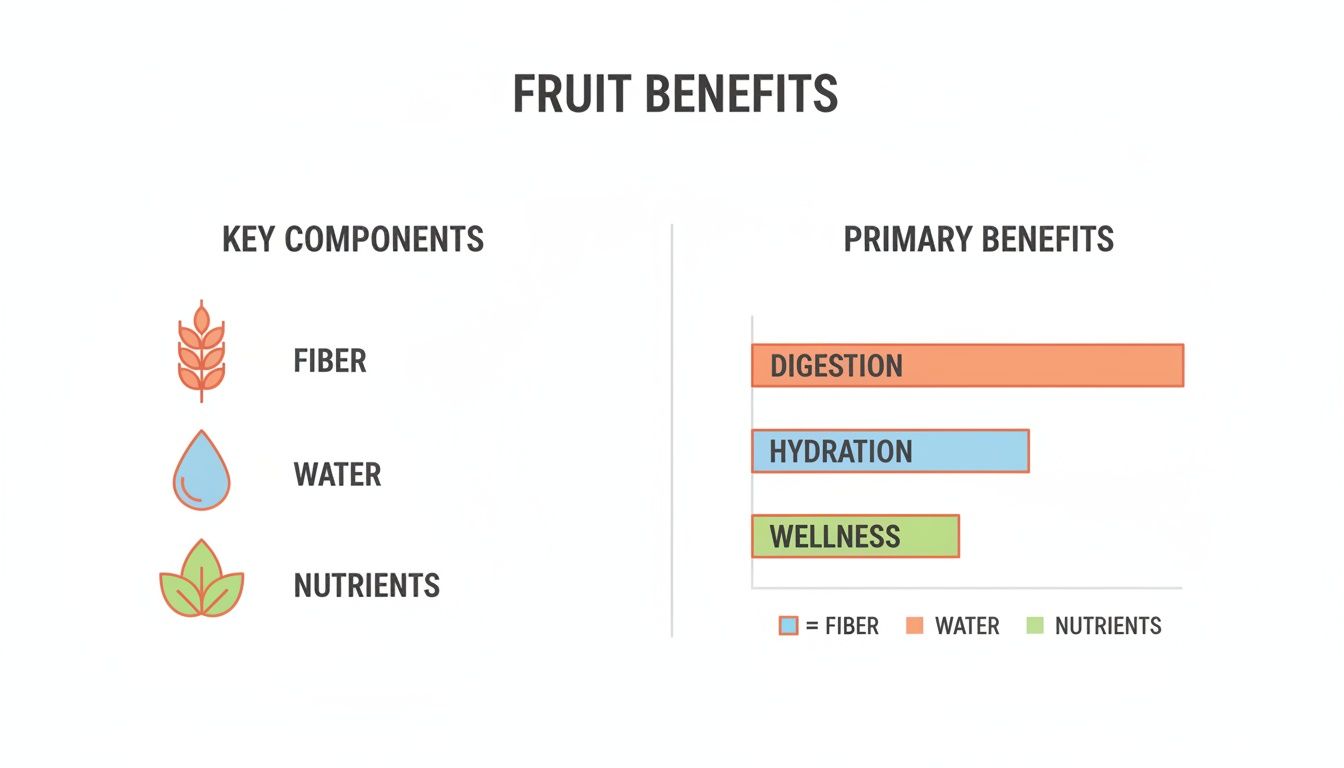
As illustrated, the primary benefits of fruit stem from its natural composition. By keeping it simple, you maximize digestive, hydration, and wellness advantages without excess calories.
Make Smart Swaps to Build a Better Bowl
The solution isn't to eat a bland bowl of fruit. It's about making strategic choices. A few simple swaps can maintain flavor and satisfaction while reducing the calorie load by hundreds. This approach involves trading low-quality, processed toppings for high-quality, whole-food alternatives that offer greater nutritional value.
Here are several effective swaps:
- Swap Flavored Yogurt for Plain Greek Yogurt: This change can save over 100 calories and 20 grams of sugar per serving while adding a substantial amount of protein, which enhances satiety.
- Swap Granola for Raw Nuts or Seeds: For a crunchy texture, a tablespoon of slivered almonds, pumpkin seeds, or chia seeds is an excellent choice. You gain healthy fats and fiber instead of the empty calories from sugary granola.
- Swap Dried Fruit for More Fresh Berries: Instead of a small amount of dried fruit, a full cup of fresh strawberries provides volume, water, and fiber for only 50 calories and significantly less sugar.
By carefully selecting toppings, you regain control over your fruit bowl calories. Learning to identify hidden sugars through skills like how to read nutrition labels is a powerful tool for constructing a meal that supports your health objectives.
How to Build the Ultimate Healthy Fruit Bowl
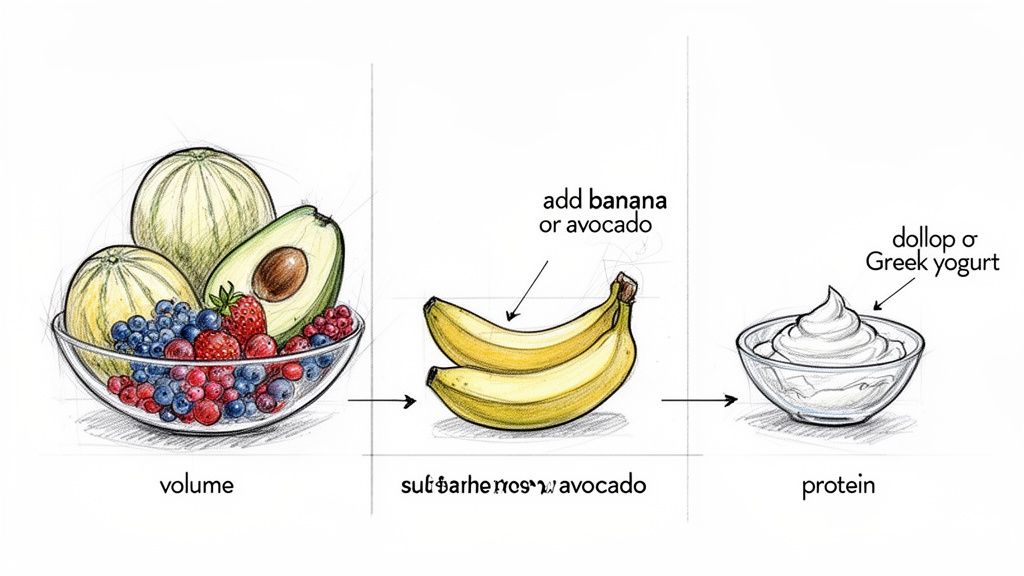 Constructing a genuinely healthy fruit bowl is a matter of strategic layering to create a balanced, satisfying meal that provides sustained energy. This involves building the meal in tiers, with each layer fulfilling a specific nutritional role.
Begin with a generous base of high-volume, low-calorie fruits. These bulk up the bowl, making it feel substantial without a high caloric cost. Melons like cantaloupe and watermelon, along with berries such as strawberries, are excellent choices due to their high water content, which contributes to early satiety.
Next, add a smaller portion of nutrient-dense fruits for more sustained energy. A small banana or mango slices provide carbohydrates and essential minerals like potassium, elevating the bowl from a light snack to a more substantial meal.
Add Protein for Serious Staying Power
This component is what transforms a good fruit bowl into a great one. To feel full for hours, incorporating a lean protein source is essential. Protein is the most satiating macronutrient, helping to prevent hunger and subsequent snacking.
Excellent protein choices include:
- Plain Greek Yogurt: Adds a creamy texture and delivers around 15-20 grams of protein per serving.
- Cottage Cheese: Another protein-rich option that pairs surprisingly well with the sweetness of fresh fruit.
- Chia Seeds or Hemp Hearts: These can be sprinkled on top for texture, fiber, and a dose of plant-based protein.
The combination of protein and fiber slows digestion, which helps stabilize blood sugar and prevent the energy crashes associated with high-carbohydrate meals. Even nutrient-rich exotic fruits like pitaya (dragon fruit) fit well; as one guide on dragon fruit benefits notes, its fiber and antioxidants are a valuable addition to a balanced diet.
A well-constructed fruit bowl is a macronutrient-balanced meal. By combining high-volume fruits with a protein source, you create a meal that supports muscle maintenance and effectively controls hunger.
Three Goal-Oriented Fruit Bowl Recipes
Here are three blueprints for creating fruit bowls tailored to different goals. Adjust portion sizes to align with your personal calorie targets.
1. The Fat-Loss Fuel Bowl (Under 300 Calories)
- Base: 1 cup of mixed berries (e.g., strawberries, blueberries).
- Protein: 1/2 cup of plain Greek yogurt.
- Topping: 1 tablespoon of chia seeds.
- This bowl is high in fiber and protein, promoting fullness with minimal fruit bowl calories.
2. The Pre-Workout Power-Up
- Base: 1/2 of a sliced banana and 1/2 cup of pineapple chunks.
- Protein: 1/4 cup of cottage cheese.
- Topping: A dash of cinnamon.
- This combination provides quick-digesting carbohydrates for immediate energy without causing digestive heaviness.
3. The Complete Meal Bowl
- Base: 1 cup of chopped melon and 1/2 of a sliced peach.
- Protein: 3/4 cup of plain Greek yogurt.
- Healthy Fat & Topping: 1 tablespoon of chopped almonds and a sprinkle of hemp hearts.
- With a balanced mix of carbohydrates, protein, and healthy fats, this bowl delivers long-lasting energy and sustained satiety.
When Tracking Your Food Becomes a Chore
You've assembled the perfect fruit bowl—it's healthy, delicious, and you know its contents. But now comes the tedious part: logging it. Weighing the banana, searching for strawberries, and finding the correct entry for Greek yogurt can turn a simple meal into a data-entry task. This friction is a common reason people abandon food tracking.
What if Logging Was as Easy as Eating?
The laborious nature of traditional calorie tracking apps is a significant barrier to consistency. They can transform a quick meal into a multi-step process. However, emerging technologies offer a more streamlined approach.
Tools like BiteKit are revolutionizing this space. Instead of manual ingredient entry and database searches, you can log an entire meal in seconds.
- Snap a Photo: A picture of your bowl is all that's needed. The app's AI identifies the ingredients and estimates the calories.
- Use Your Voice: Simply state, "bowl with strawberries, banana, and yogurt," and the app processes the information.
- Type a Quick Phrase: A short, descriptive text entry is sufficient for an accurate log.
This method removes the primary obstacle to consistent tracking, making it a sustainable habit rather than a chore. For example, telling the app you had a "fruit bowl with banana, orange, berries" instantly translates into an entry of roughly 250 calories and 60g of carbs. This ease of use facilitates adherence to beneficial habits. Research consistently demonstrates that higher fruit consumption correlates with better weight management. One New Zealand study of 1,293 women found that increased fruit intake was associated with a lower BMI over a 24-month period—a benefit not observed with high-fat foods. You can read more about these kinds of U.S. fruit consumption trends and their public health implications.
The objective is to make tracking a background process, not the main focus. By reducing friction, you can concentrate on building habits. With BiteKit's privacy-first design, all data remains on your device, ensuring peace of mind.
Frequently Asked Questions About Fruit and Diets
Navigating the world of nutrition advice can be confusing, especially concerning fruit. It's often praised as a health food but sometimes criticized for its sugar content, leaving many unsure of its role in a healthy diet. Let's clarify the most common questions and myths about fruit.
Is the Sugar in Fruit Bad for Weight Loss?
This is a prevalent misconception. The concern stems from the idea that fructose, the natural sugar in fruit, behaves identically to processed sugar. This is a simplistic and inaccurate view.
When you consume whole fruit, the fructose is delivered within a matrix of fiber and water. This natural packaging fundamentally alters its metabolic impact.
The fiber acts as a buffer, slowing the absorption of fructose. This prevents the sharp spike and subsequent crash in blood glucose levels that are characteristic of consuming refined sugars.
That "crash" is what often triggers cravings for more sugary foods. By helping to avoid this cycle, whole fruit consumption can actually support weight management efforts. Numerous studies show a correlation between higher intake of whole fruits and lower body weight and reduced risk of obesity. Do not let the fear of natural sugar prevent you from benefiting from the rich array of vitamins, minerals, and antioxidants that fruit provides.
Can You Eat Too Much Fruit in a Day?
While fruit is nutrient-dense, the calories are not negligible. It is possible to overconsume any food, and if your fruit intake consistently causes you to exceed your daily calorie requirements, it could impede weight loss.
Think of your daily energy needs as a budget. A bowl of berries is a low-cost, high-value item, but not "free." Excessive fruit consumption might leave insufficient room in your caloric budget for other essential macronutrients like protein and healthy fats.
So, what is an appropriate amount?
- A Solid Target: Most health guidelines recommend approximately two cups of fruit per day for the average adult. This should be viewed as a guideline, not a rigid rule.
- Mix It Up: Consuming a variety of fruits throughout the week ensures a broader intake of different vitamins and beneficial plant compounds.
- Check In With Yourself: Individual needs vary based on activity level, health goals, and overall dietary patterns.
The key is balance. Instead of imposing strict limits, focus on integrating fruit into a well-rounded diet centered on whole foods. A healthy dietary pattern is defined by what you include, not just what you restrict.
Is a Fruit Bowl a Complete Meal?
By itself, a bowl containing only fruit is an excellent source of quick-digesting carbohydrates, fiber, and vitamins. However, it lacks two crucial macronutrients that define a complete and satiating meal: protein and healthy fats.
Without these components, hunger will likely return shortly after eating. A meal composed primarily of carbohydrates, even from a healthy source like fruit, is digested relatively quickly. This can lead to a more rapid rise and fall in blood sugar, a primary trigger for hunger.
Fortunately, upgrading a fruit bowl into a balanced meal is simple. A few additions can significantly enhance its nutritional profile and satiating power.
Here’s how to elevate it from a snack to a proper meal:
- Pack in the Protein: A scoop of plain Greek yogurt or cottage cheese adds 15-20 grams of protein, which is critical for satiety and muscle maintenance.
- Add Healthy Fats: A tablespoon of chia seeds, ground flaxseed, or a sprinkle of chopped walnuts introduces healthy fats and additional fiber. This combination significantly slows digestion, promoting sustained fullness.
With these additions, a light snack becomes a balanced, sustainable meal that provides steady energy and supports your health goals without leaving you hungry.