10 Delicious High Fiber Meals for Weight Loss & Effortless Tracking in 2026
Discover 10 science-backed high fiber meals for weight loss. Get easy recipes, macro estimates, and tips for tracking your diet effortlessly. Start today!
Struggling with hunger pangs and slow progress on your weight loss journey? The secret isn't just cutting calories; it's about maximizing satiety. Dietary fiber is a powerhouse nutrient scientifically proven to increase feelings of fullness, stabilize blood sugar, and support a healthy gut microbiome. These factors are all critical for sustainable weight management. This article moves beyond generic advice to provide a curated list of ten specific, delicious, and easy-to-prepare high fiber meals designed to keep you satisfied.
We’ll break down exactly why these meals work, providing estimated macronutrient and fiber counts for each. You'll find simple preparation instructions, practical swaps for common dietary needs, and actionable tips for logging these complex meals effortlessly in tracking apps like BiteKit. This guide is your straightforward resource for turning the battle against hunger into a satisfying and effective strategy. Forget feeling deprived; these meals are designed to fuel your body and help you achieve your goals with food that is both filling and flavorful. Get ready to discover your new favorite recipes that make hitting your fiber targets simple and delicious.
1. Overnight Oats with Chia Seeds and Berries
Overnight oats represent one of the most efficient high fiber meals for busy mornings. The concept is simple: combine rolled oats, liquid, and your chosen mix-ins in a jar and let it sit overnight in the refrigerator. The oats and chia seeds absorb the liquid, soften, and create a creamy, pudding-like consistency without any cooking required.
This method is exceptionally valuable for anyone with a packed schedule, as it shifts all preparation to the evening before. You wake up to a ready-to-eat, nutrient-dense breakfast that can deliver between 10-15g of fiber per serving. Soluble fiber from oats, known as beta-glucan, is particularly effective at promoting satiety and supporting healthy cholesterol levels.
Example Variations
- Protein-Packed: Combine 1/2 cup rolled oats, 1/2 cup Greek yogurt, 1/2 cup milk, 1 tbsp chia seeds, 1/4 cup blueberries, and 1 tbsp sliced almonds. (Approx. 350 calories, 15g fiber, 18g protein)
- Chocolate Peanut Butter: Mix 1/2 cup rolled oats, 1 cup milk, 1 tbsp chia seeds, 1 tbsp cocoa powder, and 1 tbsp peanut butter. (Approx. 380 calories, 13g fiber, 12g protein)
Implementation Tips
To get started, a 1:1 ratio of oats to liquid (like milk or a plant-based alternative) provides a reliable, thick consistency. To maximize efficiency, you can prepare several jars at once to cover your work week. For even greater convenience and portion control, consider creating your own DIY overnight oats packets with the dry ingredients pre-mixed. This makes assembly a simple "just add liquid" process. When it's time to log your meal in an app like BiteKit, you can save the base recipe once and then quickly add daily toppings by photo.
2. Buddha Bowls with Legumes and Whole Grains
Buddha bowls are a versatile and visually appealing way to create balanced, high fiber meals. The core concept involves filling a bowl with a base of whole grains, topping it with protein-rich legumes and a variety of roasted or fresh vegetables, and finishing it with a healthy fat source like a dressing or avocado. This meal-in-a-bowl format is incredibly customizable and effective for hitting specific nutrition goals.
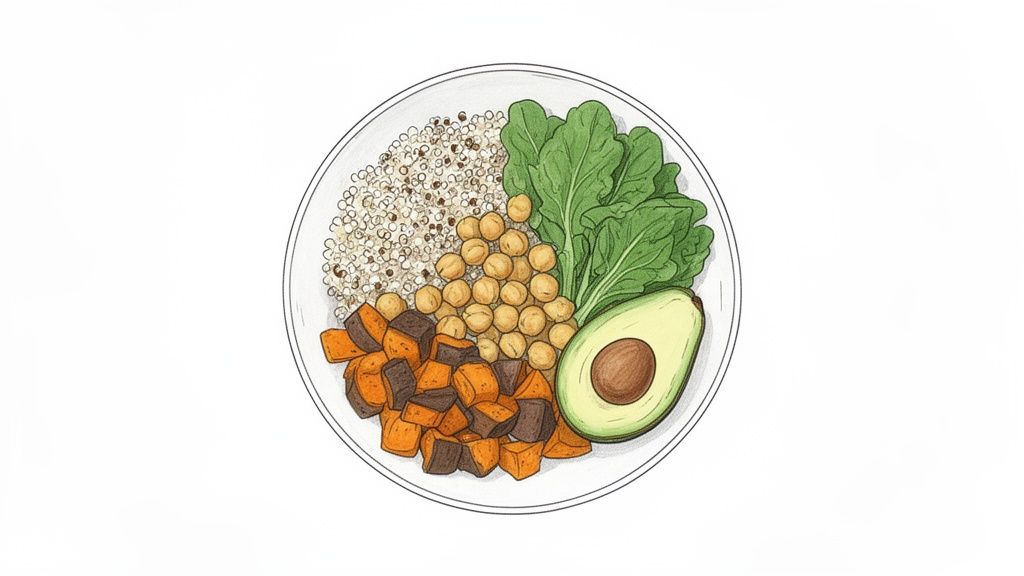
Popularized by health-focused brands like Sweetgreen and Cava, these bowls offer a powerful combination of macronutrients and micronutrients. A single serving can easily provide 12-18g of fiber, coming from the whole grains, legumes, and vegetables. This high fiber content promotes digestive regularity and sustained energy release, making it a great option for lunch or dinner to prevent afternoon slumps or evening cravings.
Example Variations
- Mediterranean: Quinoa, chickpeas, roasted bell peppers, feta, and an olive oil vinaigrette. (Approx. 520 calories, 14g fiber, 16g protein)
- Asian-Inspired: Brown rice, edamame, roasted broccoli, sesame seeds, and a tahini dressing. (Approx. 480 calories, 13g fiber, 18g protein)
- Mexican-Style: Black beans, whole grain rice, corn salsa, and fresh avocado with a lime wedge. (Approx. 510 calories, 15g fiber, 12g protein)
Implementation Tips
To make assembly quick, prepare large batches of grains (like quinoa or brown rice) and legumes on the weekend. Store components separately in the refrigerator to maintain their texture and prevent sogginess. When logging your meal in a calorie tracking app like BiteKit, a photo from directly above is very effective. The distinct layers allow the app's visual recognition to accurately estimate the portion sizes of each component. For consistent tracking, pre-portion your dressings into small containers.
3. Vegetable-Loaded Soups and Broths
Hearty soups packed with vegetables and legumes are a brilliant way to create satisfying, high fiber meals. The core idea is to combine a flavorful broth with an array of non-starchy vegetables, beans, or lentils, creating a meal high in volume and nutrients but low in calorie density. This approach keeps you feeling full and hydrated while delivering a significant fiber boost.
These soups are perfect for anyone seeking to increase vegetable intake or manage weight, as they provide satiety without excessive calories. A single serving can easily supply 8-12g of fiber from ingredients like beans, lentils, carrots, and leafy greens. The combination of soluble and insoluble fiber supports both digestive health and stable blood sugar levels.
Example Variations
- Classic Lentil Soup: Combine 1 cup brown lentils, 1 diced onion, 2 chopped carrots, 2 chopped celery stalks, and 6 cups of vegetable broth. (Approx. 220 calories, 10g fiber, 12g protein per serving)
- Hearty Minestrone: Mix 1 can of kidney beans, 1 can of diced tomatoes, mixed vegetables (like zucchini, green beans), 1/2 cup small pasta, and 6 cups of tomato-based broth. (Approx. 280 calories, 9g fiber, 8g protein per serving)
- Split Pea Soup: Simmer 1 lb split peas with 1 smoked ham hock, chopped carrots, and onions in 8 cups of water. (Approx. 240 calories, 11g fiber, 14g protein per serving)
Implementation Tips
To maximize efficiency, make a large 8-10 serving batch over the weekend and freeze portions in individual containers. When cooking, add hardy vegetables like carrots and potatoes early, and more delicate ones like spinach or zucchini near the end to prevent them from becoming mushy. Use low-sodium broth to keep sodium levels in check. For quicker meal logging in an app like BiteKit, weigh the entire finished batch, create a custom recipe, and then simply log the portion weight you eat each day.
4. Whole Grain Salads with Seeds and Nuts
Substantial salads built on a base of whole grains like farro or wild rice offer a satisfying and effective way to create high fiber meals. These are far more than simple side dishes; they are complete meals combining cooked grains with raw or roasted vegetables, crunchy nuts, and nutrient-dense seeds. The result is a texturally diverse meal that can be easily customized for lunch or dinner.
This approach is perfect for meal prepping, as the components can be stored separately and assembled quickly. A single serving delivers a powerful dose of fiber, often between 10-14g, which is crucial for digestive health and maintaining steady blood sugar levels. The combination of complex carbohydrates from grains and healthy fats from nuts and seeds also ensures you stay full and energized for hours.
Example Variations
- Mediterranean Farro Salad: Mix 1 cup cooked farro with cherry tomatoes, cucumber, olives, 1 tbsp pine nuts, and feta cheese, dressed with a lemon vinaigrette. (Approx. 420 calories, 12g fiber, 14g protein)
- Autumn Wild Rice Salad: Combine 1 cup cooked wild rice with roasted squash, dried cranberries, 1 tbsp pecans, and kale, tossed in a balsamic vinaigrette. (Approx. 380 calories, 11g fiber, 9g protein)
- Asian Barley Salad: Toss 1 cup cooked barley with edamame, shredded carrots, and 1 tbsp sesame seeds, drizzled with a ginger dressing. (Approx. 360 calories, 13g fiber, 13g protein)
Implementation Tips
For deeper flavor without added calories, cook your grains in vegetable broth instead of water. To enhance the taste further, toast nuts and seeds in a dry pan for a few minutes before adding them to your salad. To make meal prep efficient, prepare a large batch of the grain base and chop your vegetables at the start of the week, storing them separately. When logging in an app like BiteKit, you can pre-log a common measurement, like 25g of almonds, and reuse that entry each time you build your salad.
5. Legume-Based Pasta with Vegetable-Rich Sauces
Reimagining a classic comfort food, legume-based pasta offers a fantastic way to create satisfying high fiber meals without sacrificing the pasta experience. These pastas, made from flours of chickpeas, lentils, or black beans, pack a serious nutritional punch. A standard two-ounce serving can contain 8-10 grams of fiber and a significant protein boost, far surpassing the 2-3 grams found in traditional refined pasta.
This swap is perfect for dinner or lunch when you crave something hearty. The combination of high fiber and high protein promotes a strong sense of fullness, helping with appetite regulation and blood sugar management. Brands like Banza and Barilla Protein+ have made these options widely available, turning a simple pasta night into a nutrient-dense meal that can deliver over 10g of fiber when paired with a vegetable-loaded sauce.
Example Variations
- Zucchini Marinara: Combine 2oz lentil pasta, 1 cup marinara sauce, 1 cup chopped zucchini, and a handful of spinach. (Approx. 320 calories, 9g fiber, 18g protein)
- Turkey Bolognese: Mix 2oz chickpea pasta with a sauce made from 4oz lean ground turkey, tomato sauce, and chopped mushrooms. (Approx. 380 calories, 10g fiber, 22g protein)
Implementation Tips
To prevent a mushy texture, cook vegetables separately and stir them into your sauce at the end. If you are new to the taste and texture, start by mixing 50% legume pasta with 50% regular pasta, then gradually adjust the ratio. For meal prep, store the cooked pasta and sauce in separate containers to maintain the best texture. When logging your meal in an app like BiteKit, a quick photo of the plate can easily distinguish the pasta-to-sauce ratio for accurate tracking.
6. Vegetable-Based Stir-Fries with Tofu or Lean Protein
A vegetable-forward stir-fry is a powerhouse of nutrition and one of the most versatile high fiber meals for any weeknight. The method involves quickly cooking a colorful assortment of vegetables and a protein source in a wok or large skillet over high heat. By prioritizing non-starchy vegetables like broccoli, peppers, and snap peas, you can pack in a significant amount of fiber while keeping the meal calorie-efficient.
This approach is perfect for using up leftover produce and adapting to your macro goals. A single serving can easily provide 6-10g of fiber, supporting digestive health and promoting fullness. The rapid cooking time also helps retain more of the vegetables' nutrients and crisp texture, making it a far more satisfying option than boiled or steamed alternatives.
Example Variations
- Vegetable and Tofu: Sauté 150g firm tofu with broccoli, bell peppers, and mushrooms. Serve over brown rice with a ginger-garlic sauce. (Approx. 420 calories, 8g fiber, 16g protein)
- Chicken and Vegetable: Combine 150g chicken breast with snap peas, carrots, and bok choy. Serve over cauliflower rice with low-sodium soy sauce. (Approx. 320 calories, 7g fiber, 32g protein)
- Shrimp and Vegetable: Stir-fry 150g shrimp with broccoli and bell peppers. Serve over cauliflower rice with a light garlic sauce. (Approx. 280 calories, 6g fiber, 28g protein)
Implementation Tips
Preparation is key for a successful stir-fry; have all vegetables chopped and protein ready before you start cooking. This "mise en place" strategy prevents ingredients from overcooking while you rush to prep the next item. To log your meal accurately in BiteKit, use the voice feature while cooking: "Adding 150g tofu, 200g broccoli, and 150g brown rice." Be mindful of sauces and oils, as these can add calories quickly; you can learn more about managing the calories in stir-fry vegetables to stay on track.
7. Smoothie Bowls with Fiber-Rich Toppings
Smoothie bowls offer a vibrant, nutrient-dense way to create customizable high fiber meals. Unlike traditional smoothies, they have a thick, spoonable consistency achieved by blending frozen fruits with less liquid and sometimes adding thickeners like Greek yogurt or oats. This base becomes a canvas for an array of fiber-rich toppings, making it an excellent meal for breakfast or post-workout recovery.
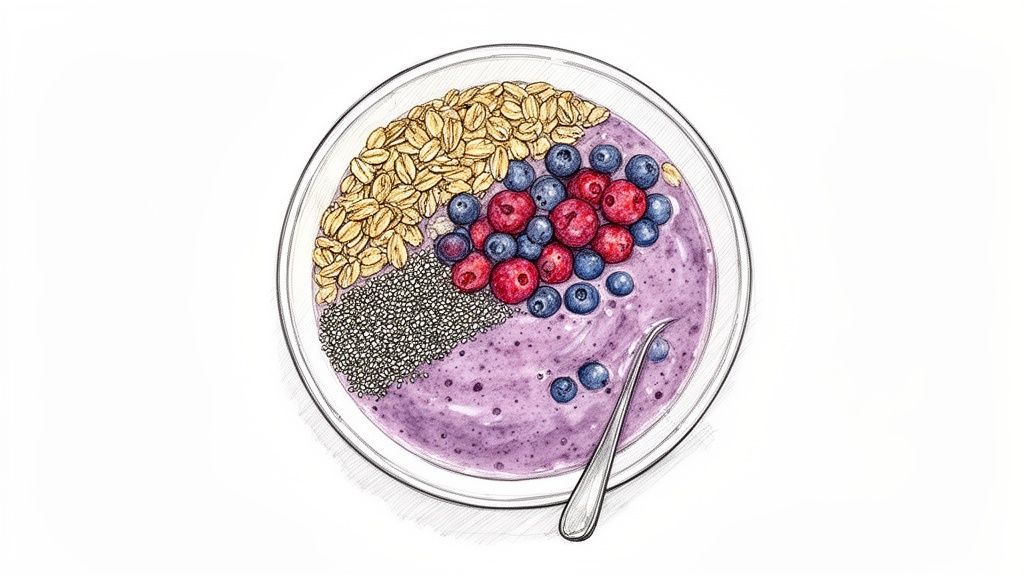
The combination of fiber from the fruit base and additional toppings like seeds, nuts, and granola can easily push a single serving to 10-16g of fiber. This powerful mix promotes digestive health and provides sustained energy. The visual appeal and endless variety have made them a favorite among health-conscious individuals and fitness communities. For those focused on a lean physique, exploring different fruit smoothies for weight loss can provide even more ideas for low-calorie, high-nutrient bases.
Example Variations
- Acai Protein Power: Blend 1 acai packet, 1/2 cup Greek yogurt, 1/4 cup rolled oats, and 1 tbsp chia seeds. Top with 1 tbsp almonds and 1/4 cup blueberries. (Approx. 380 calories, 12g fiber, 16g protein)
- Green Power Bowl: Combine 1 cup spinach, 1/2 frozen banana, 1/2 cup Greek yogurt, and 1 tbsp chia seeds. Top with 1 tbsp walnuts and 1/2 sliced apple. (Approx. 360 calories, 13g fiber, 14g protein)
Implementation Tips
To make mornings effortless, add your base ingredients to the blender jar the night before and store it in the fridge. This way, assembly takes just a couple of minutes. You can also pre-portion your dry toppings into small containers for the week. When logging your meal in an app like BiteKit, photograph the finished bowl from above. The distinct layers of toppings are easily identified by the app's photo recognition, making tracking fast and accurate.
8. Roasted Vegetable Medleys with Ancient Grains
Roasting is a fantastic cooking method that enhances the natural sweetness and flavor of vegetables and grains through caramelization. This simple, one-pan approach creates delicious and satisfying high fiber meals by combining colorful vegetables like broccoli and sweet potatoes with nutrient-dense ancient grains such as quinoa or amaranth. The dry heat of the oven draws out moisture, concentrating flavors and creating a delightful texture that requires minimal oil or heavy sauces.
This batch-cooking technique is ideal for anyone looking to simplify their weekly meal prep. By preparing a large sheet pan of roasted vegetables and grains, you can secure several days' worth of lunches or dinners. A single serving delivers an impressive 11-15g of fiber, largely from the non-starchy vegetables and whole grains, which supports digestive health and sustained energy release.
Example Variations
- Mediterranean Roasted: Toss 1 cup broccoli florets, 1 cup Brussels sprouts, 1/2 cup chopped bell peppers, and 1/2 cup cooked quinoa with 1 tsp olive oil and dried oregano before roasting. (Approx. 380 calories, 12g fiber, 12g protein)
- Fall Harvest Roasted: Combine 1 cup cubed sweet potato, 1 cup chopped carrots, 1 cup cauliflower florets, and 1/2 cup cooked amaranth with 1 tsp olive oil and a dash of cinnamon. (Approx. 360 calories, 13g fiber, 10g protein)
- Italian-Style Roasted: Mix 1 cup cubed zucchini, 1 cup chopped eggplant, 1/2 cup cherry tomatoes, and 1/2 cup cooked millet with 1 tsp oil and Italian herbs. (Approx. 340 calories, 11g fiber, 9g protein)
Implementation Tips
To start, toss your chopped vegetables and cooked grains with a measured teaspoon of oil and spices directly on the baking sheet. Roast at 425°F (220°C) for 35-40 minutes, flipping halfway through for even browning. You can prepare up to four large sheet pans on a Sunday to cover the entire work week. For quick logging in an app like BiteKit, photograph the entire tray from above; the distinct colors of the vegetables make them easy for the app to recognize. Store portions in clear glass containers to keep them visually appealing, which helps maintain motivation.
9. Vegetable Frittatas with Whole Grain Toast
Vegetable frittatas are an excellent high fiber meal, offering a fantastic balance of protein, vegetables, and complex carbohydrates when paired with whole grain toast. The concept involves baking a mixture of eggs and chopped vegetables in a cast iron skillet or baking pan. This method creates a firm, sliceable, and protein-rich dish that's perfect for meal prepping.
Popularized by meal prep communities and budget-conscious eaters, frittatas are exceptionally versatile. They allow you to use up leftover vegetables while packing a significant nutritional punch. A single serving can provide 6-10g of fiber, primarily from the vegetables and whole grain bread, alongside high-quality protein from the eggs that promotes lasting satiety. This makes it a powerful option for breakfast or lunch.
Example Variations
- Spinach and Mushroom: Combine 8 eggs, 2 cups spinach, 1 cup mushrooms, and 2 oz cheese. Serve one quarter with a slice of whole grain toast. (Approx. 380 calories, 7g fiber, 18g protein)
- Mediterranean: Mix 8 eggs with diced bell peppers, onions, tomatoes, olives, and fresh herbs. Serve one quarter with toast. (Approx. 360 calories, 8g fiber, 16g protein)
- Broccoli Cheddar: Use 8 eggs, 2 cups chopped broccoli, and 2 oz cheddar cheese. Serve a quarter portion with toast. (Approx. 400 calories, 8g fiber, 20g protein)
Implementation Tips
To prepare, lightly coat a cast iron skillet or 8x8 baking pan with nonstick spray or a teaspoon of oil. Fill with your egg and vegetable mixture, then bake at 375°F (190°C) for 20-25 minutes. For consistent portion control, cut the cooled frittata into four equal squares. These portions can be refrigerated or frozen for a quick, grab-and-go meal. When tracking your intake in an app like BiteKit, you can photograph one quarter of the frittata with the toast for fast, visually recognizable logging.
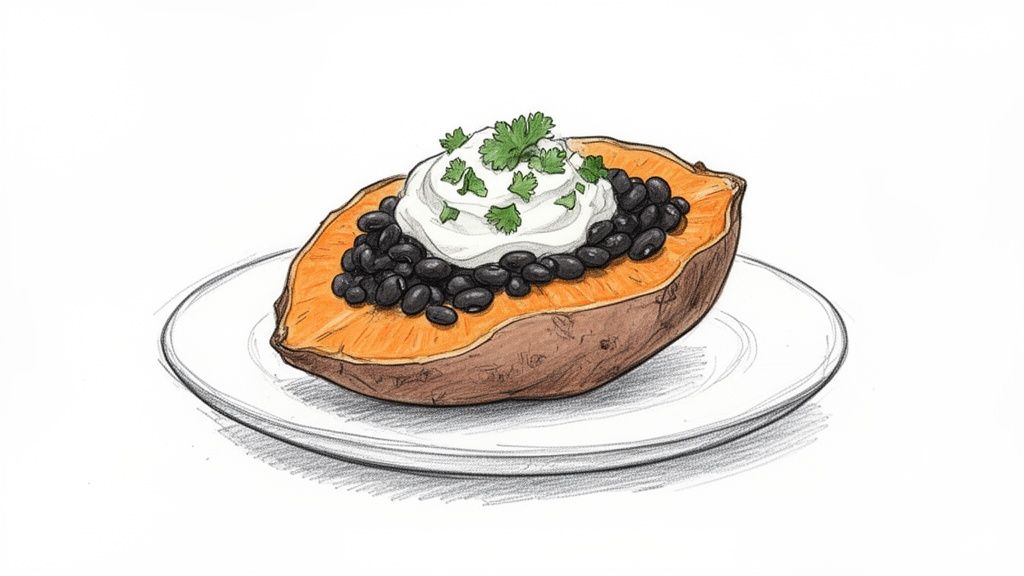
10. Baked Sweet Potatoes with Protein and Vegetable Toppings
A baked sweet potato serves as a fantastic, nutrient-dense base for a versatile and satisfying meal. This approach transforms the humble potato into a complete dish by piling on protein and fiber-rich toppings like beans, lentils, or Greek yogurt. It’s a favorite among fitness communities for its balance of complex carbohydrates and protein, supporting both energy and satiety.
A single large sweet potato (around 250g) offers approximately 6-8g of fiber on its own. When combined with smart toppings, the meal can easily reach 12-16g of total fiber, making it a powerful choice for one of your high fiber meals. Its warm, comforting nature makes it especially well-suited for a quick lunch or a simple, nourishing dinner.
Example Variations
- Greek Yogurt & Black Bean: Top a 250g sweet potato with 1 cup of black beans, 100g of Greek yogurt, and a scoop of salsa. (Approx. 420 calories, 14g fiber, 18g protein)
- Lentil & Spinach: Combine a 250g sweet potato with 1 cup of cooked lentils, sautéed spinach, and a drizzle of balsamic vinegar. (Approx. 400 calories, 16g fiber, 16g protein)
- Cottage Cheese & Broccoli: Stuff a 250g sweet potato with 100g of cottage cheese, roasted broccoli, and a sprinkle of everything bagel seasoning. (Approx. 380 calories, 12g fiber, 20g protein)
Implementation Tips
Batch-baking is the key to efficiency. Bake several similarly sized sweet potatoes (200-250g each) over the weekend; they store well in the refrigerator for up to five days. This prep work reduces daily assembly time to just a few minutes. For quick logging in BiteKit, take a photo from directly above to clearly capture all the toppings, or use voice logging by saying, "Sweet potato topped with black beans and Greek yogurt." To better understand their nutritional profile, you can find details about the carbs in a sweet potato and how they fit into a balanced diet.
Comparison of 10 High-Fiber Meals
| Item | Implementation complexity | Resource requirements | Expected outcomes | Ideal use cases | Key advantages |
|---|---|---|---|---|---|
| Overnight Oats with Chia Seeds and Berries | Very low — 5 min prep + overnight chill | Minimal — jar, fridge, oats, yogurt/milk, chia | 10–15g fiber, filling breakfast, steady energy | Busy mornings, grab-and-go meal prep, weight-loss breakfasts | No-cook, budget-friendly, consistent appearance for photo logging |
| Buddha Bowls with Legumes and Whole Grains | Moderate — multiple components to cook and roast | Moderate — grains, legumes, oven/stove, containers | 12–18g fiber, complete macros, high satiety | Balanced lunches/dinners, macro tracking, weekly meal prep | Highly customizable, nutrient-dense, clear photo components |
| Vegetable-Loaded Soups and Broths | Low–moderate — simmer and batch-cook | Minimal–moderate — pot, freezer containers, mixed vegetables/legumes | 8–12g fiber, high-volume low-calorie, hydrating | Batch cooking, freezing for convenience, weight-loss plans | Low calorie density, freezer-friendly, efficient satiety |
| Whole Grain Salads with Seeds and Nuts | Moderate — cook grains and assemble components | Moderate — whole grains, nuts/seeds, storage containers | 10–14g fiber, nutrient-dense, filling | Meal-prep lunches, Mediterranean-style meals, photo logging | Visually distinct for tracking, adaptable, keeps 3–4 days |
| Legume-Based Pasta with Vegetable-Rich Sauces | Low — cook pasta and prepare sauce | Moderate — specialty pasta (higher cost), sauce ingredients | 8–10g fiber per 2oz, higher protein, lower GI than refined pasta | Pasta lovers wanting higher fiber, easy meal swaps | Familiar comfort format, higher satiety and protein vs. regular pasta |
| Vegetable-Based Stir-Fries with Tofu or Lean Protein | Low–moderate — active stove-top cooking (15–20 min) | Minimal — pan/wok, fresh vegetables, protein, measured oil/sauce | 6–10g fiber, nutrient-dense, quick to prepare | Fast dinners, last-minute meals, high-veg intake | Fast, one-pan, highly customizable, great leftovers |
| Smoothie Bowls with Fiber-Rich Toppings | Low — blender work, 5–10 min | Minimal — blender, frozen fruit, toppings (granola, seeds) | 10–16g fiber, quick breakfast/post-workout, visually appealing | Breakfasts, post-workout meals, social/photo-focused eating | Fast, attractive, dual textures, easy topping measurement |
| Roasted Vegetable Medleys with Ancient Grains | Moderate — oven roasting + cooked grains (45–50 min) | Minimal–moderate — oven, sheet pans, ancient grains, vegetables | 11–15g fiber, flavorful, meal-prep friendly | Batch meal prep, simple dinners, cost-effective foundation | Minimal hands-on time, strong flavor, long refrigerated life |
| Vegetable Frittatas with Whole Grain Toast | Moderate — bake and portion (20–25 min) | Minimal — eggs, baking pan, whole grain bread | 6–10g fiber, high protein (15–18g), very satiating | Breakfast/brunch, protein-focused meal prep, reheatable meals | High satiety, easy portioning, reheats well |
| Baked Sweet Potatoes with Protein and Vegetable Toppings | Low — simple bake then top (45–60 min cook) | Minimal — oven, sweet potatoes, legumes/dairy toppings | 12–16g fiber (with toppings), filling, nutrient-dense | Beginner cooks, budget-friendly satiating meals, meal prep | Simple assembly, natural portion control, cost-effective |
Making High-Fiber Eating Your New Normal
You’ve now explored a diverse menu of 10 delicious and satisfying high fiber meals. From the make-ahead convenience of Overnight Oats to the hearty warmth of a Vegetable-Loaded Soup, the common thread is clear: eating for health doesn’t require sacrifice. Instead, it’s about making smart, strategic additions to your plate.
The power of these meals lies not just in their individual recipes but in the principles they represent. Each one is a testament to how whole foods, particularly legumes, vegetables, and whole grains, can work together to support your wellness goals. This approach shifts the focus from restriction to abundance, filling your diet with nutrients that promote satiety, regulate digestion, and fuel your body effectively. Scientific evidence consistently shows that diets rich in fiber are associated with lower body weight and a reduced risk of chronic diseases.
Your Action Plan for Lasting Change
Simply knowing what to eat is only half the battle. Turning that knowledge into a sustainable habit is where true progress begins. Here’s how to transition from reading about high-fiber meals to making them a core part of your lifestyle:
- Start Small and Build Momentum: Don't try to overhaul your entire diet overnight. Choose just one or two meals from this list to incorporate into your upcoming week. Maybe you swap your usual breakfast for the Overnight Oats with Chia Seeds or prep a large batch of the Buddha Bowl ingredients for a few easy lunches.
- Embrace Strategic Preparation: Consistency is built on a foundation of convenience. Dedicate a couple of hours on a Sunday to what we call "component prepping." Cook a large batch of quinoa, roast a tray of mixed vegetables, and chop raw veggies for salads. Having these building blocks ready makes assembling high fiber meals during a busy week incredibly fast. To keep everything fresh and organized, investing in the best containers for meal prep is a simple step that pays huge dividends in efficiency.
- Track Smarter, Not Harder: If you're tracking your intake to meet specific fitness or weight loss goals, efficiency is key. Use the photo and voice logging features in BiteKit to capture your high fiber meals in seconds. This eliminates the tedious manual entry that can make tracking feel like a chore, helping you stay consistent with your data and your diet.
The goal is not perfection, but consistent, intentional effort. Each high fiber meal you choose is a direct investment in your long-term health, digestive wellness, and fitness journey.
By integrating these meals and adopting these simple strategies, you move beyond the cycle of short-term diets. You begin to build a new normal, one where your food is both enjoyable and profoundly supportive of your goals. The path to better health is paved with the small, deliberate choices you make every day. Start with your next meal.